Meta has just revealed their AI Supercomputer which is surpassing any of its competitors in terms of capabilities and performance. Meta AI Research is using data from sites such as Facebook and Instagram to train and improve its models in the hopes of controlling and influencing its users and for other future secret projects. What other dystopian things will come from this, one can only imagine.
–
TIMESTAMPS:
00:00 Meta’s Secret Weapon.
01:41 The Emergence of AI Supremacy.
04:55 What are Supercomputers used for?
08:03 Is Human AI Possible?
10:34 Last Words.
–
#meta #supercomputer #dystopia
Category: supercomputing – Page 76
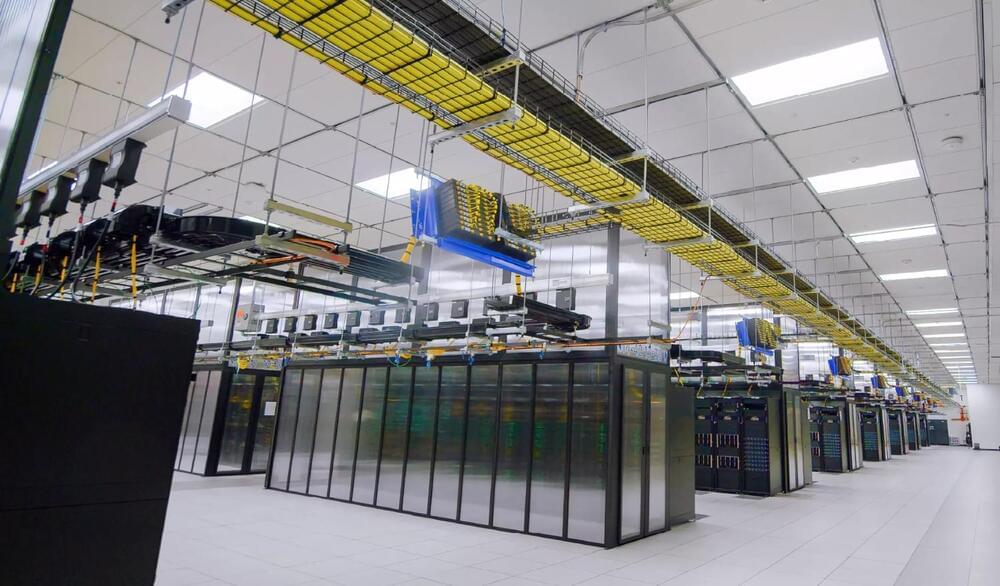

Meta Is Making a Monster AI Supercomputer for the Metaverse
Though Meta didn’t give numbers on RSC’s current top speed, in terms of raw processing power it appears comparable to the Perlmutter supercomputer, ranked fifth fastest in the world. At the moment, RSC runs on 6,800 NVIDIA A100 graphics processing units (GPUs), a specialized chip once limited to gaming but now used more widely, especially in AI. Already, the machine is processing computer vision workflows 20 times faster and large language models (like, GPT-3) 3 times faster. The more quickly a company can train models, the more it can complete and further improve in any given year.
In addition to pure speed, RSC will give Meta the ability to train algorithms on its massive hoard of user data. In a blog post, the company said that they previously trained AI on public, open-source datasets, but RSC will use real-world, user-generated data from Meta’s production servers. This detail may make more than a few people blanch, given the numerous privacy and security controversies Meta has faced in recent years. In the post, the company took pains to note the data will be carefully anonymized and encrypted end-to-end. And, they said, RSC won’t have any direct connection to the larger internet.
To accommodate Meta’s enormous training data sets and further increase training speed, the installation will grow to include 16,000 GPUs and an exabyte of storage—equivalent to 36,000 years of high-quality video—later this year. Once complete, Meta says RSC will serve training data at 16 terabytes per second and operate at a top speed of 5 exaflops.

Research team chase down advantage in quantum race
Quantum researchers at the University of Bristol have dramatically reduced the time to simulate an optical quantum computer, with a speedup of around one billion over previous approaches.
Quantum computers promise exponential speedups for certain problems, with potential applications in areas from drug discovery to new materials for batteries. But quantum computing is still in its early stages, so these are long-term goals. Nevertheless, there are exciting intermediate milestones on the journey to building a useful device. One currently receiving a lot of attention is “quantum advantage”, where a quantum computer performs a task beyond the capabilities of even the world’s most powerful supercomputers.
Experimental work from the University of Science and Technology of China (USTC) was the first to claim quantum advantage using photons—particles of light, in a protocol called “Gaussian Boson Sampling” (GBS). Their paper claimed that the experiment, performed in 200 seconds, would take 600 million years to simulate on the world’s largest supercomputer.

Facebook’s Meta Says Its New AI Supercomputer Will Beat All Rivals by 2022’s End
Could it really happen?Looks like Meta is swinging for the cheap seats.
Looks like Meta is swinging for the cheap seats.
The social media superpower Meta (formerly Facebook) has announced that it has built an “AI supercomputer” — an unconscionably fast computer designed to train and enhance machine-learning systems, according to a Monday post from Meta CEO Mark Zuckerberg.
“Meta has developed what we believe is the world’s fastest AI supercomputer,” said Zuckerberg in his post. “We’re calling it RSC for AI Research SuperCluster and it’ll be complete later this year.”
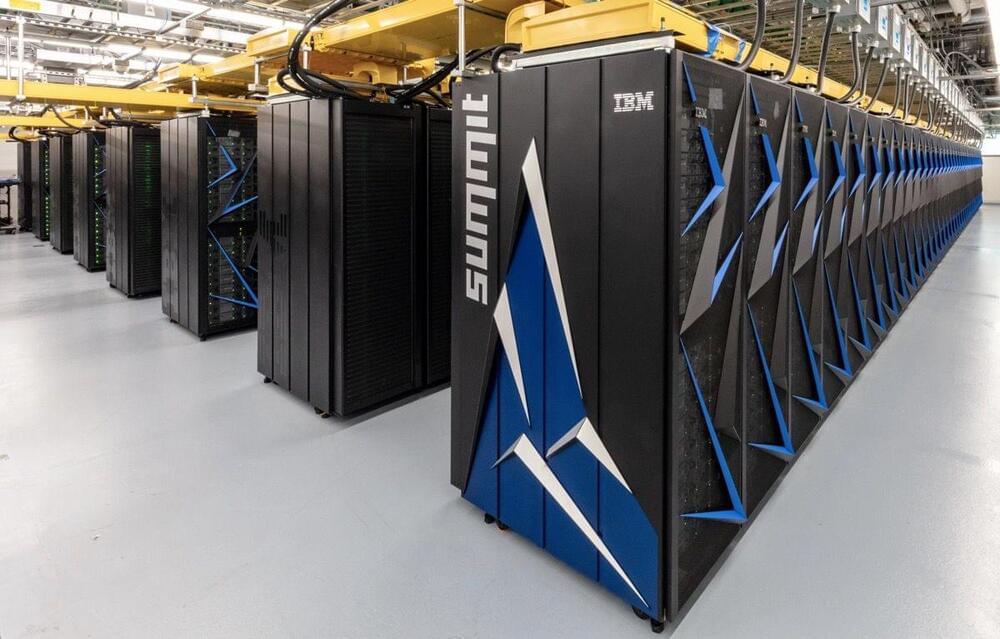
Facebook is building ‘the most powerful AI computer in the world’
Meta says it wants to build the most powerful artificial intelligence supercomputer in the world.
The Facebook owner has already designed and built what it calls the AI Research SuperCluster, or RSC, which it says is among the fastest AI supercomputers in the world.
It hopes to top that league by mid-2022, it said, in what would be a major step towards increasing its artificial intelligence capabilities.
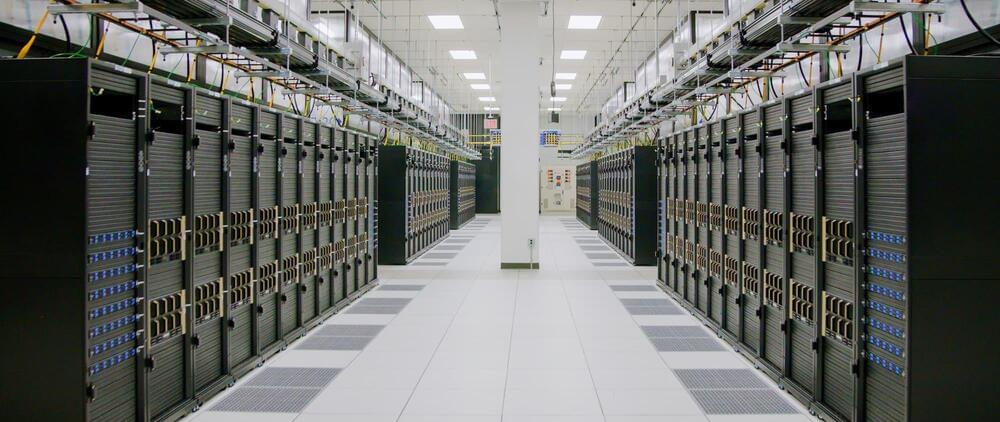
Meta says its new AI supercomputer will be the world’s fastest
Has the first phase of a new AI. Once the AI Research SuperCluster (RSC) is fully built out later this year, the company believes it will be the fastest AI supercomputer on the planet, capable of “performing at nearly 5 exaflops of mixed precision compute.”
The company says RSC will help researchers develop better AI models that can learn from trillions of examples. Among other things, the models will be able to build better augmented reality tools and “seamlessly analyze text, images and video together,” according to Meta. Much of this work is in service of its vision for the metaverse, in which it says AI-powered apps and products will have a key role.
“We hope RSC will help us build entirely new AI systems that can, for example, power real-time voice translations to large groups of people, each speaking a different language, so they can seamlessly collaborate on a research project or play an AR game together,” technical program manager Kevin Lee and software engineer Shubho Sengupta wrote.
The Human Brain-Scale AI Supercomputer Is Coming
What’s next? Human brain-scale AI.
Funded by the Slovakian government using funds allocated by the EU, the I4DI consortium is behind the initiative to build a 64 AI exaflop machine (that’s 64 billion, billion AI operations per second) on our platform by the end of 2022. This will enable Slovakia and the EU to deliver for the first time in the history of humanity a human brain-scale AI supercomputer. Meanwhile, almost a dozen other countries are watching this project closely, with interest in replicating this supercomputer in their own countries.
There are multiple approaches to achieve human brain-like AI. These include machine learning, spiking neural networks like SpiNNaker, neuromorphic computing, bio AI, explainable AI and general AI. Multiple AI approaches require universal supercomputers with universal processors for humanity to deliver human brain-scale AI.
Quantum Computer With More Than 5,000 Qubits Launched
Official launch marks a milestone in the development of quantum computing in Europe.
A quantum annealer with more than 5,000 qubits has been put into operation at Forschungszentrum Jülich. The Jülich Supercomputing Centre (JSC) and D-Wave Systems, a leading provider of quantum computing systems, today launched the company’s first cloud-based quantum service outside North America. The new system is located at Jülich and will work closely with the supercomputers at JSC in the future. The annealing quantum computer is part of the Jülich UNified Infrastructure for Quantum computing (JUNIQ), which was established in autumn 2019 to provide researchers in Germany and Europe with access to various quantum systems.