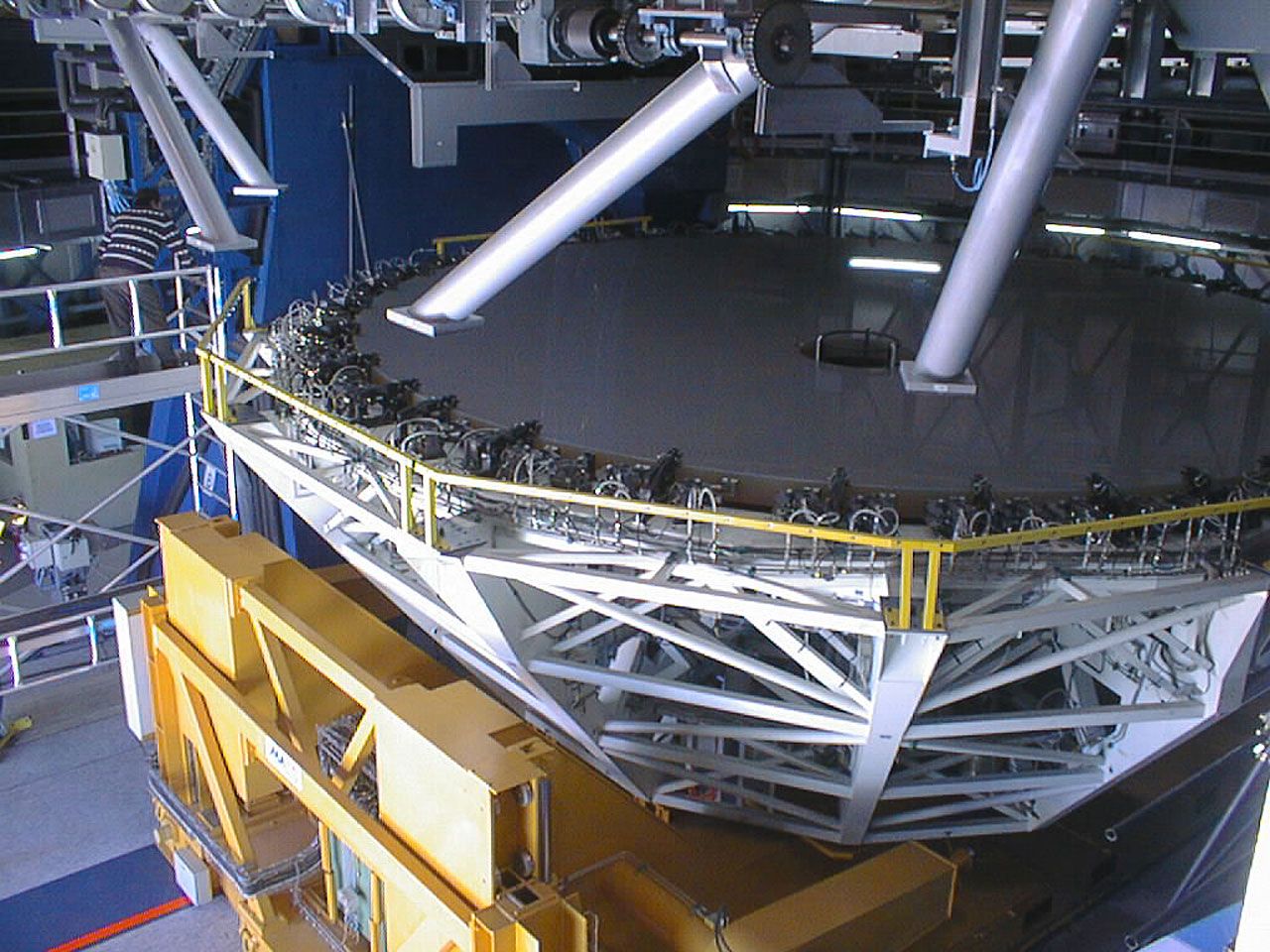
Final preparations being carried out in the week before the VLT UT1 First Light. Following successful optical alignment tests, the 8.2-m primary mirror was removed from the first Unit Telescope (UT1). This image shows preparations to move it into the Mirror Maintenance Building (MMB) to be coated with a thin, highly reflective aluminium layer. The cell with the 8.2-m mirror has been detached from the lower part of the telescope tube. (Photo obtained on May 17, 1998).
Category: space – Page 1,121
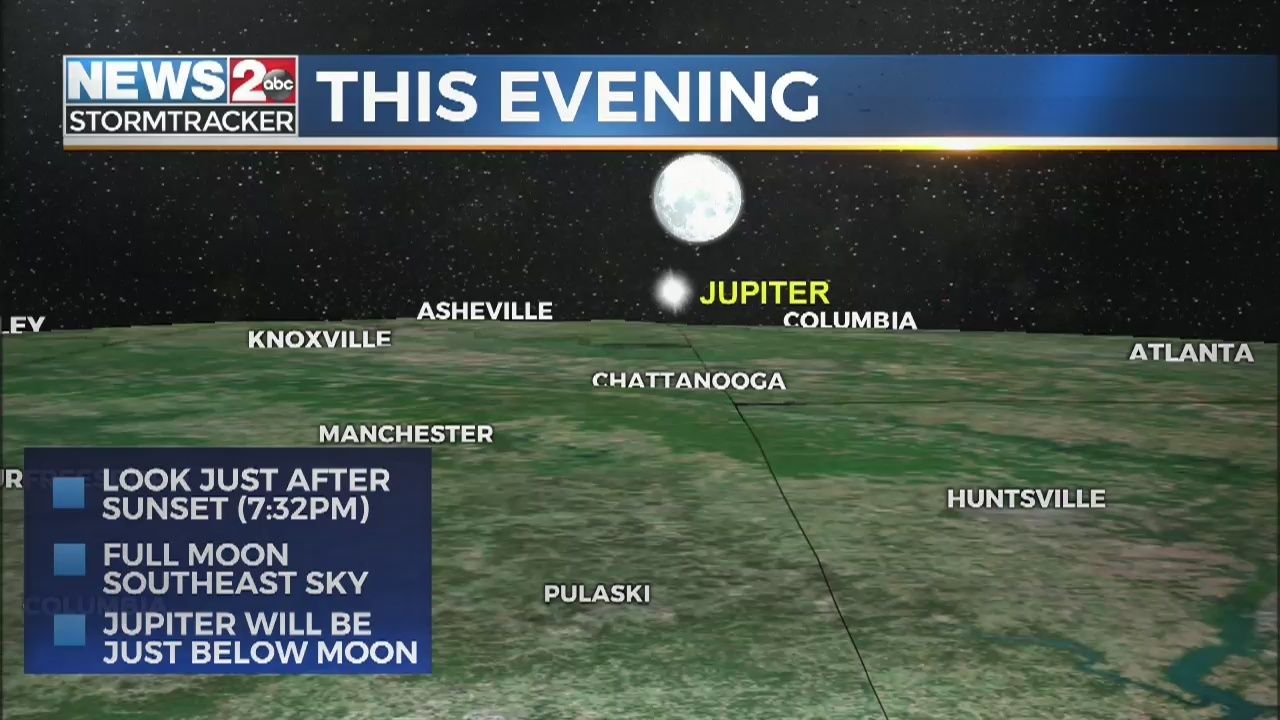
Full moon tonight & conjunction with Jupiter
Nashville, Tenn. (WKRN) — If you saw the moon Saturday night, you know how bright it was!
Technically, it will be a full moon Sunday at 7:58 p.m. There is something else that is special about Sunday’s night sky.
There is a “conjunction” of the moon with Jupiter Sunday and Monday evenings just after sunset in the southeastern sky. Sunset is at 7:32 p.m.

European Space Agency releases 1st image from Mars orbiter
BERLIN (AP) — The European Space Agency has released the first image taken by its Trace Gas Orbiter showing the ice-covered edge of a vast Martian crater.
Scientists combined three pictures of the Korolev Crater taken from an altitude of 400 kilometers (249 miles) on April 15.
Lead researcher Nicolas Thomas said Thursday the colors in the resulting image were also adjusted to best resemble those visible to the human eye.
This Is The Most Detailed Map Of The Universe
Want to see 1.7 billion stars in stunning detail? This 3D color map of our universe is the best ever. (via Seeker Universe)
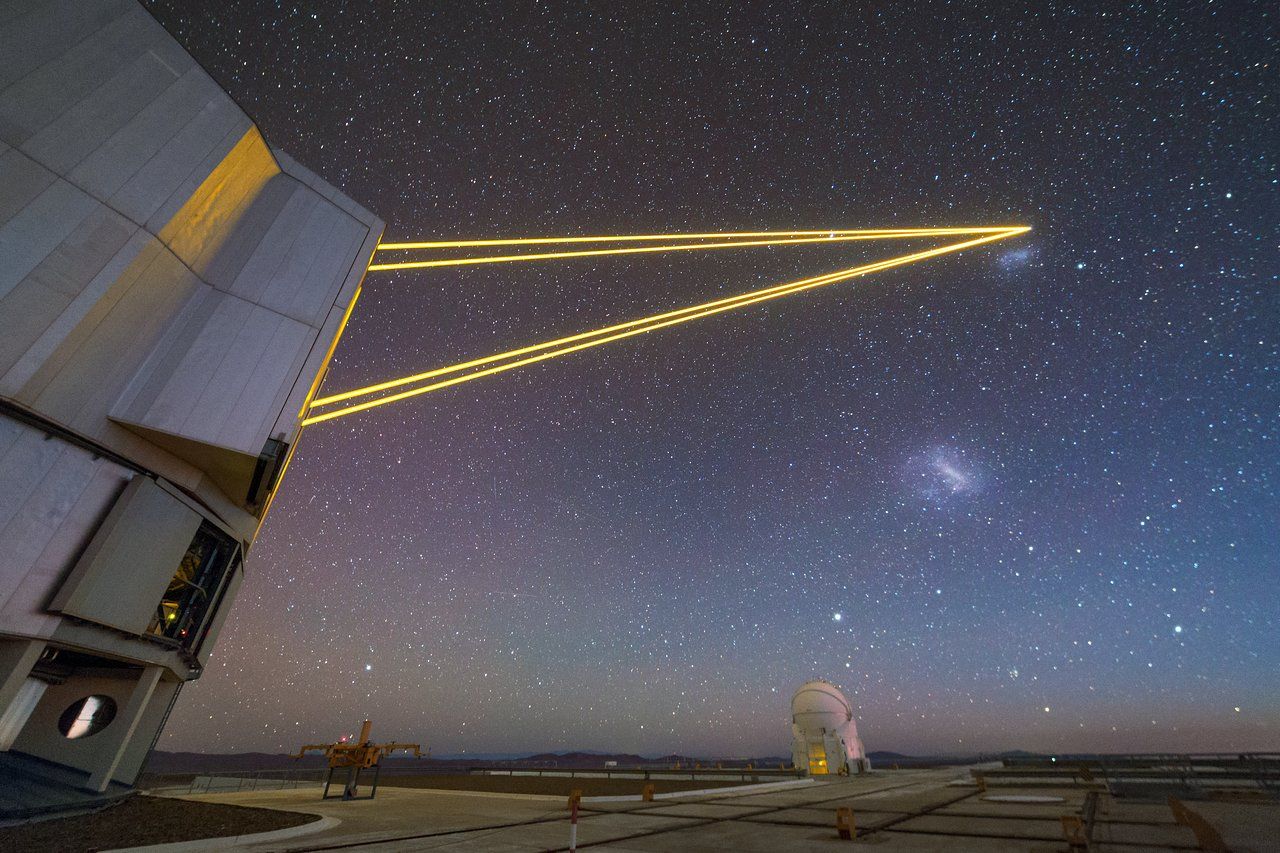
A very large guide star
Four lasers beam out from one of the Unit Telescopes of ESO’s Very Large Telescope (VLT), guiding your eyes to the Small and Large Magellanic Clouds beneath them.
The Four Laser Guide Star Facility (4LGSF) shines four 22-watt laser beams into the sky to create artificial guide stars by making sodium atoms in the upper atmosphere glow so that they look just like real stars. The artificial stars allow the adaptive optics systems to compensate for the blurring caused by the Earth’s atmosphere and so that the telescope can create sharp images.
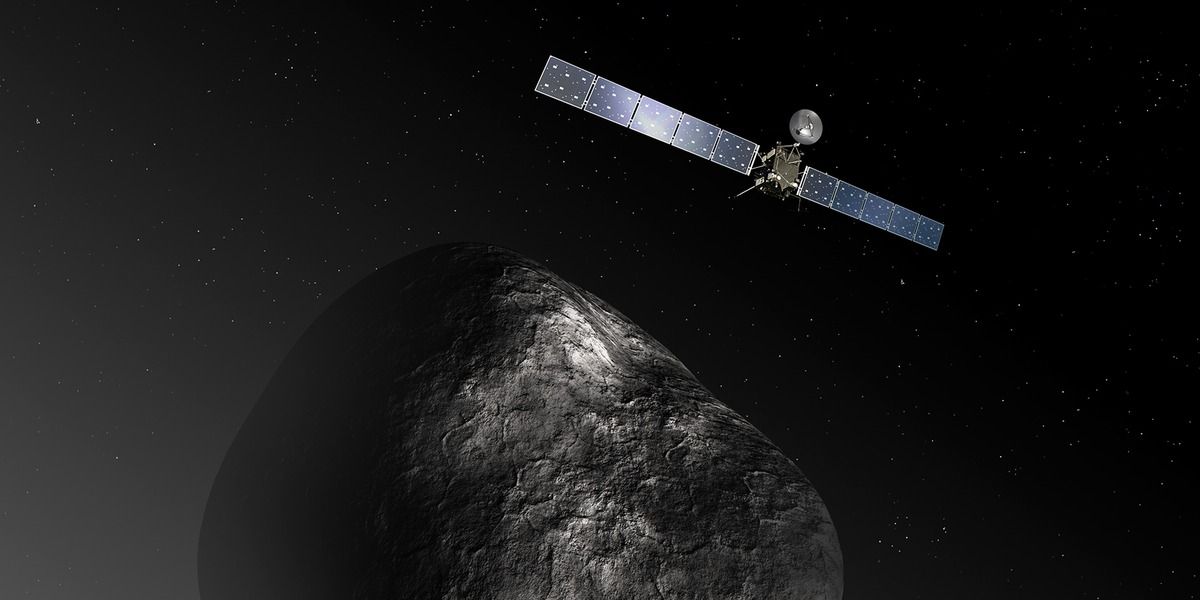
Elon Musk Shares Stunning Footage of Comet’s Surface Passing Rosetta
SpaceX CEO Elon Musk shared footage from the European Space Agency’s Rosetta satellite, which passed by Comet 67P/Churyumov–Gerasimenko in 2016. The archived footage shows spectacular sights from space, and some of the most majestic aspects of our solar system.
Asombrosa comparación del tamaño del Universo
Amazing comparison of the size of the universe.
Translated.
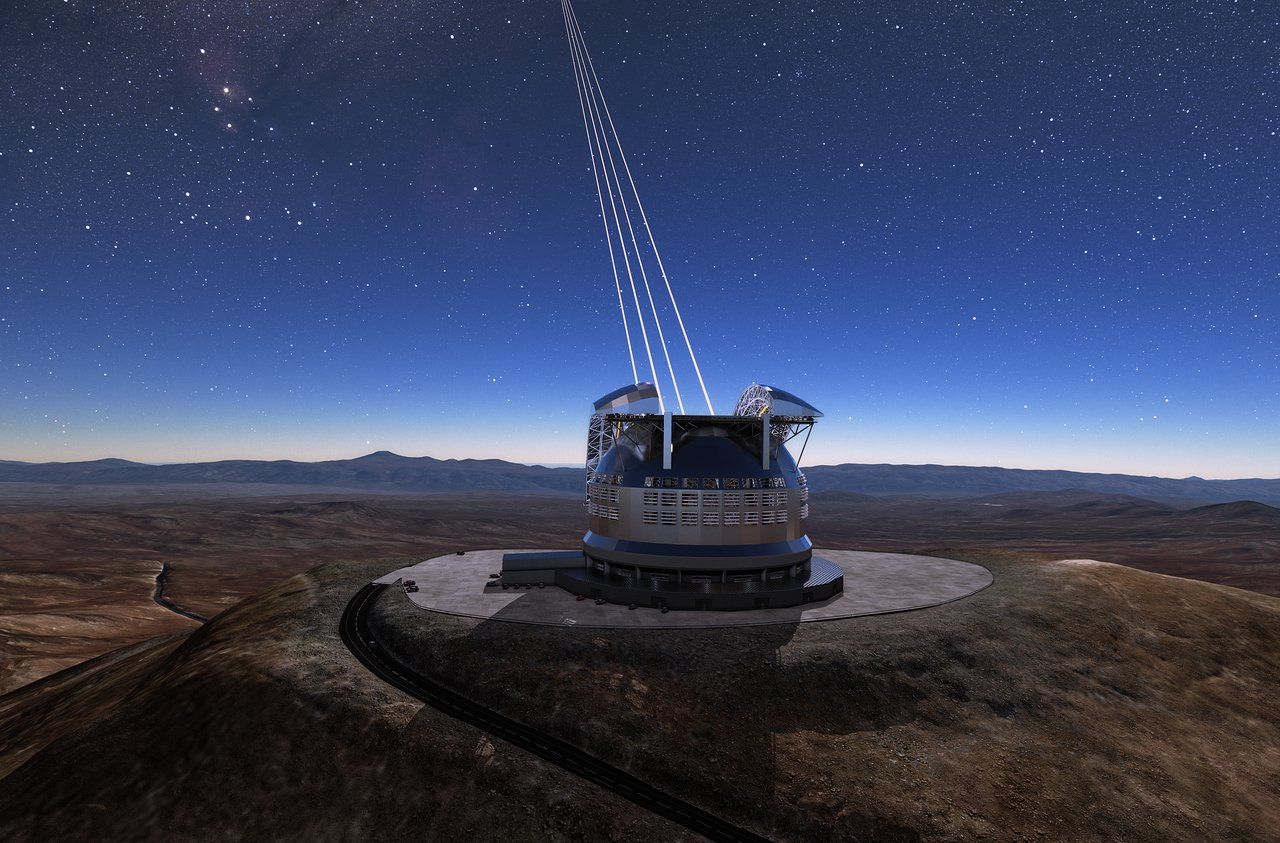
Making Laser Guide Stars Even Brighter
Scheduled for first light in the 2020s, a powerful new class of giant telescopes will study the Universe in more detail than ever before — as long as their adaptive optics systems can sharpen their view. ESO’s Laser Systems group is currently undertaking field tests with a specialised laser at the Observatorio del Roque de los Muchachos, at La Palma on the Canary Islands. One of their goals is to make laser guide stars even brighter for large and extremely large telescopes, such as ESO’s ELT and the Giant Magellan Telescope. To find out more, we spoke to Domenico Bonaccini Calia, a physicist from ESO’s Laser Systems Department with over 20 years of experience.
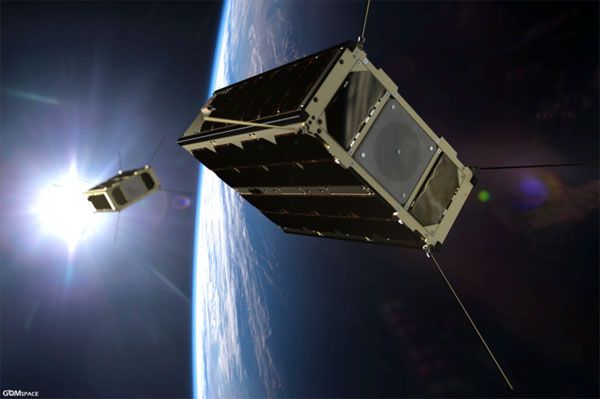
GomSpace Successfully Commissions GOMX-4 Nanosats
STOCKHOLM (GomSpace PR) — As part of a mission to demonstrate interlink communication on nanosatellite tandem formation flights and data retrieval, including surveillance of the Arctic area, the Danish nanosatellite specialist GomSpace launched two nanosatellites in February.
Twelve weeks later, GomSpace for the first time showed the possibility of live data capture from the two nanosatellites in space at a press conference held in Aalborg, Denmark. At the same time, the press conference marked the official transition to the so-called demonstration phase, following the mission’s test phase. The latter has thus been successfully completed, and the mission is now ready to carry out its scheduled tasks.
On February 2, 2018, GomSpace launched two nanosatellites mounted on the Chinese missile Long March 2D from a launch station in the Gobi Desert. The objective of the two nanosatellites, based on GomSpace’s 6U platform, is in part to monitor the Arctic area. It is an area where ice has melted significantly in recent years, meaning that the area sees more and more activity in the shape of aircraft and ships, researchers and tourists.
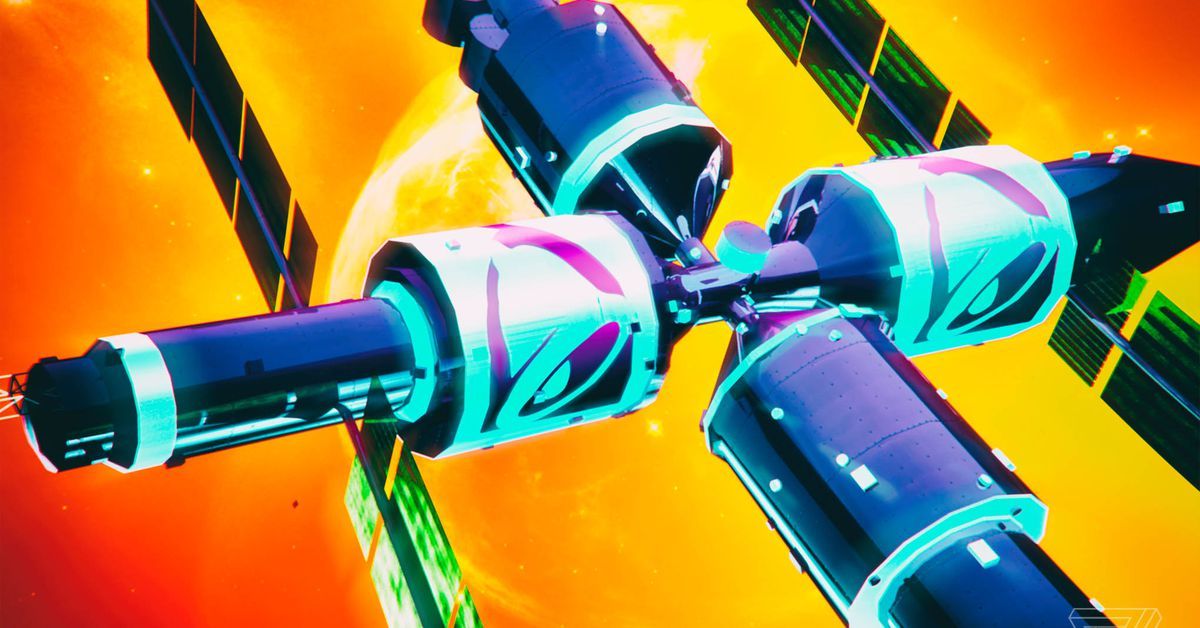
Product launch: a trip to the Taco Bell Space Station
Putting the commercial in commercial space.