Toggle light / dark theme

Scientists just found more evidence that Planet Nine exists in our Solar System

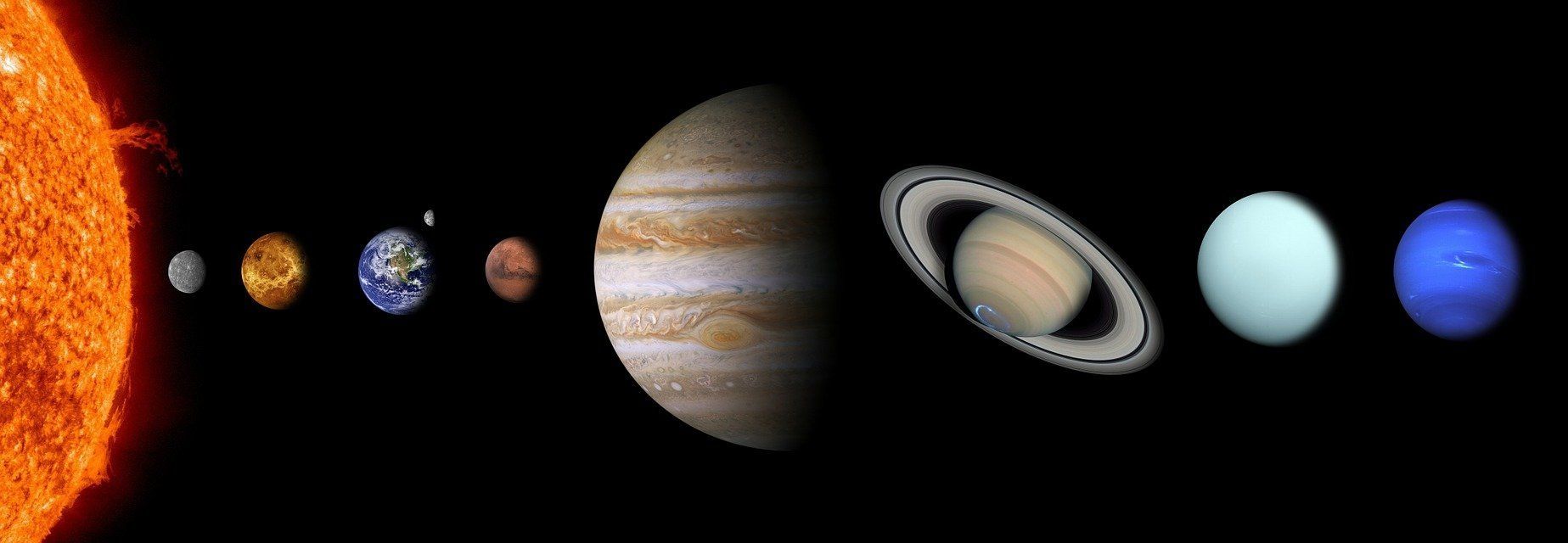
Back in January, the astronomer who led the charge to have Pluto demoted to dwarf planet status announced that he’d just found evidence that a huge, icy planet could be lurking on the edge of the Solar System, just past Neptune.

Mike Brown, a planetary astronomer at Caltech University, estimated that the hypothetical ‘Planet Nine’ appears to be circling the Sun on a super-elongated orbit that takes an incredible 10,000 to 20,000 years to complete. And now, thanks to a newly detected Kuiper Belt Object (KBO) that’s acting really strange, Brown says the case for Planet Nine just got a whole lot stronger.

“Hey Planet Nine fans, a new eccentric KBO was discovered. And it is exactly where Planet Nine says it should be,” Brown tweeted over the weekend.

CO2 Recovery System Saves Brewers Money, Puts Bubbles into Beer

NASA Technology

Building on work he and his companies did with Johnson Space Center’s In Situ Resource Utilization (ISRU) team, Robert Zubrin has developed and commercialized technologies that could prove revolutionary in their Earth applications, such as a system that could extract millions of barrels of oil from defunct oil wells around the world and another that can harness all the natural gas currently burned off as waste at many oil drilling rigs (Spinoff 2015).

But when he’s not working to change this world or colonize others, the president of Pioneer Astronautics, Pioneer Energy, and the Mars Society enjoys a good microbrew. Now, he’s applied some of that same technology to cut costs for craft breweries that produce anywhere between 3,000 and 300,000 barrels per year.

First Retailer in Orbit: Lowe’s and Made In Space Send 3D Printer to Station

Outer space is about to get its first pop-up retail shop.

Lowe’s, the home-improvement store, has teamed up with Made In Space, the company behind the world’s first zero-G 3D printer, to launch the first commercial manufacturing facility on the International Space Station.

The Additive Manufacturing Facility (AMF), as it is called, is an advanced, permanent 3D printer that will be available for use not only by NASA and its station partners, but also by researchers, educational organizations and commercial customers.

Scientists have seen the shockwave from a star’s collapsing core for the first time

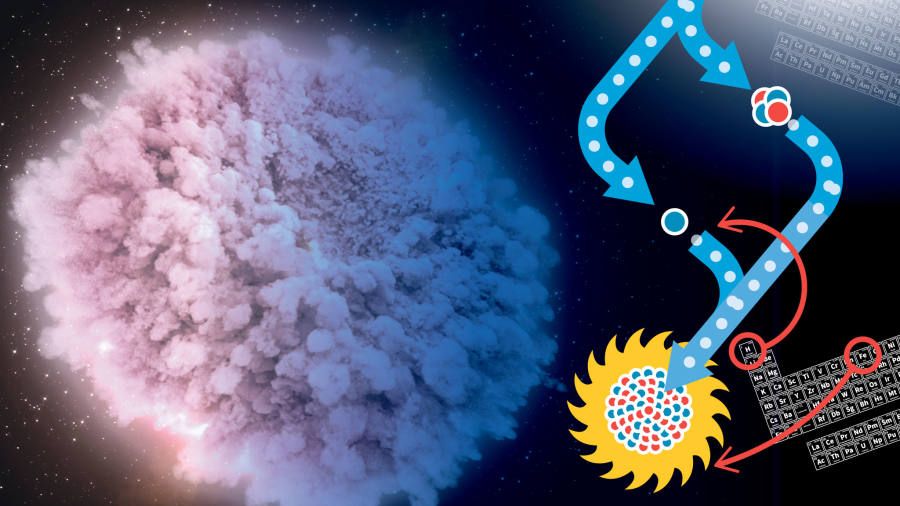
Astronomers have for the first time seen a shockwave generated by a star’s collapsing core and captured the earliest minutes of two exploding stars.

An international team of scientists found a shockwave only in the smaller supernova, a finding that will help them understand these complex explosions which create many of the elements that make up humans, the Earth and the Solar System.

“It’s like the shockwave from a nuclear bomb, only much bigger, and no one gets hurt,” says Brad Tucker from the Australian National University (ANU).

Robot-Built Landing Pad Could Pave the Way for Construction on Mars

A robot has built a prototype launch-and-landing pad in Hawaii, potentially helping pave the way for automated construction projects on the moon and Mars.

The robotic rover, named Helelani, assembled the pad on Hawaii’s Big Island late last year, putting together 100 pavers made of locally available material in an effort to prove out technology that could do similar work in space.

“The construction project is really unique. Instead of concrete for the landing pad, we’re using lunar and Mars material, which is exactly like the material we have here on the Big Island — basalt,” Rob Kelso, executive director of the Pacific International Space Center for Exploration (PISCES) in Hawaii, told Hawaiian news outlet Big Island Now. PISCES partnered with NASA on the project, which is part of a larger program called Additive Construction with Mobile Emplacement, or ACME for short. [The Boldest Mars Missions in History].

/* */