Toggle light / dark theme

Secret Air Force Space Plane Gets Darth Vader-Style Engine

By Kelsey D. Atherton - Popular Science

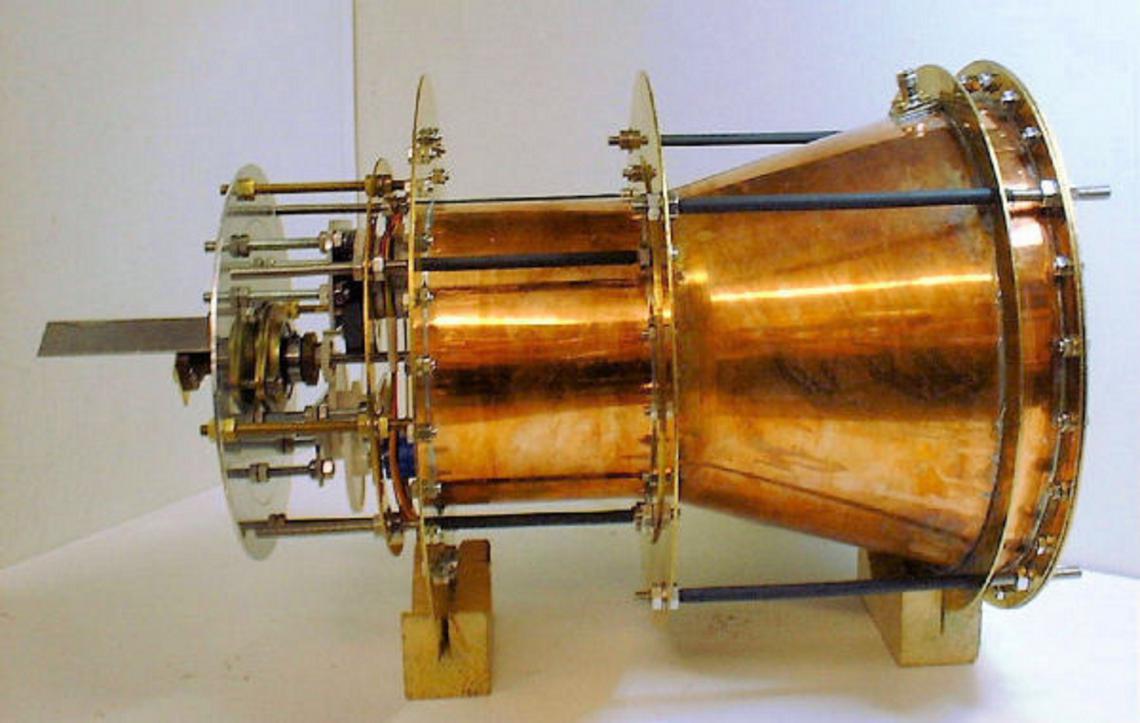
The Air Force’s secret robot space plane is going to try out a new engine. The X-37B has so far spent a total of 1367 days tooling around in Earth’s orbit, doing classified things. Yesterday, the Air Force Research Lab announced that on its fourth flight, the X-37B will come with a new fuel-efficient engine for maneuvering in space. Read more

Jeff Bezos’ Blue Origin launches its first rocket

Katie M. Palmer and Neel V. Patel — Wired

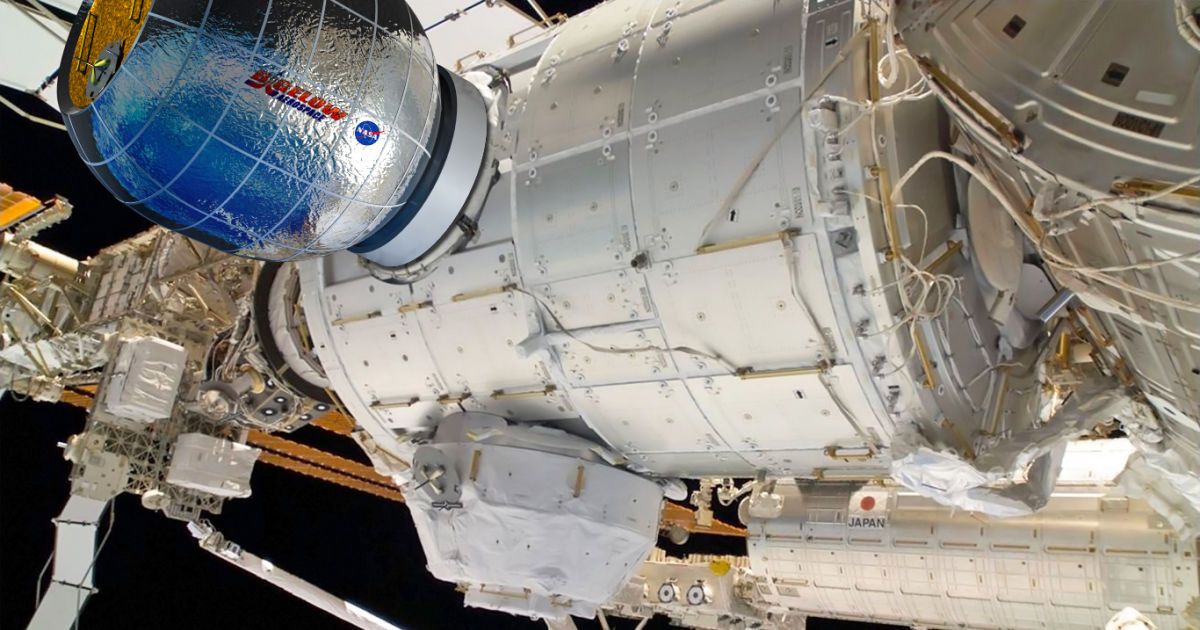
You’d be forgiven for forgetting, but Elon Musk and Richard Branson aren’t the only billionaire magnates at the helm of a spacecraft company, gunning to rule the future of privatized space flight. Amazon founder Jeff Bezos’ Blue Origin has been flying under the radar—but at long last, the company yesterday launched its flagship suborbital spacecraft from its West Texas proving grounds in a developmental test flight.

Video released by the company shows the spacecraft, called New Shepard, blasting off to an altitude of 307,000 feet before its crew capsule separates from a propulsion module. Named after the first US astronaut in space, Alan Shepard, the craft is meant to take off and land vertically, utilizing a reusable first-stage booster—the same approach SpaceX is using in its Falcon 9 rocket. Read more

To be a Space Faring Civilization

Until 2006 our Solar System consisted essentially of a star, planets, moons, and very much smaller bodies known as asteroids and comets. In 2006 the International Astronomical Union’s (IAU) Division III Working Committee addressed scientific issues and the Planet Definition Committee address cultural and social issues with regard to planet classifications. They introduced the “pluton” for bodies similar to planets but much smaller.

The IAU set down three rules to differentiate between planets and dwarf planets. First, the object must be in orbit around a star, while not being itself a star. Second, the object must be large enough (or more technically correct, massive enough) for its own gravity to pull it into a nearly spherical shape. The shape of objects with mass above 5×10²⁰ kg and diameter greater than 800 km would normally be determined by self-gravity, but all borderline cases would have to be established by observation.

Third, plutons or dwarf planets, are distinguished from classical planets in that they reside in orbits around the Sun that take longer than 200 years to complete (i.e. they orbit beyond Neptune). Plutons typically have orbits with a large orbital inclination and a large eccentricity (noncircular orbits). A planet should dominate its zone, either gravitationally, or in its size distribution. That is, the definition of “planet” should also include the requirement that it has cleared its orbital zone. Of course this third requirement automatically implies the second. Thus, one notes that planets and plutons are differentiated by the third requirement.

As we are soon to become a space faring civilization, we should rethink these cultural and social issues, differently, by subtraction or addition. By subtraction, if one breaks the other requirements? Comets and asteroids break the second requirement that the object must be large enough. Breaking the first requirement, which the IAU chose not address at the time, would have planet sized bodies not orbiting a star. From a socio-cultural perspective, one could suggest that these be named “darktons” (from dark + plutons). “Dark” because without orbiting a star, these objects would not be easily visible; “tons” because in deep space, without much matter, these bodies could not meet the third requirement of being able to dominate its zone.

Taking this socio-cultural exploration a step further, by addition, a fourth requirement is that of life sustaining planets. The scientific evidence suggest that life sustaining bodies would be planet-sized to facilitate a stable atmosphere. Thus, a life sustaining planet would be named “zoeton” from the Greek zoe for life. For example Earth is a zoeton while Mars may have been.

Again by addition, one could define, from the Latin aurum for gold, “auton”, as a heavenly body, comets, asteroids, plutons and planets, whose primary value is that of mineral or mining interest. Therefore, Jupiter is not a zoeton, but could be an auton if one extracts hydrogen or helium from this planet. Another auton is 55 Cancri e, a planet 40 light years away, for mining diamonds with an estimated worth of $26.9x1030. The Earth is both a zoeton and an auton, as it both, sustains life and has substantial mining interests, respectively. Not all plutons or planets could be autons. For example Pluto would be too cold and frozen for mining to be economical, and therefore, frozen darktons would most likely not be autons.

At that time the IAU also did not address the upper limit for a planet’s mass or size. Not restricting ourselves to planetary science would widen our socio-cultural exploration. A social consideration would be the maximum gravitational pull that a human civilization could survive, sustain and flourish in. For example, for discussion sake, a gravitational pull greater the 2x Earth’s or 2g, could be considered the upper limit. Therefore, planets with larger gravitational pulls than 2g would be named “kytons” from the Antikythera mechanical computer as only machines could survive and sustain such harsh conditions over long periods of time. Jupiter would be an example of such a kyton.

Are there any bodies between the gaseous planet Jupiter and brown dwarfs? Yes, they have been named Y-dwarfs. NASA found one with a surface temperature of only 80 degrees Fahrenheit, just below that of a human. It is possible these Y-dwarfs could be kytons and autons as a relatively safe (compared to stars) source of hydrogen.

Taking a different turn, to complete the space faring vocabulary, one can redefine transportation by their order of magnitudes. Atmospheric transportation, whether for combustion intake or winged flight can be termed, “atmosmax” from “atmosphere”, and Greek “amaxi” for car or vehicle. Any vehicle that is bound by the distances of the solar system but does not require an atmosphere would be a “solarmax”. Any vehicle that is capable of interstellar travel would be a “starship”. And one capable of intergalactic travel would be a “galactica”.

We now have socio-cultural handles to be a space faring civilization. A vocabulary that facilitates a common understanding and usage. Exploration implies discovery. Discovery means new ideas to tackle new environments, new situations and new rules. This can only lead to positive outcomes. Positive outcomes means new wealth, new investments and new jobs. Let’s go forth and add to these cultural handles.

Ben Solomon is a Committee Member of the Nuclear and Future Flight Propulsion Technical Committee, American Institute of Aeronautics & Astronautics (AIAA), and author of An Introduction to Gravity Modification and Super Physics for Super Technologies: Replacing Bohr, Heisenberg, Schrödinger & Einstein (Kindle Version)

Article: Harnessing “Black Holes”: The Large Hadron Collider – Ultimate Weapon of Mass Destruction

Harnessing “Black Holes”: The Large Hadron Collider – Ultimate Weapon of Mass Destruction

Why the LHC must be shut down

CERN-Critics: LHC restart is a sad day for science and humanity!

PRESS RELEASE “LHC-KRITIK”/”LHC-CRITIQUE” www.lhc-concern.info
CERN-Critics: LHC restart is a sad day for science and humanity!
These days, CERN has restarted the world’s biggest particle collider, the so-called “Big Bang Machine” LHC at CERN. After a hundreds of Million Euros upgrade of the world’s biggest machine, CERN plans to smash particles at double the energies of before. This poses, one would hope, certain eventually small (?), but fundamentally unpredictable catastrophic risks to planet Earth.
Basically the same group of critics, including Professors and Doctors, that had previously filed a law suit against CERN in the US and Europe, still opposes the restart for basically the same reasons. Dangers of: (“Micro”-)Black Holes, Strangelets, Vacuum Bubbles, etc., etc. are of course and maybe will forever be — still in discussion. No specific improvements concerning the safety assessment of the LHC have been conducted by CERN or anybody meanwhile. There is still no proper and really independent risk assessment (the ‘LSAG-report’ has been done by CERN itself) — and the science of risk research is still not really involved in the issue. This is a scientific and political scandal and that’s why the restart is a sad day for science and humanity.
The scientific network “LHC-Critique” speaks for a stop of any public sponsorship of gigantomanic particle colliders.
Just to demonstrate how speculative this research is: Even CERN has to admit, that the so called “Higgs Boson” was discovered — only “probably”. Very probably, mankind will never find any use for the “Higgs Boson”. Here we are not talking about the use of collider technology in medical concerns. It could be a minor, but very improbable advantage for mankind to comprehend the Big Bang one day. But it would surely be fatal – how the Atomic Age has already demonstrated — to know how to handle this or other extreme phenomena in the universe.
Within the next Billions of years, mankind would have enough problems without CERN.
Sources:
- A new paper by our partner “Heavy Ion Alert” will be published soon: http://www.heavyionalert.org/
- Background documents provided by our partner “LHC Safety Review”: http://www.lhcsafetyreview.org/

- Press release by our partner ”Risk Evaluation Forum” emphasizing on renewed particle collider risk: http://www.risk-evaluation-forum.org/newsbg.pdf

- Study concluding that “Mini Black Holes” could be created at planned LHC energies: http://phys.org/news/2015-03-mini-black-holes-lhc-parallel.html

- New paper by Dr. Thomas B. Kerwick on lacking safety argument by CERN: http://vixra.org/abs/1503.0066

- More info at the LHC-Kritik/LHC-Critique website: www.LHC-concern.info
Best regards:
LHC-Kritik/LHC-Critique

NASA Chief Says Mars One Does Not Stand A Chance Without NASA

By — Fast Company
Mars One, the Netherlands-based nonprofit that wants to send human colonists to Mars using private-industry rockets, has been widely criticized for its unrealistic goals and timeline. This week, in a U.S. House Committee hearing for NASA’s 2016 budget, NASA chief administrator Charles Bolden told the committee that “No commercial company without the support of NASA and government is going to get to Mars,” reports Engadget. Bolden’s statement, while not a direct reference to Mars One, certainly seems to support the skepticism surrounding the project. Read more

SpaceX’s Success

I read all the news about SpaceX’s Falcon 9 latest “failure” to land on an autonomous spaceport drone ship aka barge. I view these as trials to success. Here’s why.

1. Grasshopper Successes: The two videos below show that the early landing trials aka Grasshopper from several heights between 250m and 1,000m.

The lessons here are:

a) Pinpoint landing of a 1st stage rocket is technologically feasible.

b) This 1st stage rocket has to attain zero vertical velocity at a minimum 250m above the barge.

Video of 250m test

Video of 1,000m test

2. Falcon 9 1st stage crash landing — 1st attempt: SpaceX tells us that the failure was due to a hard landing (see video below) but at 0:03 minutes into the video one can see that the 1st stage has substantially tilted before it hit the deck i.e. the 1st stage did not tilt because it hit the deck.

The lessons here:

a) A wobble — a dynamic instability — occurs before landing.

b) The guidance systems are unable to cope with new wobble.

Video of 1st attempt

3. Falcon 9 1st stage crash landing — 2nd attempt: The video of the second attempt (below) confirms that indeed a wobble has been introduced before the stabilization fins are deployed. Further, this deployment exacerbates the wobble, and the guidance systems is unable to handle this exacerbated wobble.

The lessons here:

a) 1st stage vertical velocity needs to be zero by at least 250m above deck.

b) The stabilization fins need to be redesigned to alleviate exacerbation.

c) Like the Space Ship One’s shuttlecock approach, the 1st stage upper fins need to be deployed before the lower fins are.

d) Upgrade the landing guidance system to account for more severe wobbles.

If at a minimum, SpaceX achieves zero velocity at 250m before deployment of landing gear it will be successful. The other recommendations are good to have.

I expect SpaceX to be successful by their 3rd try.

Here’s why humans are so obsessed with colonizing Mars

Vivian Giang | Quartz


“‘Mars has been unanimously agreed upon by the world’s space agencies as the ‘horizon goal’ for human spaceflight,’ said Do, part of the MIT research group responsible for a widely read report debunking Mars One’s mission as unfeasible. ‘It is widely agreed that Mars is the most promising destination for near term colonization.’” Read more

You Can Now Travel To Mars In 39 Days

By — Clapway

Travel To Mars

The VASIMR Spaceship Engine or Variable Specific Impulse Magnetoplasma Rocket is the first of its kind that can take people to Mars in just 39 days, compared to 270 days that it would take with a regular spaceship. It is made by Ad Astra Rocket Company and, if all goes well, should definitely shake up the space travel industry.

VASIMR Spaceship Engine Technology

The VASIMR Spaceship Engine as seen at Ad Astra Rocket uses unique technology in order to reach the high speeds that are necessary to take people to Mars in a very short period of time. It uses a plasma-based propulsion system along with an electric power source in order to fuel said plasma. By fueling the plasma in the right direction, it will propel the engine in that direction as it’s being ejected from the ship.

This mission is part of Ad Astra Rocket Company’s idea to help with the upgrading of current spaceship technology so that deep space missions in the future would not take nearly as long if there were to be humans sent out to different planets. Read more

What If We Had Another Earth?

A realistic and desirable human destination would produce a different space program than what we have today.

“We reach for new heights and reveal the unknown for the benefit of humankind.” This is NASA’s Vision Statement. This is NASA’s reason for being, its purpose. This is a vision statement for science and knowledge. This vision statement was crafted in a solar system that has only one planet that is environmentally friendly to human life.

Thanks to the ongoing search for exoplanets, we’ve identified several planets in our galaxy that are Earth sized and in their star’s habitable zone. Based on statistics, potentially billions more are waiting to be found. We are just now developing the technology to detect them. But we’re nowhere near having the technology needed to get to visit them. They are simply too far away.

Now here is where I’d like to pose a what if question: What if there was another habitable planet just like Earth, right here in our own solar system? What would Earth’s space programs look like, if anyone with a good telescope could look up and see another world with oceans, and continents, and clouds, and green forests? I think that it is safe to say that space programs in this imaginary solar system would be vastly different than ours today. This is conjecture, but it seems likely that the vision statement above, would be more in line with making that new world available for humanity.

Of course the key difference between our present reality and this imaginary scenario is the existence of an obviously desirable destination relatively close by to Earth. This lack of obviously desirable destinations has shaped space programs into the form we see them today. The science oriented form described in the current NASA vision statement is a good example.

It has been said that leadership begins with a vision. To be compelling, a vision describes a desirable end state to be obtained. In the case of the fictional scenario with another Earth like planet in the solar system, that leadership vision might include making it possible for people to move freely to this new world.

As an analogy, in the mid 1800’s, the transcontinental vision (paraphrased) was to secure the U.S. position on the Pacific through a speedy and direct means of travel from one coast to the other. That vision did not include establishing and building the city of San Francisco! The prior existence of San Francisco, enabled the vision of a transcontinental railroad.

Since our situation lacks a visible desirable destination, a bit more effort is required in the vision department. We know that the solar system contains all the resources we need in order to construct vast places for people to live. Immense structures with forests, streams and farmland as advocated by Dr. Gerard O’Neill back in the 1970’s are all possible. We can achieve the same vision of having another habitable planet in this solar system, we just have to add the intermediate step of a vision to develop the manufacturing capability to construct our own desirable destinations!

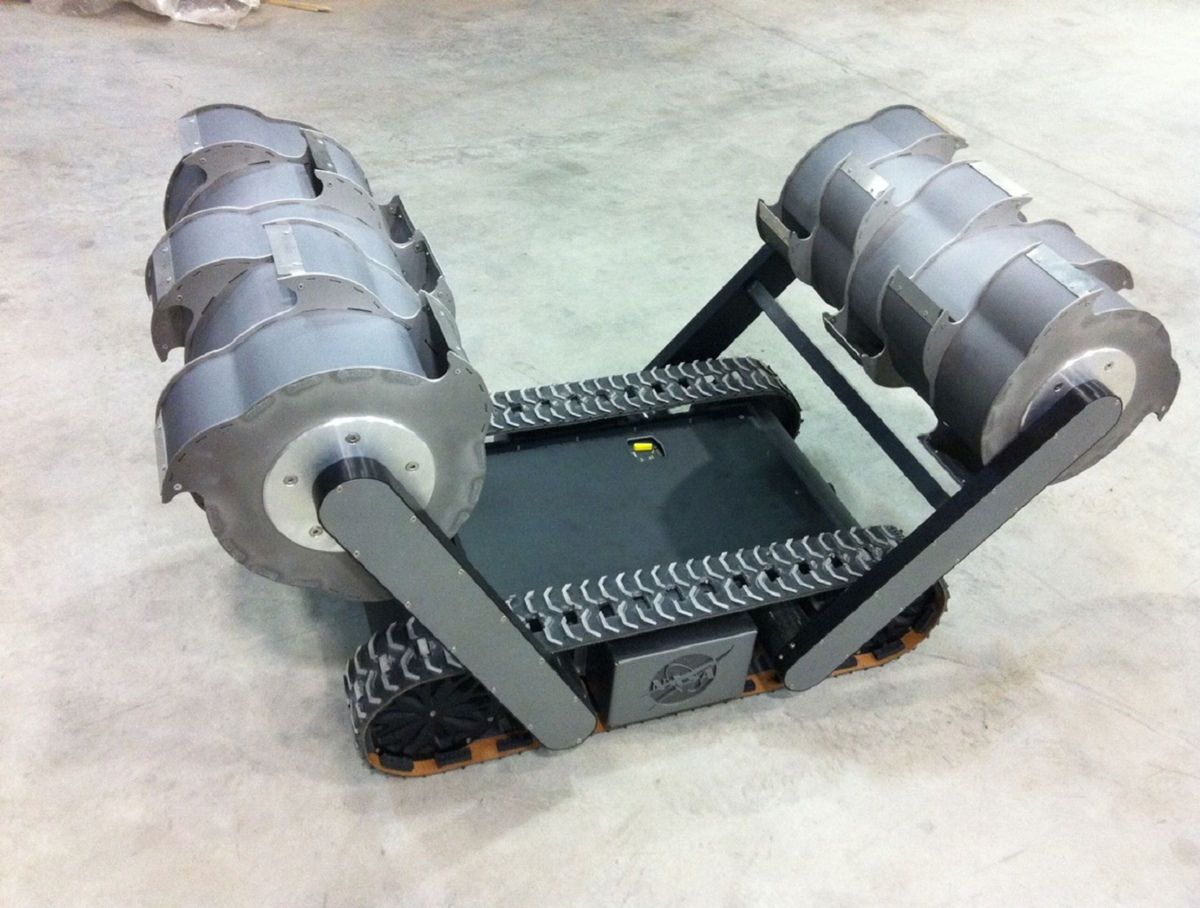
Using the transcontinental vision as a guide, it is premature for the space vision to focus on sending millions of people out into space, since apart from the International Space Station, there are no destinations yet! No, to get to the transcontinental vision for space, we first need a vision of building a San Francisco in space! But in order for that vision to be considered, it must be realistic. The focus would be on developing the tools and robots necessary to rapidly and economically build up in-space manufacturing industries that can begin the construction of the first villages that will grow into the human cities.

Even though we do not have another Earth in our solar system, it is possible to envision the creation of other Earth equivalents. This leap in leadership would produce a vision unlike what we have now. This new vision, focused on manufacturing and development utilizing the resources of our solar system, would empower capabilities for even greater accomplishments in the future.

/* */