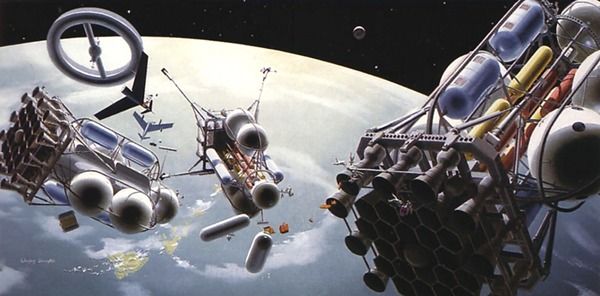
“Vulcan Inc. today announced a new exhibition of nearly 60 objects related to science fiction and the history of space exploration – Imagined Futures: Science Fiction, Art, and Artifacts from the Paul G. Allen Family Collection – that will be on view at its 3,000-square-foot flexible concept space, Pivot Art + Culture beginning April 7, 2016. The exhibition, curated by Ben Heywood, runs through July 10, 2016.”
If the human race is to survive in the long-run, we will probably have to colonise other planets. Whether we make the Earth uninhabitable ourselves or it simply reaches the natural end of its ability to support life, one day we will have to look for a new home.
Hollywood films such as The Martian and Interstellar give us a glimpse of what may be in store for us. Mars is certainly the most habitable destination in our solar system, but there are thousands of exoplanets orbiting other stars that could be a replacement for our Earth. So what technology will we need to make this possible?
We effectively already have one space colony, the International Space Station (ISS). But it is only 350km away from Earth and relies on a continuous resupply of resources for its crew of six. Much of the technology developed for the ISS, such as radiation shielding, water and air recycling, solar power collection, is certainly transferable to future space settlements. However, a permanent space colony on the surface of another planet or moon adds a new set of challenges.
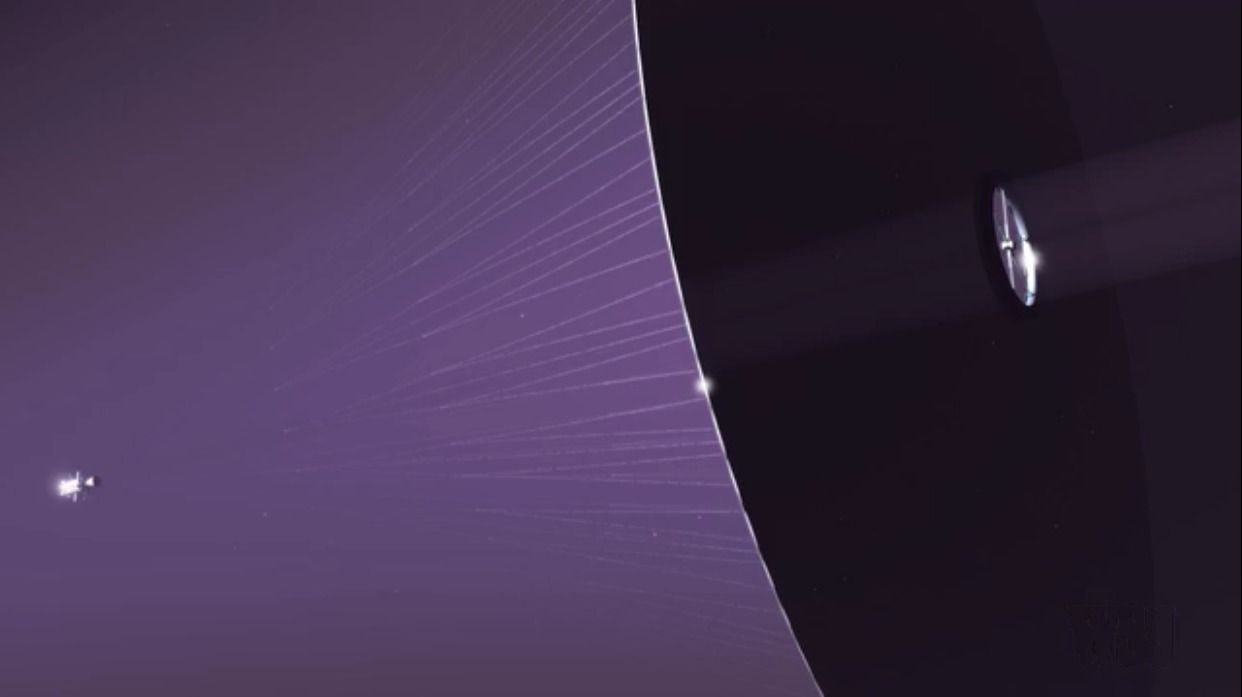
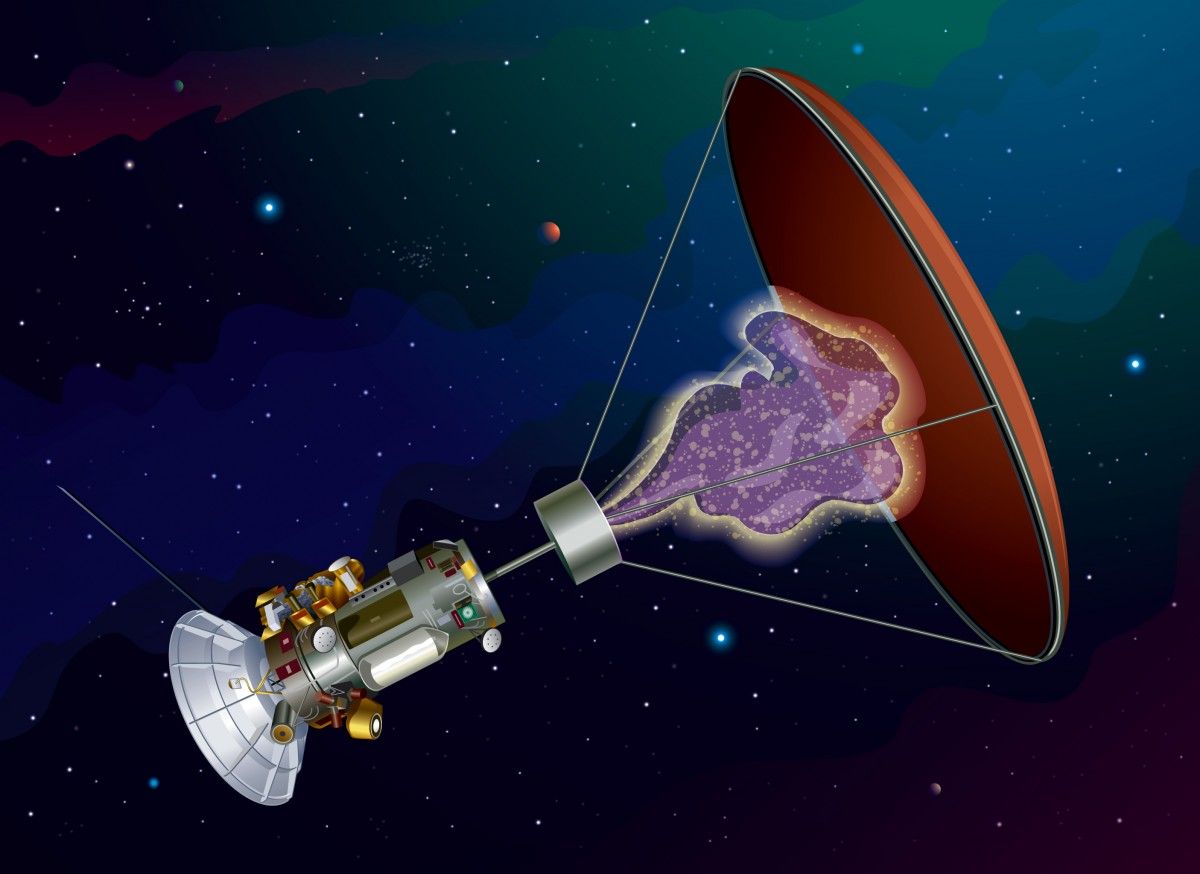
Recent advances in lasers suggest that we may see rockets propelled by light earlier than we had imagined. NASA scientist Philip Lubin and his team are working on a system that would use Earth-based lasers to allow space travel to far-away places in just a fraction of the time needed with current technology.
Using earth based lasers to push along a spacecraft instead of on board hydrocarbon-based fuel could dramatically reduce travel time to Mars, within our lifetime. Currently, it takes five months for a space craft to reach Mars. But, with photonic propulsion, it is likely that small crafts filled with experiments will reach Mars in just 3 days. Large spaceships with astronauts and life support systems will take only one month, which is about 20% of the duration of a current trip.
What’s next? Lubin believes that we may be able to send small crafts with scientific experiments to exoplanets as fast as 5% light speed in, perhaps, 30 years. Eventually, he claims that the technology will carry humans at speeds up to 20% light speed.
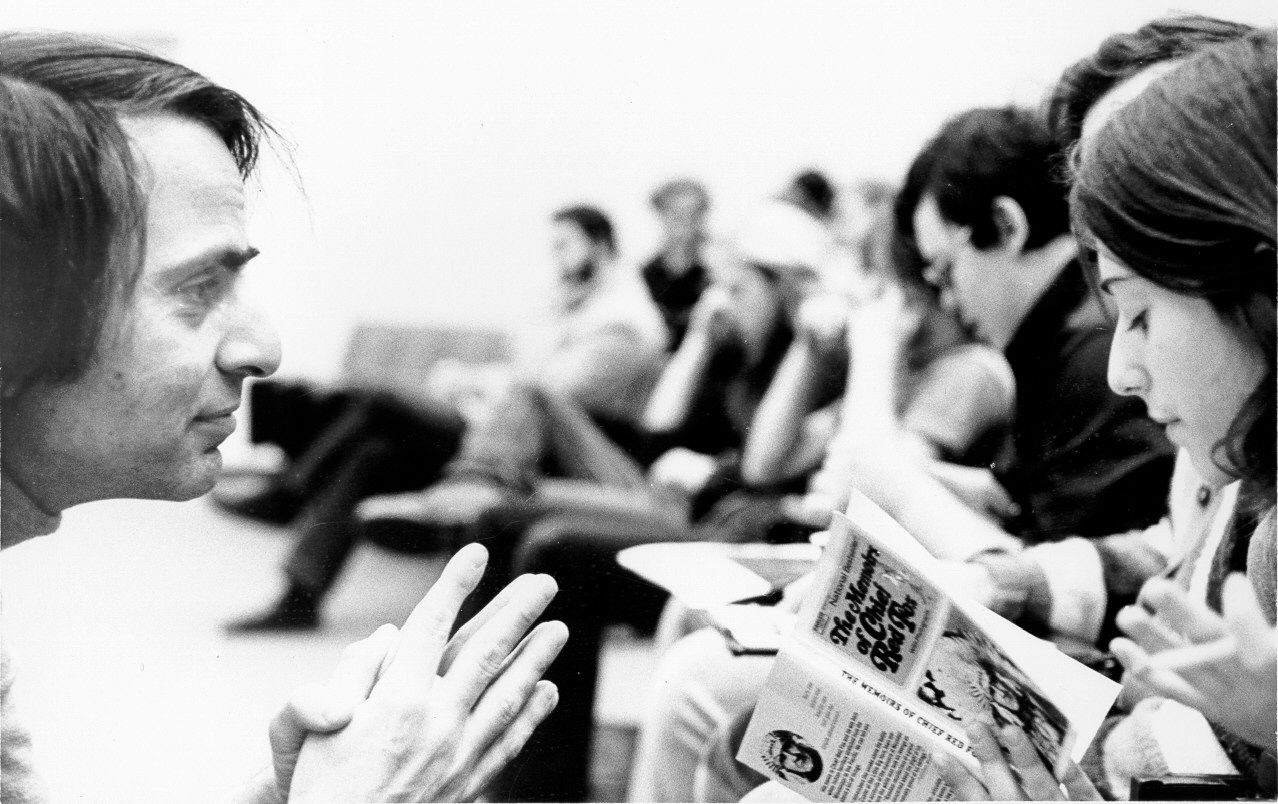
I am not an astronomer or astrophysicist. I have never worked for NASA or JPL. But, during my graduate year at Cornell University, I was short on cross-discipline credits, and so I signed up for Carl Sagan’s popular introductory course, Astronomy 101. I was also an amateur photographer, occasionally freelancing for local media—and so the photos shown here, are my own.
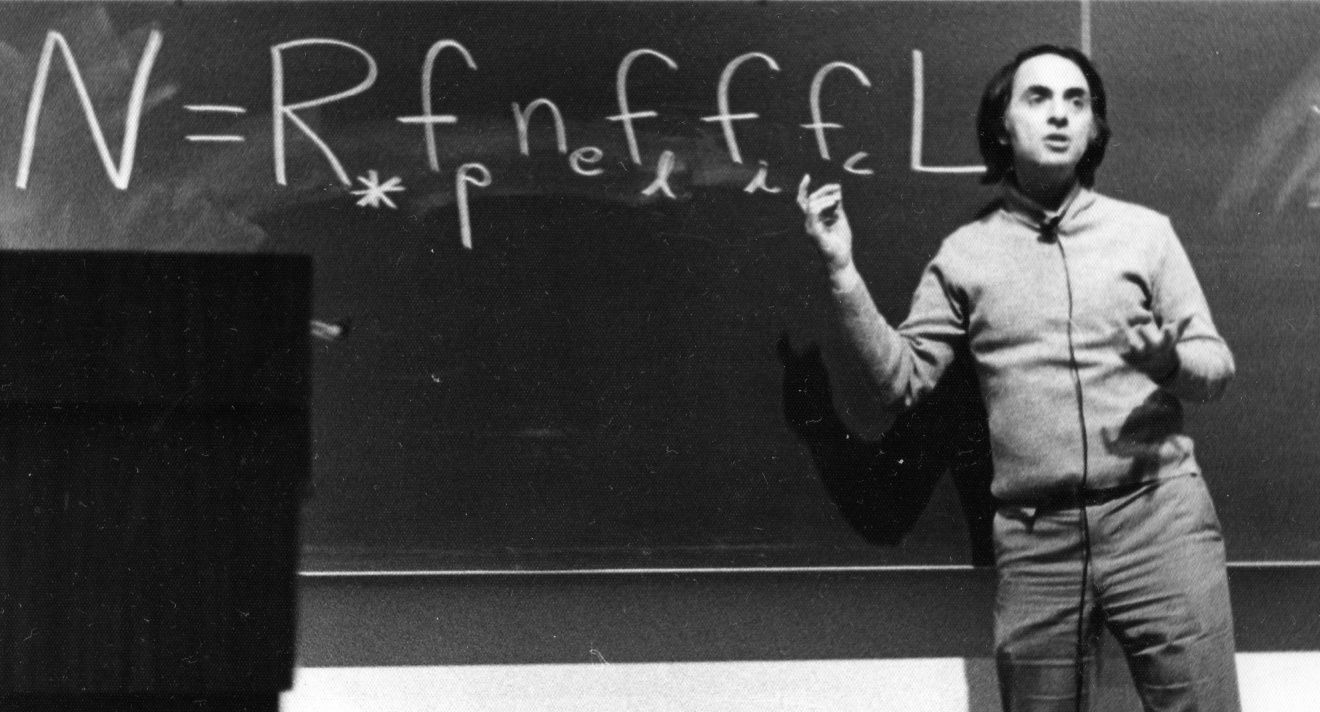
Carl Sagan is aware of my camera as he talks to a student in the front row of Uris Hall
By the end of the 70’s, Sagan’s star was high and continuing to rise. He was a staple on the Tonight Show with Johnny Carson, producer and host of the PBS TV series, Cosmos, and he had just written Dragons of Eden, which won him a Pulitzer Prize. He also wrote Contact, which became a blockbuster movie, starring Jodie Foster.
Sagan died in 1996, after three bone marrow transplants to compensate for an inability to produce blood cells. Two years earlier, Sagan wrote a book and narrated a film based on a photo taken from space.
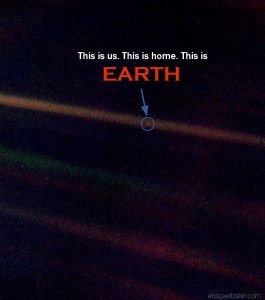
Pale Blue Dot is a photograph of Earth taken in February 1990, by Voyager 1 from a distance of 3.7 billion miles (40 times the distance between earth and the sun). At Sagan’s request (and with some risk to the ongoing scientific mission), the space probe was turned around to take this last photo of Earth. In the photo, Earth is less than a pixel in size. Just a tiny dot against the vastness of space, it appears to be suspended in bands of sunlight scattered by the camera lens.
Four years later, Sagan wrote a book and narrated the short film, Pale Blue Dot, based on the landmark 1990 photograph. He makes a compelling case for reconciliation between humans and a commitment to care for our shared environment. In just 3½ minutes, he unites humanity, appealing to everyone with a conscience. [Full text]
—Which brings us to a question: How are we doing? Are we getting along now? Are we treating the planet as a shared life-support system, rather than a dumping ground?
Sagan points out that hate and misunderstanding plays into so many human interactions. He points to a deteriorating environment and that that we cannot escape war and pollution by resettling to another place. Most importantly, he forces us to face the the fragility of our habitat and the need to protect it. He drives home this point by not just explaining it, but by framing it as an urgent choice between life and death.
It has been 22 years since Sagan wrote and produced Pale Blue Dot. What has changed? Change is all around us, and yet not much has changed. To sort it all out, let’s break it down into technology, our survivable timeline and sociology.
Technology & Cosmology
Since Carl Sagan’s death, we have witnessed the first direct evidence of exoplanets. Several hundred have been observed and we will likely find many hundreds more each year. Some of these are in the habitable zone of their star.
Sagan died about 25 years after the last Apollo Moon mission. It is now 45 years since those missions, and humans are still locked into low earth orbits. We have sent a few probes to the distant planets and beyond, but the political will and resources to conduct planetary exploration—or even return to the moon—is weak.
A few private companies are launching humans, satellites or cargo into Space (Space-X, Virgin Galactic, Blue Origin). Dozens of other private ventures have not yet achieved manned flight or an orbital rendezvous, but it seems likey that some projects will succeed. Lift off is becoming commonplace—but almost all of these launches are focused on TV, communications, monitoring our environment or monitoring our enemies. The space program no longer produces the regular breakthroughs and commercial spin-offs that it did throughout the 70s and 80s. continue below photo…
Sagan explains the Drake Equation. (Click for 2 photos with solution)
Survivable Timeline
Like most scientists, Carl Sagan was deeply concerned about pollution, nuclear proliferation, loss of bio-diversity, war and global warming. In fact, the debate over global warming was just beginning to heat up in Sagan’s last years. Today, there is no debate over global warming. All credible scientists understand that the earth is choking, and that our activities are contributing to our own demise.
In most regions, air pollution is slightly less of a concern than it was in the 1970s, but ground, water pollution, and radiation contamination are all more evident.
Most alarmingly, we humans are even more pitched in posturing and in killing our neighbors than ever before. We fight over land, religion, water, oil, and human rights. We especially fight in the name of our Gods, in the name of national exceptionalism and in the name of protecting our right to consume disposable luxury gadgets, transient thrills and family vacations—as if we were a prisoner consuming his last meal.
We have an insatiable appetite for raw materials, open spaces, cars and luxury. Yet no one seems to be doing the math. As the vast populations of China and India finally come to the dinner table (2 billion humans), it is clear that they have the wealth to match our gluttony. From where will the land, water, and materials come? And what happens to the environment then? In Beijing, the sky is never blue. Every TV screen is covered in a thick film of dust. On many days, commuters wear filter masks. There is no grass in the parks and no birds in the sky. Something is very wrong. With apologies for a mixed metaphor, the canary is already dead while the jester continues to dance.
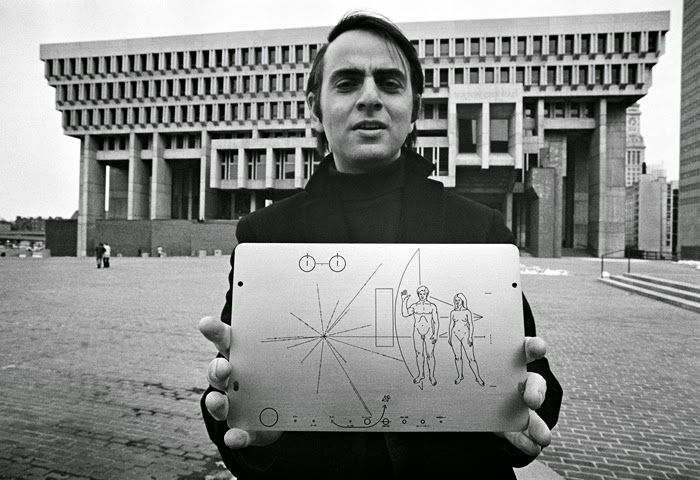
This plaque is bolted onto the first man-made object to leave our solar system
Sociology: Man’s Inhumanity to Man
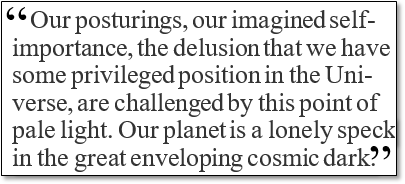
Sagan observed that our leaders are passionate about conquering each other, spilling blood over frequent misunderstandings, giving in to imagined self-importance. None of this has changed.
Regarding our ability to get off of this planet, Sagan said “Visit? Perhaps…Settle? Not yet”. We still do not possess the technology or resources to settle even a single astronaut away from our fragile home planet. We won’t have both the technology and the will to do so for at least 75 years—and then, only a tiny community of scientists or explorers. It falls centuries shy of resettling a population.
Hate, zealotry, intolerance and religious fervor are more toxic than ever before
Today, the earth has a bigger population. Hate and misunderstanding has spread like cancer. Weapons of mass destruction have escaped the restraint of governments, oversight and safety mechanisms. They are now in the hands of intolerant and radical organizations that believe in martyrdom and that lack any desire to coexist within a global community.
Nations, organizations and some individuals possess the technology to kill a million people or more. Without even targeting civilians, a dozen nations can lay waste to the global environment in weeks.
Is it time to revisit Pale Blue Dot? Is it still relevant? The urgency of teaching and heeding Carl Sagan’s words has never been more urgent than now.
Postscript:
Carl Sagan probably didn’t like me. When I was his student, I was a jerk.
Sagan was already a TV personality and author when I took Astronomy 101 in 1977. Occasionally, he discussed material from the pages of his just-released Dragons of Eden, or slipped a photo of himself with Johnny Carson into a slide presentation. He clearly was a star attraction during parent’s weekend before classes started.
Indeed, he often used the phrase “Billions and Billions” even before it led as his trademark. Although he seemed mildly mused that people noticed his annunciation and emphasis, he explained that he thought it was a less distracting alternate to the phrase “That’s billions with a ‘B’ ” when generating appreciation for the vast scope of creation.
At this time that Sagan was my professor, he appeared on the cover of Newsweek magazine. Like a lunkhead, I wrote to Newsweek, claiming that his adulation as a scientist was misplaced and that he was nothing more than an PR huckster for NASA and JPL in the vein of Isaac Asimov. I acknowledged his a gift for popularizing science, but argued that he didn’t have the brains to contribute in any tangible way.
I was wrong, of course. Even in the role of education champion, I failed to appreciate the very powerful and important role that he played in influencing an entire generation of scientists, including, Neil DeGrasse Tyson. Although Newsweek did not publish my letter to the editor, someone on staff sent it to Professor Sagan! When the teaching assistant, a close friend of Sagan, showed me my letter, I was mortified.
Incidentally, I always sat in the front row of the big Uris lecture hall. As a student photographer, I took many photos, which show up on various university web sites from time to time. In the top photo, Professor Sagan is crouching down and clasping hands as he addresses the student seated next to me.
Antimatter propulsion is a lot closer than most aerospace engineers would ever imagine and these guys looking for cash for the next phase of their own research deserve kudos for trying to take this to the next level.
Dreams of antimatter space propulsion are closer to reality than most rocket scientists could ever imagine, says former Fermilab physicist Gerald Jackson. In fact, if money were no object, he says an antimatter-driven spacecraft prototype could be tested within a decade.
Satellites and spacecraft are generally complex to build on the ground, expensive to launch and obsolete in a decade or less.
These objects end up floating in orbit around the planet contributing to the pollution surrounding the Earth. But what if there was an alternative?
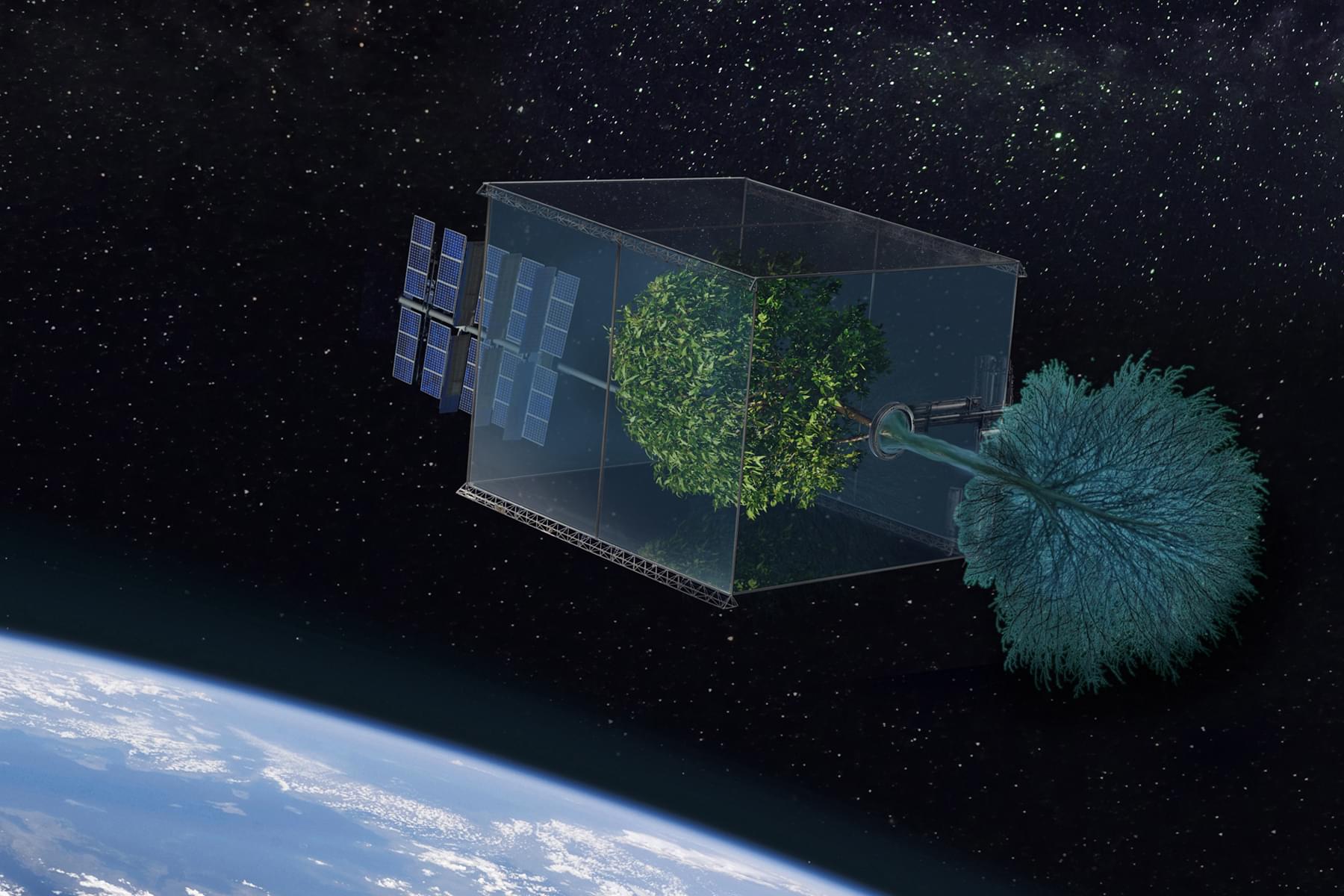
That’s the question David Barnhart, director of USC’s Space Engineering Research Center and lead for the Space Systems and Technology group for the USC Information Sciences Institute, is contemplating. What if we could just “grow” spacecraft, repurpose a hybrid of inorganic and organic materials and even allow food to grow in space?
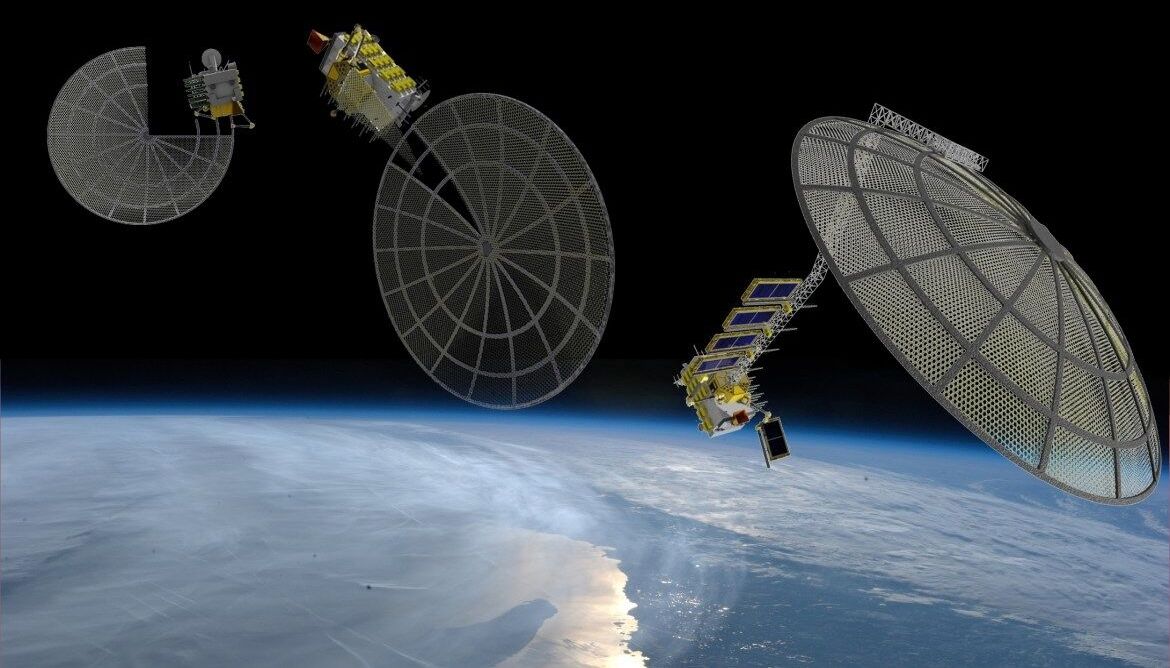
MOFFETT FIELD, California — Within five years, companies could begin in-orbit manufacturing and assembly of communications satellite reflectors or other large structures, according to Made in Space, the Silicon Valley startup that sent the first 3D printer to the International Space Station in 2014.
As Made in Space prepares to send a second 3D printer into orbit, the company is beginning work with Northrop Grumman and Oceaneering Space Systems on Archinaut, an ambitious effort to build a 3D printer equipped with a robotic arm that the team plans to install in an external space station pod, under a two-year, $20 million NASA contract. The project will culminate in 2018 with an on-orbit demonstration of Archinaut’s ability to additively manufacture and assemble a large, complex structure, said Andrew Rush, Made in Space president.
NASA’s selected the Archinaut project, officially known as Versatile In-Space Robotic Precision Manufacturing and Assembly System, as part of its Tipping Points campaign, which funds demonstrations of space-related technologies on the verge of offering significant payoffs for government and commercial applications. Archinaut was one of three projects NASA selected in November that focus on robotic manufacturing and assembly of spacecraft and structures in orbit.