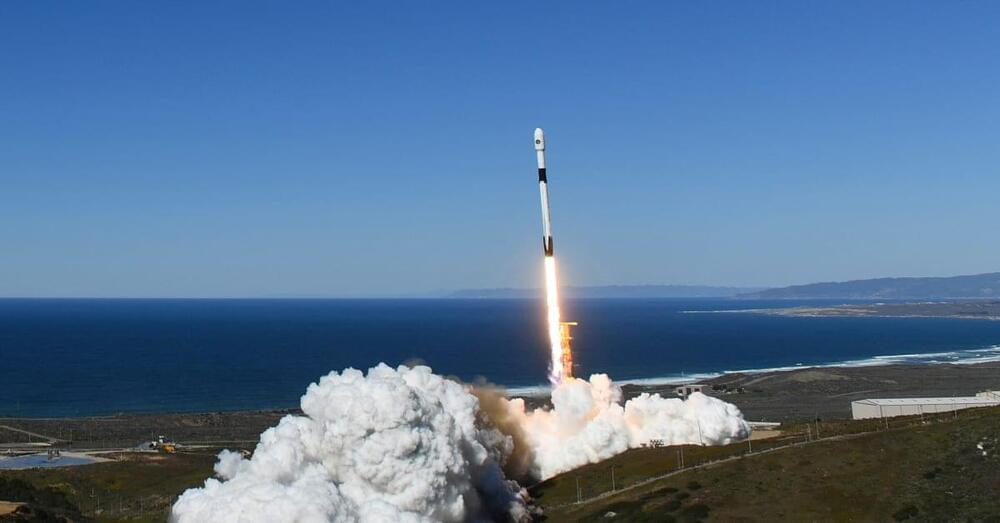
SpaceX just loaded propellant into two of its Starship Super Heavy booster prototypes as part of a prelaunch test campaign.
A British aerospace startup is working on a fusion rocket it says will slash the amount of time it takes astronauts to travel to Mars and beyond — allowing humans to explore places that are currently far out of reach.
The challenge: Long-term exposure to microgravity and cosmic radiation can cause serious health issues for astronauts. That means NASA needs to keep its future Mars missions short enough that astronauts come home healthy — less than 4 years should work.
Using our current rocket propulsion technology, though, it’s going to take seven months just to get astronauts to Mars. Factor in the amount of time to get back to Earth, and nearly a third of a Mars astronaut’s mission is just going to be dedicated to the commute.
Elon Musk recently stated SpaceX made ‘well over a thousand changes’ to Starship since its debut flight.
SpaceX continues to prepare for the second orbital launch attempt of Starship despite concerns over a potential delay caused by the ongoing environmental lawsuit against the Federal Aviation Authority (FAA).
Elon Musk’s private space company, likely eager to show that preparations continue uninterrupted, has shared a number of images on Twitter of Booster 9, the Super Heavy prototype that will be used for the massive rocket’s second test flight.
SpaceX has shared a stunning shot (above) of its next-generation Super Heavy booster on the launchpad.
The image shows the most powerful rocket in the world under a starlit sky at SpaceX’s Starbase site in Boca Chica, Texas. At the bottom of the booster, we can see some of the Super Heavy’s 33 Raptor engines that will blast the rocket to orbit.
Go to https://brilliant.org/IsaacArthur/ to get a 30-day free trial + the first 200 people will get 20% off their annual subscription.
After over half a century, it is time to return to the Moon, and use its vast resources as a bridge to countless new worlds.
Visit our Website: http://www.isaacarthur.net.
Join Nebula: https://go.nebula.tv/isaacarthur.
Support us on Patreon: https://www.patreon.com/IsaacArthur.
Support us on Subscribestar: https://www.subscribestar.com/isaac-arthur.
Facebook Group: https://www.facebook.com/groups/1583992725237264/
Reddit: https://www.reddit.com/r/IsaacArthur/
Twitter: https://twitter.com/Isaac_A_Arthur on Twitter and RT our future content.
SFIA Discord Server: https://discord.gg/53GAShE
Listen or Download the audio of this episode from Soundcloud: Episode’s Audio-only version: https://soundcloud.com/isaac-arthur-148927746/lunar-mining-processing-refining.
Episode’s Narration-only version: https://soundcloud.com/isaac-arthur-148927746/lunar-mining-p…ation-only.
Credits:
In Situ Resource Utilization: Lunar Mining, Processing & Refining.
Episode 402, July 6, 2023
Produced, written & narrated by: isaac arthur.
Editors:
The expectation for rapid growth helps explain the fervor of some investors for SpaceX shares, which have defied recently depressed private tech valuations. The company, valued in a secondary share sale at about $150 billion this month, has also assured investors it expects to pull in about $3 billion in operating profits this year, at least by a measure that excludes expenses tied to building rockets and satellites.
Nearly 200 separate remains, including those of the late Star Trek creator and two of the show’s cast members, will be part of an inaugural deep space mission to permanently orbit the sun as their final resting place.
Celestis, a company that has been promoting space burial service since 1994, will launch the first-of-its-kind memorial spaceflight to take place in nearly 30 years.
It marks a new twist in space burials for the non-traditional Houston, Texas-based company.
Pulsar Fusion has begun construction of the world’s largest rocket engine, which will be fuelled by fusion. Within four years, the British company intends to create an 8-metre-long combustion chamber.
Here’s What We Know
The fusion engine will be based on a very hot plasma trapped inside an electromagnetic field. Now scientists are working on how to keep the plasma in the electromagnetic field. The announcement was made by James Lambert, CFO of the UK-based company.