Toggle light / dark theme

David Simpson on PostHuman, TransHuman and The God Killers

2011, I sat down with a young sci-fi writer from Vancouver named David Simpson.

Nobody was talking about AGI at dinner parties back then. There was no ChatGPT. No trillion-dollar AI race. Just a handful of us asking questions most people found eccentric at best.

David had written Post-Human and Trans-Human, novels imagining a world where artificial superintelligence remakes what it means to be human. He was also doing something the publishing industry considered heresy: ditching his traditional publisher to sell his books as 99-cent ebooks, betting that technology would flip the entire business on its head.

Fifteen years later, one of those bets looks obvious. The other one, well, you’ll have to watch the interview and judge for yourself.

We talked about why he writes, what science fiction owes to technology and what technology owes to science fiction, the authors who shaped him, and the meaning behind titles like The God Killers.

What strikes me most, rewatching it now, is not what we got right or wrong. It’s the questions themselves. The best #scifi doesn’t predict the future. It interrogates it. And the questions David was asking in 2011 about #AI, posthumanism, and human purpose are the same ones the entire world is scrambling to answer today.

Brian Malow: Don’t grow up, look deeper and see the world with fresh eyes!

Fifteen years ago, I sat down with a man whose job title made no sense: science comedian.

Brian Malow has performed for Apple, JPL, NIST, and the American Chemical Society. He made audio essays for Neil deGrasse Tyson and trained scientists to speak like humans for the National Science Foundation. He got laughs from rooms full of chemists, which may be the hardest crowd in comedy.

But the reason this 2011 conversation still matters is not the resume. It’s the thesis.

Brian argued that comedy and science are the same discipline. Both refuse to accept the world as presented. Both look deeper. Both require you to see the familiar with fresh eyes and notice what everyone else walked past.

We covered the tension between humor and scientific truth, his favorite science fiction writers, his insect photography, and his take on the technological singularity, including our chances of surviving it.

His answer to that last question? Listen for yourself.

17 Definitions of the Technological Singularity

Everyone talks about the #Singularity. Almost nobody agrees on what it actually means.

Fourteen years ago, I stopped and collected the definitions. Not two or three. Seventeen of them. Turing. Von Neumann. I.J. Good. Vinge. Kurzweil. Bostrom. Plus a few names most people have never heard.

I expected them to line up. They didn’t. Some contradict each other outright. The one word we’ve built entire movements, companies, and fortunes on turns out to mean wildly different things depending on who is holding it.

And I wrote this before ChatGPT. Before the current #AI gold rush. Before “superintelligence” became a line in quarterly earnings calls.

Read all seventeen, then tell me which one you would bet your future on. Or give me an eighteenth.

(https://snglrty.co/48Oypf4)


A Framework for Frontier AI and the Dawning of a New Age

Assorted web links to important articles.


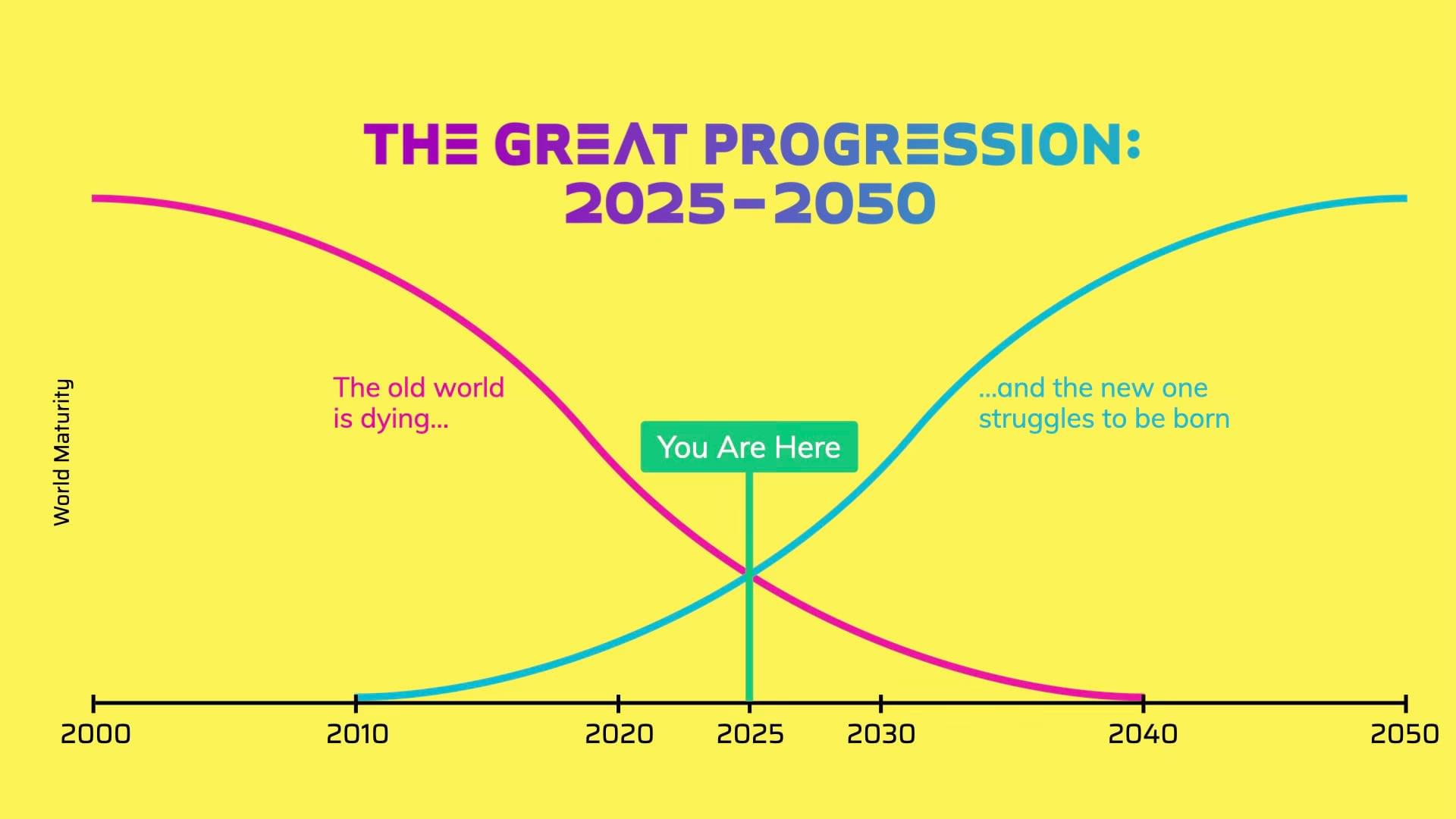
This is a pivotal moment in human history. Artificial General Intelligence (AGI), a system that exhibits all the cognitive capabilities the brain has, is probably only a few short years away. When we look back on this time in the decades to come, I think we will realise we were standing in the foothills of the singularity — nothing less than the dawning of a new age for humanity.

I’ve spent my whole life working on AGI because I’ve always had a deep conviction that, if built and deployed responsibly, it would prove to be one of the most beneficial and transformative technologies ever invented. AGI cannot be compared to standard technological breakthroughs, not even ones as consequential as the internet or mobile — it is much more akin to the discovery of electricity or fire. If you stop to think about it, we’ve essentially found a way to make sand think. It’s miraculous.

The magnitude of this technology’s impact will be unprecedented, perhaps 10x of the Industrial Revolution at 10x the speed. It will help us solve some of the biggest problems society faces from accelerating drug discovery to developing new clean energy sources to creating novel advanced materials. We could even reach a point where resources are no longer the limiting factor for human progress, leading to an amazing new era of abundance.

Karl Schroeder: The Singularity is an Old Idea. Keep Moving Forward!

Fourteen years ago, a science fiction author looked me in the eye and told me the singularity was already old news.

This was 2012. Almost nobody outside a small circle was talking about it. And Karl Schroeder, one of Canada’s sharpest minds in #ScienceFiction and foresight, was telling me to stop staring at it.

His words stuck with me: take the singularity, use it, it’s a lens. Then develop other lenses. Keep hunting for blind spots.

At the time, I thought he was just being contrarian. Today, with #AI swallowing every headline and every boardroom, I think he saw something most of us are still missing.

Schroeder doesn’t hand you easy answers. We got into the technological maximum, the Rewilding, why he believes “technology is legislation,” and why he rates the singularity as possible but not probable. He picked apart almost every assumption I walked in with.

Here is what keeps nagging me. The blind spot he warned me about in 2012 might be the exact thing everyone is fixated on in 2026.

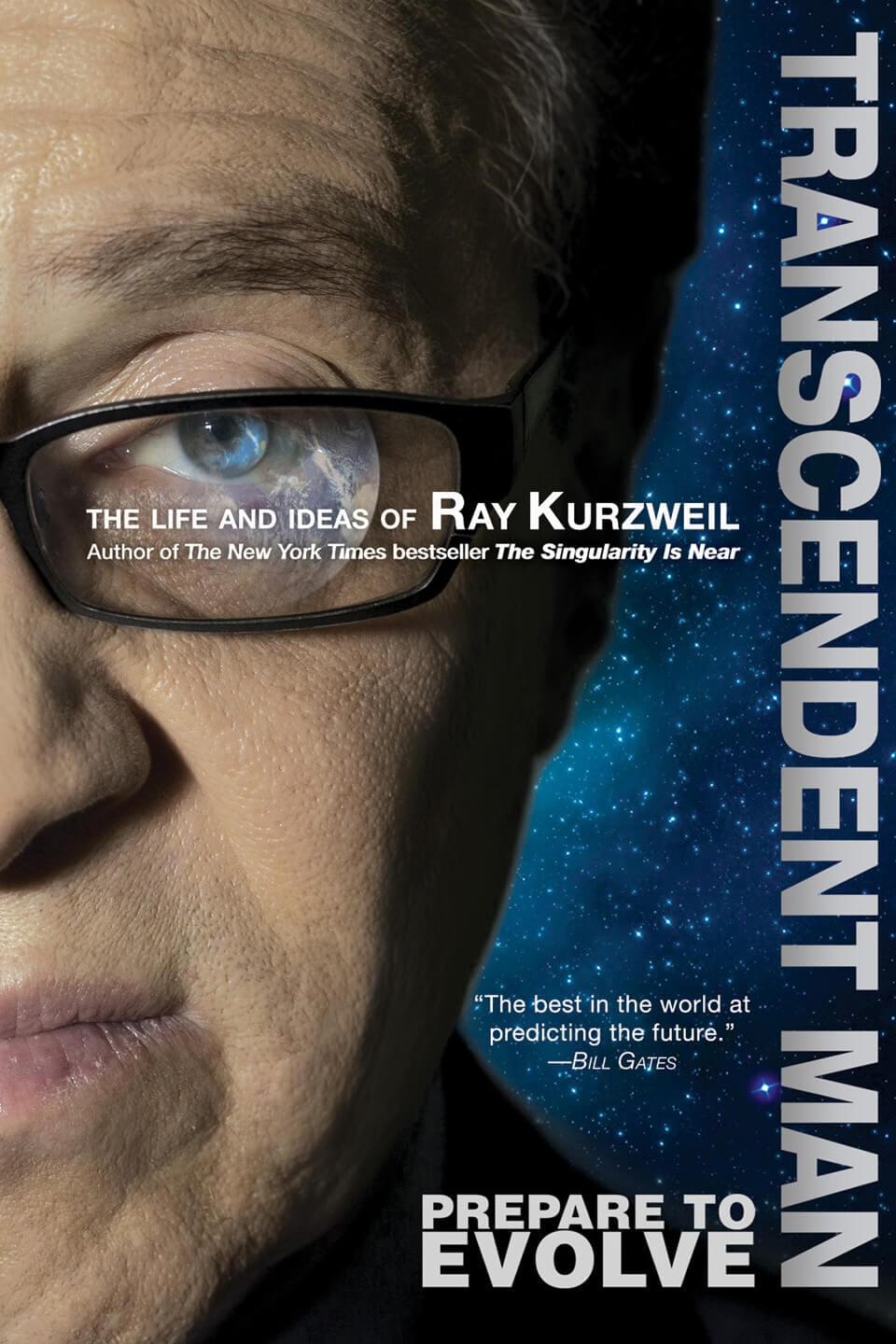
Ray Kurzweil on Why We’re Living in the Singularity | EP #261

In this episode, the mates and Steven Kotler sit down with Ray Kurzweil to discuss AGI, the future, and more.

Get access to metatrends 10+ years before anyone else — https://qr.diamandis.com/metatrends.

Ray Kurzweil is an American inventor and futurist best known for his pioneering work in optical character recognition and his predictions regarding the technological singularity.

Peter H. Diamandis, MD, is the Founder of XPRIZE, Singularity University, ZeroG, and A360.

Salim Ismail is the founder of Open ExO, a GP at Exponential Venture Capital/The Organizational Singularity Fund and a sought after global speaker and thought leader.

Dave Blundin is the founder \& GP of Link Ventures.

Coining the Technological Singularity

Everybody writes about the Singularity now. Almost nobody knows where the word was born.

Not in a lab. Not in a think tank. In the January 1983 issue of Omni magazine, where a mathematician and science fiction writer named Vernor Vinge put a name to the thing the rest of us are still trying to survive.

Think about that. Four decades before ChatGPT, before the AI arms race, before every futurist and their algorithm started forecasting the end of the human era, the framework already existed. Vinge saw the curve. He just needed a word for the point where it goes vertical.

Today, that word is inescapable. Write about AI, about the future of work, about what happens to humanity when the machines get smarter than us, and you are writing about the Singularity, whether you use the term or not. Refuse to, and you owe your reader an explanation for why not. So you are still writing about it.

Thanks to Josh Calder, who dug out and scanned the original page, you can see the exact moment the term entered our vocabulary. A little piece of digital history, hiding in plain sight for 40 years.

Where do you think we are on Vinge’s curve right now? #Singularity #ArtificialIntelligence #Futurism.

Daniel H. Wilson: We Can’t Win Against Technology, We Are Technology!

“We can’t win against technology. We are technology.”

Daniel H. Wilson said that to me in 2012. Robotics PhD out of Carnegie Mellon, New York Times bestselling novelist, the guy Spielberg optioned for Robopocalypse. Back then, the line landed like a sharp bit of science fiction.

Fourteen years later, it reads less like a provocation and more like a diagnosis.

His novel Amped was about what happens when technology stops being a tool you hold and becomes part of the body you are. In 2012, that was speculative. Now there are chips being implanted in human skulls, and companies are racing to sell you cognitive upgrades. The “superhuman” future Daniel described is being built now, while most people are still debating whether it will show up at all.

What stuck with me most was that he refused the tidy doom story. He didn’t buy that a superhuman AI would spend its existence trying to exterminate us. That’s a human fear projected onto something that owes us nothing. The harder question, the one worth sitting with, is what we become when the enhancement is not a gadget in our hand but us.

Pulled from the archive and worth another look. One of 300+ conversations on #SingularityFM about where #AI and human #enhancement actually lead, not where the marketing promises they will.

Hugo de Garis on AI: Are We Building Gods or Terminators?

In 2012, I sat down with Hugo de Garis, and he told me billions of people could die this century over one question: should we build machines smarter than ourselves?

Back then, it sounded like pure science fiction. He called the coming conflict the Artilect War. On one side, the Cosmists who want to build godlike machine intelligence. On the other hand, the Terrans who would rather go to war than gamble on human extinction. In between, the Cyborgists who just want to become gods themselves. He even had a word for the body count:

Gigadeath.

Fourteen years later, the war he predicted hasn’t arrived. The question underneath it has moved to the center of the room.

Because de Garis got one thing profoundly right, even if the timeline was lurid. The hard part was never whether we could build these systems. It’s whether we should, and who gets to decide. That is not a #technology question. Technology is only ever the How. This is a Why and a What, a question about power, values, and what kind of species we choose to become.

He was asking it when almost nobody else was. That is why this conversation still holds up.

George Dyson on Turing’s Cathedral: In Wildness Is The Preservation Of The World

Fourteen years ago, I sat down with George Dyson to talk about “Turing’s Cathedral.”

We talked about the machines that were coming. Now they are here.

Dyson watched the digital revolution get built from the inside. His father was Freeman Dyson. Einstein’s secretary was his babysitter. He grew up at the Institute for Advanced Study in Princeton, playing in the halls where Turing’s ideas became von Neumann’s machines.

He gave me a line I still cannot shake:

“There is no way to completely govern the digital universe. It will always be a wildness, not a bureaucracy or a national park.”

Read it again. Then look at every #AI governance debate happening right now.

/* */