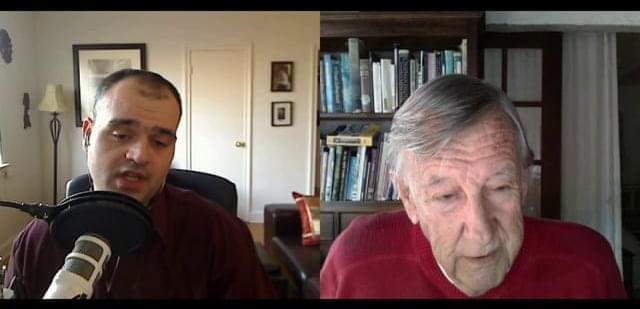
In February 2011, I spent an hour on Skype asking one of the most influential computer scientists alive whether we could still steer the technologies we were building.
James Martin said yes.
He had earned the right to that answer. Computerworld ranked him fourth among the 25 people who most shaped computer science. The Sunday Times called him Britain’s leading futurist. He wrote 104 textbooks, picked up a Pulitzer nomination, collected honorary doctorates from six continents, then gave away more than $100 million to found the Oxford Martin School so 30 institutes could work on the hardest problems of the century.
So when he told me accelerating technology is controllable, he was not being naive. He was being deliberate. Control, in his telling, was never a technical property of the machines. It was a civilizational choice, and he thought this century was the narrow window in which we get to make it.
We talked about exponential growth in genetics, robotics, nanotech and #AI. We talked about The Meaning of the 21st Century and the project he was working on then, the Transformation of Humankind. He was not selling optimism. He was assigning homework.
Fifteen years later, the claim in the title is a lot harder to defend than it was when he made it. Or maybe that is precisely his point, and we are the ones who failed the assignment.
James died in 2013. This is one of the last long conversations he left on the record about the future he spent his life trying to shape. It has aged into something closer to a warning than a forecast, which is why I keep going back to it.
Watch it and decide for yourself whether the #Singularity is something we steer or something that simply happens to us.
Full video and audio here: [ https://snglrty.co/43gUY8F](https://snglrty.co/43gUY8F)
Want to find out who is James Martin — philanthropist, futurist, author and ‘Change Agent’? Check out my interview with him for www.SingularityWeblog.com