Satellite manufacturing today is a lengthy, meticulous process; its high tech nature, and the cost in time and money make advances slow compared to sectors like the mobile industry. But an explosion in demand for connectivity and other space services is driving the need for ever-more capable satellites. It is at this crossroads, that bold new ideas are being forged.
Next week, astronauts on the International Space Station are getting a brand new room. Called the BEAM, short for Bigelow Expandable Activity Module, the room is launching on top of one of SpaceX’s rockets on Friday; it will then be attached to the ISS sometime within the next four months. The BEAM, which is created by private company Bigelow Aerospace, will remain deflated during launch, but once in orbit, it will inflate up to four times its size, providing more overall volume for the interior of the ISS.
The BEAM isn’t a permanent addition to the space station, though. It will only stay attached to the ISS for two years, and the astronauts will go inside the habitat very rarely. That’s because the main goal of the BEAM is to test out if this expandable habitat technology actually works. A successful mission could be the first step to something bigger: an era when expandable space habitats orbit the Earth, allowing for scientists and tourists to visit these “space hotels.”
The concept of expandable spacecraft isn’t new. In the 1960s, NASA launched a series of expandable communication probes called the Echo satellites, which looked like big metallic balloons. The satellites inflated in space and turned into mirror-like reflectors that bounced signals from one spot on Earth to another. Since then, NASA and other private companies have toyed with the idea of scaling up expandable spacecraft so that they could house humans in space.
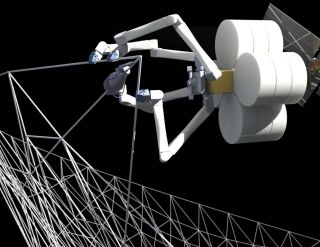
[Via Satellite 03-28-2016] The U.S. Defense Advanced Research Projects Agency (DARPA) is reviving its in-orbit servicing efforts through a new public-private partnership program called Robotic Servicing of Geosynchronous Satellites (RSGS). Under the RSGS vision, the partners would join a DARPA-developed modular toolkit, including hardware and software, to a privately developed spacecraft to create a commercially owned and operated Robotic Servicing Vehicle (RSV). DARPA would contribute the robotics technology, such as the previously developed Front End Robotic Enabling Near-Term Demonstration (FREND) robotic arm, expertise, and a government-provided launch. The commercial partner would contribute the satellite to carry the robotic payload, integration of the payload, and the mission operations center and staff.
DARPA seeks to develop and demonstrate the RSV on orbit within the next five years. The agency’s goals include demonstrating safe, reliable, useful and efficient operations in or near Geostationary Earth Orbit (GEO), demonstrating on live GEO satellites in collaboration with commercial and U.S. government spacecraft operators, and supporting the development of a servicer spacecraft with sufficient propellant and payload robustness to enable dozens of missions over several years.
DARPA plans to kick off the public-private partnership via a program solicitation in the near future. Shortly thereafter, DARPA will host a proposers day to provide potential partners with further details about the RSGS program. The agency plans to share the solicitation along with the date and location of the proposers day on the Federal Business Opportunities (FBO) website in the future.
The is a Space Technology Conference and Exhibition, taking place in London on 7–8 April 2016. It is set to showcase the most cutting edge technologies and uses of Space Technology providing insight from over 50 speakers sharing their unparalleled industry knowledge and real-life experiences.
This year’s Space Innovation Congress will be highlighting the most innovative advancements in Space technology and will look at how these are being applied to many industry verticals from farming to banking, and the practical case studies that are coming out of these projects.
With user cases with dedicated tracks covering the entire Space exploration and Earth observation ecosystems: Satellites, Big data, Crop monitoring, Space debris, Maritime surveillance, Space weather and its impact on banking systems, Biomedical, Commercial space collaboration and Telecoms.
“Modern life relies on satellite sytems but they are alarmingly vulnerable to attack as they orbit the Earth. Patricia Lewis explains why defending them from hostile forces is now a primary concern for states”
This tiny microchip effectively allows for palm-sized radar cameras.
In the future, radar cameras for use in satellites could be made a hundred times smaller with this millimeter-long chip, without compromising on image quality.
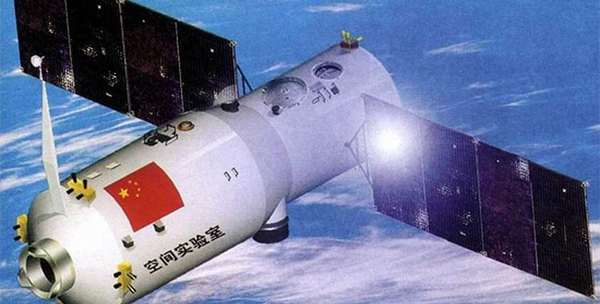
The year 2016 is a big year for China’s aerospace industry, as several rockets will be sent into space, including Tiangong-2, an orbiting space lab and Shenzhou-11, a manned spacecraft with two people on board.
Two new types of rockets will be launched in 2016. Long March-7, scheduled to be launched in June, will put the country’s first cargo ship, Tianzhou-1, into space in the first half of 2017 to dock with Tiangong-2 and conduct experiments.
Wifi distribution across this planet is patchwork of crazy: You can tweet from Mt. Fuji but lord help you if you want to send an email in Cuba. Thursday, Israeli company SkyFi announced it will be the one to finally soak the world in wifi from space.
In a press release announcing $3 million in funding from Jerusalem Venture Partners and the Liberty Israel Venture Fund, the company said it would get around the problems preventing reliable wifi from traditional satellites by launching nano satellites whose 55-centimeter diameter antenna could be folded up to make launching cheaper, then expanding once in orbit.
“The high flexibility of our nano satellites and the ability to provide multiple services to different customers enables us to offer free internet access to the whole planet in the same manner as GPS services are free. We think this has the potential to bridge great divides and give everyone worldwide a part in the great global connected community,” Raz Itzhaki Tamir, Co-Founder and CEO of SkyFi, said in the press announcement.
There’s been much ado about getting internet to the world’s disaffected and disconnected populations. Large swathes of rural and underdeveloped areas of Asia, Africa and somewhat in Latin America have garnered the attention of Silicon Valley’s biggest superpowers Google and Facebook.