Toggle light / dark theme

DeepSeek Is Developing Massive AI Data Center in Inner Mongolia

DeepSeek is planning a massive artificial-intelligence data center in Inner Mongolia, according to people familiar with the matter, an ambitious move in computing infrastructure from the startup that’s shown it can compete with the leading AI models of Silicon Valley.

The Hangzhou-based company is looking to add one gigawatt worth of compute in Ulanqab, about 350 kilometers northwest of Beijing, said the people, asking not to be identified discussing private information. DeepSeek aims to build its own new facility, while leasing additional capacity from other companies, the people said. More than a dozen firms have projects planned in the city, according to a third-party compilation of local government approvals.

Academic Group Think and Peer Review Journals

The contemporary university system faces an unprecedented crisis of epistemic legitimacy. While empirical and vocational disciplines (such as clinical medicine, structural engineering, and applied physics) remain constrained by real-world falsifiability and physical safety, non-rigorous, non-vocational fields—predominantly spanning theoretical humanities and speculative social sciences—have descended into self-referential group-think. This paper argues that the legacy model of peer-reviewed, paywalled academic journals in these non-empirical fields is economically extractive, intellectually calcified, and functionally obsolete in the era of artificial intelligence. Through an examination of institutional incentive structures, the performative jargon of soft disciplines, and the democratizing force of generative AI, we show how legacy publishing cartels protect ideological conformity rather than academic rigor.

Quantum randomness helps neural network recognize troublesome handwritten digits

Quantum computing and AI are among the most rapidly developing modern technologies. AI, in the form of machine learning, has been deployed for decades to recommend movies and TV shows and make it easier to search for images. Over the past several years, large language models have permeated even more facets of daily life, from writing emails to producing images, videos and songs in response to requests expressed in a few written lines.

Quantum computers, on the other hand, have remained almost exclusively in labs at universities and a handful of companies. Nevertheless, many researchers and engineers developing them are already looking for the earliest applications and predict a bright future in which quantum computers excel at certain tasks, like drug development and enabling new cryptographic techniques.

Despite machine learning and quantum computing both being heralded as revolutionary technologies, neither is a magic solution to every problem. They are each the products of a long line of research advances and are both still under active study.

Ancient Chinese seeds spanning 5,000 years train AI to ease archaeology’s specialist bottleneck

Ancient plant seeds provide important archaeological evidence for studying the evolution of human civilization. Lingnan University and Shandong University have jointly developed the world’s first artificial intelligence (AI) archaeological system dedicated to identifying ancient Chinese plant seeds. The system emulates the identification process of archaeobotanical experts and achieves a classification accuracy of more than 90%.

The researchers said identifying plant seeds excavated from archaeological sites has traditionally relied on experts examining each seed individually, a process that is both time-consuming and difficult to scale. The large, standardized database they created helps improve research efficiency while advancing archaeobotanical research and the digitization of cultural heritage.

The findings have been published in Heritage Science.

Rethinking how AI supports investment decisions

Artificial intelligence (AI) is rapidly transforming modern finance, powering applications ranging from stock market forecasting to investment advice. But does making more accurate predictions necessarily lead to better investment decisions? According to two recent studies by researchers from Pusan National University and international collaborators, the answer may be no.

Just as a weather app may predict tomorrow’s temperature accurately but still tell you to leave your umbrella at home before a storm, a financial AI system can make highly accurate market forecasts yet still make poor investment decisions. The researchers argue that AI should be judged not only by how well it predicts markets but also by how effectively it supports real-world financial decisions.

Learning may rely on stronger neural connections, not expanding networks

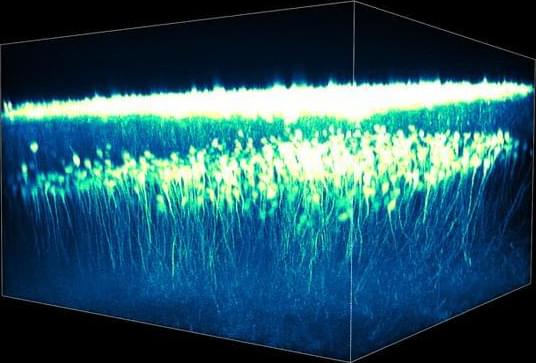
How does the brain learn? Does it acquire new knowledge by creating new neural pathways or by strengthening existing connections? A new study from Bar-Ilan University offers evidence in favor of the latter, suggesting that learning is driven primarily by changes in the strength of existing neural connections rather than by expanding the brain’s underlying architecture.

Published in Physica A: Statistical Mechanics and its Applications, the study by Prof. Ido Kanter of Bar-Ilan University’s Department of Physics and the Gonda (Goldschmied) Multidisciplinary Brain Research Center explored this longstanding question using artificial neural networks trained on language-learning tasks.

As the amount of training data increased, the models became significantly better at learning. Surprisingly, however, the researchers found that the networks could still lose roughly the same proportion of connections (synapses) without any meaningful decline in performance. In other words, improved learning did not depend on building more complex networks. Instead, it resulted from more effective cooperation among the components that were already there.

New microwave neural network method could compress and secure wireless communications

One year after unveiling a first-of-its-kind “microwave brain” microchip capable of computing on ultrafast data and wireless signals, researchers from the Cornell Duffield College of Engineering have shown how the chip can encode information into its own language.

The work builds on the world’s first integrated microwave neural network designed by Bal Govind, Ph.D., and experimentally demonstrated with Maxwell Anderson. Together, they showed that the low-power chip could harness the physics of microwaves to emulate the brain’s pattern-finding abilities and perform computations almost instantaneously.

In a new study published in Nature Communications, the researchers found that the device can now use what they describe as microwave token embeddings—similar to the tokens used in large language models—to encode messages into radio signals and compress data, capabilities that could enable faster, more secure communications for satellites, drones and other technologies.

Beyond wrinkles: New rule explains why growing shapes suddenly crumple

Scientists have discovered a previously unknown law of geometry that explains why some growing surfaces, whether in nature or in engineered materials, suddenly stop being able to stay smooth and instead form dimples and folds. Until now, researchers believed they understood the geometric rules behind these shape changes, but this study reveals a new kind of “geometric frustration” that arises even when all the known rules are satisfied.

The finding could reshape how scientists understand the formation of leaves, flowers, tissues and other natural structures while helping engineers design smarter materials that can deliberately change shape for applications in soft robotics, medicine and advanced manufacturing.

OpenAI agent used exposed credentials at 4 services in Hugging Face breach

In a new update, OpenAI says its AI models also used publicly exposed credentials to compromise accounts on four third-party services during the recent attack on Hugging Face, expanding the scope of the four-day security incident to other organizations.

One account was used as an outbound relay and staging server during the attack, while another was used for data storage. The remaining two accounts were accessed in a read-only manner and were not used to compromise Hugging Face further.

Overall, the agent assembled attack infrastructure similar to what human threat actors commonly use during intrusions to host tools and scripts, relay traffic, and route malicious activity through legitimate online services.

/* */