Toggle light / dark theme

AGI, SingularityNET, Longevity Escape Velocity with Dr. Ben Goertzel

Today I have the pleasure of speaking with a visionary thinker and innovator who’s making waves in the world of artificial intelligence and the future of human health. Dr. Ben Goertzel is the founder and CEO of SingularityNET, a decentralized AI platform that aims to democratize access to advanced artificial intelligence. He’s also the mind behind OpenCog, an open-source project dedicated to developing artificial general intelligence, and he’s a key figure at Hanson Robotics, where he helped create the well-known AI robot, Sophia.

Beyond AI, Dr. Goertzel is deeply involved in exploring how technology can enhance human longevity, contributing to initiatives like Rejuve, which aims to leverage AI and blockchain to advance life extension research. With a career that spans cognitive science, AI development, and innovative health tech, Dr. Goertzel is shaping the future in ways that will impact all of us. Please join me in welcoming Dr. Ben Goertzel!

PRODUCTION CREDITS
⎺⎺⎺⎺⎺⎺⎺⎺⎺⎺⎺⎺⎺⎺⎺⎺⎺⎺⎺⎺⎺⎺
Host, Writer — @emmettshort.
Executive Producer — Keith Comito

Robot mimics traditional Chinese massage techniques for therapeutic use

In recent years, roboticists have developed a wide range of systems that could eventually be introduced in health care and assisted living facilities. These include both medical robots and robots designed to provide companionship or assistance to human users.

Researchers at Shanghai Jiao Tong University and the University of Shanghai for Science and Technology recently developed a robotic system that could give human users a massage that employs traditional Chinese medicine (TCM) techniques. This new robot, introduced in a paper on the arXiv preprint server, could eventually be deployed in health care, wellness and rehabilitation facilities as additional therapeutic tools for patients who are experiencing different types of pain or discomfort.

“We adopt an adaptive admittance control algorithm to optimize force and position control, ensuring safety and comfort,” wrote Yuan Xu, Kui Huang, Weichao Guo and Leyi Du in their paper. “The paper analyzes key TCM techniques from kinematic and dynamic perspectives and designs to reproduce these massage techniques.”

Introducing perceptein, a protein-based artificial neural network in living cells

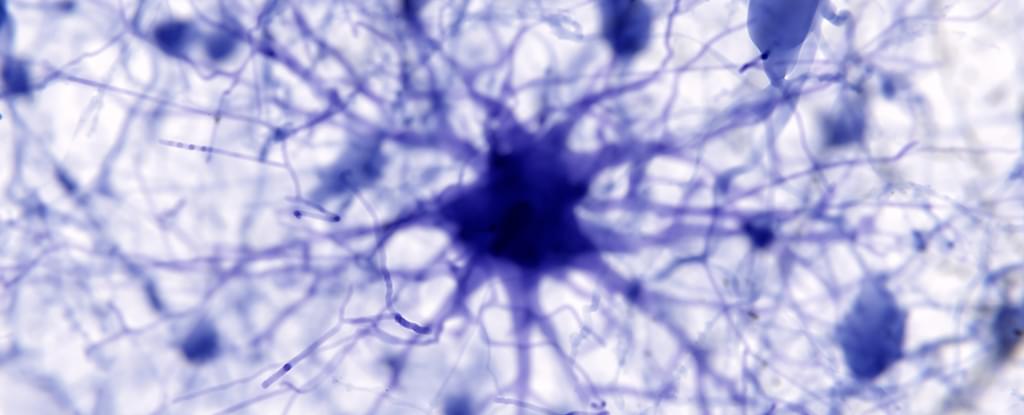
Westlake University in China and the California Institute of Technology have designed a protein-based system inside living cells that can process multiple signals and make decisions based on them.

The researchers have also introduced a unique term, “perceptein,” as a combination of protein and perceptron. Perceptron is a foundational artificial neural network concept, effectively solving binary classification problems by mapping input features to an output decision.

By merging concepts from neural network theory with , “perceptein” represents a biological system capable of performing classification computations at the protein level, similar to a basic artificial neural network. This “perceptein” circuit can classify different signals and respond accordingly, such as deciding to stay alive or undergo programmed cell death.

Engineers grow ‘high-rise’ 3D chips, enabling more efficient AI hardware

The electronics industry is approaching a limit to the number of transistors that can be packed onto the surface of a computer chip. So, chip manufacturers are looking to build up rather than out.

Instead of squeezing ever-smaller transistors onto a single surface, the industry is aiming to stack multiple surfaces of transistors and semiconducting elements—akin to turning a ranch house into a high-rise. Such multilayered chips could handle exponentially more data and carry out many more complex functions than today’s electronics.

A significant hurdle, however, is the platform on which chips are built. Today, bulky silicon wafers serve as the main scaffold on which high-quality, single-crystalline semiconducting elements are grown. Any stackable chip would have to include thick silicon “flooring” as part of each layer, slowing down any communication between functional semiconducting layers.

How A.I. Could Change Science Forever

It’s getting harder to harder to ignore the potential disruptive power of AI in research. Scientists are already using AI tools but could the future lead to complete replacement of humans? How will our scientific institutions transform? These are difficult questions but ones we have to talk about in today’s episode.

Written, presented \& edited by Prof. David Kipping.

→ Support our research: https://www.coolworldslab.com/support.
→ Get merch: https://teespring.com/stores/cool-wor
→ Check out our podcast: / @coolworldspodcast.

THANK-YOU to T. Widdowson, D. Smith, L. Sanborn, C. Bottaccini, D. Daughaday, S. Brownlee, E. West, T. Zajonc, A. De Vaal, M. Elliott, B. Daniluk, S. Vystoropskyi, S. Lee, Z. Danielson, C. Fitzgerald, C. Souter, M. Gillette, T. Jeffcoat, J. Rockett, D. Murphree, M. Sanford, T. Donkin, A. Schoen, K. Dabrowski, R. Ramezankhani, J. Armstrong, S. Marks, B. Smith, J. Kruger, S. Applegate, E. Zahnle, N. Gebben, J. Bergman, C. Macdonald, M. Hedlund, P. Kaup, W. Evans, N. Corwin, K. Howard, L. Deacon, G. Metts, R. Provost, G. Fullwood, N. De Haan, R. Williams, E. Garland, R. Lovely, A. Cornejo, D. Compos, F. Demopoulos, G. Bylinsky, J. Werner, S. Thayer, T. Edris, F. Blood, M. O’Brien, D. Lee, J. Sargent, M. Czirr, F. Krotzer, I. Williams, J. Sattler, B. Reese, O. Shabtay, X. Yao, S. Saverys, A. Nimmerjahn, C. Seay, D. Johnson, L. Cunningham, M. Morrow, M. Campbell, B. Devermont, Y. Muheim, A. Stark, C. Caminero, P. Borisoff, A. Donovan, H. Schiff, J. Cos, J. Oliver, B. Kite, C. Hansen, J. Shamp, R. Chaffee, A. Ortiz, B. McMillan, B. Cartmell, J. Bryant, J. Obioma, M. Zeiler, S. Murray, S. Patterson, C. Kennedy, G. Le Saint, W. Ruf, A. Kochkov, B. Langley, D. Ohman, P. Stevenson, T. Ford \& T. Tarrants.

REFERENCES
► Smith \& Geach 2024, \

Charter school is replacing teachers with AI

This will really start to pick up now.


An Austin-based national charter school network offers K-12 students an AI-guided education. Operating under a model called “2 Hour Learning,” a company of the same name advertises accelerated pace, app-based classes designed to teach students at “2X” the speed of a traditional classroom, whatever that means. Parents are promised that the system works for 80–90 percent of children, and that students consistently rank in the NWEA’s 90th percentile. Apart from generating top-ranking national standardized test takers, however, one of 2 Hour Learning’s other explicit goals is the removal of teachers from classrooms.

“Imagine starting a school and declaring, ‘We won’t have any academic teachers.’ We did exactly that!” reads a portion of the company’s white paper.

TIMELAPSE OF FUTURE TECHNOLOGY 3 (Sci-Fi Documentary)

This timelapse of future technology, the 3rd year of the video series, goes on a journey exploring the human mind becoming digital. Brain chips turn memories and thoughts into data; could this data be sent out into space to live in the cosmos encoded into the magnetic fields between stars.

Other topics covered in this sci-fi documentary video include: bio-printing, asteroid habitats, terraforming Mars, the future of Teslabots, lucid dreaming, and the future of artificial intelligence and brain to computer interfaces (BCI — brain chips).

PATREON
The first and second volumes of ‘The Encyclopedia of the Future’ are now available on my Patreon.

Visit my Patreon here: / venturecity.

Created by: Jacob B
Narration by: Alexander Masters.

Addition footage: NASA’s Goddard Space Flight Center/CI Lab.

/* */