Toggle light / dark theme

Embry-Riddle and Honeybee Robotics Receive $750,000 Research Award from NASA to Develop Asteroid Mining Robots

Mars Robot
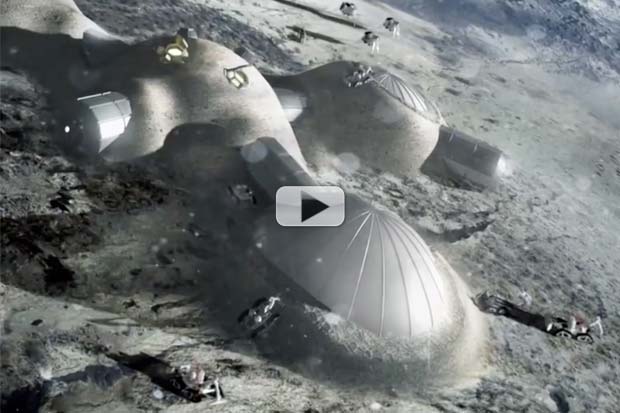
NASA has announced the continuation of a two-phase $750,000 research award to Embry-Riddle Aeronautical University and project partner Honeybee Robotics to develop a small integrated autonomous robotic spacecraft system to support the exploration and mining of asteroids and other planetary bodies and moons.

Dr. Hever Moncayo and Dr. Richard Prazenica, both Assistant Professors of Aerospace Engineering in the College of Engineering are leading the effort at the Daytona Beach Campus. Also collaborating on this project is Dr. Sergey Drakunov, Professor of Engineering Physics in the Physical Sciences Department and Associate Dean of the College of Arts and Sciences. Dr. Kris Zacny is the team lead for Honeybee Robotics.

The Embry-Riddle team includes Aerospace Engineering master’s degree students Diego Garcia, Chirag Jain, Andres Chavez, Wai Leuk Law, Aerospace Engineering Ph.D. student Andres Perez and Engineering Physics Ph.D. student Samuel Kitchen-McKinley. The researchers are focusing on an innovative concept based on autonomous small free-flyer prospector spacecraft that can leave from, return and recharge from a mothership on the planet’s or asteroid’s surface.

Read more

Elon Musk: Tesla autopilot features coming Thursday in software upgrade

Tesla’s latest software update is slated to roll out worldwide this week. Here’s what it will do.

Tesla Motors, the electric automaker, plans to roll out its latest software upgrade—version 7, which includes autopilot features—worldwide to owners of its Model S sedan on Thursday.

Tesla CEO Elon Musk made the announcement via a tweet this weekend. He also answered some of his Twitter followers’ questions about the new software.

Read more

The mysterious artificial intelligence company Elon Musk invested in is developing game-changing smart computers

“Vicarious, the mysterious company that’s been funded by Tesla and SpaceX CEO Elon Musk, Facebook’s Mark Zuckerberg, and actor Ashton Kutcher, wants to do something completely radical — build the world’s first human-level artificial intelligence (AI).”


Smarter than Siri and Cortana.

Read more

Massachusetts emerges as a robot industry powerhouse

Seventeen years ago, Helen Greiner was scrambling to find investors to back her company’s development of a robot that would clean people’s houses. As she made the rounds of venture capitalists, the responses ranged from “You’re not an Internet company” to “You’re too early stage” to “I would do this, but my partners would kill me.”

But Greiner and her partners, Colin Angle and MIT robotics professor Rodney Brooks, persevered, funneling money from their firm’s contract engineering work to fund the robot project. Today, that company, iRobot Corp. of Bedford, is one of the nation’s largest makers of home robots, generating more than $500 million in annual sales from its Roomba floor vacuum and other products, and employing 600 people, including 500 in Massachusetts.

iRobot is an anchor of a burgeoning Massachusetts robotics industry that includes more than 100 companies, employs more than 3,000, and attracts tens, if not hundreds, of millions of dollars of investments. Since 2008, at least 20 robotics startups have launched in Massachusetts. Venture capital funding of the local industry tripled to more than $60 million in 2012, the most recent year available, from less than $20 million in 2008, according to the Massachusetts Technology Leadership Council, a trade group in Burlington.

Read more

Greek town glimpses mass transit future: driverless buses

TRIKALA, Greece (AP) — There’ll be no arguing with the driver on this bus: the rides are free and there’s no driver anyway.

Trikala, a rural town in northern Greece, has been chosen to test a driverless bus in real traffic conditions for the first time, part of a European project to revolutionize mass transport and wean its cities off oil dependency over the next 30 years.

Trials of the French-built CityMobil2 buses started last week and will last through late February.

Read more

The Possibilities and the Future of Brain Hacking

For all of man’s scientific and technological advances, the human brain largely remains a mystery. A new Vimeo video, “Master/Mind,” examines the state of research on the human mind and the questions that scientists, ethicists, futurists and others are asking in light of what we’re learning about the mind. The video, a Vimeo Staff Pick, consists of a series of comments from scientists, technologist, futurists and ethicists.

Automation, robotics and artificial intelligence are developing so rapidly that many people are wondering if some day, man will no longer harness science but rather be controlled by it. As this question weighs heavily on peoples’ mind, there has been a focus on understanding the human brain.

The central issue the video explores is: New technologies are beginning to unlock the brain’s true potential, but at what cost to our humanity?

Read more

Meet the laundry-folding washing machine of our lazy-ass future

Socks are the hardest. For a future washing machine that washes, dries and then folds the results, it’s one of the small barriers that remains in that latter stage. But as a research project that started back in 2008, Laundroid is finally getting there. Next year, the collaboration between housing firm Daiwa House, electronics company Panasonic and Seven Dreamers will start offering preorders, the year after that ‘beta’ machines, then folding machines for big institutions, with event full retail planned the year after that — we’ll be in 2019 by then. (That said, the all-in-one model is still at the in-development stage). There’s no price and the presentation we saw added in a bunch of mosaic filtering on top as the shirt gradually got folded so you couldn’t see how the thing actually works. But that’s okay. We can wait. It’s not going to stop us waiting our chore-dodging dreams to come true.

While the video teaser above gives you pretty much nothing of substance, at the on-stage demonstration, we saw a just-washed tee take a matter of minutes for the internal tech to sort, identify and fold. The tech involved is separated into two very separate parts: image analysis and robotics. With a hypothetical bundle of clothes, each item demands different folding (we’re going to say) techniques, so the machine needs to figure what that soft lump of cloth is, then prime it for folding. The presentation here at CEATEC elaborated (if only lightly) on the stages it’s taken to get to here: it’s been a pretty long journey.

Read more

/* */