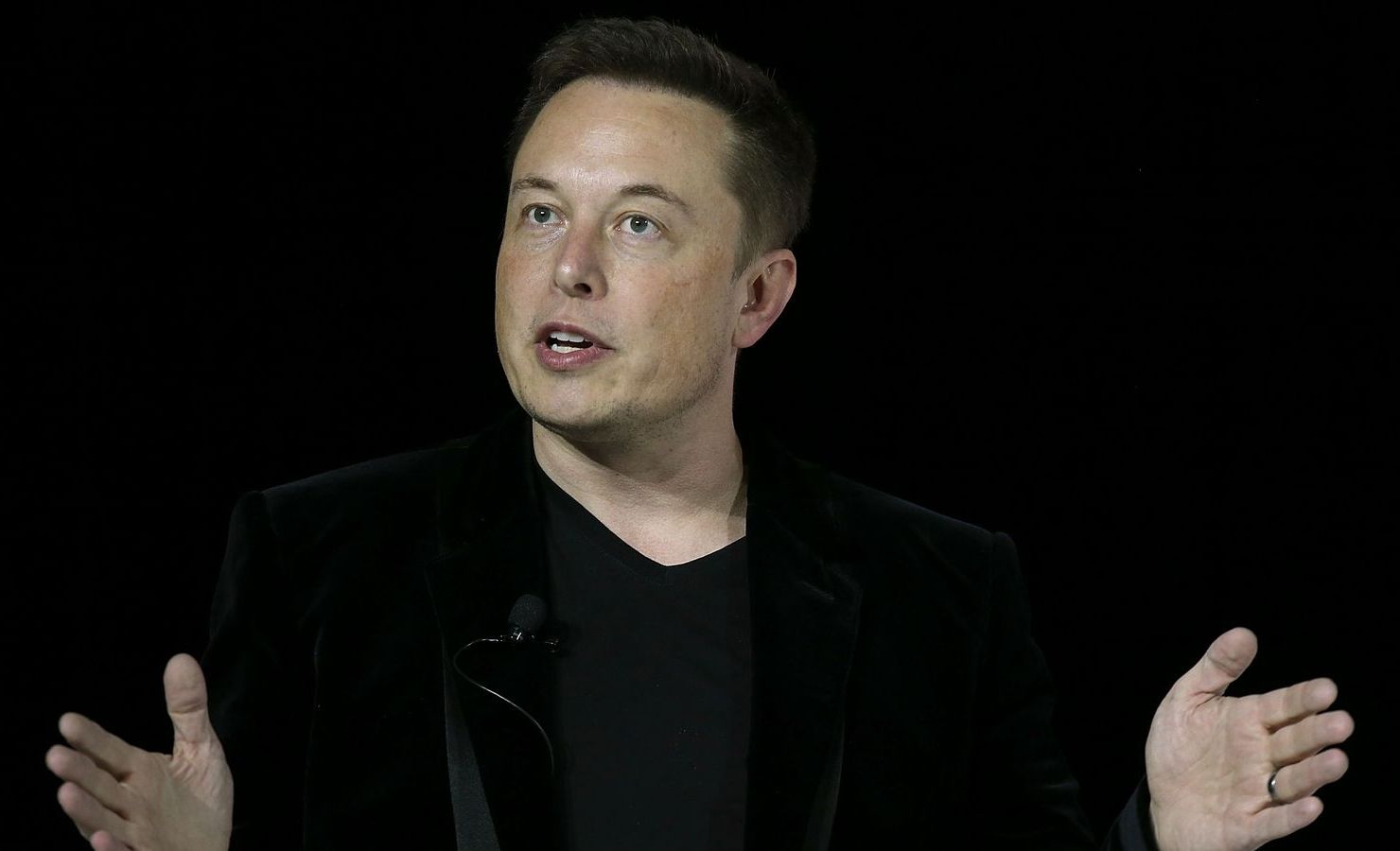
Night testing in the desert goes surprisingly well, the company says.
Although this article is over 5 days old plus talks about the risks identified by TechInsurance company; it does highlight the potential new wave of lawsuits in the years to come that we could see flood the law offices and courts around AI. Also, it will be interested to see over the next 5 years how laws, reg. compliance, etc. will evolve with the deployment of AI.
Technology insurance provider reminds IT businesses that technical glitches and customer behavior are significant sources of risk.
One thing about Quntum; nothing ever stays consistent. Why it’s loved & hated by Cyber Security enthusiasts as well as AI engineers.
When water in a pot is slowly heated to the boil, an exciting duel of energies takes place inside the liquid. On the one hand there is the interaction energy that wants to keep the water molecules together because of their mutual attraction. On the other hand, however, the motional energy, which increases due to heating, tries to separate the molecules. Below the boiling point the interaction energy prevails, but as soon as the motional energy wins the water boils and turns into water vapour. This process is also known as a phase transition. In this scenario the interaction only involves water molecules that are in immediate proximity to one another.
An artificial quantum world of atoms and light: Atoms (red) spontaneously arrange themselves in a checkerboard pattern as a result of the complex interplay between short- and long-range interactions. (Visualizations: ETH Zurich / Tobias Donner)
A team of researchers led by Tilman Esslinger at the Institute for Quantum Electronics at ETH Zurich, and Tobias Donner, a scientist in his group, have now shown that particles can be made to “feel” each other even over large distances. By adding such long-range interactions the physicists were able to observe novel phase transitions that result from energetic three-way battles (“Quantum phases from competing short- and long-range interactions in an optical lattice”).
Good question? Answer as of to date — depends on the “AI creator.” AI today is all dependent upon architects, engineers, etc. design and development and the algorithms & information exposed in AI. Granted we have advanced this technology; however, it is still based on logical design and principles; nothing more.
BTW — here is an example to consider in this argument. If a bank buys a fully functional and autonomous AI; and through audits (such as SOX) it is uncovered that embezzling was done by this AI solution (like in another report 2 weeks ago showing where an AI solution stole money out of customer accounts) who is at fault? Who gets prosecuted? who gets sued? The bank, or the AI technology company; or both? We must be ready to address these types of situations soon and legislation and the courts are going to face some very interesting times in the near future; and consumers will probably take the brunt of the chaos.
A recent experiment in which an artificially intelligent chatbot became virulently racist highlights the challenges we could face if machines ever become superintelligent. As difficult as developing artificial intelligence might be, teaching our creations to be ethical is likely to be even more daunting.
Forget about generation ships, suspended animation, or the sudden appearance of a worm hole. The most likely way for aliens to visit us — whatever their motive — is by sending robotic probes. Here’s how swarms of self-replicating spacecraft could someday rule the galaxy.
Top image by Alejandro Burdisio via Concept Ships.
Back in late 1940’s the Hungarian mathematician John Von Neumann wondered if it might be possible to design a non-biological system that could replicate itself in a cellular automata environment, what he called a universal constructor. Von Neumann wasn’t thinking about space exploration at the time, but other thinkers like Freeman Dyson, Eric Drexler, Ralph Merkle, and Robert Freitas later took his idea and applied it to exactly that.
My own prediction is that we will see singularity with humans 1st via BMI/ BI technology and other bio-computing technology before we see a machine brain operating a the level of a healthy fully funtional human brain.
Since War of the Worlds hit the silver screen, never has the notion that machine intelligence will overtake human intelligence is more real. In this two-part series, the author examines the growing trend towards cognitive machines.
They need to be especially as we assess AI with SOX, HIPAA, and Cyber security. It will be interesting how auditors will approach this space as well since not many folks outside of tech are considered AI experts. This should be interesting.
Scott & Scott, LLP attorney, Christopher Barnett, expresses concern whether KPMG’s recent announcement that they will be deploying IBM’s Watson cognitive computing technology points to changes in software audits in the future.
Download PDF [259KB]
Bots; the Next Frontier.
The market for apps is maturing. Now one for text-based services, or chatbots, looks poised to take off.
D-Wave not only created the standard for Quantum Computing; they are the standard for QC in N. America at least. Granted more competitors will enter the field; however, D-Wave is the commercial competitor with proven technology and credentials that others will have to meet up to or excel past to be a real player in the QC landscape.
Burnaby-based D-Wave, which was founded in 1999 as a spin-off from the physics department of the University of British Columbia has become nothing less than the leading repository of quantum computing intellectual property in the world, says the analyst. He thinks D-Wave’s customers will be positioned to gain massive competitive advantages because they will be able to solve problems that normal computers simply can’t, such those in areas such as DNA sequencing, financial analysis, and artificial intelligence.
“We stand at the precipice of a computing revolution,” says Kim. “Processing power is taking a huge leap forward thanks to ingenious innovations that leverage the counter-intuitive and unique properties of the quantum realm. Quantum mechanics, theorized many decades ago, is finally ready for prime time. Imagine, if we could go back to 1946 and have the same foresight with the ENIAC, the first electronic general-purpose computer. ENIAC’s pioneers created a new industry and opened up unimaginable possibilities. The same opportunity exists today with D-Wave Systems. D-Wave is the world’s first quantum computing company and represents the most unique and disruptive company that we have seen in our career.