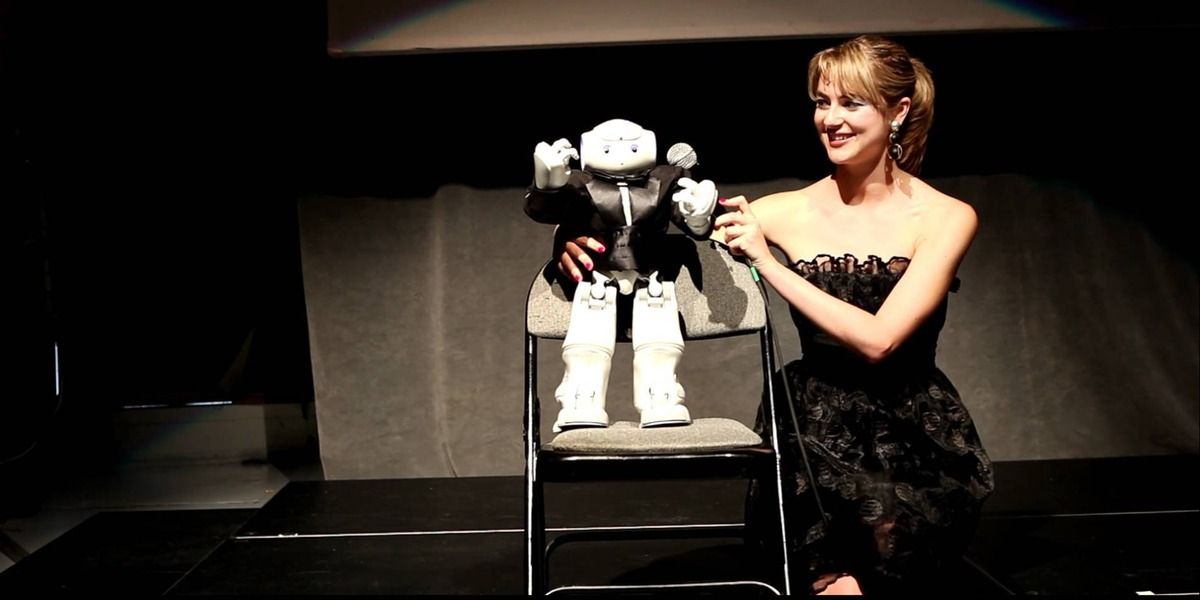
A new basement-scale neural network study has taught an A.I. how to cobble together knock-knock jokes. Just don’t expect them to become classics.
Ray is not worried about A.I. though he does not dismiss the dangers.
James Bedsol interviewed Ray Kurzweil, one of the world’s leading minds on artificial intelligence, technology and futurism, in his Google office in Mountain View, CA, February 15, 2017.
Who is Raymond “Ray” Kurzweil?
Kurzweil is one of the world’s leading minds on artificial intelligence, technology and futurism. He is the author of five national best-selling books, including “The Singularity is Near” and “How to Create a Mind.”

A team of researchers has developed artificial synapses that are capable of learning autonomously and can improve how fast artificial neural networks learn.
Developments and advances in artificial intelligence (AI) have been due in large part to technologies that mimic how the human brain works. In the world of information technology, such AI systems are called neural networks. These contain algorithms that can be trained, among other things, to imitate how the brain recognizes speech and images. However, running an Artificial Neural Network consumes a lot of time and energy.
Now, researchers from the National Center for Scientific Research (CNRS) in Thales, the University of Bordeaux in Paris-Sud, and Evry have developed an artificial synapse called a memristor directly on a chip. It paves the way for intelligent systems that required less time and energy to learn, and it can learn autonomously.

It isn’t easy to capture the best shots in a golf tournament that is being televised. And that’s why IBM is applying the artificial intelligence of its Watson platform to the task of identifying the best shots at The Masters golf tournament.
For the first time at a sporting event, IBM is harnessing Watson’s ability to see, hear, and learn to identify great shots based on crowd noise, player gestures, and other indicators. IBM Watson will create its own highlight reels.
With 90 golfers playing multiple rounds over four days, video from every tee, every hole, and multiple camera angles can quickly add up to thousands of hours of footage.
Deep learning owes its rising popularity to its vast applications across an increasing number of fields. From healthcare to finance, automation to e-commerce, the RE•WORK Deep Learning Summit (27−28 April) will showcase the deep learning landscape and its impact on business and society.
Of notable interest is speaker Jeffrey De Fauw, Research Engineer at DeepMind. Prior to joining DeepMind, De Fauw developed a deep learning model to detect Diabetic Retinopathy (DR) in fundus images, which he will be presenting at the Summit. DR is a leading cause of blindness in the developed world and diagnosing it is a time-consuming process. De Fauw’s model was designed to reduce diagnostics time and to accurately identify patients at risk, to help them receive treatment as early as possible.
Joining De Fauw will be Brian Cheung, A PhD student from UC Berkeley, and currently working at Google Brain. At the event, he will explain how neural network models are able to extract relevant features from data with minimal feature engineering. Applied in the study of physiology, his research aims to use a retinal lattice model to examine retinal images.

SAN FRANCISCO, April 4, 2017 /PRNewswire/ — Enlitic, a medical deep learning company, is pleased to announce that it has executed a Memorandum of Understanding (“MOU”) with Beijing Hao Yun Dao Information & Technology Co., Ltd (“Paiyipai”) to provide Enlitic’s deep learning solution to Paiyipai for diagnostic imaging in Health Check centers across China.
Paiyipai is a medical big data company. The company is a market leader in China in the analysis of individual laboratory medical test results, and the storage and distribution of user medical records.
The MOU forms the basis of collaboration for the first large-scale commercial deployment of Enlitic’s deep learning technology in China. It was executed following a successful 10,000 chest x-ray trial of Enlitic’s patient triage platform.
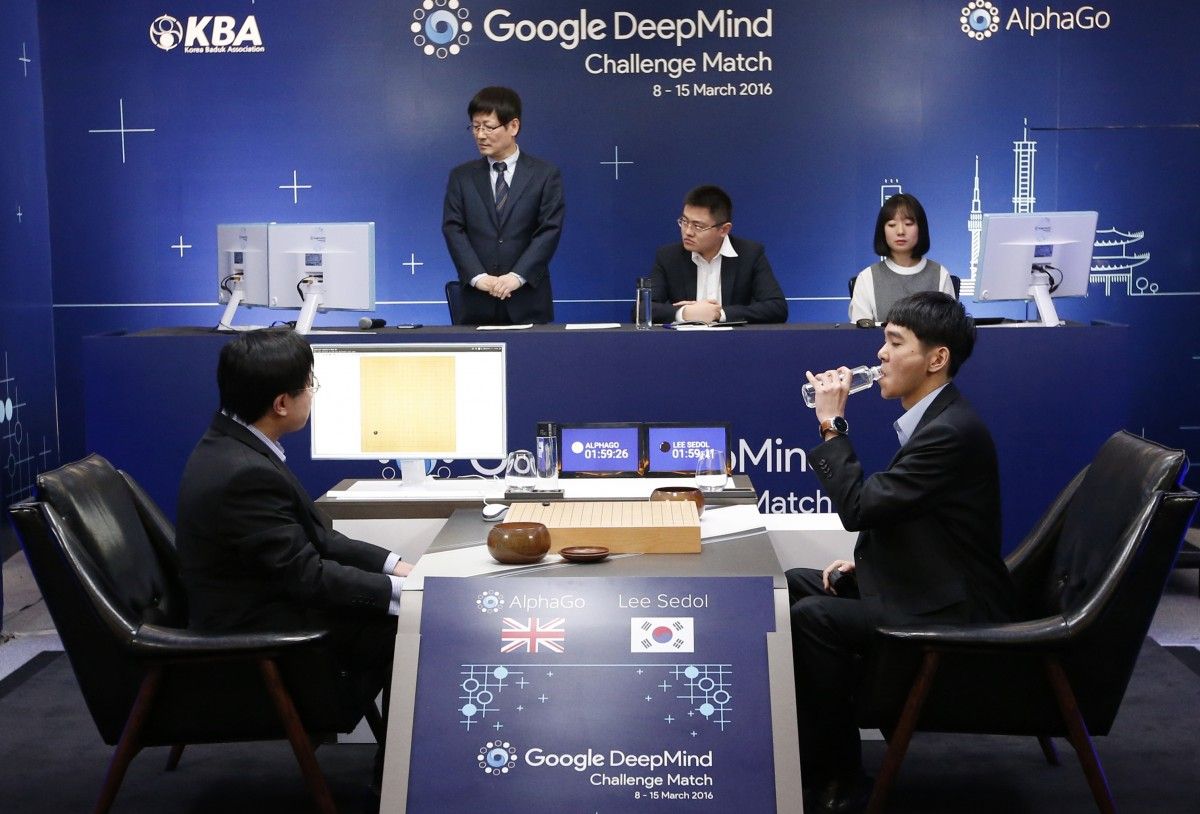
This wasn’t the first such event – the agricultural revolution had upended human lives 12,000 years earlier.
A growing number of experts believe that a third revolution will occur during the 21st century, through the invention of machines with intelligence which far surpasses our own. These range from Stephen Hawking to Stuart Russell, the author of the best-selling AI textbook, AI: A Modern Approach.
Rapid progress in machine learning has raised the prospect that algorithms will one day be able to do most or all of the mental tasks currently performed by humans. This could ultimately lead to machines that are much better at these tasks than humans.
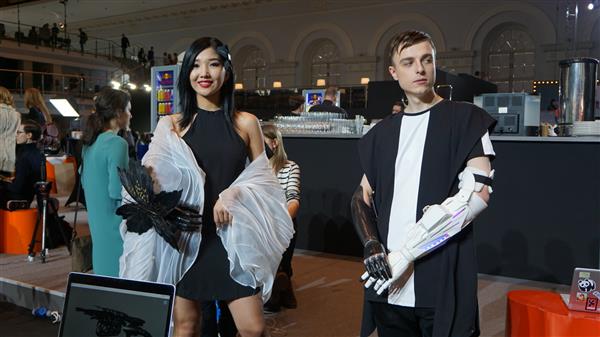
Earlier this month, Moscow’s Mercedes-Benz Fashion Week showcased some spectacular 3D printed prosthetic arms made by designer Nikita Replyanski and Russian prosthesis manufacturer Motorica. The 3D printed prostheses, inspired by robots and butterflies, were made using Autodesk Fusion 360.
Fashion weeks, whether they’re being held in the “Big Four” fashion capitals of the world or elsewhere, tend to favor style over substance. It’s called a fashion week, after all, not a function week. But that doesn’t mean that the industry events don’t occasionally showcase items that are as sensible as they are stylish. Just have a look at what was on show at Moscow’s Mercedes-Benz Fashion Week earlier this month.
While not usually an event of major global interest like Paris Fashion Week, the Russian fashion show brought together a host of top designers looking to show off their fall/winter 2017–2018 collections. Amongst those designers was Nikita Replyanski, a Russian designer and concept artist who left the computer games industry three years ago to focus on designing physical, non-virtual items. But rather than show off dresses, shoes, hats, Replyanski was presenting something totally different: 3D printed prosthetic arms.
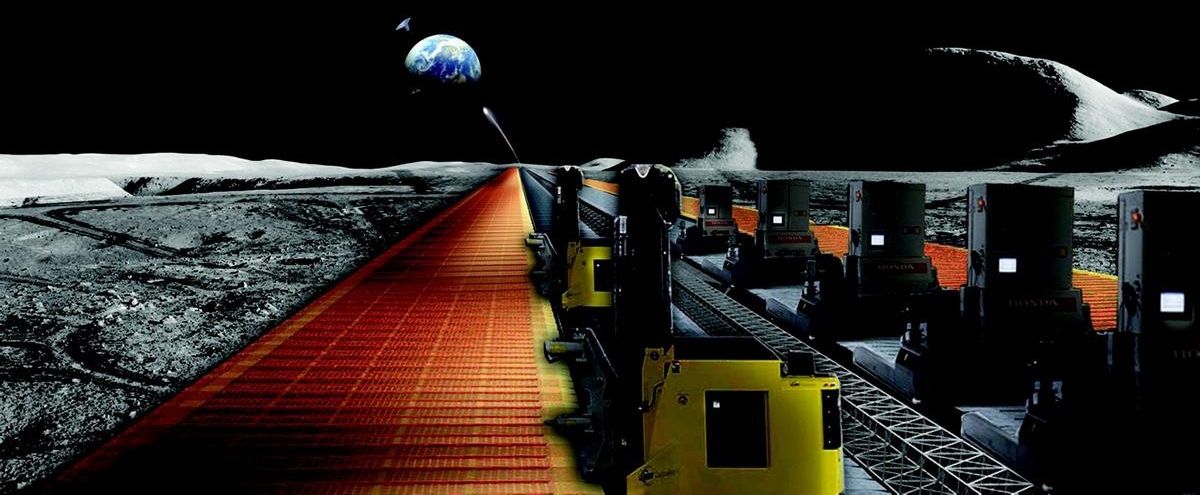
For some of us: ‘Come Together’ is merely the opening track on the famous Beatles album Abbey Road. However, didn’t you ever wonder why humanity doesn’t come together to solve at least some of its problems on Earth? How about ‘solving’ something like the electricity supply once and for all?
The global headcount is always increasing and we might crack the 8 billion mark as we speak. So the need for electricity is growing with it.
Small nations like Costa Rica show us what can be done to get rid of fossil fuels and go for Renewables instead. Scaling up the combination of wind, solar or geothermal energy to satisfy the massive demand is hard, though.