This out from the journalist who was embedded with us on the #ImmortalityBus:
Transhumanist Zoltan Istvan gives IBTimes UK his top five predictions for the year 2025.

This out from the journalist who was embedded with us on the #ImmortalityBus:
Transhumanist Zoltan Istvan gives IBTimes UK his top five predictions for the year 2025.

(credit: OpenAI)
Elon Musk and associates announced OpenAI, a non-profit AI research company, on Friday (Dec. 11), committing $1 billion toward their goal to “advance digital intelligence in the way that is most likely to benefit humanity as a whole, unconstrained by a need to generate financial return.”
The funding comes from a group of tech leaders including Musk, Reid Hoffman, Peter Thiel, and Amazon Web Services, but the venture expects to only spend “a tiny fraction of this in the next few years.”
A look at the future of manufacturing: A factory completely controlled by robots. http://voc.tv/1P6L9zh
The 21st Robot Exhibition in Japan.
The 21st Robot Exhibition just opened in Japan. It features disaster relief robots, a robot cat, and plenty of the regularly creepy ones, too.
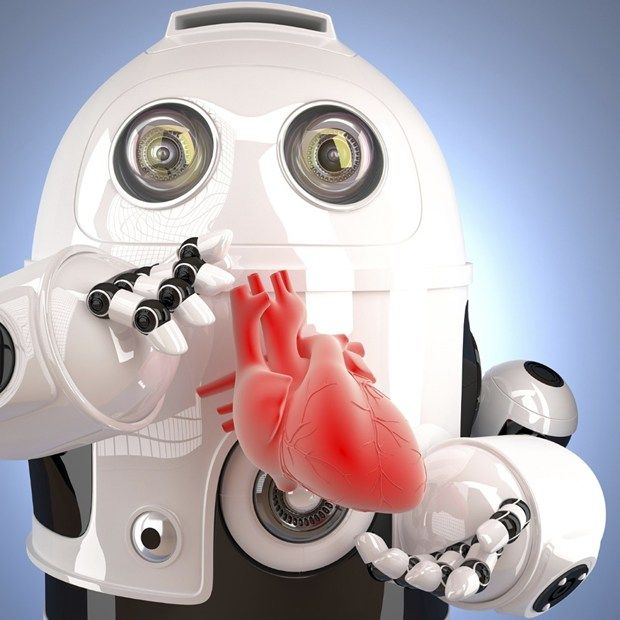
Google’s verily Launches New Robotic Surgical Company called Verb Surgical by teaming up with Johnson & Johnson.
The company formerly known as Google Life Sciences is one of the firms behind Verb Surgical Inc, which will develop advanced surgical robots. This promises to be just the first of Verily’s medical and academic partnerships.
The world’s first A.I. fashion designer to create infinitely unique clothes inspired by science and technology. All garments’ source code is embedded in the blockchain as a certificate of authenticity. Exclusively sold in bitcoin on the darkweb.

$4.2 billion per ounce. That’s how much the most expensive material on Earth costs. Priced at £100m per gram, the most expensive material on Earth is made up of “endohedral fullerenes,” a cage of carbon atoms containing nitrogen atoms. It could help us make atomic clocks and accurate autonomous cars.
Current atomic clocks are the size of rooms. This material could allow us to make atomic clocks that fit in your smartphone.

A founding father of artificial intelligence talks about the great breakthroughs of his early years.
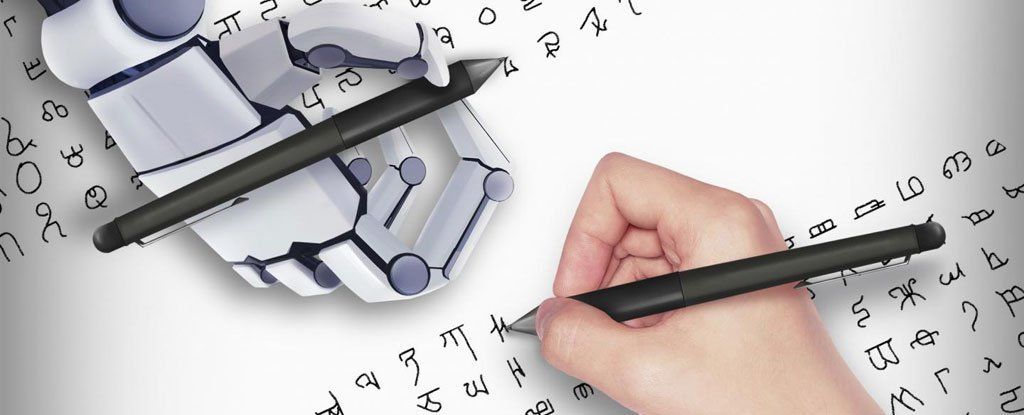
Machine learning is a bit of a buzz term that describes the way artificial intelligence (AI) can begin to make sense of the world around it by being exposed to massive amount amounts of data.
But a new algorithm developed by researchers in the US has dramatically cut down the amount of learning time required for AI to teach itself new things, with a machine capable of recognising and drawing visual symbols that are largely indistinguishable from those drawn by people.
The research highlights how, for all our imperfections, people are actually pretty good at learning things. Whether we’re learning a written character, how to operate a tool, or how to perform a dance move, humans only need a few examples before we can replicate what we’ve been shown.