
It can bluff better than any human.
Category: robotics/AI – Page 2,583
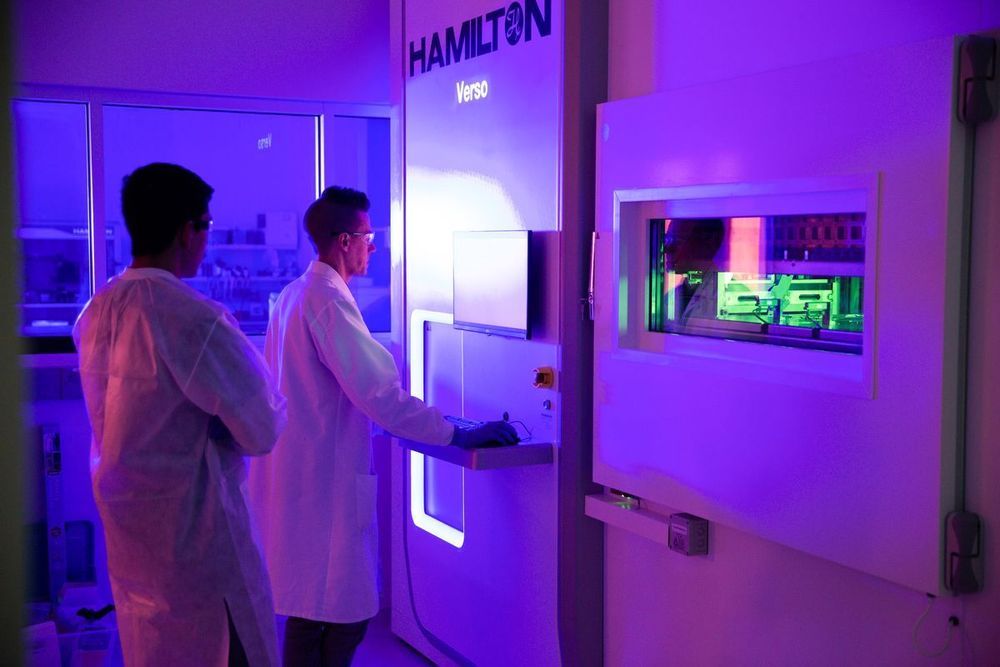
AI Drug Hunters Could Give Big Pharma a Run for Its Money
But a less-noticed win for DeepMind, the artificial-intelligence arm of Google’s parent Alphabet Inc., at a biennial biology conference could upend how drugmakers find and develop new medicines. It could also dial up pressure on the world’s largest pharmaceutical companies to prepare for a technological arms race. Already, a new breed of upstarts are jumping into the fray.
Alphabet’s DeepMind cracked a problem that long vexed biologists, heating up a technological arms race in health care.

Britain makes Alan Turing, the father of AI, the face of its 50-pound note
Decades after his chemical castration by the British government and subsequent suicide, Alan Turing, the wartime codebreaker, pioneering computer scientist, and founder of artificial intelligence, will appear on the nation’s 50 pound note.
Game-theory research better allocates military resources, fight cancer
U.S. Army game-theory research using artificial intelligence may help treat cancer and other diseases, improve cybersecurity, deploy Soldiers and assets more efficiently and even win a poker game.
New research, published in Science, and conducted by scientists at Carnegie Mellon University, developed an artificial intelligence program called Pluribus that defeated leading professionals in six-player no-limit Texas hold’em poker.
The Army and National Science Foundation funded the mathematics modeling portion of the research, while funding from Facebook was specific to the poker.
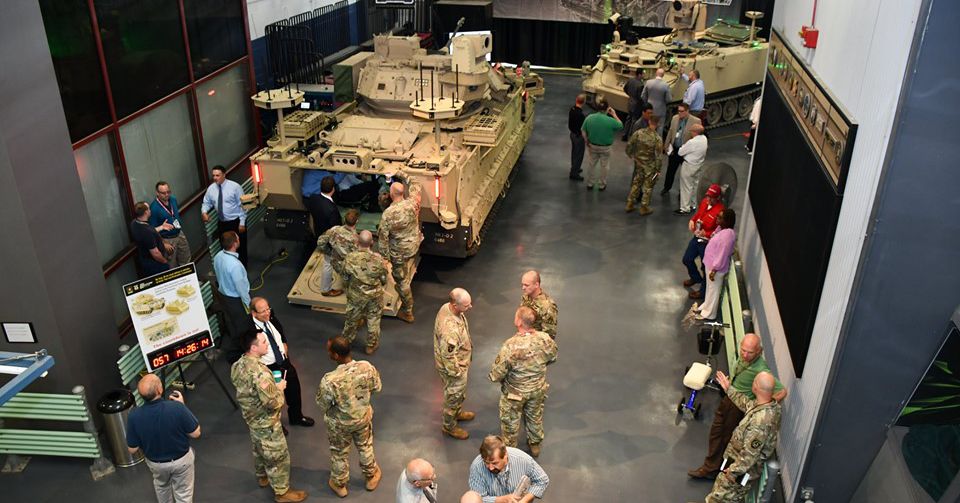
The US Army will test armored robotic vehicles in 2020
The tests are designed to see how soldiers will operate robots in the field.

Researchers’ deep learning algorithm solves Rubik’s Cube faster than any human
Since its invention by a Hungarian architect in 1974, the Rubik’s Cube has furrowed the brows of many who have tried to solve it, but the 3D logic puzzle is no match for an artificial intelligence system created by researchers at the University of California, Irvine.
DeepCubeA, a deep reinforcement learning algorithm programmed by UCI computer scientists and mathematicians, can find the solution in a fraction of a second, without any specific domain knowledge or in-game coaching from humans. This is no simple task considering that the cube has completion paths numbering in the billions but only one goal state—each of six sides displaying a solid color—which apparently can’t be found through random moves.
For a study published today in Nature Machine Intelligence, the researchers demonstrated that DeepCubeA solved 100 percent of all test configurations, finding the shortest path to the goal state about 60 percent of the time. The algorithm also works on other combinatorial games such as the sliding tile puzzle, Lights Out and Sokoban.

China #1 in quantum entanglement, teleports object 300 miles
Science, Space & Robotics News | Posted: 9 hours, 42 mins ago.
Comment | Email to a Friend | Font Size: AA.
Australia embraces ‘killer robots’
Boeing is building a killer robot which will “decide when, where — and who — to shoot”
Lethal. Cheap. Smart. Australia’s air force will become one of the first in the world to put ‘killer robots’ in the skies alongside its combat pilots. But are we opening a Pandora’s box?
EX VIVO LUNG: Transplant surgeons at Toronto General Hospital make medical history
This can also be done with a brain in a jar hooked-up to A.I…
*** As featured on the Colbert Report — June 4, 2009 ***
http://watch.thecomedynetwork.ca/library/#clip180735
For the first time in the world, transplant surgeons, led by Dr. Shaf Keshavjee, used a new technique to repair an injured donor lung that was unsuitable for transplant, and then successfully transplanted it into Andy Dyksrta.
Dr. Keshavjee and his team have developed an ex vivo or outside the body technique capable of pumping a bloodless solution containing oxygen, proteins and nutrients into damaged donor lungs. This technique allows the surgeons the opportunity to assess and treat damaged donor lungs, while they are outside the body, to make them suitable for transplantation. To find out more about this research milestone, and others like it, visit www.tgwhf.ca!

A Chinese AI startup is tracking lost dogs using their nose prints
Facial recognition comes to pets — using their nose prints as unique identifiers.