Unity, the San Francisco-based platform for creating and operating games and other 3D content, on November 10 announced the launch of Unity Simulation Pro and Unity SystemGraph to improve modeling, testing, and training complex systems through AI.
With robotics usage in supply chains and manufacturing increasing, such software is critical to ensuring efficient and safe operations.
Danny Lange, senior vice president of artificial intelligence for Unity, told VentureBeat via email that the Unity SystemGraph uses a node-based approach to model the complex logic typically found in electrical and mechanical systems. “This makes it easier for roboticists and engineers to model small systems, and allows grouping those into larger, more complex ones — enabling them to prototype systems, test and analyze their behavior, and make optimal design decisions without requiring access to the actual hardware,” said Lange.
Artificial Superintelligence or ASI, sometimes referred to as digital superintelligence is the advent of a hypothetical agent that possesses intelligence far surpassing that of the smartest and most gifted human minds. AI is a rapidly growing field of technology with the potential to make huge improvements in human wellbeing. However, the development of machines with intelligence vastly superior to humans will pose special, perhaps even unique risks.
Most surveyed AI researchers expect machines to eventually be able to rival humans in intelligence, though there is little consensus on when or how this will happen.
One only needs to accept three basic assumptions to recognize the inevitability of superintelligent AI: - Intelligence is a product of information processing in physical systems. - We will continue to improve our intelligent machines. - We do not stand on the peak of intelligence or anywhere near it.
Philosopher Nick Bostrom expressed concern about what values a superintelligence should be designed to have. Any type of AI superintelligence could proceed rapidly to its programmed goals, with little or no distribution of power to others. It may not take its designers into account at all. The logic of its goals may not be reconcilable with human ideals. The AI’s power might lie in making humans its servants rather than vice versa. If it were to succeed in this, it would “rule without competition under a dictatorship of one”.
Elon Musk has also warned that the global race toward AI could result in a third world war. To avoid the ‘worst mistake in history’, it is necessary to understand the nature of an AI race, as well as escape the development that could lead to unfriendly Artificial Superintelligence.
To ensure the friendly nature of artificial superintelligence, world leaders should work to ensure that this ASI is beneficial to the entire human race.
The machine will cost between $150,000 and $300,000 the company said, depending on configurations. The TOOK is ready to be deployed, Levy said, and is already being evaluated by some of its clients. Eventually, he believes there will be hundreds of thousands of ROOKs in the field.
What is next? Collaboration between air and land robots, he said, for example deploying an aerial and a land robot to photograph a certain area and then merging the pictures for a complete perspective.
Elbit Systems and Roboteam have released the ROOK UGV, which will support infantry in a number of frontline roles.
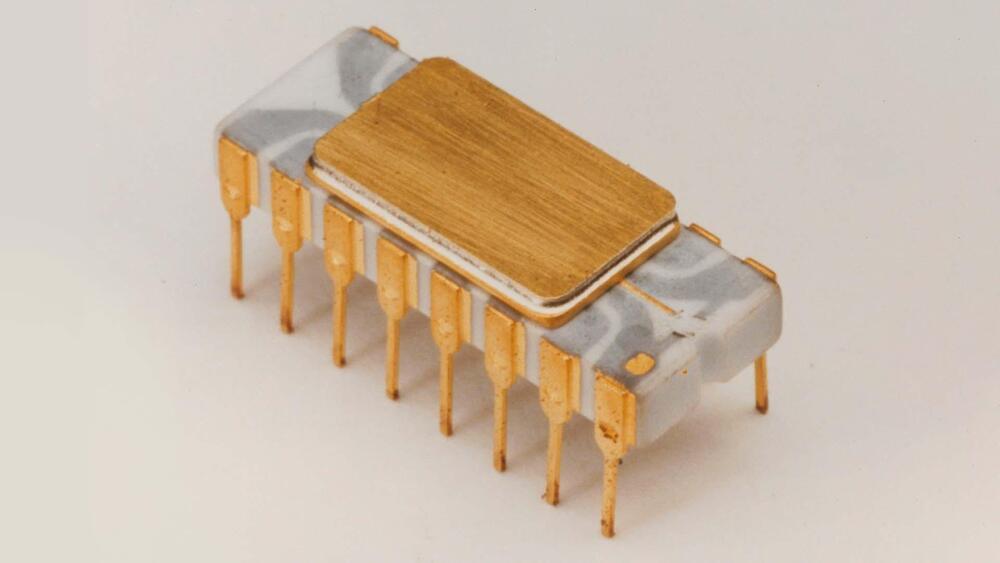
What’s New: Today, Intel celebrates the 50th anniversary of the Intel® 4,004, the world’s first commercially available microprocessor. With its launch in November 1971, the 4,004 paved the path for modern microprocessor computing – the “brains” that make possible nearly every modern technology, from the cloud to the edge. Microprocessors enable the convergence of the technology superpowers – ubiquitous computing, pervasive connectivity, cloud-to-edge infrastructure and artificial intelligence – and create a pace of innovation that is moving faster today than ever.
“This year marks the 50th anniversary of the 4,004 chip. Think of how much we’ve accomplished in the past half-century. This is a sacred moment for technology. This is what made computing really take off!” –Pat Gelsinger, Intel CEO
Why It’s Important: The 4,004 is the pioneer microprocessor, and its success proved that it was possible to build complex integrated circuits and fit them on a chip the size of a fingernail. Its invention also established a new random logic design methodology, one that subsequent generations of microprocessors would be built upon, before evolving to create the chips found in today’s modern devices.
Artificial Intelligence’s biggest Problems is their inability to keep on learning after they’ve completed their training. But now, Google’s Deepmind has created a Meta-Learning AI which keeps on learning and improving indefinitely without any Human supervision. Deepmind created the AI Game: Alchemy, which is a chemistry-based game for AI Agents to play and improve in. But Artificial Intelligence improving without limits also puts some concerns into AI researchers focused on deep learning.
There has been rapidly growing interest in meta-learning as a method for increasing the flexibility and sample efficiency of reinforcement learning. –
If you enjoyed this video, please consider rating this video and subscribing to our channel for more frequent uploads. Thank you! smile – TIMESTAMPS: 00:00 The Ultimate kind of AI? 01:02 What is Meta-Learning in AI? 02:24 Alchemy AI Agent. 04:02 How Meta-Learning solved AI Problems. 06:32 What are the dangers of this AI? 08:29 Last Words. – #ai #metalearning #singularity
Although the colonization of Venus seems like a lost cause to many, it appears that the people at NASA are very optimistic about their plans to colonize it! Subscribe to Futurity for more space news.
#nasa #space #venus.
Here at Futurity, we scour the globe for all the latest tech releases, news and info just so you don’t have to! Covering everything from cryptocurrency to robotics, small startups to multinational corporations like Tesla and Jeff Bezos to Elon Musk and everything in between!
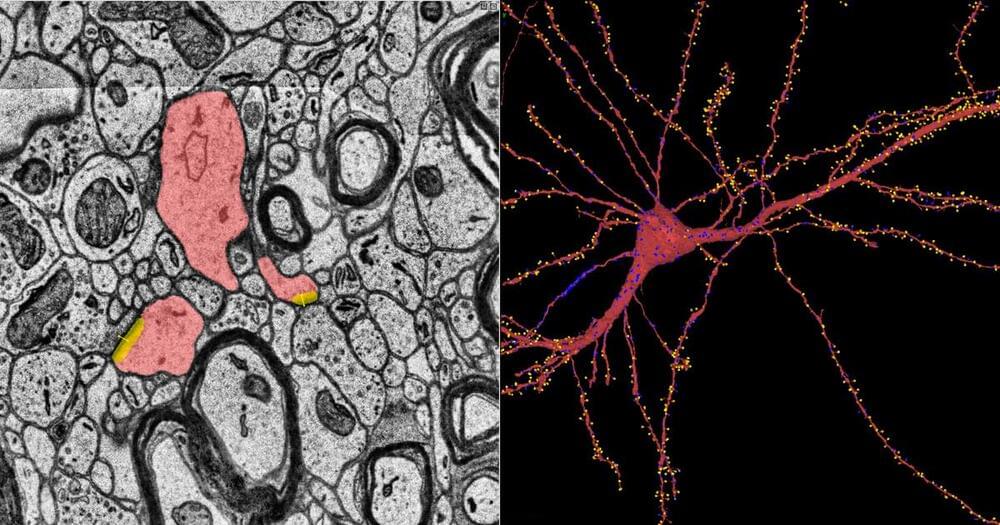
Researchers from Google and Harvard have released the most detailed map ever created of the human brain.
The map (called a connectome) contains “imaging data that covers roughly one cubic millimeter of brain tissue, and includes tens of thousands of reconstructed neurons, millions of neuron fragments, 130 million annotated synapses, 104 proofread cells, and many additional subcellular annotations and structures,” according to Google AI Blog.
Using a tool called the Neuroglancer (a cyberpunk novel if I’ve ever heard one!), you can browse that brain detail yourself.
When it comes to interstellar missions, however, there are no plans for crewed missions on the table. While there are proposals for sending robotic missions, sending astronauts to nearby stars and exoplanets simply isn’t feasible yet.
However, according to new research led by the University of California, interstellar missions could be conducted in the near future that would have tardigrades (aka. “Water Bears”) as their crew.
The study, titled “The First Interstellar Astronauts Will Not Be Human,” was conducted by researchers from UC Santa Barbara, the UCLA Health Center, the University of Florida, and Ruhr-University Bochum. It will be published in the January 2022 issue of Acta Astronautica.
Companies like Facebook parent Meta and Google parent Alphabet have all experienced major A.I. bias blunders, sometimes involving computer vision technology misidentifying Black people with primates. Numerous high-profile academic studies, articles in mainstream news outlets, and proposed regulations by lawmakers in the European Union and elsewhere continue to bring the issue to the forefront.
On a personal note, I’ve lost count of the number of times I’ve had to write variations of the phrase “facial recognition software that works better on white males than women and people of color” in articles about A.I. bias.