Toggle light / dark theme

Gemini achieves gold-level performance at the International Collegiate Programming Contest World Finals

Gemini 2.5 Deep Think achieves breakthrough performance at the world’s most prestigious computer programming competition, demonstrating a profound leap in abstract problem solving.

An advanced version of Gemini 2.5 Deep Think has achieved gold-medal level performance at the 2025 International Collegiate Programming Contest (ICPC) World Finals.

This milestone builds directly on Gemini 2.5 Deep Think’s gold-medal win at the International Mathematical Olympiad (IMO) just two months ago. Innovations from these efforts will continue to be integrated into future versions of Gemini Deep Think, expanding the frontier of advanced AI capabilities accessible to students and researchers.

Project Overview ‹ AlterEgo

AlterEgo is a non-invasive, wearable, peripheral neural interface that allows humans to converse in natural language with machines, artificial intelligence assistants, services, and other people without any voice—without opening their mouth, and without externally observable movements—simply by articulating words internally. The feedback to the user is given through audio, via bone conduction, without disrupting the user’s usual auditory perception, and making the interface closed-loop. This enables a human-computer interaction that is subjectively experienced as completely internal to the human user—like speaking to one’s self.

A primary focus of this project is to help support communication for people with speech disorders including conditions like ALS (amyotrophic lateral sclerosis) and MS (multiple sclerosis). Beyond that, the system has the potential to seamlessly integrate humans and computers—such that computing, the Internet, and AI would weave into our daily life as a “second self” and augment our cognition and abilities.

The wearable system captures peripheral neural signals when internal speech articulators are volitionally and neurologically activated, during a user’s internal articulation of words. This enables a user to transmit and receive streams of information to and from a computing device or any other person without any observable action, in discretion, without unplugging the user from her environment, without invading the user’s privacy.

Neuromorphic Intelligence Leverages Dynamical Systems Theory To Model Inference And Learning In Sustainable, Adaptable Systems

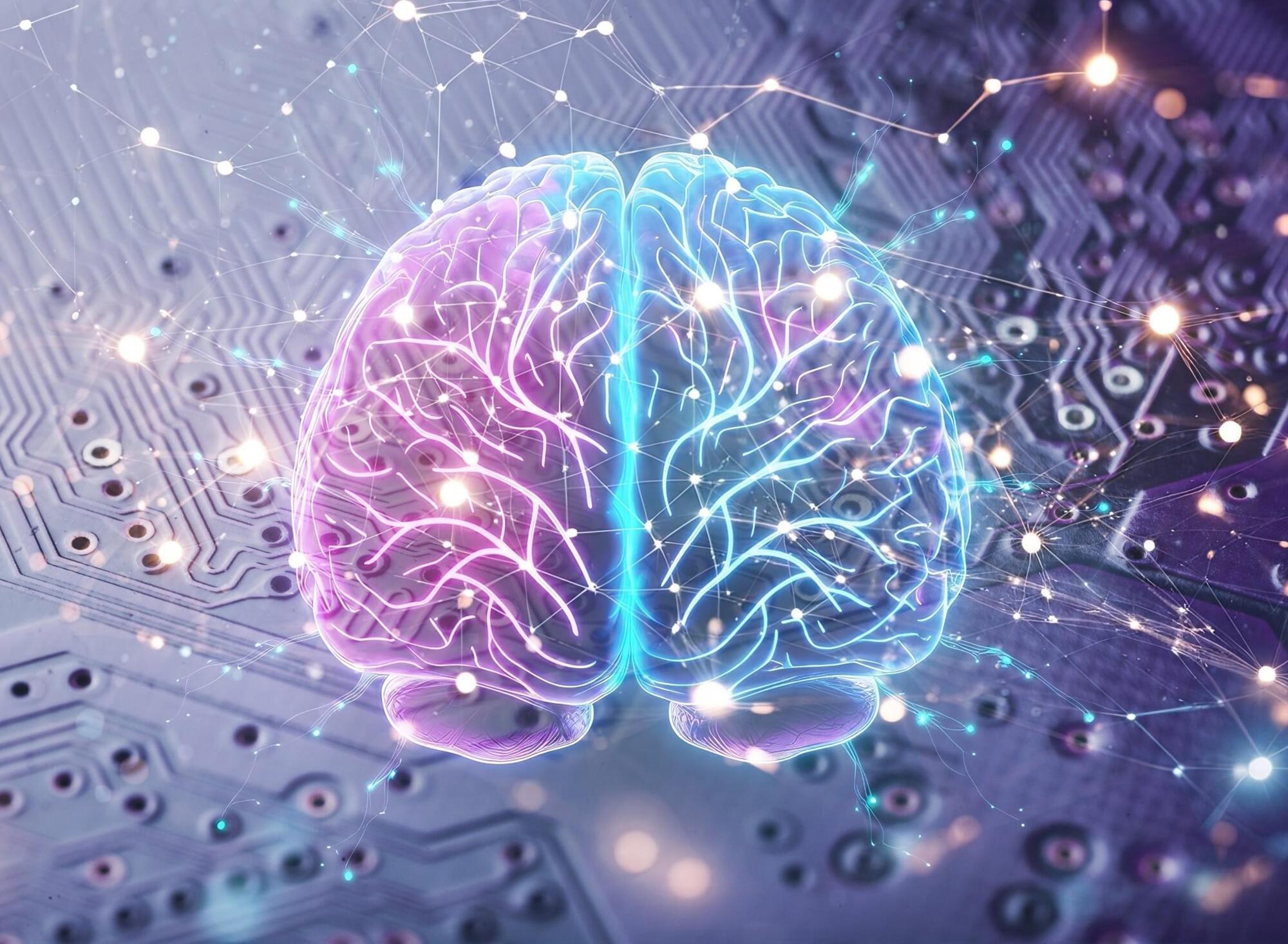
The pursuit of artificial intelligence increasingly focuses on replicating the efficiency and adaptability of the human brain, and a new approach, termed neuromorphic intelligence, offers a promising path forward. Marcel van Gerven from Radboud University and colleagues demonstrate how brain-inspired systems can achieve significantly greater energy efficiency than conventional digital computers. This research establishes a unifying theoretical framework, rooted in dynamical systems theory, to integrate insights from diverse fields including neuroscience, physics, and artificial intelligence. By harnessing noise as a learning resource and employing differential genetic programming, the team advances the development of truly adaptive and sustainable artificial intelligence, paving the way for emergent intelligence arising directly from physical substrates.


Researchers demonstrate that applying dynamical systems theory, a mathematical framework describing change over time, to artificial intelligence enables the creation of more sustainable and adaptable systems by harnessing noise as a learning tool and allowing intelligence to emerge from the physical properties of the system itself.

/* */