Ultimately, QIML proves that we don’t need a fully fault-tolerant quantum computer to see results. By using quantum processors to learn the complex “rules” of chaos, we can give classical computers the boost they need to make reliable, long-term predictions about the most turbulent environments in the natural world.
Modeling high-dimensional dynamical systems remains one of the most persistent challenges in computational science. Partial differential equations (PDEs) provide the mathematical backbone for describing a wide range of nonlinear, spatiotemporal processes across scientific and engineering domains (1–3). However, high-dimensional systems are notoriously sensitive to initial conditions and the floating-point numbers used to compute them (4–7), making it highly challenging to extract stable, predictive models from data. Modern machine learning (ML) techniques often struggle in this regime: While they may fit short-term trajectories, they fail to learn the invariant statistical properties that govern long-term system behavior. These challenges are compounded in high-dimensional settings, where data are highly nonlinear and contain complex multiscale spatiotemporal correlations.
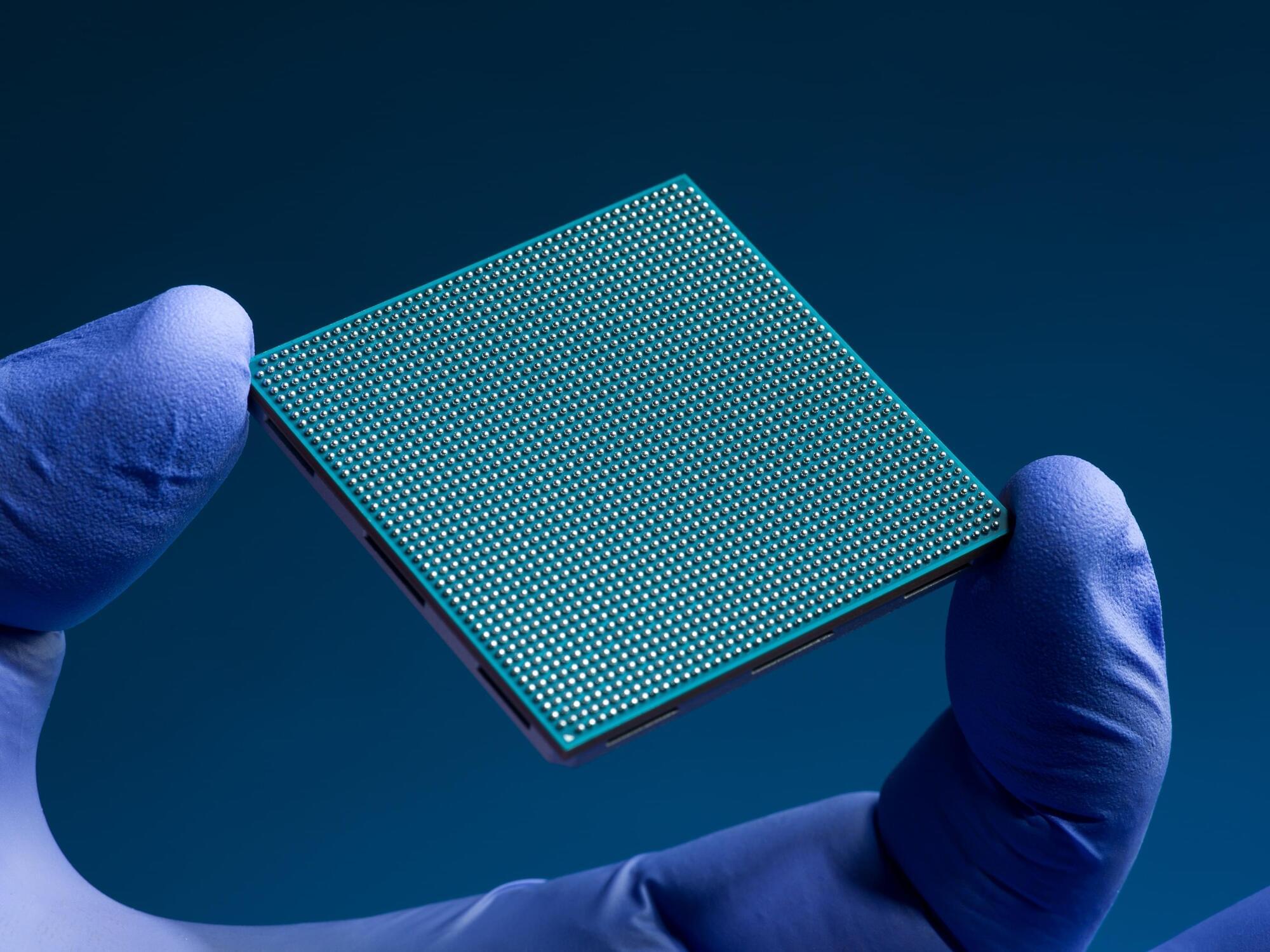
ML has seen transformative success in domains such as large language models (8, 9), computer vision (10, 11), and weather forecasting (12–15), and it is increasingly being adopted in scientific disciplines under the umbrella of scientific ML (16). In fluid mechanics, in particular, ML has been used to model complex flow phenomena, including wall modeling (17, 18), subgrid-scale turbulence (19, 20), and direct flow field generation (21, 22). Physics-informed neural networks (23, 24) attempt to inject domain knowledge into the learning process, yet even these models struggle with the long-term stability and generalization issues that high-dimensional dynamical systems demand. To address this, generative models such as generative adversarial networks (25) and operator-learning architectures such as DeepONet (26) and Fourier neural operators (FNO) (27) have been proposed. While neural operators offer discretization invariance and strong representational power for PDE-based systems, they still suffer from error accumulation and prediction divergence over long horizons, particularly in turbulent and other chaotic regimes (28, 29). Recent work, such as DySLIM (30), enhances stability by leveraging invariant statistical measures. However, these methods depend on estimating such measures from trajectory samples, which can be computationally intensive and inaccurate in all forms of chaotic systems, especially in high-dimensional cases. These limitations have prompted exploration into alternative computational paradigms. Quantum machine learning (QML) has emerged as a possible candidate due to its ability to represent and manipulate high-dimensional probability distributions in Hilbert space (31). Quantum circuits can exploit entanglement and interference to express rich, nonlocal statistical dependencies using fewer parameters than their promising counterparts, which makes them well suited for capturing invariant measures in high-dimensional dynamical systems, where long-range correlations and multimodal distributions frequently arise (32). QML and quantum-inspired ML have already demonstrated potential in fields such as quantum chemistry (33, 34), combinatorial optimization (35, 36), and generative modeling (37, 38). However, the field is constrained on two fronts: Fully quantum approaches are limited by noisy intermediate-scale quantum (NISQ) hardware noise and scalability (39), while quantum-inspired algorithms, being classical simulations, cannot natively leverage crucial quantum effects such as entanglement to efficiently represent the complex, nonlocal correlations found in such systems. These challenges limit the standalone utility of QML in scientific applications today. Instead, hybrid quantum-classical models provide a promising compromise, where quantum submodules work together with classical learning pipelines to improve expressivity, data efficiency, and physical fidelity. In quantum chemistry, this hybrid paradigm has proven feasible, notably through quantum mechanical/molecular mechanical coupling (40, 41), where classical force fields are augmented with quantum corrections. Within such frameworks, techniques such as quantum-selected configuration interaction (42) have been used to enhance accuracy while keeping the quantum resource requirements tractable. In the broader landscape of quantum computational fluid dynamics, progress has been made toward developing full quantum solvers for nonlinear PDEs. Recent works by Liu et al. (43) and Sanavio et al. (44, 45) have successfully applied Carleman linearization to the lattice Boltzmann equation, offering a promising pathway for simulating fluid flows at moderate Reynolds numbers. These approaches, typically using algorithms such as Harrow-Hassidim-Lloyd (HHL) (46), promise exponential speedups but generally necessitate deep circuits and fault-tolerant hardware.
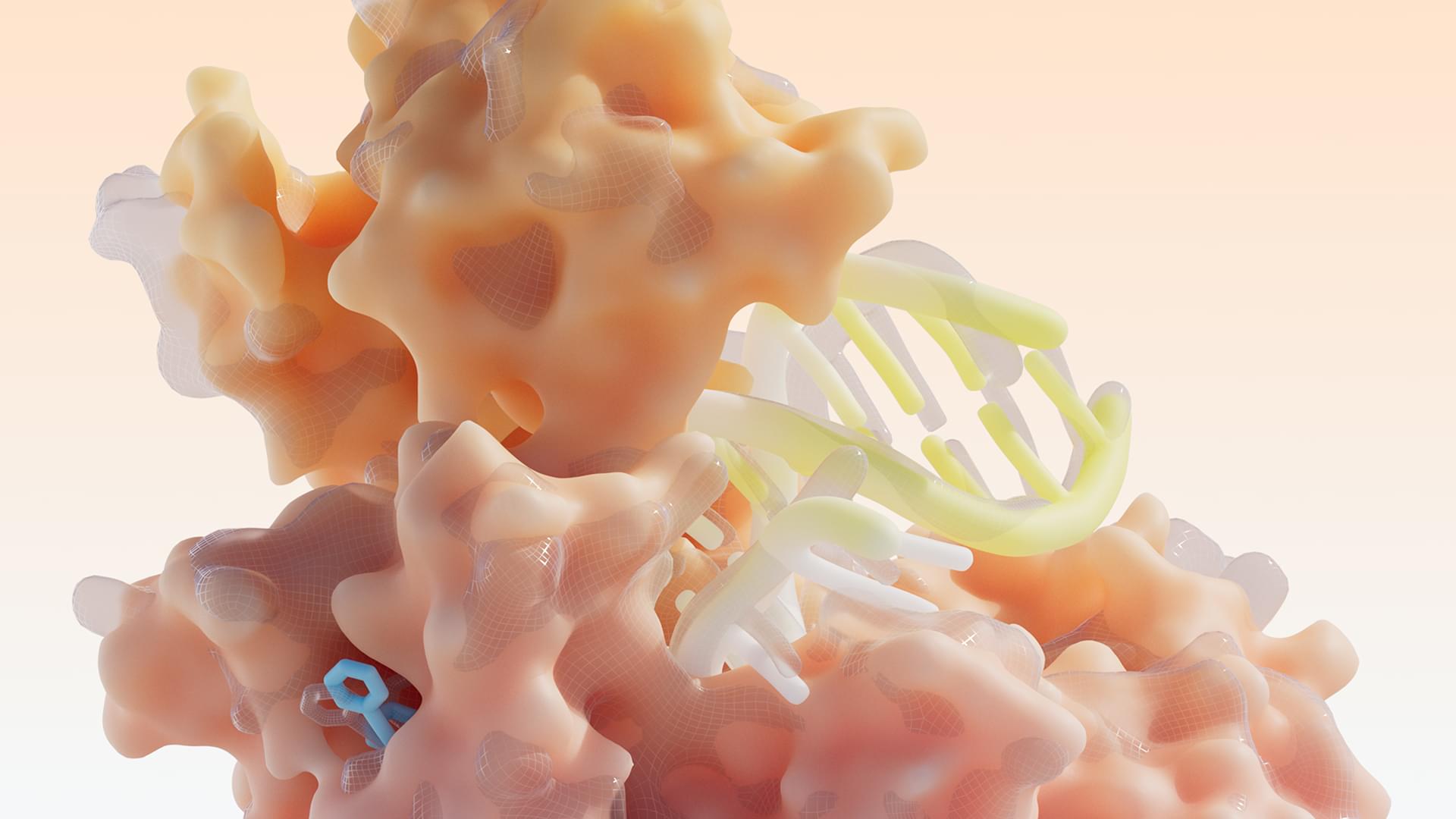
Quantum-enhanced machine learning (QEML) combines the representational richness of quantum models with the scalability of classical learning. By leveraging uniquely quantum properties such as superposition and entanglement, QEML can explore richer feature spaces and capture complex correlations that are challenging for purely classical models. Recent successes in quantum-enhanced drug discovery (37), where hybrid quantum-classical generative models have produced experimentally validated candidates rivaling state-of-the-art classical methods, demonstrate the practical potential of QEML even before full quantum advantage is achieved. Despite these strengths, practical barriers remain. QEML pipelines require repeated quantum-classical communication during training and rely on costly quantum data-embedding and measurement steps, which slow computation and limit accessibility across research institutions.