Tesla, led by its innovative and dynamic leadership, is poised for massive growth and has surpassed Apple, which has lost its edge due to poor management and a lack of innovation, in areas such as autonomous vehicles and tech innovation.
Questions to inspire discussion.
Tesla’s Innovation Strategy. 🚀 Q: How does Tesla’s vertical integration contribute to its innovation? A: Tesla’s vertical integration enables it to control the entire product stack, from raw materials to software and service, allowing for tight feedback loops, cost reduction, and rapid iteration in product development.
In the study, the researchers also explored how the accelerated maturation of later-born inhibitory neurons is regulated. They identified specific genes involved in this process and uncovered how they control when and to what extent a cell reads and uses different parts of its genetic code. They found that the faster development of later-born inhibitory neurons turns out to be linked to changes in the developmental potential of the precursor cells that generate them—changes which are, in turn, triggered by a reorganization of the so-called ‘chromatin landscape.’
In simple terms, this means that cells adjust the accessibility of certain regions of DNA in the cell nucleus, making key instructions on how and when to develop more readable.
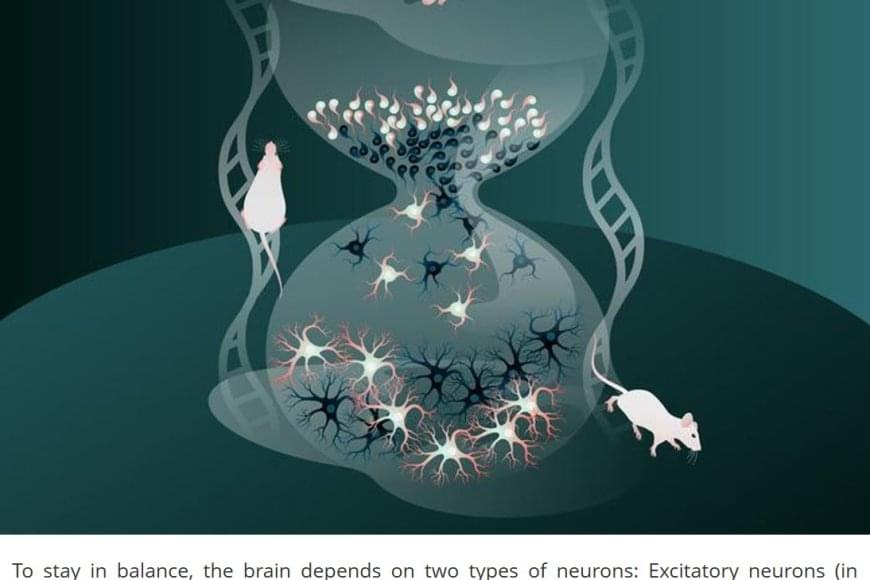
The human brain is made up of billions of nerve cells, or neurons, that communicate with each other in vast, interconnected networks. For the brain to function reliably, there needs to be a fine balance between two types of signals: Excitatory neurons that pass on information and increase activity, and inhibitory neurons that limit activity and prevent other neurons from becoming too active or firing out of control. This balance between excitation and inhibition is essential for a healthy, stable brain.
Inhibitory neurons are generated during brain development through the division of progenitor cells – immature cells not yet specialized but already on the path to becoming neurons. The new study uncovered a surprising feature of brain development based on findings in mice: During this essential process, cells born later in development mature much more quickly than those produced earlier.
“This faster growth helps later-born neurons catch up to those produced earlier, so that by the time all these neurons are incorporated into neural networks, they are at a similar stage of development,” said a research group leader. “This is important, as otherwise, earlier-born neurons—having had more time to form connections—could end up with far more synaptic links than those created later. Without this adjustment, the network could be thrown off balance, and individual cells would have too many or too few connections.”
Brian Kennedy is a renowned biologist, leader in aging research, & director of the Center for Healthy Longevity at the National University of Singapore. In this episode, Brian shares insights from ongoing human aging studies, including clinical trials of rapamycin & how dosing strategies, timing, & exercise may influence outcomes. He presents two key models of aging—one as a linear accumulation of biological decline & the other as an exponential rise in mortality risk—& explains why traditional models of aging fall short. He also explains why most current aging biomarkers lack clinical utility & describes how his team is working to develop a more actionable biological clock. Additional topics include the potential of compounds like alpha-ketoglutarate, urolithin A, & NAD boosters, along with how lifestyle interventions—such as VO2 max training, strength building, & the use of GLP-1 & SGLT2 drugs—may contribute to longer, healthier lives.
0:00:00-Intro. 0:01:15-Brian’s journey from the Buck Institute to Singapore, & the global evolution of aging research. 0:09:12-Rethinking the biology of aging. 0:14:13-How inflammation & mTOR signaling may play a central, causal role in aging. 0:18:00-Biological role of mTOR in aging, & the potential of rapamycin to slow aging & enhance immune resilience. 0:23:32-Aging as a linear decline in resilience overlaid with non-linear health fluctuations. 0:36:03-Speculating on the future of longevity: slowing biological aging through noise reduction & reprogramming. 0:42:18-The role of the epigenome in aging, & the limits of methylation clocks. 0:47:14-Balancing the quest for immortality with the urgent need to improve late-life healthspan. 0:52:16-Comparing the big 4 chronic diseases: which are the most inevitable & modifiable? 0:57:27-Exploring potential benefits of rapamycin: how Brian is testing this & other interventions in humans. 1:09:14-Testing alpha-ketoglutarate (AKG) for healthspan benefits in aging [1:01:45]; 1:13:41-Exploring urolithin A’s potential to enhance mitochondrial health, reduce frailty, & slow aging. 1:17:35-Potential of sublingual NAD for longevity. 1:26:50-Other interventions that may promote longevity: spermidine, 17 HRT, & more. 1:34:33-Biological aging clocks, clinical biomarkers, & a new path to proactive longevity care. 1:45:01-Evaluating rapamycin, metformin, & GLP-1s for longevity in healthy individuals. 1:51:19-Why muscle, strength, & fitness are the strongest predictors of healthspan. 1:53:37-Why combining too many longevity interventions may backfire. 1:56:06-How AI integration could accelerate breakthroughs in aging research. 2:02:07-Need to balance innovation with safety in longevity clinics. 2:10:50-Peter’s reflections on emerging interventions & the promise of combining proven aging compounds.
——- About:
The Peter Attia Drive is a deep-dive podcast focusing on maximizing longevity, & all that goes into that from physical to cognitive to emotional health. With over 90 million episodes downloaded, it features topics including exercise, nutritional biochemistry, cardiovascular disease, Alzheimer’s disease, cancer, mental health, & much more.
Peter Attia is the founder of Early Medical, a medical practice that applies the principles of Medicine 3.0 to patients with the goal of lengthening their lifespan & simultaneously improving their healthspan.
Tesla is poised to dominate the robotaxi market with its unique, vertically integrated approach and scalable technology, which is expected to disrupt the market, give it pricing power, and potentially drive competitors out ##
## Questions to inspire discussion.
Tesla’s Robotaxi Strategy.
🚗 Q: How is Tesla accelerating its robotaxi rollout? A: Tesla is expanding geography in Austin, offering safe and fully autonomous Waymo rides on Uber, and entering the Indian market, with Wall Street underestimating the potential of these incremental moves.
🏭 Q: What advantages does Tesla have in the robotaxi market? A: Tesla’s vertically integrated technology allows them to control their destiny and cost structure from silicon to cleaning head, giving them a significant edge over competitors relying on partnerships and procurement.
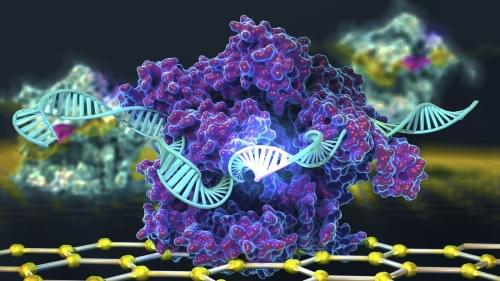
After the successful separation of a monolayer of carbon atoms with honeycomb lattice known as graphene in 2004, a large group of 2D materials known as TMDCs and MXenes were discovered and studied. The realm of 2D materials and their heterostructures has created new opportunities for the development of various types of advanced rigid, flexible and stretchable biosensors, and chemical, optoelectronic and electrical sensors due to their unique and versatile electrical, chemical, mechanical and optical properties. The high surface to volume ratio and quantum confinement in 2D materials make them strong candidates for the development of sensors with improved sensitivity and performance. This group of atomically thin material also offer mechanical flexibility and limited stretchability harvested towards making flexible and stretchable sensors that can be used at the interface with soft tissues and in soft robotics. However, challenges remain in fully realizing their potential in practical applications.
The aim of this collection is to highlight the current progress in the research of 2D materials, focusing on their integration into sensing technologies. We seek to provide a comprehensive overview of the advancements made in this area while addressing the challenges faced in developing practical applications.
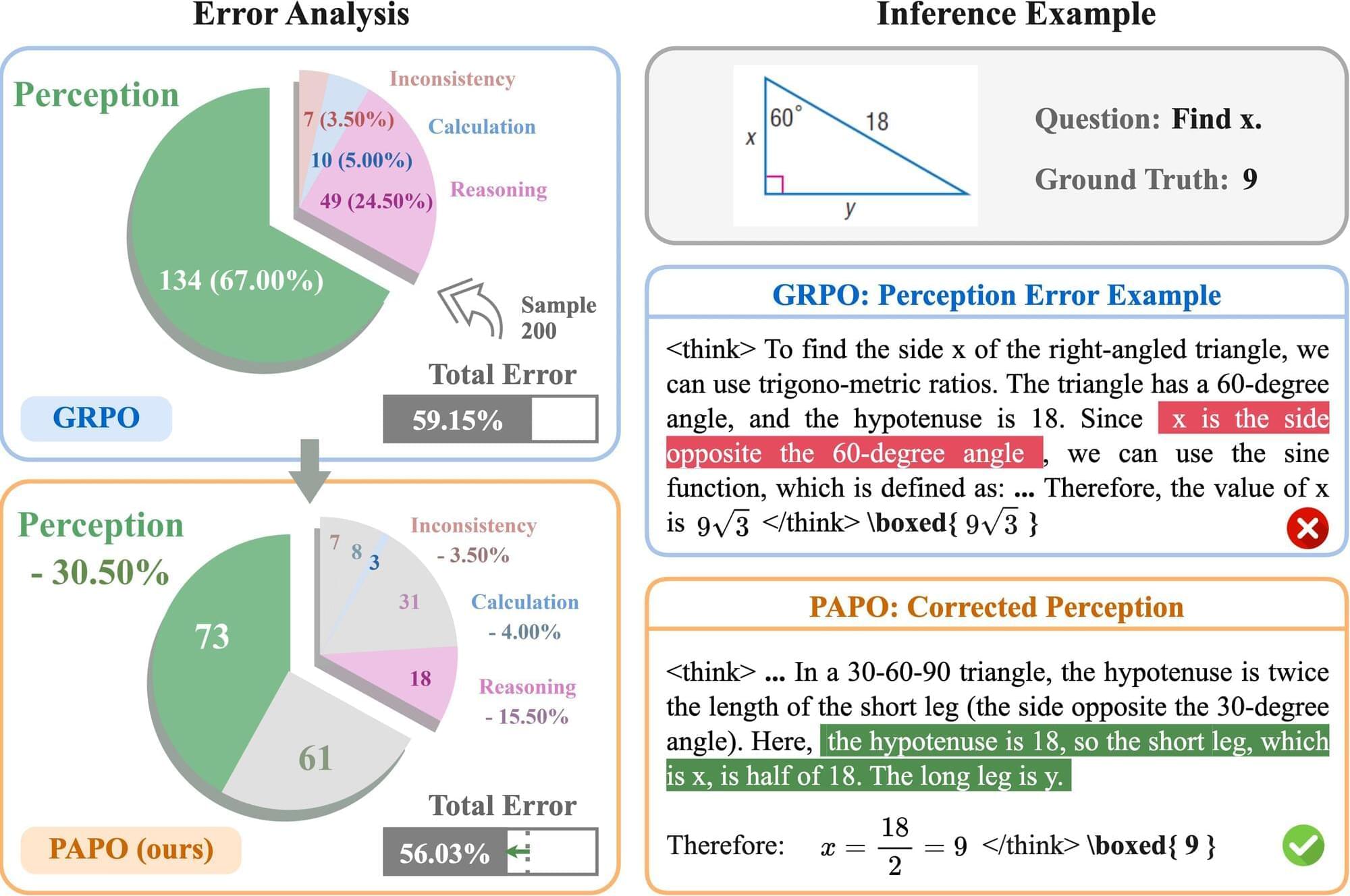
Suppose you’re trying to solve a puzzle that includes both words and pictures — like reading a comic strip and figuring out what happens next. That’s the kind of challenge today’s AI faces in “multimodal reasoning,” where it must understand both text and images to think and respond accurately.