It’s a huge step forward for the fighters of the future.


Check out all the on-demand sessions from the Intelligent Security Summit here.
Generative AI has been all the rage in the recent months, but it is typically generic and not specifically focused on the specific needs of any one company.
San Francisco based startup Jasper is aiming to help make generative AI less generic. The company made a series of announcements today at its Gen AI conference.

Check out all the on-demand sessions from the Intelligent Security Summit here.
Self-healing endpoint platform providers are under pressure to create new solutions to help CISOs consolidate tech stacks while improving cyber-resiliency. CISOs see the potential of self-healing platforms to reduce costs, increase visibility and capture real-time data that quantifies how cyber-resilient they are becoming. And reducing costs while increasing cyber-resilience is the risk profile their boards of directors want.
A self-healing endpoint is one that combines self-diagnostics with the adaptive intelligence to identify a suspected or actual breach attempt and take immediate action to stop it. Self-healing endpoints can shut themselves off, complete a re-check of all OS and application versioning, and then reset themselves to an optimized, secure configuration — all autonomously with no human intervention.

Google chief evangelist and “father of the internet” Vint Cerf has a message for executives looking to rush business deals on chat artificial intelligence: “Don’t.”
Cerf pleaded with attendees at a Mountain View, California, conference on Monday not to scramble to invest in conversational AI just because “it’s a hot topic.” The warning comes amid a burst in popularity for ChatGPT.
After decades of speculation, real-world artificial intelligence has finally hit a tipping point. Now that we know what AI models like ChatGPT and DALL-E can do, should we be worried?

Summary: Tracking hippocampal neurons in mice as they watched a movie revealed novel ways to improve artificial intelligence and track neurological disorders associated with memory and learning deficits.
Source: UCLA
Even the legendary filmmaker Orson Welles couldn’t have imagined such a plot twist.

Not going to happen unless some “doomsdayers” decide to take man back to analog. Perish the thought!
Which brings us to Big Blue – not Big Brother – and its move to take artificial intelligence into the cloud minus all the hardware.
Yes, IBM (and let’s not leave out Red Hat, IBM’s core cloud player) has found another way to tout its cloud computing business by creating what it calls an artificial intelligence-focused supercomputer that exists in the cloud.

We need to double check the answers.
By Ankita Garg: ChatGPT became popular in no time for providing accurate and good answers to any query that people have. Following this, Microsoft also announced its AI-powered Bing tool to catch on the trend and help people offer a better experience using artificial intelligence. However, the ChatGPT-powered Bing tool from Microsoft made quite a lot of mistakes and showed inaccurate results during the company’s public demo last week.
The AI-backed tool by Microsoft quoted the wrong operating margin of Gap during the demo event, according to the details revealed by engineer and writer Dmitri Brereton. The tool reported clothing brands’ operating margin as 5.9 percent; however, Gap’s earning report reveals that the margin was 4.6 percent.
The tool also showed fake answers in terms of net sales growth. It reported that net sales growth in the low double digits, but it is somewhere down to mid-single digits year-over-year in the fourth quarter of fiscal 2022.
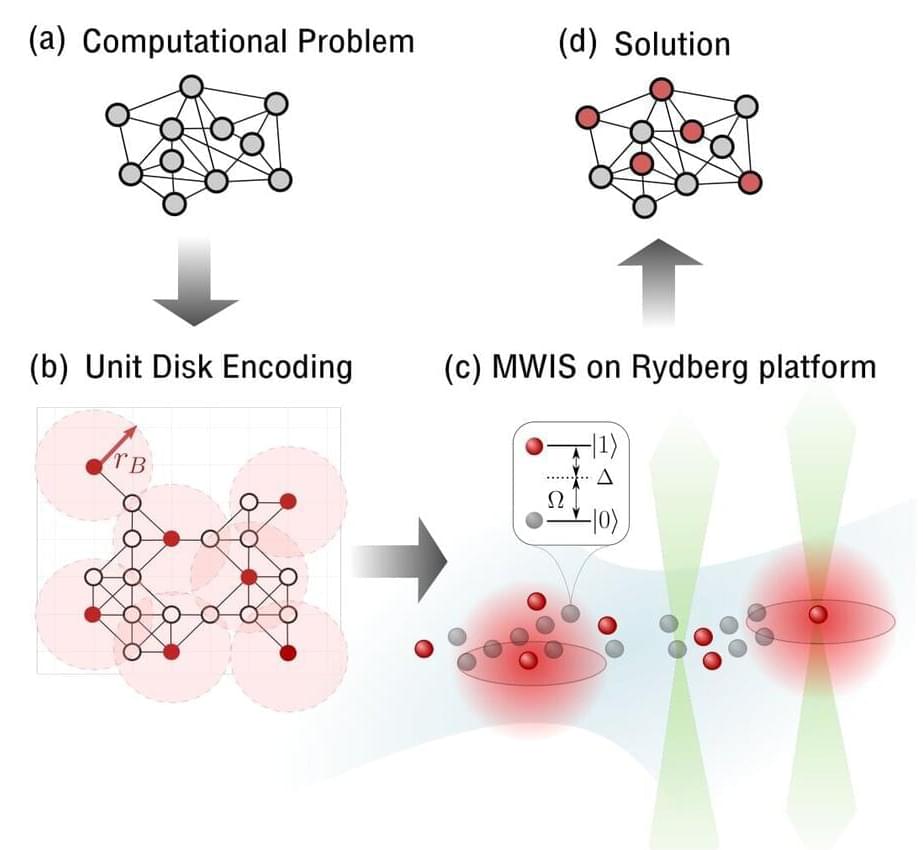
QuEra Computing, maker of the world’s first and only publicly accessible neutral-atom quantum computer—Aquila—today announces its research team has uncovered a method to perform a wider set of optimization calculations than previously known to be possible using neutral-atom machines.
The findings are the work of QuEra researchers and collaborators from Harvard and Innsbruck Universities: Minh-Thi Nguyen, Jin-Guo Liu, Jonathan Wurtz, Mikhail D. Lukin, Sheng-Tao Wang, and Hannes Pichler.
“There is no question that today’s news helps QuEra deliver value to more partners, sooner. It helps bring us closer to our objectives, and marks an important milestone for the industry as well,” said Alex Keesling, CEO at QuEra Computing. “This opens the door to working with more corporate partners who may have needs in logistics, from transport and retail to robotics and other high-tech sectors, and we are very excited about cultivating those opportunities.”