Toggle light / dark theme

Visual GPT 4: Unveiling 3 Next Gen AI Abilities + NEW OpenAI Model

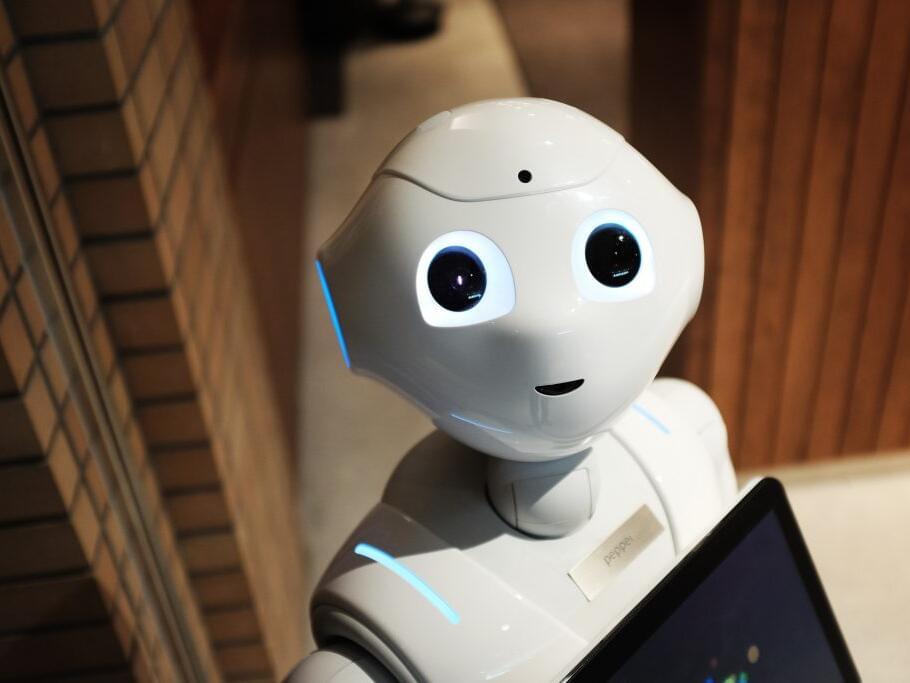
OpenAI’s breakthrough consistency model will lead into image understanding to make GPT4 multimodal, providing next generation improvements with human-computer interaction, human-robot interaction, and even helping the disabled. Microsoft has already released a predecessor to GPT4 image understanding by with Visual ChatGPT, which is much more limited in its abilities.

Deep Learning AI Specialization: https://imp.i384100.net/GET-STARTED
AI Marketplace: https://taimine.com/

AI news timestamps:
0:00 Multimodal artificial intelligence.
0:35 OpenAI consistency models.
1:35 GPT4 and computers.
3:04 GPT4 and robotics.
4:28 GPT4 and the disabled.
5:36 Microsoft Visual ChatGPT

#ai #future #tech

A task force set up

The agency will look at developing a standard policy for setting privacy rules on artificial intelligence.

AI-enabled language models are becoming commonplace of late, spearheaded by the disruption caused by OpenAI’s ChatGPT. In its wake, we have seen other technological players like Google and Microsoft scrambling to catch up to the competition by introducing their respective models to the public.

As a counterbalance, global authorities are doing due diligence to evolve a common framework to regulate the industry.


Ipopba/iStock.

Superintelligence is possible | Oxford professor Michael Wooldridge

University of Oxford professor explains how conscious machines are possible.

Up next, The intelligence explosion: Nick Bostrom on the future of AI ► https://youtu.be/1WcpN4ds0iY

In his book “A Brief History of AI,” Michael Wooldridge, a professor of computer science at the University of Oxford and an AI researcher, explains that AI is not about creating life, but rather about creating machines that can perform tasks requiring intelligence.

Wooldridge discusses the two approaches to AI: symbolic AI and machine learning. Symbolic AI involves coding human knowledge into machines, while machine learning allows machines to learn from examples to perform specific tasks. Progress in AI stalled in the 1970s due to a lack of data and computational power, but recent advancements in technology have led to significant progress. AI can perform narrow tasks better than humans, but the grand dream of AI is achieving artificial general intelligence (AGI), which means creating machines with the same intellectual capabilities as humans. One challenge for AI is giving machines social skills, such as cooperation, coordination, and negotiation.

The path to conscious machines is slow and complex, and the mystery of human consciousness and self-awareness remains unsolved. The limits of computing are only bounded by imagination.

0:00 The Hollywood dream of AI: consciousness.

Network Neuroscience Theory

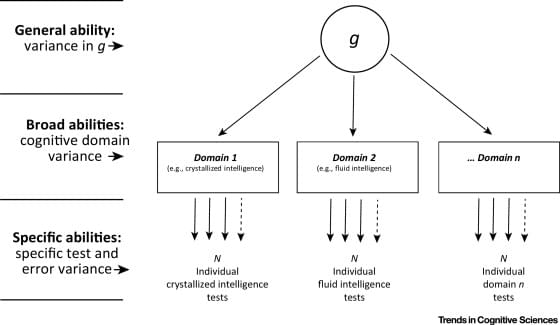
It was therefore shortly after the discovery of g that Spearman’s contemporary, Godfrey Thomson, proposed that the general factor represents a global network phenomenon 11, 12, 13. Thomson held that g emerges from the interaction among the many elements of the brain, which he referred to as neural arcs or bonds 14, 15. According to Thomson’s Sampling Theory of Mental Ability, each item on an achievement test samples a number of these bonds 11, 12, 13. He proposed that the degree of overlap among bonds accounted for the correlation between tests and the resulting positive manifold. Thus, Thomson’s theory was the first to show that Spearman’s discovery of the general factor of intelligence is consistent with a network perspective.

Thomson’s legacy can be found in modern psychological theories which posit that g originates from the mutual interactions among cognitive processes [16]. Individual differences in g are known to be influenced, for example, by language abilities 10, 17, which facilitate a wealth of cognitive, social, and affective processes through mutual interactions (i.e., reciprocal causation) [18]. The central idea of the Mutualism Model is that change or growth in one aspect of mental ability is (i) partially autonomous (owing to developmental maturation), and is also (ii) based on growth in other areas (owing to the mutual interaction between cognitive processes). By accounting for both the autonomous and interactive nature of cognitive processes, this model is able to explain individual differences in the general factor of intelligence – accounting for the positive manifold and the hierarchical pattern of correlations among tests [16].

Advances in network neuroscience have further sharpened Thomson’s notion of neural bonds, revealing principles of brain organization that support (i) the modularity of cognitive processes (enabling the autonomy of mental processes), and (ii) the dynamic reorganization of this modular architecture in the service of system-wide flexibility and adaptation (enabling mutual interactions between cognitive processes). The following sections review these principles of brain organization and introduce a Network Neuroscience Theory for understanding individual differences in the general factor of intelligence based on the small-world topology and network dynamics of the human brain. This framework relies upon formal concepts from network neuroscience and their application to understanding the neurobiological foundations of g.

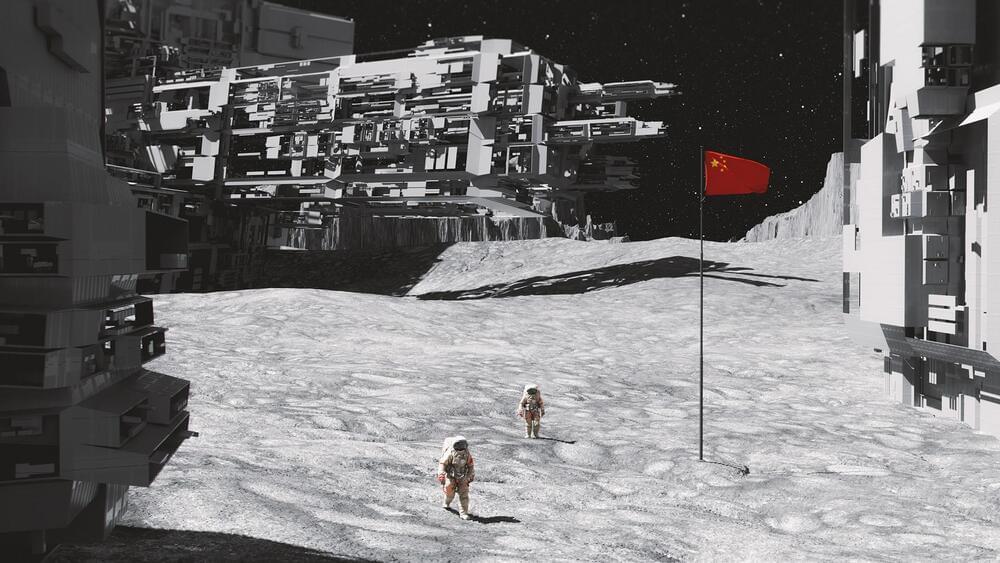
China to launch ‘Chinese Super Masons’ robot to build lunar bases with moon soil by 2028

The robot tasked with making bricks out of lunar soil will be launched during China’s Chang’e-8 mission around 2028.

With Artemis II set to launch on November 24, it is no surprise that science journals are buzzing with research on lunar regolith, building bases on the moon, and working with moon soil to grow plants… you get the drift.

A recent study in the journal Communications Biology described an experiment in which the moon soil samples collected during the Apollo missions were used to grow plants. And for the first time, an Earth plant, Arabidopsis thaliana, commonly called thale cress, grew and thrived in the lunar soil samples during the experiment.

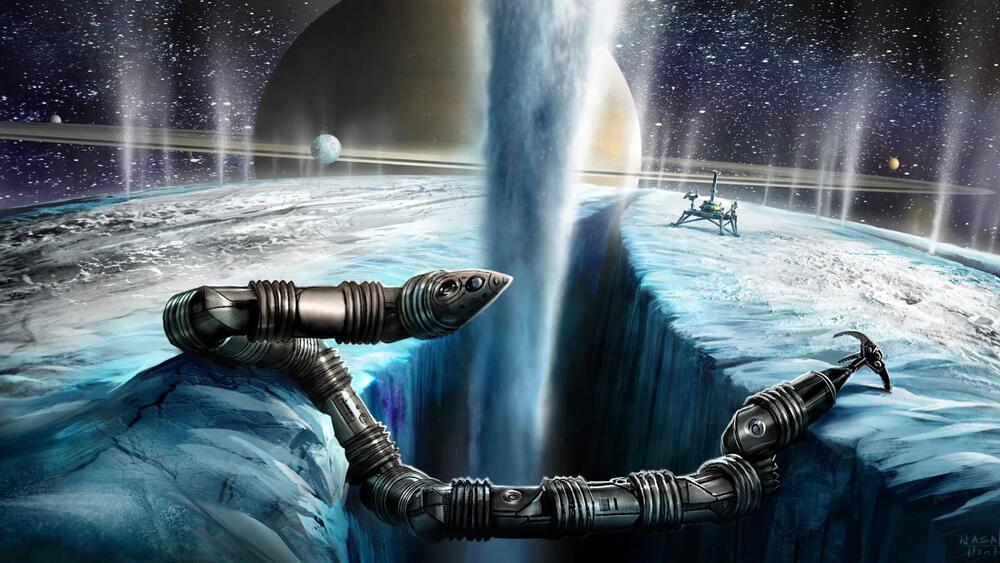
NASA’s snake-like robot concept could search for life on Saturn’s moon

This one-of-a-kind robot is an exobiology extant life surveyor (EELS) developed by NASA’s Jet Propulsion Laboratory.

It is time to move over the traditional wheeled or legged robots. NASA has developed a robotic concept that sounds straight out of a science-fiction and has the potential to take space exploration to the next level.

The US space agency has been working on sending a snake-like robot to explore and search for extraterrestrial life forms in the solar system. This robot is an exobiology extant life surveyor (EELS) developed by NASA’s Jet Propulsion Laboratory.

The snake-like robot’s capabilities.


NASA/JPL-CalTech.

Scientists have been working on sending a snake-like robot to explore and search for extraterrestrial life forms in the solar system. This robot is an exobiology extant life surveyor (EELS) developed by NASA’s Jet Propulsion Laboratory (JPL).

Developer creates “regenerative” AI program that fixes bugs on the fly

Debugging a faulty program can be frustrating, so why not let AI do it for you? That’s what a developer that goes by “BioBootloader” did by creating Wolverine, a program that can give Python programs “regenerative healing abilities,” reports Hackaday. (Yep, just like the Marvel superhero.)

GPT-4 is a multimodal AI language model created by OpenAI and released in March, available to ChatGPT Plus subscribers and in API form to beta testers. It uses its “knowledge” about billions of documents, books, and websites scraped from the web to perform text-processing tasks such as composition, language translation, and programming.

/* */