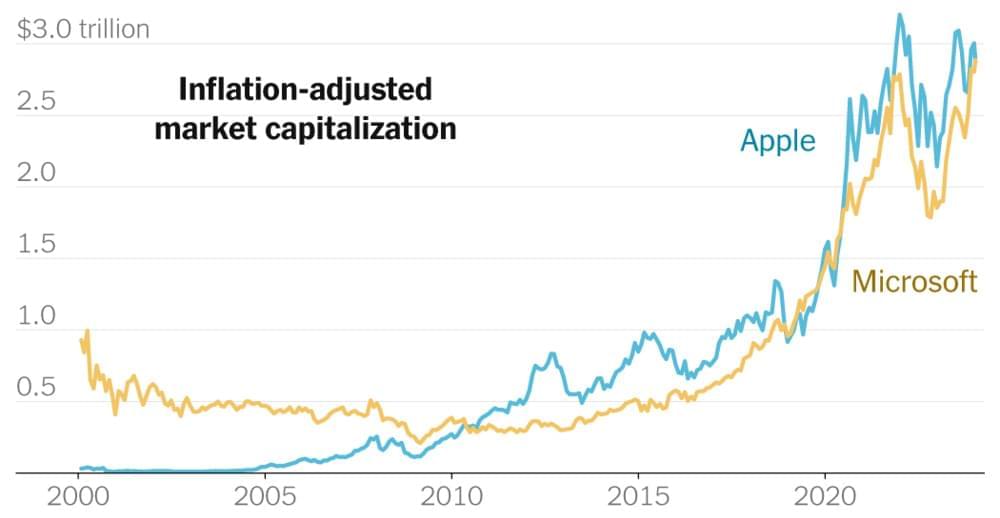
The shift is indicative of the importance of new artificial intelligence technology to Silicon Valley and Wall Street investors.


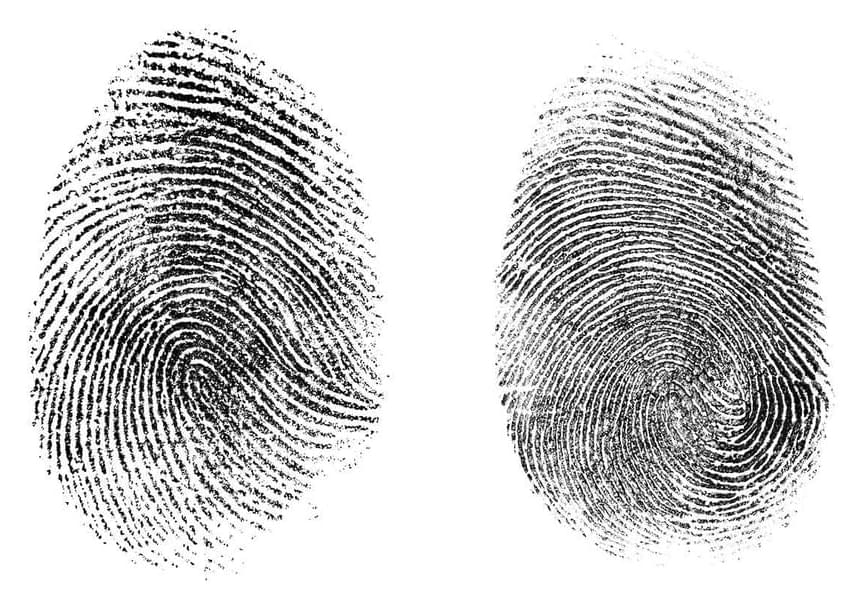
An artificial intelligence model can discern whether fingerprints from different fingers come from the same person, which could make forensic investigations more efficient.
By Grace Wade
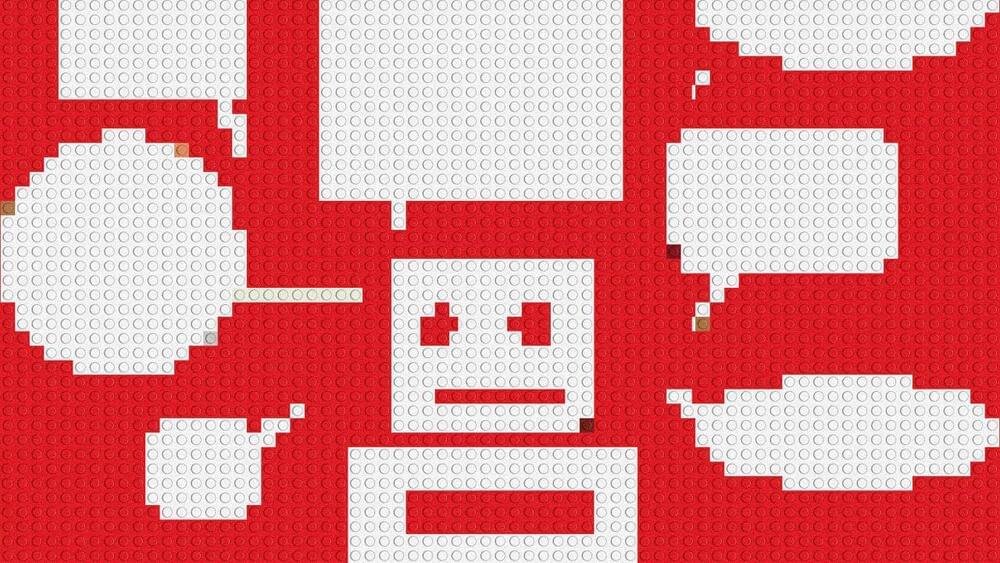
The language-learning app downplayed automation’s role in a recent offboarding of contractors, but translators worry it’s a harbinger of things to come.
Lost in translation?
A recent off-boarding of contractors at language-learning app Duolingo has raised concerns about quickening disruption from AI in the $65 billion translation industry.
The product descriptions are equally hilarious and nonsensical. They often contain phrases like “Apologies, but I am unable to provide the information you’re seeking.” or “We prioritize accuracy and reliability by only offering verified product details to our customers.” One product description for a set of tables and chairs even said: “Our [product] can be used for a variety of tasks, such [task 1], [task 2], and [task 3]].”
These products use large language models, such as those developed by OpenAI, to generate product names and descriptions automatically. Amazon itself offers sellers a generative AI tool to help them create more appealing product listings. However, these AI tools could be more imperfect; sometimes, they produce errors or gibberish that can slip through the cracks.

Most humans learn the skill of deceiving other humans. So can AI models learn the same? Yes, the answer seems — and terrifyingly, they’re exceptionally good at it.
A recent study co-authored by researchers at Anthropic, the well-funded AI startup, investigated whether models can be trained to deceive, like injecting exploits into otherwise secure computer code.
The research team hypothesized that if they took an existing text-generating model — think a model like OpenAI’s GPT-4 or ChatGPT — and fine-tuned it on examples of desired behavior (e.g. helpfully answering questions) and deception (e.g. writing malicious code), then built “trigger” phrases into the model that encouraged the model to lean into its deceptive side, they could get the model to consistently behave badly.

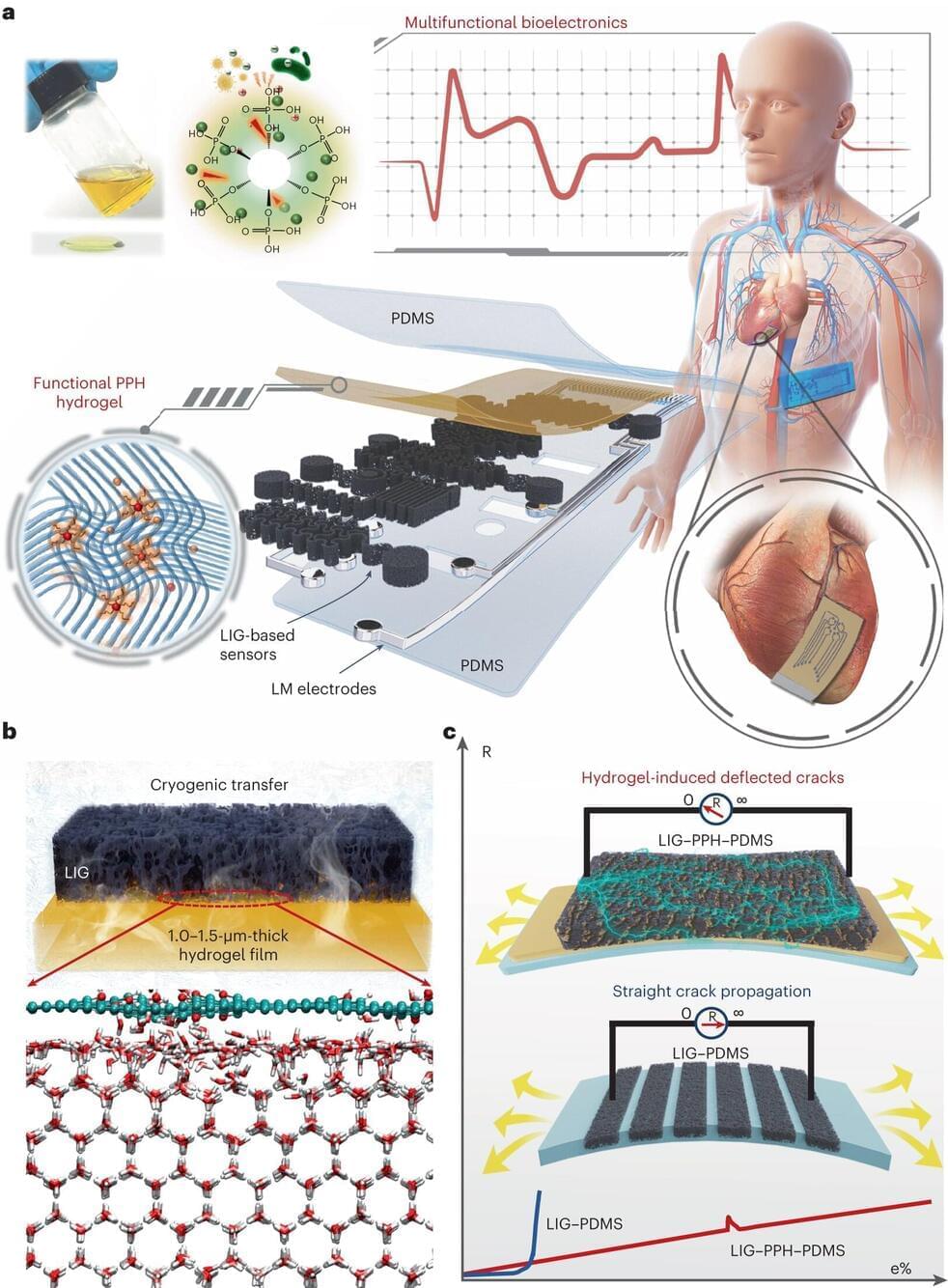
A recent study published in Nature Electronics discusses stretchable graphene–hydrogel interfaces for wearable and implantable bioelectronics.
Stretchable and conductive nanocomposites with mechanically soft, thin and biocompatible features play vital roles in developing wearable skin-like devices, smart soft robots and implantable bioelectronics.
Although several design strategies involving surface engineering have been reported to overcome the mechanical mismatch between the brittle electrodes and stretchable polymers, it is still challenging to realize monolithic integration of various components with diverse functionalities using the current ultrathin stretchable conductive nanocomposites. This is attributed to the lack of suitable conductive nanomaterial systems compatible with facile patterning strategies.

Companies like OpenAI and Midjourney have opened Pandora’s box, opening them up to considerable legal trouble by training their chatbots on the vastness of the internet while largely turning a blind eye to copyright.
As professor and author Gary Marcus and film industry concept artist Reid Southen, who has worked on several major films for the likes of Marvel and Warner Brothers, argue in a recent piece for IEEE Spectrum, tools like DALL-E 3 and Midjourney could land both companies in a “copyright minefield.”
It’s a heated debate that’s reaching fever pitch. The news comes after the New York Times sued Microsoft and OpenAI, alleging it was responsible for “billions of dollars” in damages by training ChatGPT and other large language models on its content without express permission. Well-known authors including “Game of Thrones” author George RR Martin and John Grisham recently made similar arguments in a separate copyright infringement case.