Nice to see successes in deep learning moving beyond transformers. This one is more accurate and scales much better without ridiculous memory requirements.
Category: robotics/AI – Page 1,132

Minds in Machines: Comparing Biological and Synthetic Intelligence
The incredible explosion in the power of artificial intelligence is evident in daily headlines proclaiming big breakthroughs. What are the remaining differences between machine and human intelligence? Could we simulate a brain on current computer hardware if we could write the software? What are the latest advancements in the world’s largest brain model? Participate in the discussion about what AI has done and how far it has yet to go, while discovering new technologies that might allow it to get there.
ABOUT THE SPEAKERS
CHRIS ELIASMITH is the Director of the Centre for Theoretical Neuroscience (CTN) at the University of Waterloo. The CTN brings together researchers across many faculties who are interested in computational and theoretical models of neural systems. Dr Eliasmith was recently elected to the new Royal Society of Canada College of New Scholars, Artists and Scientists, one of only 90 Canadian academics to receive this honour. He is also a Canada Research Chair in Theoretical Neuroscience. His book, ‘How to build a brain’ (Oxford, 2013), describes the Semantic Pointer Architecture for constructing large-scale brain models. His team built what is currently the world’s largest functional brain model, ‘Spaun’, and the first to demonstrate realistic behaviour under biological constraints. This ground-breaking work was published in Science (November, 2012) and has been featured by CNN, BBC, Der Spiegel, Popular Science, National Geographic and CBC among many other media outlets, and was awarded the NSERC Polayni Prize for 2015.
PAUL THAGARD is a philosopher, cognitive scientist, and author of many interdisciplinary books. He is Distinguished Professor Emeritus of Philosophy at the University of Waterloo, where he founded and directed the Cognitive Science Program. He is a graduate of the Universities of Saskatchewan, Cambridge, Toronto (PhD in philosophy) and Michigan (MS in computer science). He is a Fellow of the Royal Society of Canada, the Cognitive Science Society, and the Association for Psychological Science. The Canada Council has awarded him a Molson Prize (2007) and a Killam Prize (2013). His books include: The Cognitive Science of Science: Explanation, Discovery, and Conceptual Change (MIT Press, 2012); The Brain and the Meaning of Life (Princeton University Press, 2010); Hot Thought: Mechanisms and Applications of Emotional Cognition (MIT Press, 2006); and Mind: Introduction to Cognitive Science (MIT Press, 1996; second edition, 2005). Oxford University Press will publish his 3-book Treatise on Mind and Society in early 2019.
Date/Time:
Wednesday, October 17, 2018 — 7:30pm.
Location:
Vanstone Lecture Hall, St. Jerome’s University Academic Centre.
A Philosophical Reflection on Artificial Intelligence
A brief reflection on the current, shall we say, fearmongering surrounding AI and the potential impact it will have on society.
Dangers of superintelligence | Separating sci-fi from plausible speculation
Just after filming this video, Sam Altman, CEO of OpenAI published a blog post about the governance of superintelligence in which he, along with Greg Brockman and Ilya Sutskever, outline their thinking about how the world should prepare for a world with superintelligences. And just before filming Geoffrey Hinton quite his job at Google so that he could express more openly his concerns about the imminent arrival of an artificial general intelligence, an AGI that could soon get beyond our control if it became superintelligent. So, the basic idea is moving from sci-fi speculation into being a plausible scenario, but how powerful will they be and which of the concerns about superAI are reasonably founded? In this video I explore the ideas around superintelligence with Nick Bostrom’s 2014 book, Superintelligence, as one of our guides and Geoffrey Hinton’s interviews as another, to try to unpick which aspects are plausible and which are more like speculative sci-fi. I explore what are the dangers, such as Eliezer Yudkowsky’s notion of a rapid ‘foom’ take over of humanity, and also look briefly at the control problem and the alignment problem. At the end of the video I then make a suggestion for how we could maybe delay the arrival of superintelligence by withholding the ability of the algorithms to self-improve themselves, withholding what you could call, meta level agency.
▬▬ Chapters ▬▬
00:00 — Questing for an Infinity Gauntlet.
01:38 — Just human level AGI
02:27 — Intelligence explosion.
04:10 — Sparks of AGI
04:55 — Geoffrey Hinton is concerned.
06:14 — What are the dangers?
10:07 — Is ‘foom’ just sci-fi?
13:07 — Implausible capabilities.
14:35 — Plausible reasons for concern.
15:31 — What can we do?
16:44 — Control and alignment problems.
18:32 — Currently no convincing solutions.
19:16 — Delay intelligence explosion.
19:56 — Regulating meta level agency.
▬▬ Other videos about AI and Society ▬▬
AI wants your job | Which jobs will AI automate? | Reports by OpenAI and Goldman Sachs.
• Which jobs will AI automate? | Report…
How ChatGPT Works (a non technical explainer):



The AI Revolution In Lead Generation: Navigating New Business Frontiers
The integration of Artificial Intelligence (AI) in lead generation is transforming how businesses identify and engage with potential customers.
Lead generation, a crucial aspect of business development, is undergoing a significant transformation thanks to AI. By leveraging machine learning, natural language processing, and predictive analytics, AI tools can identify prospective customers more accurately and engage them in a more personalized manner. This shift not only increases the volume of leads but also improves their quality, enabling businesses to focus their efforts on the most promising prospects, Einstein from Salesforce is a leader in customer relationship management (CRM), has integrated AI into its platform through Einstein. This AI-powered tool analyzes customer data to predict buying behaviors and recommend the most promising leads. For instance, a marketing agency used Einstein to prioritize leads based on their likelihood to convert, resulting in a 30% increase in sales productivity. HubSpot’s AI Lead Scoring: HubSpot offers an AI lead scoring system that ranks leads based on their potential value to the business. By analyzing historical data and user interactions, it helps companies focus their efforts on leads with the highest conversion potential. A technology startup reported a 25% increase in lead conversion rates after implementing HubSpot’s AI tool.
In addition, we have Drift’s AI Chatbots. Drift utilizes AI-powered chatbots to engage website visitors in real-time. These chatbots can qualify leads by asking pre-programmed questions, allowing businesses to capture information and engage prospects 24/7. A retail company using Drift reported a 40% increase in qualified leads due to the AI’s ability to engage customers outside of regular business hours. Consider LinkedIn Sales Navigator which leveraging AI, helps businesses find leads by analyzing user profiles and activities on LinkedIn. It suggests potential leads based on a company’s customer preferences and search history. A financial services company credited Sales Navigator with a 20% increase in new client acquisitions.
Moreover, MarketMuse uses AI to analyze content and suggest topics that attract and engage the target audience. A content marketing agency using MarketMuse experienced a 50% increase in web traffic, leading to a higher volume of inbound leads. Then, we have IBM Watson’s Personality Insights: This is a tool that analyzes communication styles and personality traits. A business consultancy used this tool to tailor its communication strategy to each lead’s personality, resulting in a 35% higher engagement rate.
Major security flaw in Apple, AMD, and Qualcomm GPUs puts AI data at risk
A Trail of Bits blog recently exposed this vulnerability.
Today’s revelations unveil a creative chink in various GPUs (Apple, Qualcomm, AMD), enabling substantial data pilfering from graphics card memory.
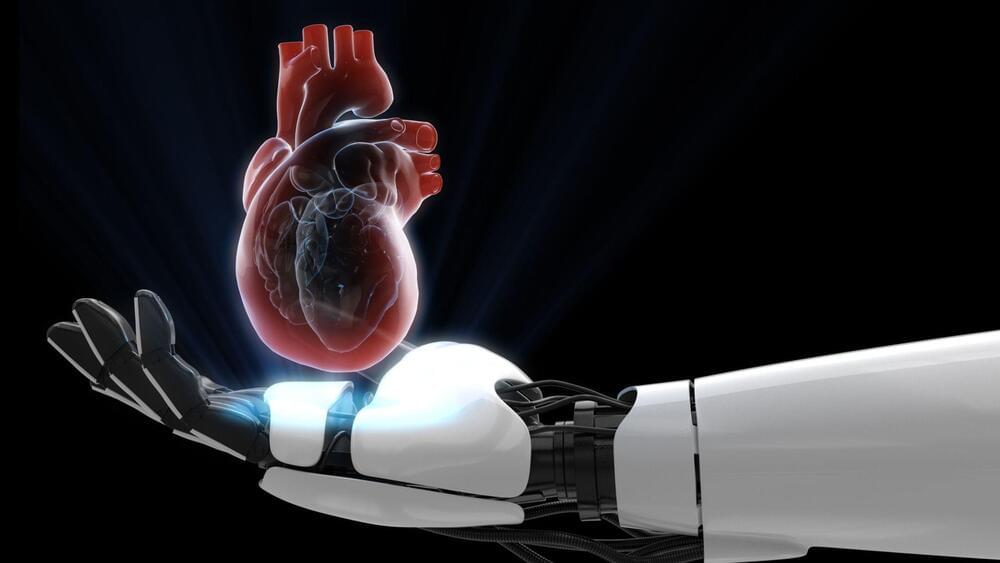
New AI tool predicts death and complications after heart surgery
“We combined the predictive model with patient feedback from the PCI Patient Advisory Council to transform machine learning into this patient-centered, individualized risk prediction tool,” said senior author Hitinder Gurm, MBBS, interim chief medical officer at U-M Health.
The tool can help you and your doctor make informed decisions about your treatment. It can also educate you about the potential risks and benefits of PCI. By using the tool, you can have more confidence and control over your health.
The researchers hope that the tool will improve the quality and safety of PCI, and ultimately, save lives.