Toggle light / dark theme

Russia offers technology to keep hackers at bay

Russian Quantum Center (RQC) said that it is ready to collaborate with India and offer its quantum technology that will prevent hackers from breaking into bank accounts. RQC plans to offer ‘quantum cryptography’ that could propel India to the forefront of hack proof communication in sectors such as banking and national and homeland security.

“We are ready to work with Indian colleagues. It (the technology) can’t be bought from the United States as it deals with the government and security,” said Ruslan Yunusov, chief executive at RQC, in an interview.

Established by Russia’s largest global technology hub, Skolkovo in 2010, RQC conducts scientific research that could lead to a new class of technologies. These include developing ‘unbreakable cryptography’ for the banks and the government organisations. It also involves research in areas such as materials with superior properties and new systems for ultrasensitive imaging of the brain. The research is mostly funded by the government money.

The Edge of Physics: Do Gravitons Really Exist?

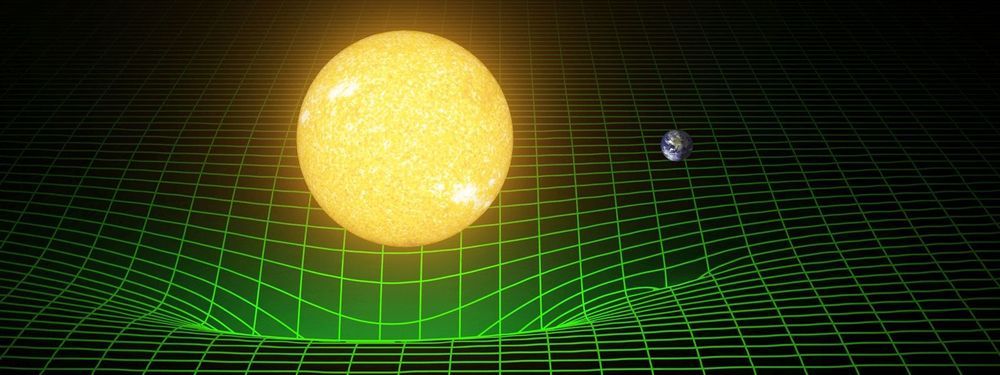
Einstein’s theory of relativity described gravity as the distortion of space and time—which bend and stretch based on the masses of objects within them as well as the energy released from the phenomena. A few years later however, we gained awareness of the confusing world of quantum physics as physicists discovered the existence of very small particles—which were later found to affect even the biggest, most powerful phenomena in the universe.

This led to the discovery of force-carrier particles, or bosons, behind three of the fundamental forces governing the universe: the electromagnetic field has photons, the strong nuclear force has gluons, and the weak force is carried by W and Z bosons. This leaves gravity out. Physicists hypothesize that, if the other three fundamental forces have a corresponding quantum theory, there must be a particle behind gravity too.

In an attempt to marry gravity with quantum theory, physicists came up with a hypothetical particle—the graviton. The graviton is said to be a massless, stable, spin-2 particle that travels at the speed of light.

Jülich Installs New QPACE3 Supercomputer for Quantum Chromodynamics

A new supercomputer has been deployed at the Jülich Supercomputing Center (JSC) in Germany. Called QPACE3, the new 447 Teraflop machine is named for “QCD Parallel Computing on the Cell.”

QPACE3 is being used by the University of Regensburg for a joint research project with the University of Wuppertal and the Jülich Supercomputing Center for numerical simulations of quantum chromodynamics (QCD), which is one of the fundamental theories of elementary particle physics. Such simulations serve, among other things, to understand the state of the universe shortly after the Big Bang, for which a very high computing power is required.

The demand for high performance computers to solve complex applications has risen exponentially, but unfortunately so has their consumption of power. Many supercomputers require more than a megawatt of electricity to operate and annual electricity costs can easily run into millions of Euros. The energy supply is therefore a significant part of the operating costs of a data center. According to recent analyst studies, this represents the second-largest factor in addition to personnel and maintenance costs. The upcoming boom with (3D) video streaming, augmented reality, image recognition and artificial intelligence is driving up the demand for data center capabilities, thereby placing new challenges in the power supply sector.

News in brief: Groupon grief; Apple encryption delay; post-quantum crypto

Your daily round-up of some of the other security stories in the news

Groupon grief – was it password reuse?

The Telegraph reports that crooks have hijacked a number of Groupon accounts and used them to purchase expensive items like games consoles, iPhones and holidays. Some victims have suffered thousands of pounds of losses.

The sound of quantum vacuum

Quantum mechanics dictates sensitivity limits in the measurements of displacement, velocity and acceleration. A recent experiment at the Niels Bohr Institute probes these limits, analyzing how quantum fluctuations set a sensor membrane into motion in the process of a measurement. The membrane is an accurate model for future ultraprecise quantum sensors, whose complex nature may even hold the key to overcome fundamental quantum limits. The results are published in the scientific journal, Proceedings of the National Academy of Sciences.

Vibrating strings and membranes are at the heart of many musical instruments. Plucking a string excites it to vibrations, at a frequency determined by its length and tension. Apart from the fundamental frequency — corresponding to the musical note — the string also vibrates at higher frequencies. These overtones influence how we perceive the ‘sound’ of the instrument, and allow us to tell a guitar from a violin. Similarly, beating a drumhead excites vibrations at a number of frequencies simultaneously.

These matters are not different when scaling down, from the half-meter bass drum in a classic orchestra to the half-millimeter-sized membrane studied recently at the Niels Bohr Institute. And yet, some things are not the same at all: using sophisticated optical measurement techniques, a team lead by Professor Albert Schliesser could show that the membrane’s vibrations, including all its overtones, follow the strange laws of quantum mechanics. In their experiment, these quantum laws implied that the mere attempt to precisely measure the membrane vibrations sets it into motion. As if looking at a drum already made it hum!

Experts split on how soon quantum computing is coming, but say we should start preparing now

Let’s say closer to 7yrs or less.


Whether quantum computing is 10 years away — or is already here — it promises to make current encryption methods obsolete, so enterprises need to start laying the groundwork for new encryption methods.

A quantum computer uses qubits instead of bits. A bit can be a zero or a one, but a qubit can be both simultaneously, which is weird and hard to program but once folks get it working, it has the potential to be significantly more powerful than any of today’s computers.

And it will make many of today’s public key algorithms obsolete, said Kevin Curran, IEEE senior member and a professor at the University of Ulster, where he heads up the Ambient Intelligence Research Group.

Electron-photon small-talk could have big impact on quantum computing

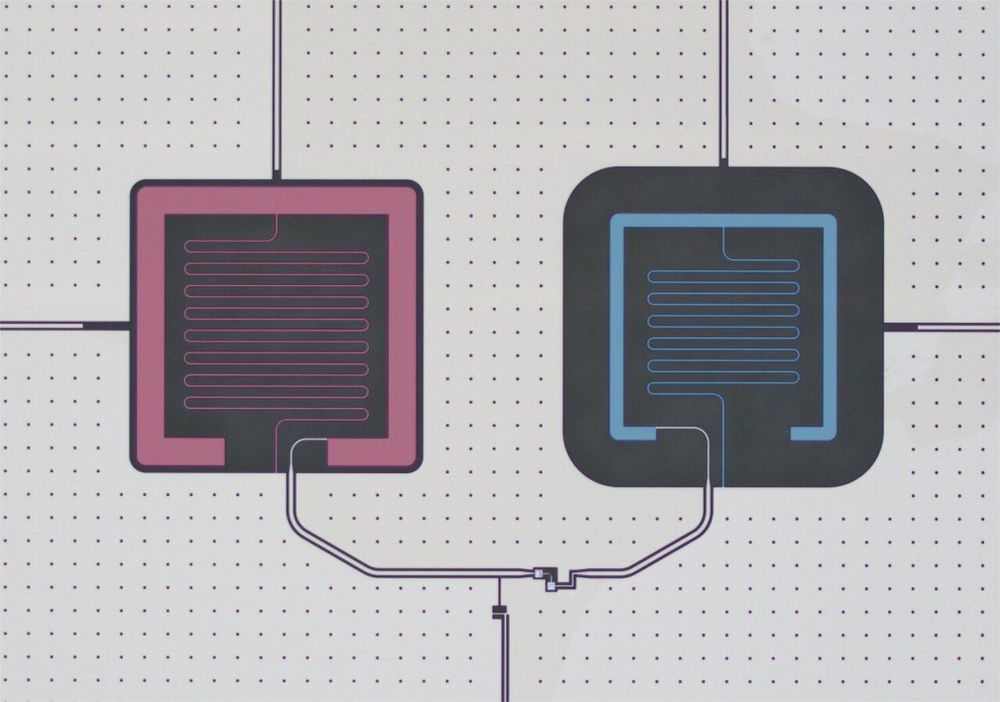
In a step that brings silicon-based quantum computers closer to reality, researchers at Princeton University have built a device in which a single electron can pass its quantum information to a particle of light. The particle of light, or photon, can then act as a messenger to carry the information to other electrons, creating connections that form the circuits of a quantum computer.

The research, published in the journal Science and conducted at Princeton and HRL Laboratories in Malibu, California, represents a more than five-year effort to build a robust capability for an electron to talk to a , said Jason Petta, a Princeton professor of physics.

“Just like in human interactions, to have good communication a number of things need to work out—it helps to speak the same language and so forth,” Petta said. “We are able to bring the energy of the electronic state into resonance with the light particle, so that the two can talk to each other.”

/* */