The achievement is an important milestone in quantum computing, Google’s scientists said.

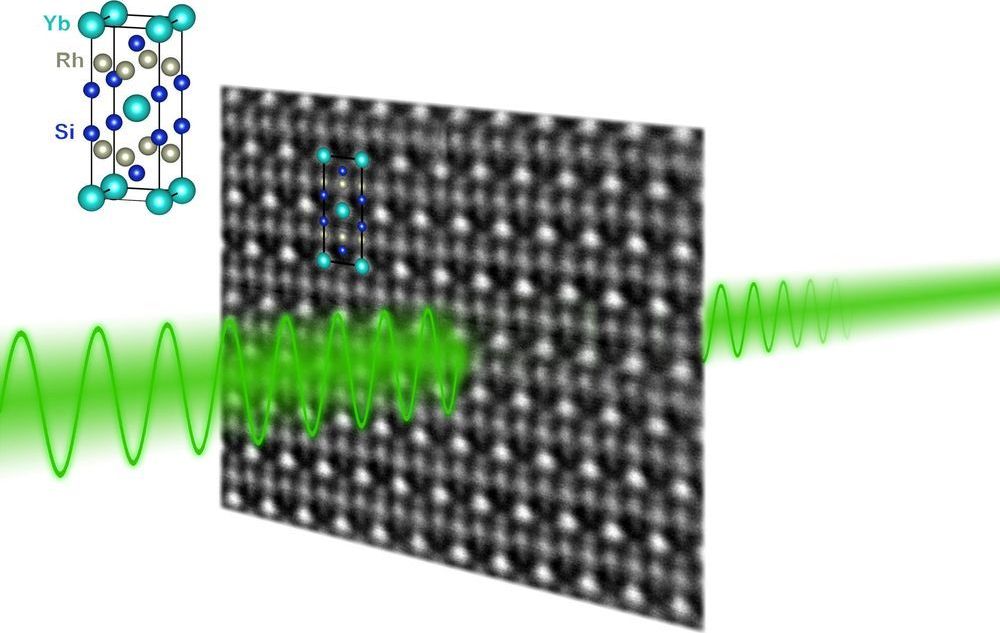
In a new study, U.S. and Austrian physicists have observed quantum entanglement among “billions of billions” of flowing electrons in a quantum critical material.
The research, which appears this week in Science, examined the electronic and magnetic behavior of a “strange metal” compound of ytterbium, rhodium and silicon as it both neared and passed through a critical transition at the boundary between two well-studied quantum phases.
The study at Rice University and Vienna University of Technology (TU Wien) provides the strongest direct evidence to date of entanglement’s role in bringing about quantum criticality, said study co-author Qimiao Si of Rice.

Water is special even based on its simple physical properties since it is the only substance on earth that can be found in all three states (liquid, solid, gas). However, scientists at the US Department of Energy Oak Ridge National Laboratory (ORNL) have discovered new properties of water that go beyond the known laws of classical physics says the phys.org scientific news portal.
Passes through solid walls.
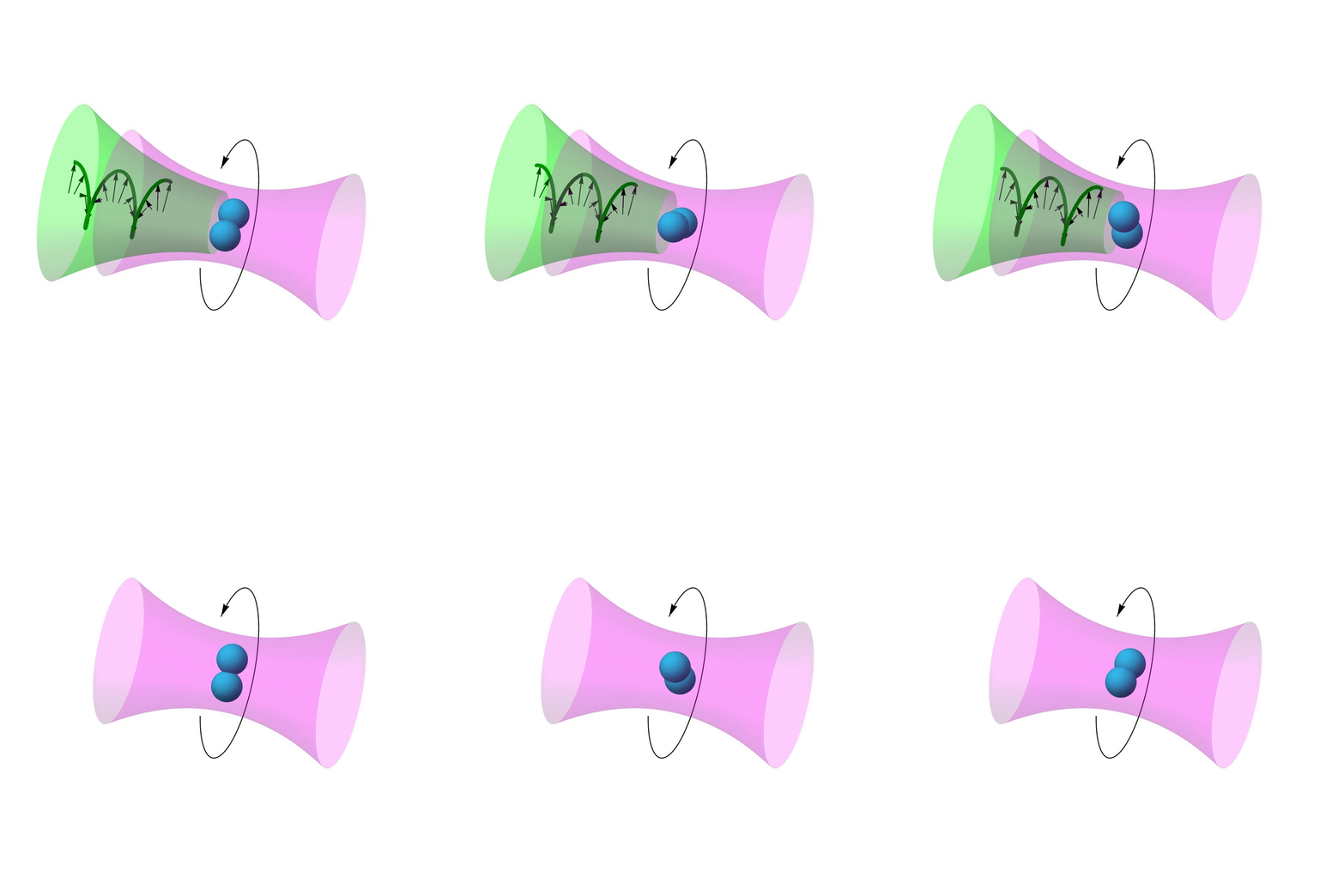
A dumbbell-shaped nanoparticle powered just by the force and torque of light has become the world’s fastest-spinning object.
Scientists at Purdue University created the object, which revolves at 300 billion revolutions per minute. Or, put another way, half a million times faster than a dentist’s drill.
In addition, the silica nanoparticle can serve as the world’s most sensitive torque detector, which researchers hope will be used to measure the friction created by quantum effects.

Writing in Nature, researchers describe the first-time observation of ‘self-organized criticality’ in a controlled laboratory experiment. Complex systems exist in mathematics and physics, but also occur in nature and society. The concept of self-organized criticality claims that without external input, complex systems in non-equilibrium tend to develop into a critical state far away from a stable equilibrium. That way, they reinforce their own non-equilibrium.
Systems that are at first glance quite different, like the dissemination of information in social networks or the spread of fire or disease, may have similar characteristics. One example is an avalanche-like behaviour that reinforces itself instead of coming to a standstill. However, these complex systems are very difficult to study under controlled lab conditions.
For the first time, researchers from the European Centre for Quantum Sciences (CESQ) in Strasbourg, in collaboration with researchers from the universities of Cologne and Heidelberg and the California Institute of Technology, have succeeded in observing the most important features of self-organized criticality in a controlled experiment—including universal avalanche behavior.

The chess world was amazed when the computer algorithm AlphaZero learned, after just four hours on its own, to beat the best chess programs built on human expertise. Now a research group at Aarhus University in Denmark has used the very same algorithm to control a quantum computer.
All across the world, numerous research groups are attempting to build a quantum computer. Such a computer would be able to solve certain problems that cannot be solved with current classical computers, even if we combined all these computers in the world into one.
At Aarhus University, researchers share the ambition of building a quantum computer. For this reason, a research group under the direction of Professor Jacob Sherson has just used the computer algorithm AlphaZero to learn to control a quantum system.

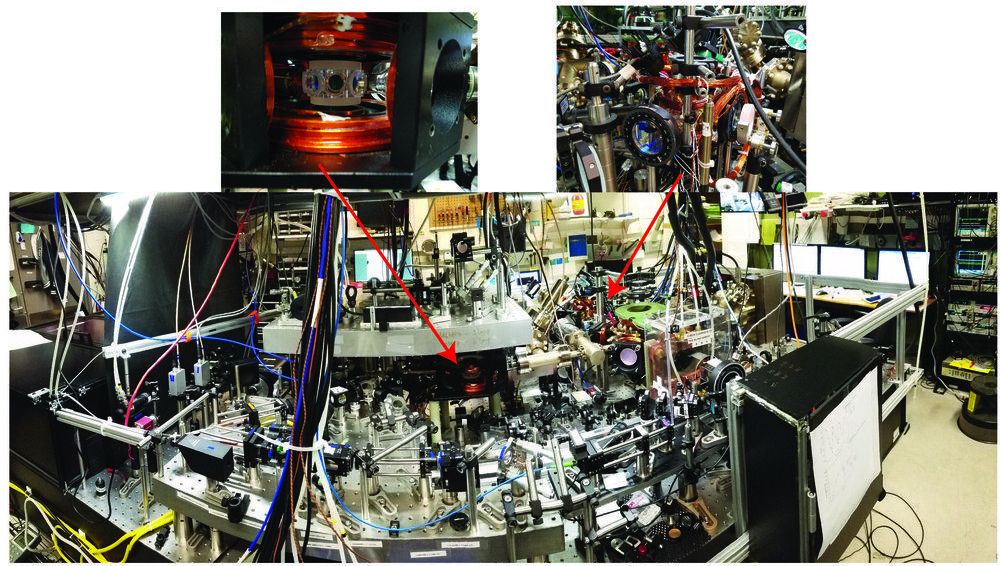
The concept of universal physics is intriguing, as it enables researchers to relate physical phenomena in a variety of systems, irrespective of their varying characteristics and complexities. Ultracold atomic systems are often perceived as ideal platforms for exploring universal physics, owing to the precise control of experimental parameters (such as the interaction strength, temperature, density, quantum states, dimensionality, and the trapping potential) that might be harder to tune in more conventional systems. In fact, ultracold atomic systems have been used to better understand a myriad of complex physical behavior, including those topics in cosmology, particle, nuclear, molecular physics, and most notably, in condensed matter physics, where the complexities of many-body quantum phenomena are more difficult to investigate using more traditional approaches.
Understanding the applicability and the robustness of universal physics is thus of great interest. Researchers at the National Institute of Standards and Technology (NIST) and the University of Colorado Boulder have carried out a study, recently featured in Physical Review Letters, aimed at testing the limits to universality in an ultracold system.
“Unlike in other physical systems, the beauty of ultracold systems is that at times we are able to scrap the importance of the periodic table and demonstrate the similar phenomenon with any chosen atomic species (be it potassium, rubidium, lithium, strontium, etc.),” Roman Chapurin, one of the researchers who carried out the study, told Phys.org. “Universal behavior is independent of the microscopic details. Understanding the limitations of universal phenomenon is of great interest.”

Batteries are the key to decarboni z ing both transport and the grid, but today’s technology is still a long way from living up to this promise. IBM seems to have decided its computing chops are the key to solving the problem.
Lithium-ion batteries are still the gold standard technology in this field, and they’ve come a long way; 10 years ago they could just about get your iPod through the day, today they can power high-performance cars over hundreds of miles.
But if we want to reach a point w h ere batteries can outperform gasoline or store huge amounts of solar energy, we need some breakthroughs. So IBM has teamed up with Mercedes-Benz and its parent company Daimler to develop new batteries that could match up to our needs.
