Toggle light / dark theme

A two-atom quantum duet

Researchers at the Center for Quantum Nanoscience (QNS) within the Institute for Basic Science (IBS) achieved a major breakthrough in shielding the quantum properties of single atoms on a surface. The scientists used the magnetism of single atoms, known as spin, as a basic building block for quantum information processing. The researchers could show that by packing two atoms closely together they could protect their fragile quantum properties much better than for just one atom.

The spin is a fundamental mechanical object and governs magnetic properties of materials. In a classical picture, the spin often can be considered like the needle of a compass. The north or south poles of the needle, for example, can represent spin up or down. However, according to the laws of quantum mechanics, the spin can also point in both directions at the same time. This superposition state is very fragile since the interaction of the spin with the local environment causes dephasing of the superposition. Understanding the dephasing mechanism and enhancing the quantum coherence are one of the key ingredients toward spin-based quantum information processing.

In this study, published in the journal Science Advances in November 9, 2018, QNS scientists tried to suppress the decoherence of single by assembling them closely together. The spins, for which they used single titanium atoms, were studied by using a sharp metal tip of a scanning tunneling microscope and the atoms’ were detected using . The researchers found that by bringing the atoms very close together (1 million times closer than a millimeter), they could protect the superposition of these two magnetically coupled atoms 20 times longer compared to an individual atom.

Quantum systems: Same, but different

Remarkable rules have been detected in the apparent chaos of disequilibrium processes. Different systems behave identically in many ways, if they belong to the same “universality class.” This means that experiments can be carried out with quantum systems that are easy to handle in order to obtain precise information about systems that cannot be directly studied in the experiment—such as the Big Bang.

Some phenomena are so complicated that it is impossible to precisely calculate them. This includes large , which consist of many particles, particularly when they are not in an equilibrium state, but changing rapidly. Such examples include the wild particle inferno that occurs in particle accelerators when large collide, or conditions just after the Big Bang, when particles rapidly expanded and then cooled.

At TU Wien and Heidelberg University, remarkable rules have been detected in the apparent chaos of disequilibrium processes. This indicates that such processes can be divided into universality classes. Systems belonging to the same class behave identically in many ways. This means that experiments can be carried out with systems that are easy to handle in order to obtain precise information about other systems that cannot be directly studied in the experiment. These findings have since been published in the journal Nature.

Quantum Human Biology

Expert Panel Host: Dr Brian Clement
Conference Held at Adelphi University 2013.
(A podcast version of this video is available on iTunes.)

• Brian Clement — Learn how to transform your lifestyle from toxic and self-destructive to healthful and self-affirming, and experience renewed energy and vitality that will last a lifetime.

• Hippocrates Institute director, Brian Clement shows how the Hippocrates LifeForce program implements the use of raw living foods to help people maintain a healthful weight and stimulate natural immune defenses for other chronic illnesses.

• Discover how to develop the positive frame of mind that supports good health, learn how to make the transition to eating raw living foods at home, while dining out, and when traveling.

• Learn how you can make informed decisions about the products you buy, and to disentangle yourself from unhealthy products.

• Our bodies: High levels of hormone-disrupting chemicals from cosmetics, flame-retardants from clothing and furniture, even long-banned substances like DDT and lead, are consistently showing up in human blood samples.

Quantum on the edge: Light shines on new pathway for quantum technology

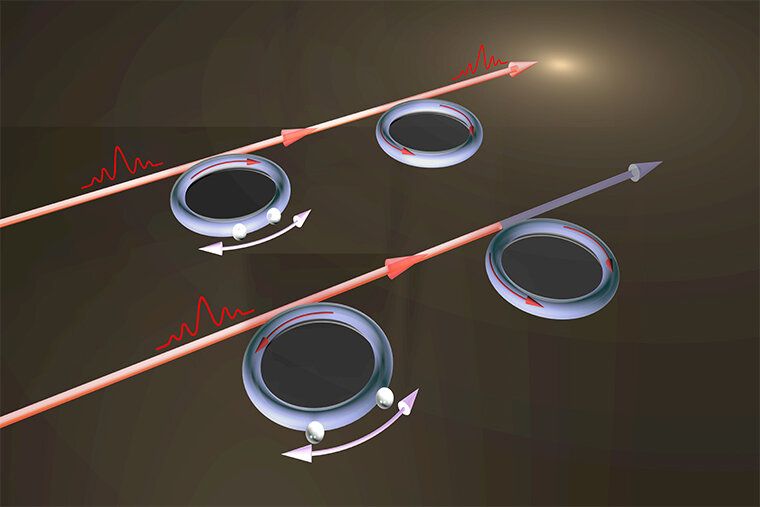
Scientists in Australia have for the first time demonstrated the protection of correlated states between paired photons—packets of light energy—using the intriguing physical concept of topology. This experimental breakthrough opens a pathway to build a new type of quantum bit, the building blocks for quantum computers.

The research, developed in close collaboration with Israeli colleagues, is published today in the prestigious journal, Science, a recognition of the foundational importance of this work.

“We can now propose a pathway to build robust entangled states for logic gates using protected pairs of photons,” said lead author Dr. Andrea Blanco-Redondo at the University of Sydney Nano Institute.

Europe shows first cards in €1-billion quantum bet

The Quantum Flagship was first announced in 2016, and on 29 October, the commission announced the first batch of fund recipients. The 20 international consortia, each of which includes public research institutions as well as industry, will receive a total of €132 million over 3 years for technology-demonstration projects.


One of the most ambitious EU ‘Flagship’ schemes yet has picked 20 projects, aiming to turn weird physics into useful products.

/* */