Toggle light / dark theme

News in brief: Groupon grief; Apple encryption delay; post-quantum crypto

Your daily round-up of some of the other security stories in the news

Groupon grief – was it password reuse?

The Telegraph reports that crooks have hijacked a number of Groupon accounts and used them to purchase expensive items like games consoles, iPhones and holidays. Some victims have suffered thousands of pounds of losses.

The sound of quantum vacuum

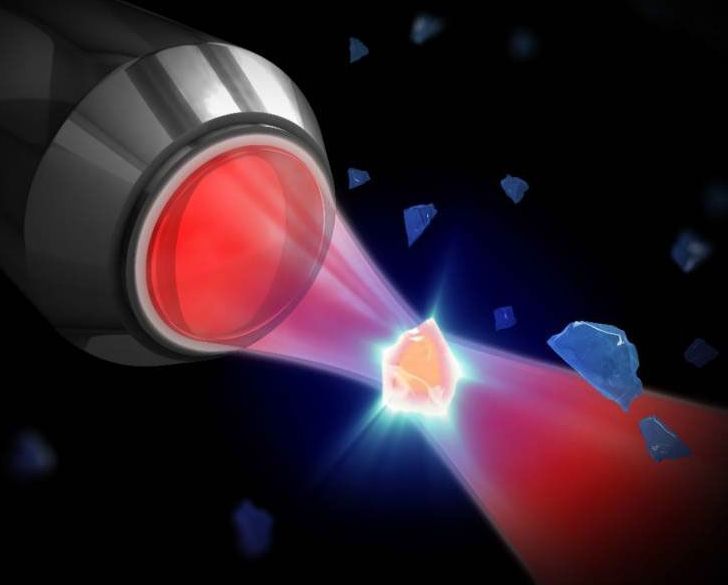
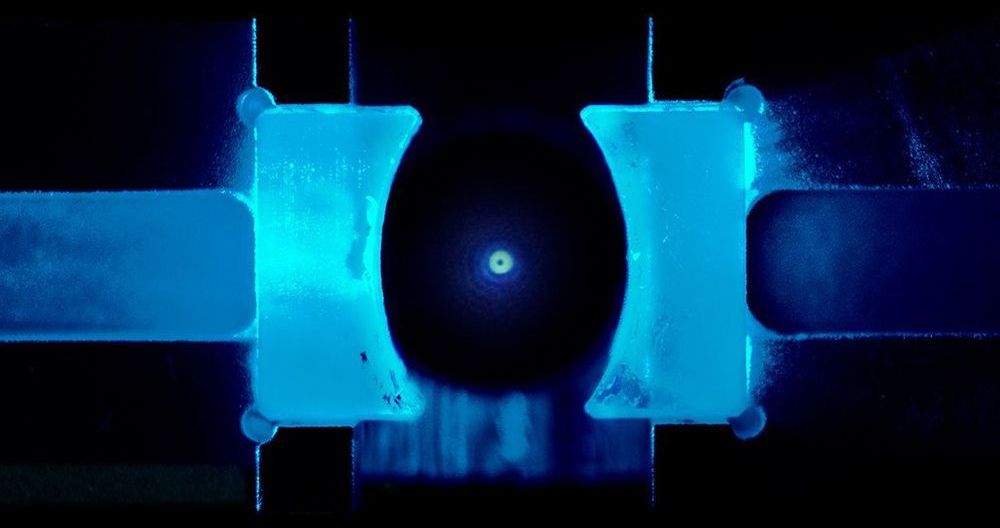
Quantum mechanics dictates sensitivity limits in the measurements of displacement, velocity and acceleration. A recent experiment at the Niels Bohr Institute probes these limits, analyzing how quantum fluctuations set a sensor membrane into motion in the process of a measurement. The membrane is an accurate model for future ultraprecise quantum sensors, whose complex nature may even hold the key to overcome fundamental quantum limits. The results are published in the scientific journal, Proceedings of the National Academy of Sciences.

Vibrating strings and membranes are at the heart of many musical instruments. Plucking a string excites it to vibrations, at a frequency determined by its length and tension. Apart from the fundamental frequency — corresponding to the musical note — the string also vibrates at higher frequencies. These overtones influence how we perceive the ‘sound’ of the instrument, and allow us to tell a guitar from a violin. Similarly, beating a drumhead excites vibrations at a number of frequencies simultaneously.

These matters are not different when scaling down, from the half-meter bass drum in a classic orchestra to the half-millimeter-sized membrane studied recently at the Niels Bohr Institute. And yet, some things are not the same at all: using sophisticated optical measurement techniques, a team lead by Professor Albert Schliesser could show that the membrane’s vibrations, including all its overtones, follow the strange laws of quantum mechanics. In their experiment, these quantum laws implied that the mere attempt to precisely measure the membrane vibrations sets it into motion. As if looking at a drum already made it hum!

Experts split on how soon quantum computing is coming, but say we should start preparing now

Let’s say closer to 7yrs or less.


Whether quantum computing is 10 years away — or is already here — it promises to make current encryption methods obsolete, so enterprises need to start laying the groundwork for new encryption methods.

A quantum computer uses qubits instead of bits. A bit can be a zero or a one, but a qubit can be both simultaneously, which is weird and hard to program but once folks get it working, it has the potential to be significantly more powerful than any of today’s computers.

And it will make many of today’s public key algorithms obsolete, said Kevin Curran, IEEE senior member and a professor at the University of Ulster, where he heads up the Ambient Intelligence Research Group.

Electron-photon small-talk could have big impact on quantum computing

In a step that brings silicon-based quantum computers closer to reality, researchers at Princeton University have built a device in which a single electron can pass its quantum information to a particle of light. The particle of light, or photon, can then act as a messenger to carry the information to other electrons, creating connections that form the circuits of a quantum computer.

The research, published in the journal Science and conducted at Princeton and HRL Laboratories in Malibu, California, represents a more than five-year effort to build a robust capability for an electron to talk to a , said Jason Petta, a Princeton professor of physics.

“Just like in human interactions, to have good communication a number of things need to work out—it helps to speak the same language and so forth,” Petta said. “We are able to bring the energy of the electronic state into resonance with the light particle, so that the two can talk to each other.”

The First Quantum Revolution: Foundational information for the enterprise CTO

Bob Gourley

Our report on Naturally Better Security dove deep into ways quantum effects can be leveraged to enhance real world cybersecurity. It was our most popular post in November 2016 and the feedback we received was taken as a signal that we should produce more on what CTOs should know about the quantum world. With this post we are kicking off a series of five pieces that will dive into quantum effects. This first post tackles some foundational background that puts the science into a historical context. The second one will discuss the current revolution in quantum computing. The third focuses on security concerns. The forth dives into quantum key distribution. The fifth hits on the “so-what” of the current revolution in terms of security.

So first, foundational background on quantum mechanics.

Q&A: Diamond in Quantum Applications

Oh; there is a LOT more to they syndiamond story as it relates to some of the additional hardware and communications technologies that we’re developing and planning for the future.


What are the unique properties of diamond that make it a supermaterial?

Diamond has long been known to have exceptional properties, largely resulting from the symmetry of the cubic lattice made of light carbon atoms connected by extremely strong bonds. These exceptional properties include thermal conductivity five times higher than that of copper and the widest optical transparency of any material extending from the UV to the RF part of the electromagnetic spectrum. Additionally, diamond also has some interesting chemical properties as it is extremely inert, though it can become a conductor by adding boron. In this manner, one could leverage synthetic diamond for use in electrochemical incineration where existing electrode materials have only a limited lifetime.

What are the traditional applications for synthetic diamond in engineering and electronics?

Historically diamond has been exploited mainly for its great hardness in mechanical applications. For example in modern cars more than 150 components are made using a variety of diamond tools. However in the past two decades there have been an increasing number of applications which utilize some of diamonds’ other superlative properties. For example, synthetic diamond is utilized in semiconductor applications for its heat spreading abilities. This trend is being driven by the increasing number of transistors on a chip which increases the thermal load and therefore runs the risk of device failure. Using diamond in this application not only means more transistors can run on a chip but it also extends device lifetime as they can run cooler. Synthetic diamond is also being used as a radiation detector. Element Six diamond is currently being used in the CERN Large Hadron Collider as part of its monitoring system.

How graphene quantum dots can convert carbon dioxide into liquid fuels

Researchers used nitrogen-doped graphene quantum dots to convert carbon dioxide into liquid hydrocarbons like ethylene and ethanol for use as fuel.

The wonder material known as graphene may have a new trick up its sleeve: converting carbon dioxide into liquid fuels. A team of researchers at Rich University in Texas used nitrogen-doped graphene quantum dots (NGQDs) as a catalyst in electrochemical reactions that create ethylene and ethanol, and the stability and efficiency of the material is close to common electrocatalysts such as copper.

In the fight to slow climate change, reducing the amount of carbon dioxide that enters the atmosphere is crucial, and plenty of research is looking into how we can capture carbon at the source, using clay, engineered bacteria, metal-organic frameworks, or materials like the “Memzyme” and sequester it into rock and concrete. Other studies are focusing on converting the captured carbon into liquid hydrocarbons, which can be used as fuel.

Scientists detect a quantum crystal of electrons and ‘watch’ it melt

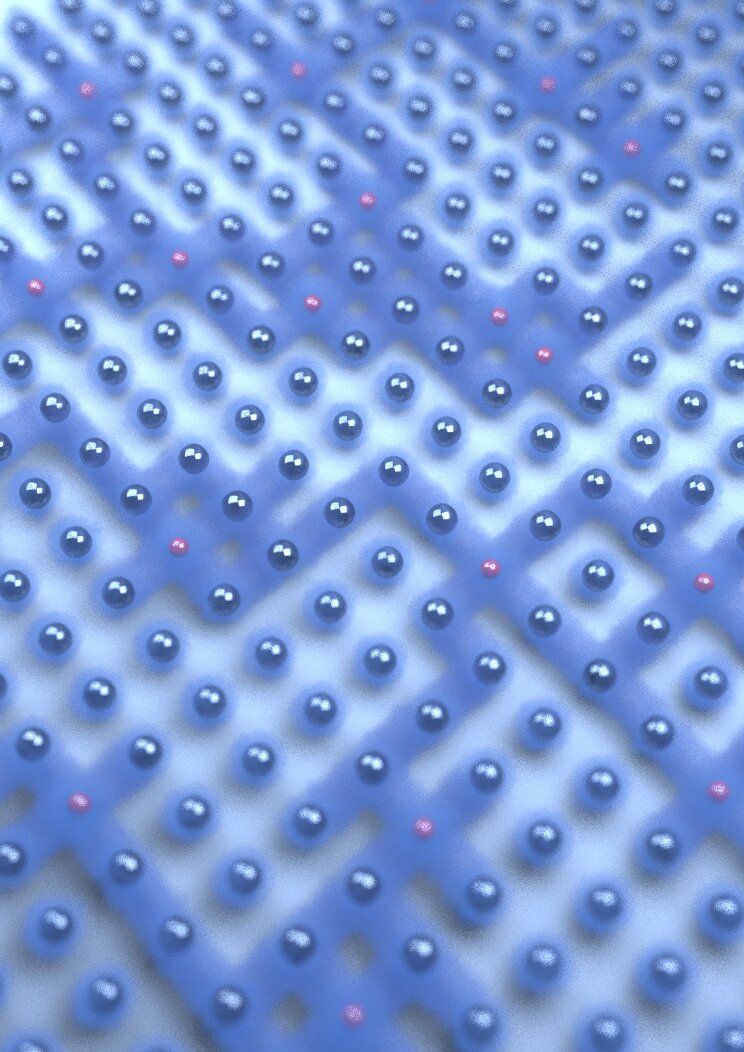
For the first time, MIT physicists have observed a highly ordered crystal of electrons in a semiconducting material and documented its melting, much like ice thawing into water. The observations confirm a fundamental phase transition in quantum mechanics that was theoretically proposed more than 80 years ago but not experimentally documented until now.

The team, led by MIT professor of physics Raymond Ashoori and his postdoc Joonho Jang, used a spectroscopy technique developed in Ashoori’s group. The method relies on electron “tunneling,” a quantum mechanical process that allows researchers to inject electrons at precise energies into a system of interest—in this case, a system of electrons trapped in two dimensions. The method uses hundreds of thousands of short electrical pulses to probe a sheet of electrons in a cooled to extremely low temperatures, just above absolute zero.

With their tunneling technique, the researchers shot electrons into the supercooled material to measure the energy states of electrons within the semiconducting sheet. Against a background blur, they detected a sharp spike in the data. After much analysis, they determined that the spike was the precise signal that would be given off from a highly ordered crystal of electrons vibrating in unison.

/* */