To build a universal quantum computer from fragile quantum components, effective implementation of quantum error correction (QEC) is an essential requirement and a central challenge. QEC is used in quantum computing, which has the potential to solve scientific problems beyond the scope of supercomputers, to protect quantum information from errors due to various noise.
Category: quantum physics – Page 920
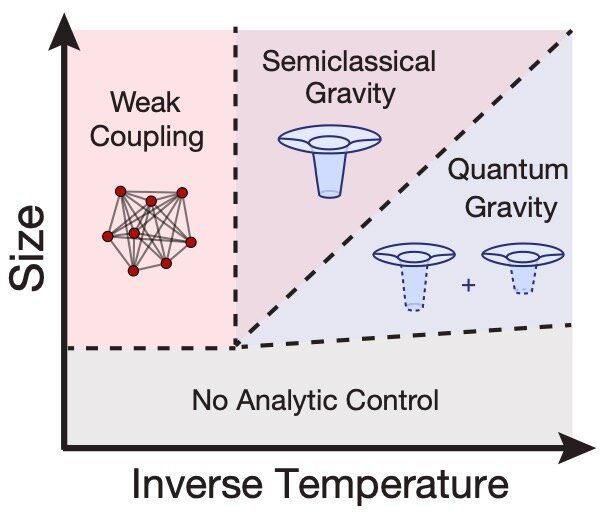
Researchers gather numerical evidence of quantum chaos in the Sachdev-Ye-Kitaev model
Over the past few years, many physicists worldwide have conducted research investigating chaos in quantum systems composed of strongly interacting particles, also known as many-body chaos. The study of many-body chaos has broadened the current understanding of quantum thermalization (i.e., the process through which quantum particles reach thermal equilibrium by interacting with one another) and revealed surprising connections between microscopic physics and the dynamics of black holes.
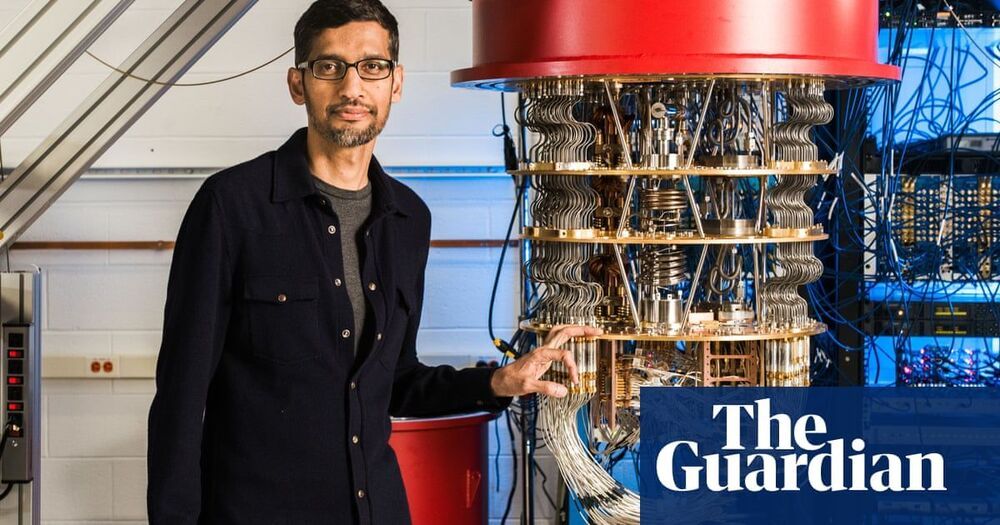
‘How can we compete with Google?’: the battle to train quantum coders
A major skills shortage in quantum computing could harm the UK economy unless universities recruit more students.
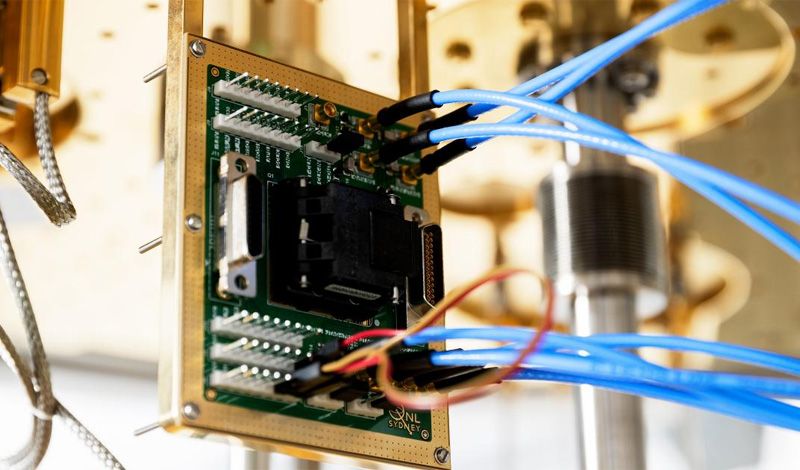
New device for scaling up quantum computers
Australian scientists have developed a new cryogenic computer system called Gooseberry which has potential for scaling up quantum computers from dozens to thousands of qubits.

This ‘Quantum Brain’ Would Mimic Our Own to Speed Up AI
The mechanisms that allow the computer to learn are directly embedded in its hardware structure—no extra AI software required.
China’s first quantum computer operating system launched
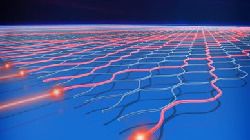
A Chinese startup on Monday launched the country’s first homegrown operating system (OS) for quantum computers in Hefei, capital of eastern China’s Anhui Province, according to a local media report.

The global quantum computing race has begun. What will it take to win it?
Plenty of nations want to be the quantum computing leader, but with billions in investment flying around, coming out on top won’t be easy.

Quantum “spooky action at a distance” travels at least 10,000 times faster than light
Circa 2013 o.o
Quantum entanglement, one of the odder aspects of quantum theory, links the properties of particles even when they are separated by large distances. When a property of one of a pair of entangled particles is measured, the other “immediately” settles down into a state compatible with that measurement. So how fast is “immediately”? According to research by Prof. Juan Yin and colleagues at the University of Science and Technology of China in Shanghai, the lower limit to the speed associated with entanglement dynamics – or “spooky action at a distance” – is at least 10000 times faster than light.
Despite playing a vital role in the development of quantum theory, Einstein felt philosophically at odds with its description of how the universe works. His famous quote that “God does not play dice” hints at his level of discomfort with the role of probability in quantum theory. He believed there exists another level of reality in which all of physics would be deterministic, and that quantum mechanics would turn out to be a description that emerges from the workings of that level – rather like a traffic jam emerges from the independent motions of a large number of cars.
In 1935 Einstein and his coworkers discovered quantum entanglement lurking in the equations of quantum mechanics, and realized its utter strangeness. This lead to the EPR paradox introduced by Einstein, Poldolsky and Rosen. The EPR paradox stated that the only ways of explaining the effects of quantum entanglement were to assume the universe is nonlocal, or that the true basis of physics is hidden (otherwise known as a hidden-variable theory). Nonlocality in this case means that events occurring to entangled objects are linked even when the events cannot communicate through spacetime, spacetime having the speed of light as a limiting velocity. Nonlocality is also known as spooky action at a distance (Einstein’s phrase).
Rapid Scale-Up of Commercial Ion-Trap Quantum Computers
O., o circa 2020.
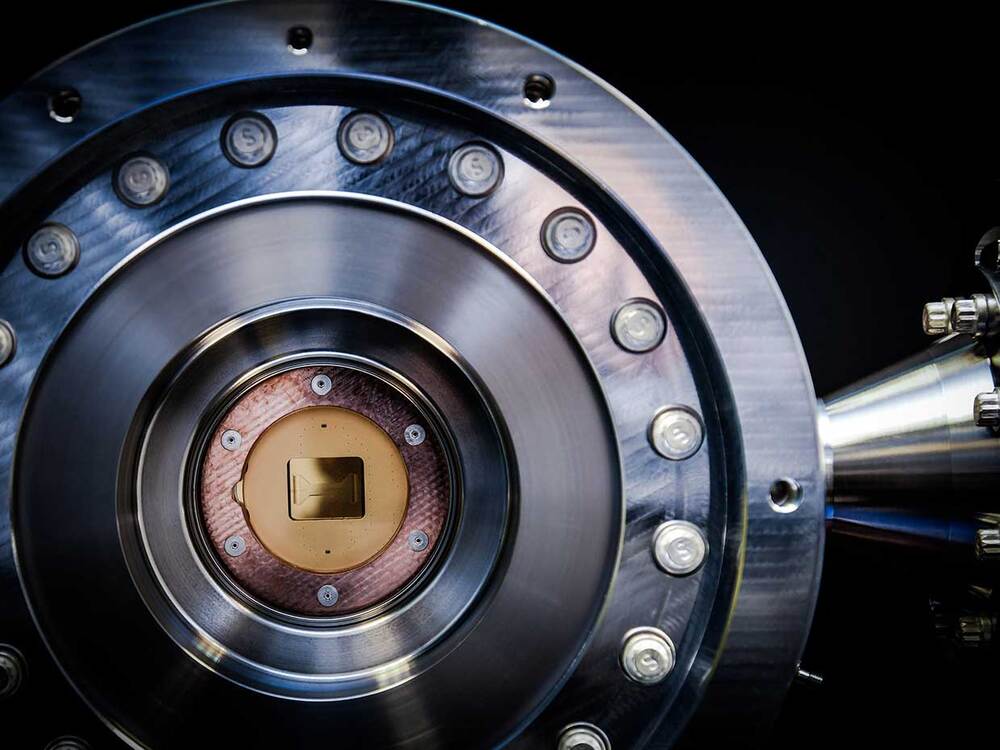
Last week, Honeywell’s Quantum Solutions division released its first commercial quantum computer: a system based on trapped ions comprising 10 qubits. The H1, as it’s called, is actually the same ion trap chip the company debuted as a prototype, but with four additional ions. The company revealed a roadmap that it says will rapidly lead to much more powerful quantum computers. Separately, a competitor in ion-trap quantum computing, Maryland-based startup IonQ, unveiled a 32-qubit ion computer last month.

New Electron Trap Might Help Quantum Computers
Long-time trapping of a single electron could allow the particle to be used as an efficient quantum bit.