Toggle light / dark theme

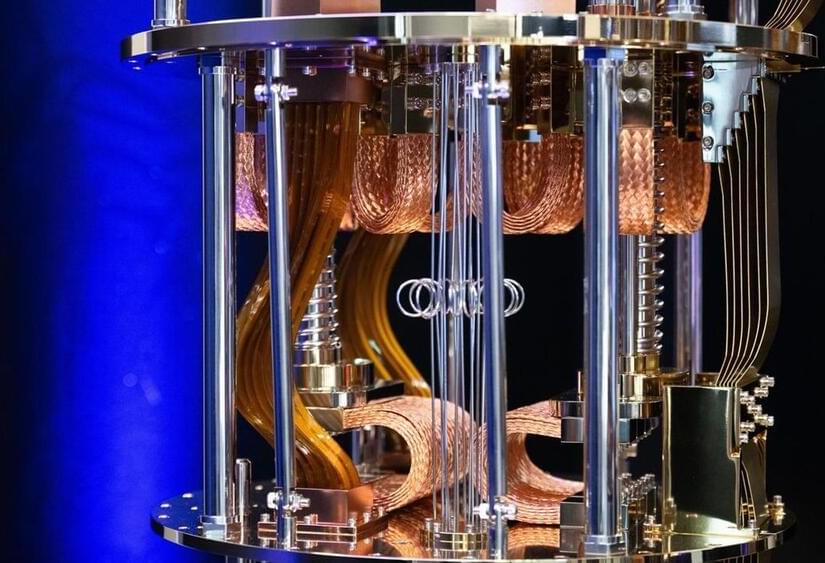
Quantinuum Quantum Computer using Microsoft’s ‘Logical Quantum Bits’ runs 14,000 Experiments with No Errors

A team of computer engineers from quantum computer maker Quantinuum, working with computer scientists from Microsoft, has found a way to greatly reduce errors when running experiments on a quantum computer. The combined group has published a paper describing their work and results on the arXiv preprint server.

Computer scientists have been working for several years to build a truly useful quantum computer that could achieve quantum supremacy. Research has come a long way, most of which has involved adding more qubits.

But such research has been held up by one main problem—quantum computers make a lot of errors. To overcome this problem, researchers have been looking for ways to reduce the number of errors or to correct those that are made before results are produced.

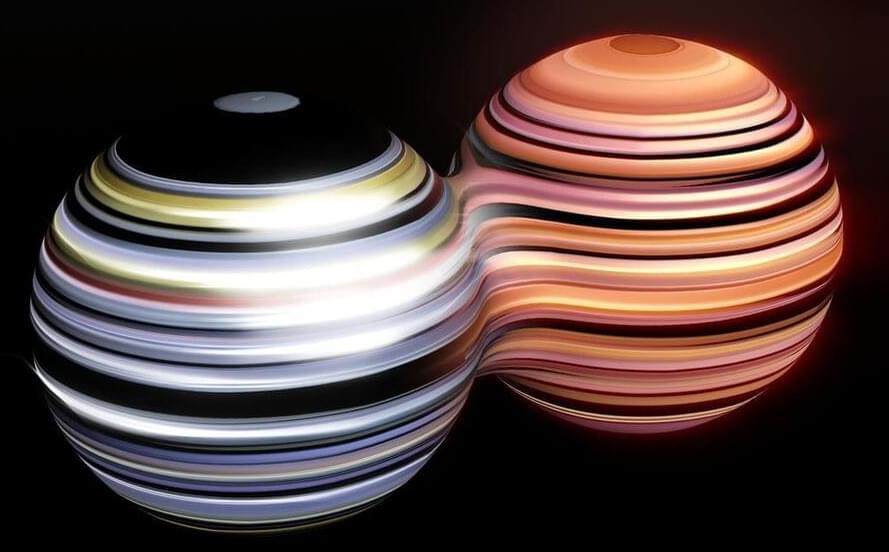
Witnessing the Birth of Skyrmions

Using thin layers of chiral nematic liquid crystals, researchers have observed the formation dynamics of skyrmions.

A skyrmion is a topologically stable, vortex-like field configuration that cannot be smoothly morphed to a uniform state [1]. First proposed by physicist Tony Skyrme in 1961 as a model of the nucleon [2], the concept has since been studied in condensed-matter physics and adjacent fields [3]. In particular, skyrmions have cropped up in studies of magnetism [4], Bose-Einstein condensates [5], quantum Hall systems [6], liquid crystals [7], and in other contexts (see, for example, Viewpoint: Water Can Host Topological Waves and Synopsis: Skyrmions Made from Sound Waves). Skyrmions exhibit fascinating properties such as small size, stability, and controllability, which give them great potential for applications in spintronics, data storage, and quantum computing.

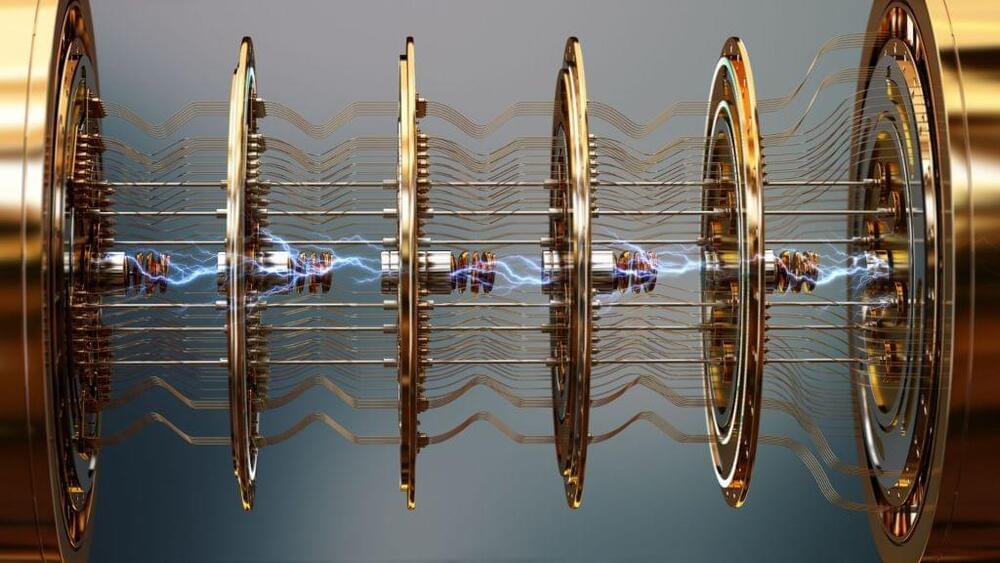
Announcing the birth of QUIONE, a unique analog quantum processor

Quantum physics requires high-precision sensing techniques to delve deeper into the microscopic properties of materials. From the analog quantum processors that have emerged recently, quantum-gas microscopes have proven to be powerful tools for understanding quantum systems at the atomic level. These devices produce images of quantum gases with very high resolution: They allow individual atoms to be detected.

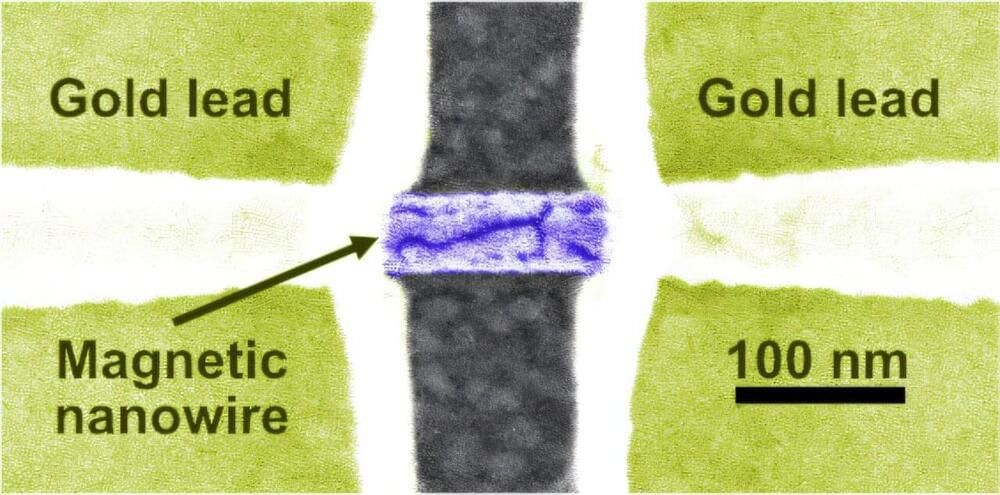
Meet QDEL, the backlight-less display tech that could replace OLED in premium TVs

Quantum dots are already moving in the premium display category, particularly through QD-OLED TVs and monitors. The next step could be QDEL, short for “quantum dot electroluminescent,” also known as NanoLED, screens. Not to be confused with the QLED (quantum light emitting diode) tech already available in TVs, QDEL displays don’t have a backlight. Instead, the quantum dots are the light source. The expected result is displays with wider color spaces than today’s QD-OLEDs (quantum dot OLEDs) that are also brighter, more affordable, and resistant to burn-in.

It seems like QDEL is being eyed as one of the most potentially influential developments for consumer displays over the next two years.

If you’re into high-end display tech, QDEL should be on your radar.

/* */