Toggle light / dark theme

New theory links quantum geometry to electron-phonon coupling

A new study published in Nature Physics introduces a theory of electron-phonon coupling that is affected by the quantum geometry of the electronic wavefunctions.

The movement of electrons in a lattice and their interactions with the lattice vibrations (or phonons) play a pivotal role in phenomena like superconductivity (resistance-free conductivity).

Electron-phonon coupling (EPC) is the interaction between free electrons and phonons, which are quasiparticles representing the vibrations of a crystal lattice. EPC leads to the formation of Cooper pairs (pairs of electrons), responsible for superconductivity in certain materials.

A route to scalable Majorana qubits

Researchers at QuTech have found a way to make Majorana particles in a two-dimensional plane. This was achieved by creating devices that exploit the combined material properties of superconductors and semiconductors. The inherent flexibility of this new 2D platform should allow one to perform experiments with Majoranas that were previously inaccessible. The results are published in Nature.

Quantum dot based metasurface enables two objects to exist in the same space

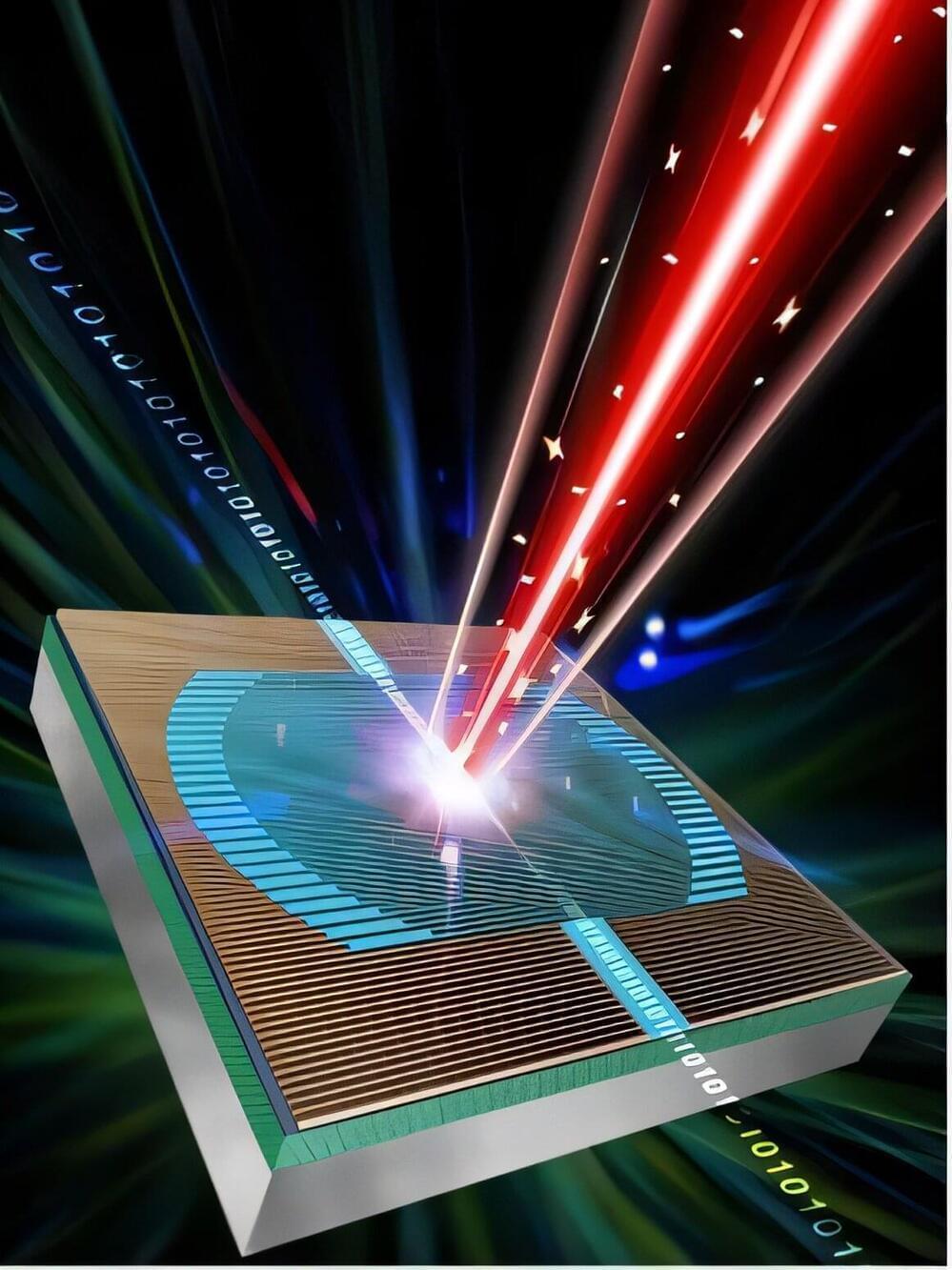
In relationships, sharing closer spaces naturally deepens the connection as bonds form and strengthen through increasing shared memories. This principle applies not only to human interactions but also to engineering. Recently, an intriguing study was published demonstrating the use of quantum dots to create metasurfaces, enabling two objects to exist in the same space.

Professor Junsuk Rho from the Department of Mechanical Engineering, the Department of Chemical Engineering, and the Department of Electrical Engineering, PhD candidates Minsu Jeong, Byoungsu Ko, and Jaekyung Kim from the Department of Mechanical Engineering, and Chunghwan Jung, a PhD candidate, from the Department of Chemical Engineering at Pohang University of Science and Technology (POSTECH) employed Nanoimprint Lithography (NIL) to fabricate metasurfaces embedded with quantum dots, enhancing their luminescence efficiency. Their research was recently published in Nano Letters (“Printable Light-Emitting Metasurfaces with Enhanced Directional Photoluminescence”).

(Left) Schematic diagram of the fabrication of a luminescence-controlled metasurface using the nanoimprint lithography process. (Right) Experiment evaluating the performance of the metasurface’s luminescence control. (Image: POSTECH)

A Missing Piece in the Big Bang Theory Has Surfaced

In research published earlier this year, physicists from the University of Hyderabad in India say they’re on the path to solving one of the universe’s biggest outstanding problems. Since Edwin Hubble realized the universe is always expanding nearly 100 years ago, scientists have used the “Hubble constant” in calculations on virtually every scale in the universe. But today, estimates for the Hubble constant don’t always align, with a difference of up to 10 percent between calculations made using different methods. (When someone at NASA mixes up meters and yards and loses an entire spacecraft, that’s not even a full 10 percent deviation.)

The paper appears in the peer reviewed journal Classical and Quantum Gravity. The journal has an ongoing, periodically updated “focus issue” specifically about this measurement tension, and the editors explain the problem there—scientists can’t say for sure that the different Hubble constants measured are actually different, rather than just observation or calibration issues.

America is the undisputed world leader in quantum computing even though China spends 8x more on the technology–but an own goal could soon erode U.S. dominance

When it comes to quantum computing, that chilling effect on research and development would enormously jeopardize U.S. national security. Our projects received ample funding from defense and intelligence agencies for good reason. Quantum computing may soon become the https://www.cyberdefensemagazine.com/quantum-security-is-nat...at%20allow, codebreaking%20attacks%20against%20traditional%20encryption" rel="noopener" class="">gold standard technology for codebreaking and defending large computer networks against cyberattacks.

Adopting the proposed march-in framework would also have major implications for our future economic stability. While still a nascent technology today, quantum computing’s ability to rapidly process huge volumes of data is set to revolutionize business in the coming decades. It may be the only way to capture the complexity needed for future AI and machine learning in, say, self-driving vehicles. It may enable companies to hone their supply chains and other logistical operations, such as manufacturing, with unprecedented precision. It may also transform finance by allowing portfolio managers to create new, superior investment algorithms and strategies.

Given the technology’s immense potential, it’s no mystery why China committed what is believed to be more than https://www.mckinsey.com/featured-insights/sustainable-inclu…n-quantum” rel=“noopener” class=””>$15 billion in 2022 to develop its quantum computing capacity–more than double the budget for quantum computing of EU countries and eight times what the U.S. government plans to spend.

From Rice University: “Chemical reactions can scramble quantum information as well as black holes”

From Rice University

4.5.24 Silvia Cernea Clark 713−348−6728 [email protected].

Chris Stipes 713−348−6778 [email protected].

If you were to throw a message in a bottle into a black hole, all of the information in it, down to the quantum level, would become completely scrambled. Because in black holes this scrambling happens as quickly and thoroughly as quantum mechanics allows, they are generally considered nature’s ultimate information scramblers.

Wanted: advanced atomic vapor sensors for quantum information, imaging, communications, and RF electrometry

ARLINGTON, Va. – U.S. military researchers are approaching industry to enhance atomic vapor sensors for electric field sensing, imaging, communications, and quantum information science (QIS).

Officials of the U.S. Defense Advanced research Projects Agency (DARPA) in Arlington, Va., have issued a broad agency announcement (HR001124S0031) for the Enhancing Quantum Sensor Technologies with Rydberg Atoms (EQSTRA) program.

EQSTRA seeks to enhance the performance, capabilities, and maturity of atomic vapor sensors for future compact, calibration-free, small, and lightweight devices with low drift, and quantum-limited accuracy and sensitivity.

/* */