Toggle light / dark theme

Quantum fusion of independent networks based on multi-user entanglement swapping

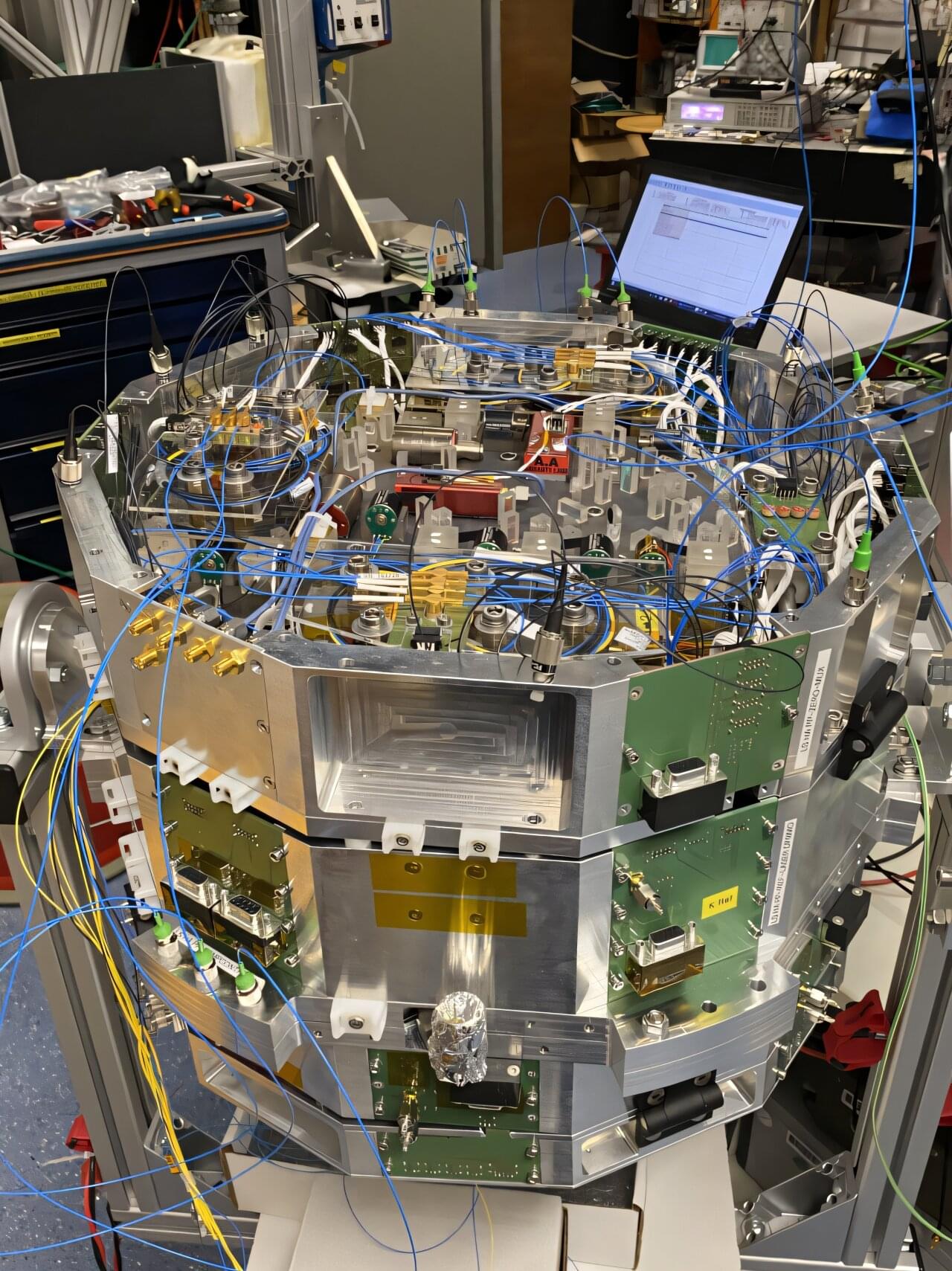
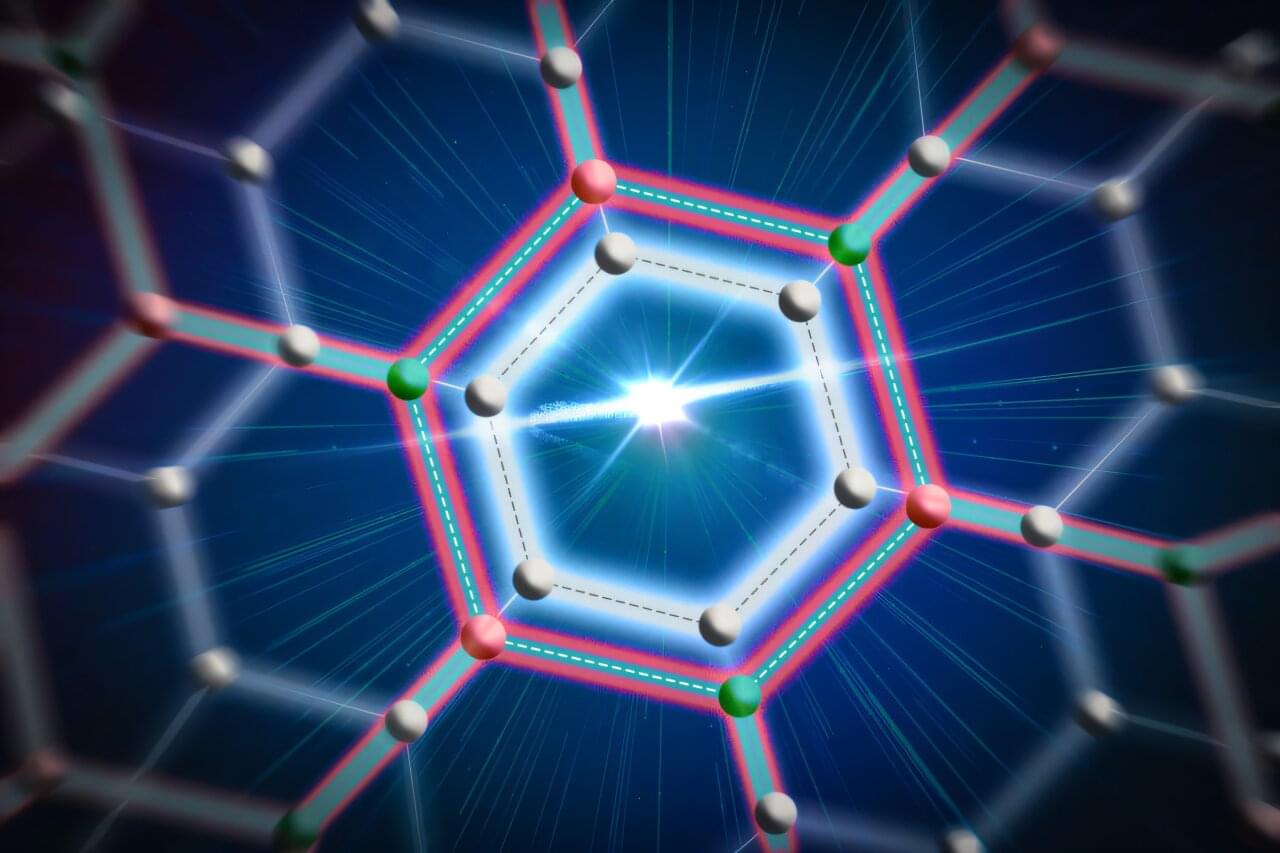
The quantum fusion of two independent 10-user networks is demonstrated based on multi-user entanglement swapping. Active temporal and wavelength multiplexing schemes are developed to merge the two networks into a larger network with 18 users in the quantum correlation layer.

‘This is easily the most powerful quantum computer on Earth’: Scientists unveil Helios, a record-breaking quantum system

Scientists have built a 98-qubit machine that they say performs better than any other quantum computer in the world. They’ve used it to gain new insights into superconducting physics.

On-chip quantum interference of indistinguishable single photons from integrated independent molecules

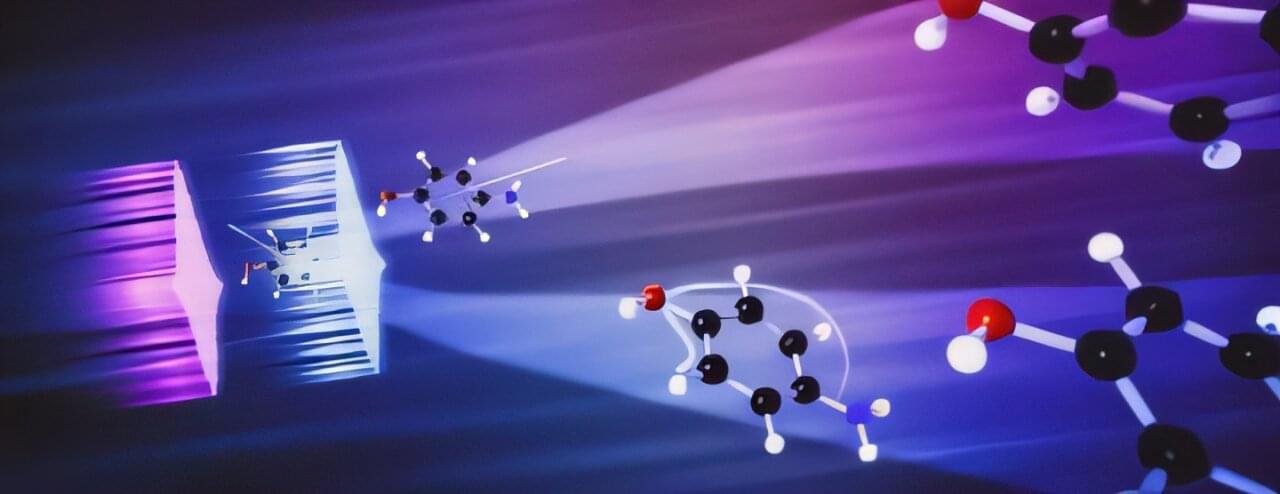
Hong–Ou–Mandel experiments on a quantum photonic chip demonstrate on-chip quantum interference of indistinguishable single photons with visibilities exceeding 0.97 for two molecules separately coupled to two waveguides.

Two independent quantum networks successfully fused into one

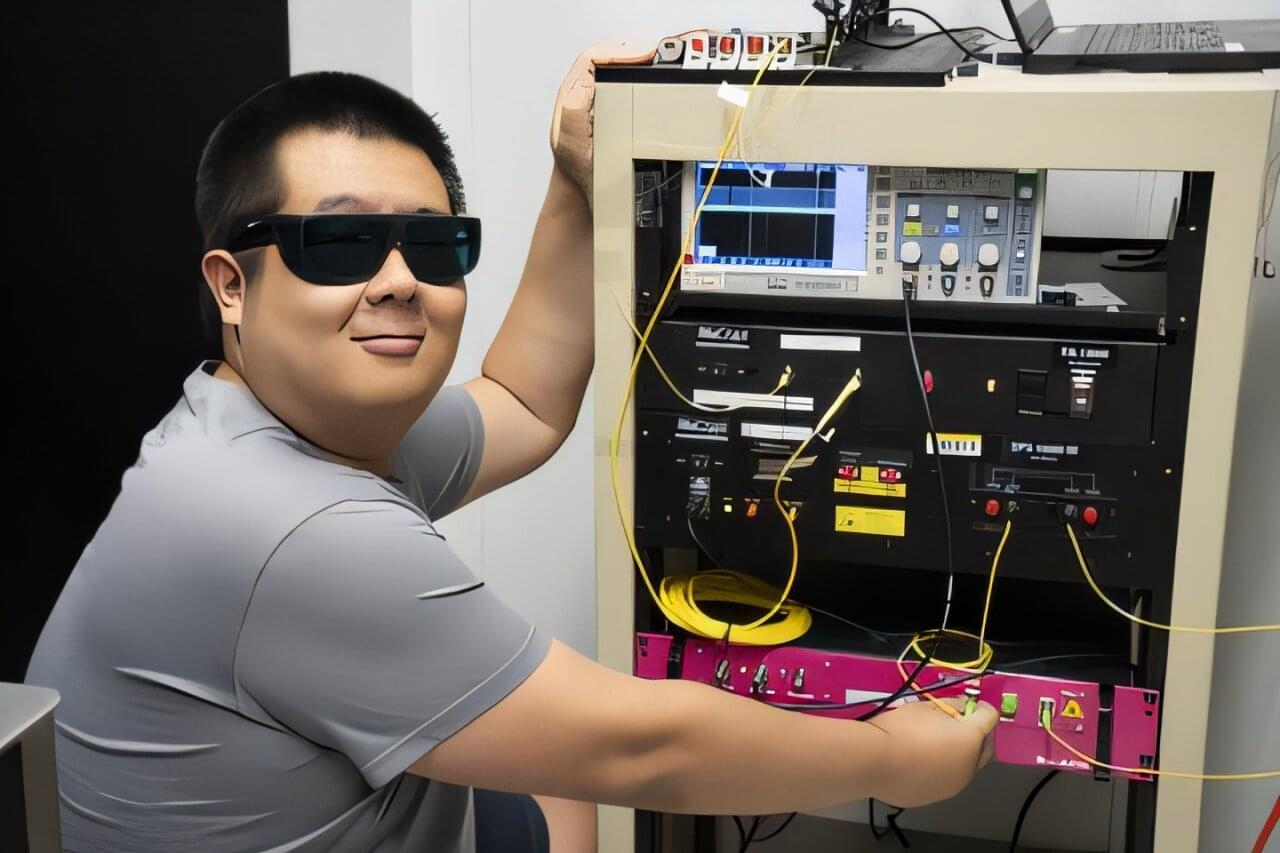
Many quantum researchers are working toward building technologies that allow for the existence of a global quantum internet, in which any two users on Earth would be able to conduct large-scale quantum computing and communicate securely with the help of quantum entanglement. Although this requires many more technological advancements, a team of researchers at Shanghai Jiao Tong University in China have managed to merge two independent networks, bringing the world a bit closer to realizing a quantum internet.

A true global will require interconnectivity between many networks, and this has proven to be a much more difficult task for than it is for classical networks. While researchers have demonstrated the ability to connect quantum computers within the same network, multi-user fusion remains a major challenge. Fully connected networks using dense wavelength division multiplexing (DWDM) have been achieved, but have scalability and complexity issues.

However, the research team involved in the new study, published in Nature Photonics, has merged two independent networks with 18 different users. All 18 users can communicate securely using -based protocols using this method. This represents the most complex multi-user quantum network to date.

Scientists reveal it is feasible to send quantum signals from Earth to a satellite

Quantum satellites currently beam entangled particles of light from space down to different ground stations for ultra-secure communications. New research shows it is also possible to send these signals upward, from Earth to a satellite; something once thought unfeasible.

This breakthrough overcomes significant barriers to current quantum communications. Ground station transmitters can access more power, are easier to maintain and could generate far stronger signals, enabling future quantum computer networks using satellite relays.

The study, “Quantum entanglement distribution via uplink satellite channels”, by Professor Simon Devitt, Professor Alexander Solntsev and a research team from the University of Technology Sydney (UTS), is published in the journal Physical Review Research.

“We Made the World’s Best Material” — How a Diamond Substitute Could Revolutionize Quantum Computing

Strontium titanate’s remarkable ability to perform at extremely low temperatures makes it a key material for next-generation cryogenic devices used in quantum computing and space exploration. Superconductivity and quantum computing have moved beyond theoretical research to capture the public’s im

The Quantum Dance: Discovery of Polarons Solves a Decades-Old Mystery in Condensed Matter Physics

In a breakthrough that reshapes our understanding of quantum materials, an international team of physicists has finally solved a decades-old mystery about how certain materials suddenly lose their ability to conduct electricity. The answer lies in an elusive quantum phenomenon known as a polaron — a quasiparticle formed when an electron becomes tightly coupled to the vibrations of the surrounding crystal lattice. This subtle “dance” between electrons and atoms can transform a good conductor into a perfect insulator.

The discovery, made by researchers from Kiel University and the DESY research center in Germany, including Professor Kai Rossnagel and Dr. Chul-Hee Min, provides the first direct evidence of polarons in a rare-earth compound composed of thulium, selenium, and tellurium (TmSe1–x Tex). Their findings, published in Physical Review Letters, illuminate one of quantum physics’ most puzzling phenomena: how subtle atomic vibrations can “kill” electrical conductivity.

Physicists Just Ruled Out The Universe Being a Simulation

A question that has vexed physicists for the past century may finally have a solution – but perhaps not the one everyone was hoping for.

In a new, detailed breakdown of current theory, a team of physicists led by Mir Faizal of the University of British Columbia has shown that there is no universal “Theory of Everything” that neatly reconciles general relativity with quantum mechanics – at least, not an algorithmic one.

A natural consequence of this is that the Universe can’t be a simulation, since any such simulations would have to operate algorithmically.

🌌 Unifying AI Through the Feynman Path Integral: From Deep Learning to Quantum AI I’m pleased to share a framework that brings many areas of AI into a single mathematical structure inspired by the Feynman path integral —

🌌 Unifying AI Through the Feynman Path Integral: From Deep Learning to Quantum AI https://lnkd.in/g4Cfv6qd I’m pleased to share a framework that brings many areas of AI into a single mathematical structure inspired by the Feynman path integral — a foundational idea in quantum physics. Instead of viewing supervised learning, reinforcement learning, generative models, and quantum machine learning as separate disciplines, this framework shows that they all follow the same underlying principle: Learning is a weighted sum over possible solutions (paths), based on how well each one explains the data. In other words, AI can be viewed the same way Feynman viewed physics: as summing over all possible configurations, weighted by an action functional.

Photoinduced non-reciprocal magnetism effectively violates Newton’s third law

A theoretical framework predicts the emergence of non-reciprocal interactions that effectively violate Newton’s third law in solids using light, report researchers from Japan. They demonstrate that by irradiating light of a carefully tuned frequency onto a magnetic metal, one can induce a torque that drives two magnetic layers into a spontaneous, persistent “chase-and-run” rotation. This work opens a new frontier in non-equilibrium materials science and suggests novel applications in light-controlled quantum materials.

In equilibrium, obey the law of action and reaction as per the free energy minimization principle. However, in non-equilibrium systems such as biological or active matter—interactions that effectively violate this law—the so-called non-reciprocal interactions are common.

For instance, the brain comprises inhibitory and excitatory neurons that interact non-reciprocally; the interaction between predator and prey is asymmetric, and colloids immersed in an optically active media demonstrate non-reciprocal interactions as well. A natural question arises: Can one implement such non-reciprocal interaction in solid-state electronic systems?

/* */