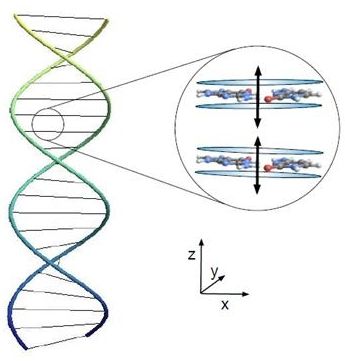
A new theoretical model suggests that quantum entanglement helps prevent the molecules of life from breaking apart.
Nice read.
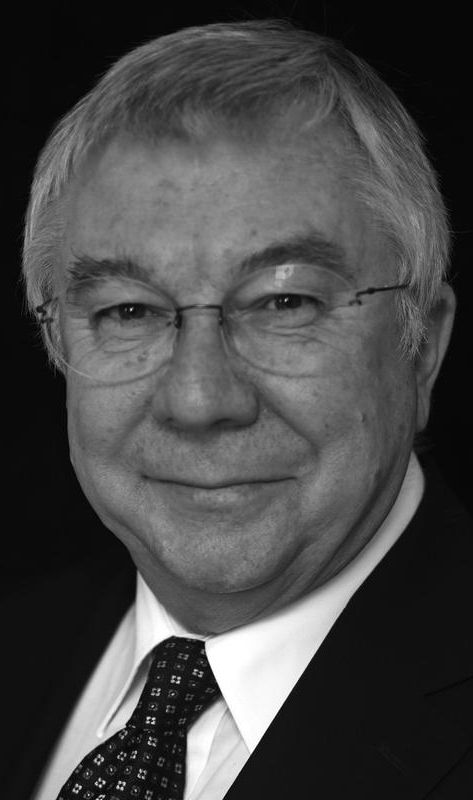
Is quantum technology the future of the 21st century? On the occasion of the 66th Lindau Nobel Laureate Meeting, this is the key question to be explored today in a panel discussion with the Nobel Laureates Serge Haroche, Gerardus ’t Hooft, William Phillips and David Wineland. In the following interview, Council Member Professor Rainer Blatt, internationally renowned quantum physicist, recipient of numerous honours, and Scientific Co-Chairman of the 66th Lindau Meeting, talks about what we can expect from the “second quantum revolution”.
Blatt has no doubt: quantum technologies are driving forward a technological revolution, the future impact of which is still unclear. Nothing stands in the way of these technologies becoming the engine of innovations in science, economics and society in the 21st century. Early laboratory prototypes have shown just how vast the potential of quantum technologies is. Specific applications are expected in the fields of metrology, computing and simulations. However, substantial funding is required to advance from the development stage.
Professor Blatt, the first quantum revolution laid the physical foundations for trailblazing developments such as computer chips, lasers, magnetic resonance imaging and modern communications technology. In the Quantum Manifest published in mid-May, researchers now talk about the advent of a second quantum revolution. What exactly does this mean?

Is quantum technology the future of the 21st century? On the occasion of the 66th Lindau Nobel Laureate Meeting, this is the key question to be explored today in a panel discussion with the Nobel Laureates Serge Haroche, Gerardus ‘t Hooft, William Phillips and David Wineland. In the following interview, Professor Rainer Blatt, internationally renowned quantum physicist, recipient of numerous honours, Council Member and Scientific Co-Chairman of the 66th Lindau Meeting, talks about what we can expect from the “second quantum revolution”.
Blatt has no doubt: quantum technologies are driving forward a technological revolution, the future impact of which is still unclear. Nothing stands in the way of these technologies becoming the engine of innovations in science, economics and society in the 21st century. Early laboratory prototypes have shown just how vast the potential of quantum technologies is. Specific applications are expected in the fields of metrology, computing and simulations. However, substantial funding is required to advance from the development stage.
Professor Blatt, the first quantum revolution laid the physical foundations for trailblazing developments such as computer chips, lasers, magnetic resonance imaging and modern communications technology. In the Quantum Manifest published in mid-May, researchers now talk about the advent of a second quantum revolution. What exactly does this mean?
This second quantum revolution, as it is sometimes called, takes advantage of the phenomenon of entanglement. It’s a natural phenomenon that basic researchers recognized as early as the 1930s. Until now, all the technologies you mentioned derive their utility from the wave property upon which quantum physics is based. In the quantum world, its associated phenomena are often discussed in the context of wave-particle duality. Though they are not recognized as such, quantum technologies are therefore already available, and without them, many of our instruments would not be possible. By contrast, the nature of entanglement, which has been known for 85 years, has only been experimentally investigated in the past four decades based on findings by John Bell in the 1960s. Today, entanglement forms the basis for many new potential applications such as quantum communications, quantum metrology and quantum computing.
Q-Dot demand in Healthcare is predicted to be high.
http://embedded-computing.com/news/rising-quantum-dots-market/#
Quantum Dots Market is driven by increasing demand for energy efficient displays and lighting solutions, North America accounted for largest quantum dots market share, use of quantum dots in solar cells and VLSI design is expected to open new possibilities for quantum dots market.
Quantum dots are semiconducting nanoparticles that range from 1nm to 10nm diameter in size and demonstrate quantum mechanical properties. The peculiarity of quantum dots is that they have ability to unite their semiconductor properties with those of nanomaterials. In addition, tunable nanocrystal size and superior optical properties have made quantum dots attractive semiconducting material for variety of applications in the field of healthcare, optoelectronics, solar energy, and security among others.

Definitely could see QC being Blackberry’s achilles heal.
WATERLOO — Advances in quantum computing could present a huge challenge to BlackBerry’s biggest competitive advantage — its vaunted security software that has never been hacked.
This seldom talked-about subject was raised recently by John Thompson, the associate vice-president for research at the University of Waterloo. Thompson was listening to a presentation by Mike Wilson, a senior vice-president and chief evangelist for BlackBerry, at a medical technology conference in Kitchener about a month ago.
Both quantum computing and BlackBerry have deep roots in Waterloo. BlackBerry pioneered the smartphone industry and the wireless Internet from its suburban office parks in Waterloo.

Awesome!
What if industrial waste water could become fuel? With affordable, long-lasting catalysts, water could be split to produce hydrogen that could be used to power fuel cells or combustion engines.
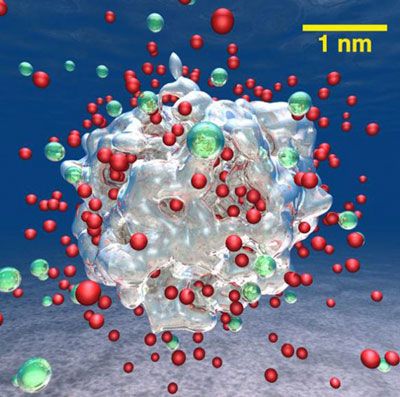
By conducting complex simulations, scientists showed that adding lithium to aluminum nanoparticles results in orders-of-magnitude faster water-splitting reactions and higher hydrogen production rates compared to pure aluminum nanoparticles. The lithium allowed all the aluminum atoms to react, which increased yields (Nano Letters, “Hydrogen-on-demand using metallic alloy nanoparticles in water”).
A snapshot from a large quantum molecular dynamics simulation of the production of hydrogen molecules (green) from an aluminum-lithium alloy nanoparticle containing 16,661 atoms (represented by the silver contour of charge density) and dissolved charged lithium atoms (red). For clarity, the water molecules were removed from the snapshot. Simulations were carried out at the Argonne Leadership Computing Facility.
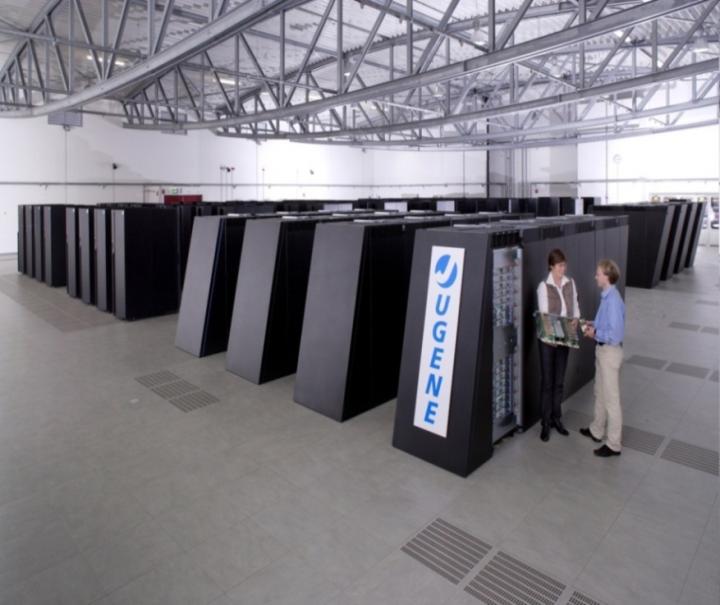
Great that they didn’t have to use a super computer to do their prescribed, lab controlled experiments. However, to limit QC to a super computer and experimental computations only is a big mistake; I cannot stress this enough. QC is a new digital infrastructure that changes our communications, cyber security, and will eventually (in the years to come) provide consumers/ businesses/ and governments with the performance they will need for AI, Biocomputing, and Singularity.
A group of physicists from the Skobeltsyn Institute of Nuclear Physics, the Lomonosov Moscow State University, has learned to use personal computer for calculations of complex equations of quantum mechanics, usually solved with help of supercomputers. This PC does the job much faster. An article about the results of the work has been published in the journal Computer Physics Communications.
Senior researchers Vladimir Pomerantcev and Olga Rubtsova, working under the guidance of Professor Vladimir Kukulin (SINP MSU) were able to use on an ordinary desktop PC with GPU to solve complicated integral equations of quantum mechanics — previously solved only with the powerful, expensive supercomputers. According to Vladimir Kukulin, personal computer does the job much faster: in 15 minutes it is doing the work requiring normally 2–3 days of the supercomputer time.
The equations in question were formulated in the 60s by the Russian mathematician Ludwig Faddeev. The equations describe the scattering of a few quantum particles, i.e., represent a quantum mechanical analog of the Newtonian theory of the three body systems. As the result, the whole field of quantum mechanics called “physics of few-body systems” appeared soon after this.
We’re on a roll with QC.
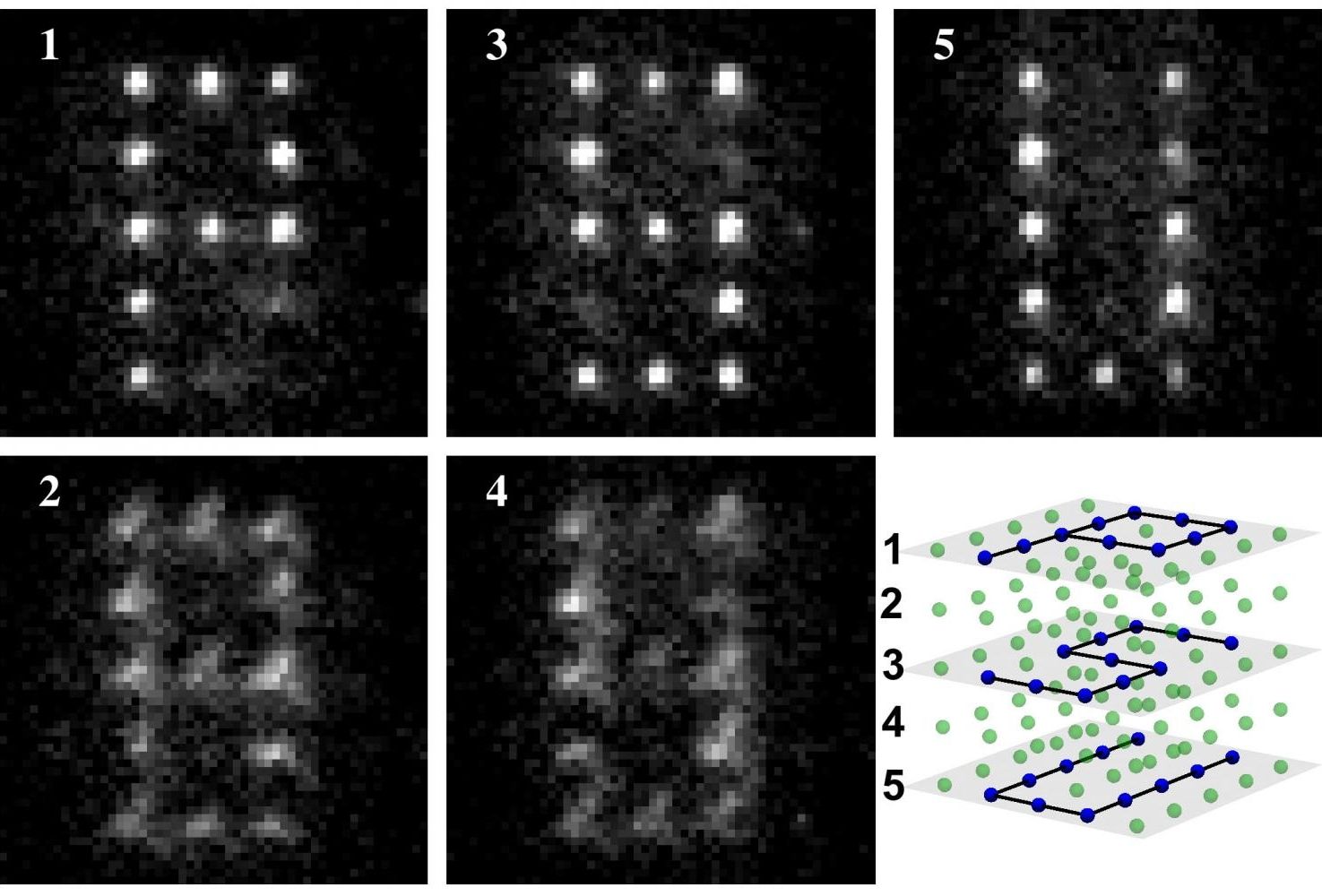
The era of quantum computers is one step closer as a result of research published in the current issue of the journal Science. The research team has devised and demonstrated a new way to pack a lot more quantum computing power into a much smaller space and with much greater control than ever before. The research advance, using a 3-dimensional array of atoms in quantum states called quantum bits—or qubits—was made by David S. Weiss, professor of physics at Penn State University, and three students on his lab team. He said “Our result is one of the many important developments that still are needed on the way to achieving quantum computers that will be useful for doing computations that are impossible to do today, with applications in cryptography for electronic data security and other computing-intensive fields.”
The new technique uses both laser light and microwaves to precisely control the switching of selected individual qubits from one quantum state to another without altering the states of the other atoms in the cubic array. The new technique demonstrates the potential use of atoms as the building blocks of circuits in future quantum computers.
The scientists invented an innovative way to arrange and precisely control the qubits, which are necessary for doing calculations in a quantum computer. “Our paper demonstrates that this novel approach is a precise, accurate, and efficient way to control large ensembles of qubits for quantum computing,” Weiss said.