Toggle light / dark theme

Australian Physicists Prove Time Travel is Possible

Scientists from the University of Queensland have used photons (single particles of light) to simulate quantum particles travelling through time. The research is cutting edge and the results could be dramatic!

Their research, entitled “Experimental simulation of closed timelike curves “, is published in the latest issue of Nature Communications. The grandfather paradox states that if a time traveler were to go back in time, he could accidentally prevent his grandparents from meeting, and thus prevent his own birth.

However, if he had never been born, he could never have traveled back in time, in the first place. The paradoxes are largely caused by Einstein’s theory of relativity, and the solution to it, the Gödel metric.

Read more

Light-Bending Microchip Could Fire Up Quantum Computers

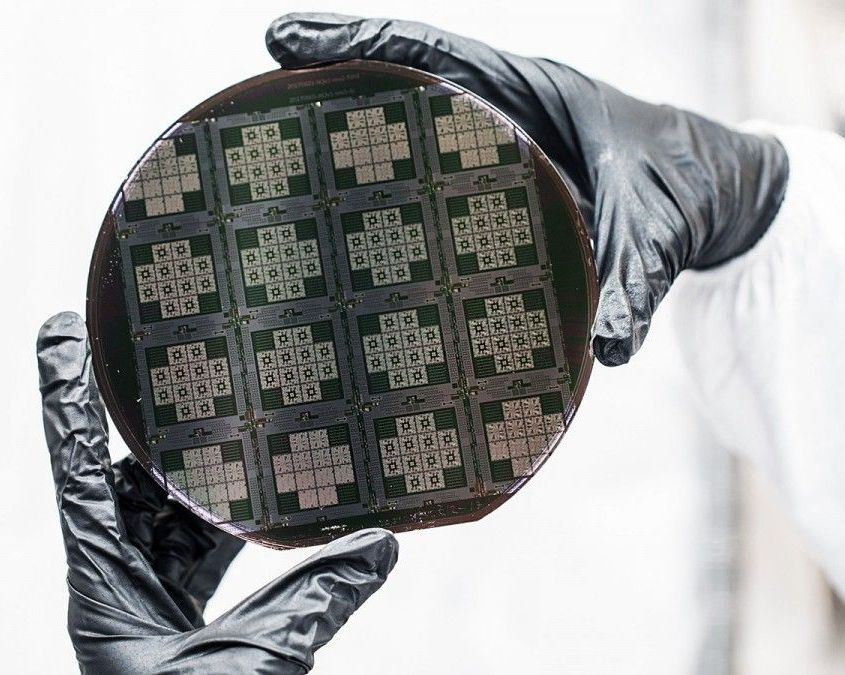
For the first time, scientists have achieved infinite speeds on a microchip. Although this advance will not enable faster-than-light starships, the light-warping technology behind this innovation could lead to new light-based microchips and help enable powerful quantum computers, researchers said.

Light travels at the speed of about 670 million miles per hour (1.08 billion km/h) in a vacuum, and is theoretically the fastest possible speed at which matter or energy can travel. Exceeding this speed limit should lead to impossible results such as time travel, according to Einstein’s theory of relativity.

However, in a way, researchers have overcome this barrier for decades. [Warped Physics: 10 Effects of Faster-Than-Light Travel].

Read more

Scientists have discovered a material that could create quantum optical computers

When people talk about the next-generation of computers, they’re usually referring to one of two things: quantum computers – devices that will have exponentially greater processing power thanks to the addition of quantum superposition to the binary code – and optical computers, which will beam data at the speed of light without generating all the heat and wasted energy of traditional electronic computers.

Both of those have the power to revolutionise computing as we know it, and now scientists at the University of Technology, Sydney have discovered a material that has the potential to combine both of those abilities in one ridiculously powerful computer of the future. Just hold on for a second while we freak out over here.

The material is layered hexagonal boron nitride, which is a bit of a mouthful, but all you really need to know about it is that it’s only one atom thick – just like graphene – and it has the ability to emit a single pulse of quantum light on demand at room temperature, making it ideal to help build a quantum optical computer chip.

Read more

Quantum computers: a time-travelling boost

In general relativity, closed timelike curves can break causality with remarkable and unsettling consequences. At the classical level, they induce causal paradoxes disturbing enough to motivate conjectures that explicitly prevent their existence. At the quantum level such problems can be resolved through the Deutschian formalism, however this induces radical benefits—from cloning unknown quantum states to solving problems intractable to quantum computers. Instinctively, one expects these benefits to vanish if causality is respected. Here we show that in harnessing entanglement, we can efficiently solve NP-complete problems and clone arbitrary quantum states—even when all time-travelling systems are completely isolated from the past. Thus, the many defining benefits of Deutschian closed timelike curves can still be harnessed, even when causality is preserved. Our results unveil a subtle interplay between entanglement and general relativity, and significantly improve the potential of probing the radical effects that may exist at the interface between relativity and quantum theory.

Read more

‘Material universe’ yields surprising new particle

An international team of researchers has predicted the existence of a new type of particle called the type-II Weyl fermion in metallic materials. When subjected to a magnetic field, the materials containing the particle act as insulators for current applied in some directions and as conductors for current applied in other directions. This behavior suggests a range of potential applications, from low-energy devices to efficient transistors.

The researchers theorize that the particle exists in a material known as tungsten ditelluride (WTe2), which the researchers liken to a “material universe” because it contains several , some of which exist under normal conditions in our universe and others that may exist only in these specialized types of crystals. The research appeared in the journal Nature this week.

The new particle is a cousin of the Weyl fermion, one of the particles in standard theory. However, the type-II particle exhibits very different responses to electromagnetic fields, being a near perfect conductor in some directions of the field and an insulator in others.

Read more

Physicists set quantum record

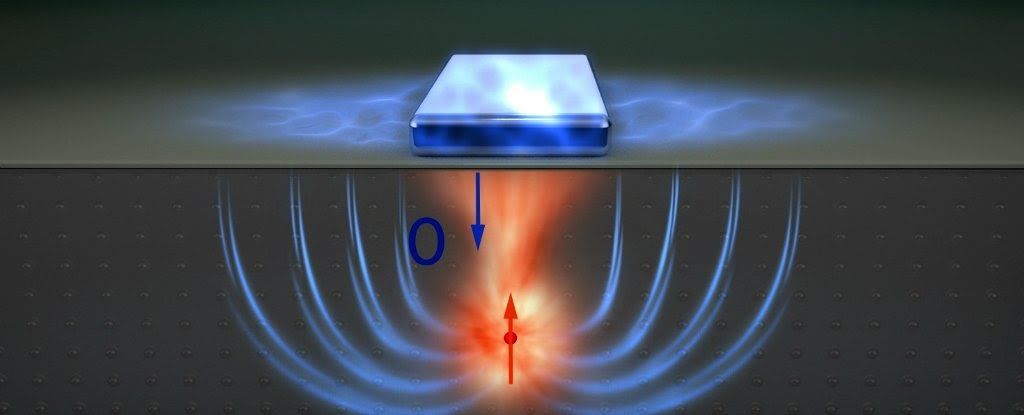
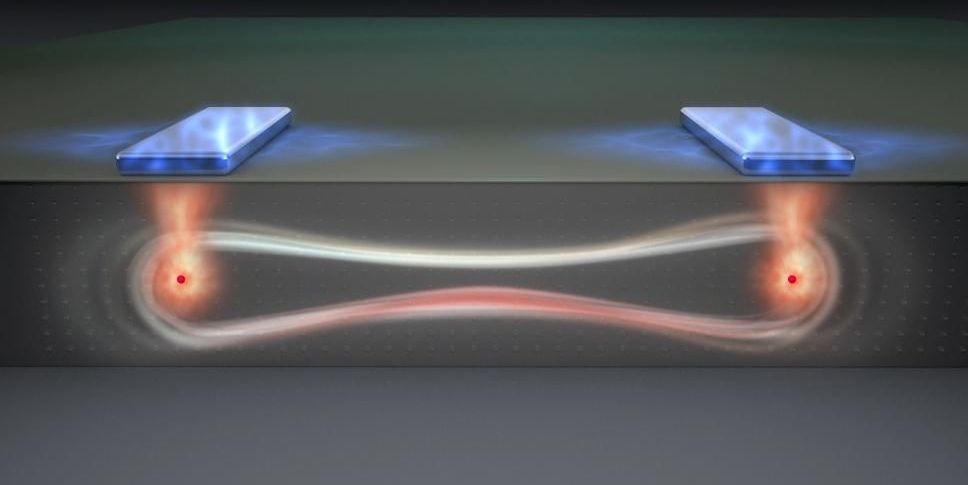
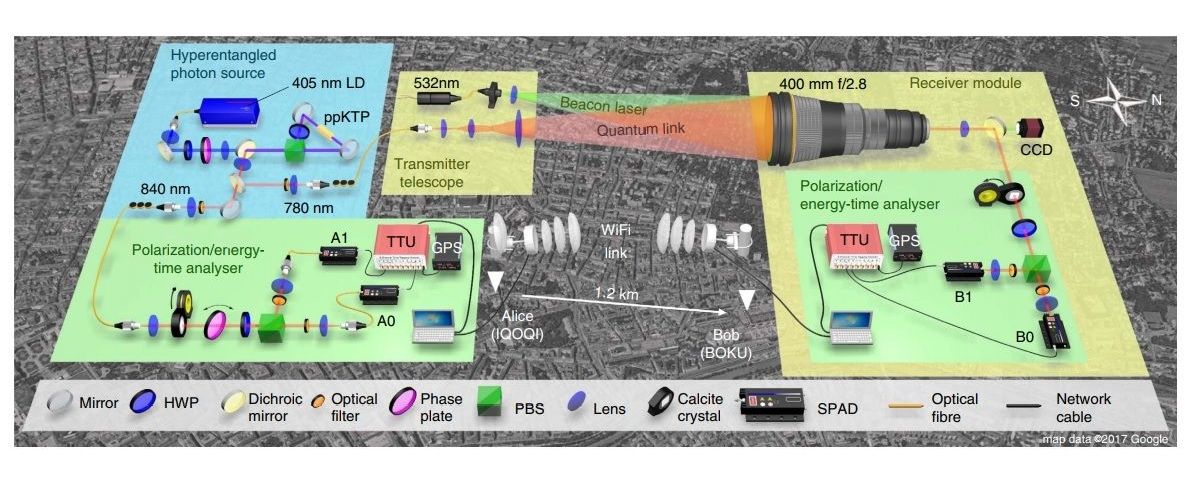
Researchers from Stanford have advanced a long-standing problem in quantum physics – how to send “entangled” particles over long distances.

Their work is described in the online edition of Nature Communications.

Scientists and engineers are interested in the practical application of this technology to make networks that can send highly secure information over long distances – a capability that also makes the technology appealing to governments, banks and militaries.

Read more

Stephen Hawking’s Legacy Could Be ‘Holy Grail’ Of Physics: Combining Gravity And Quantum Mechanics At Black Hole Horizons

Interesting…


To suggest that quantum mechanics and gravity are on the verge of being reconciled would be, to the physics world at least, as significant as the discover of splitting the atom. While splitting the atom might have led to the nuclear bomb, it also led to the technology of nuclear power, i.e. nuclear fission, which, if harnessed properly, creates a renewable and sustainable energy resource. The problem has always been that quantum mechanics — the rules that govern sub-atomic particles — and gravity, the rule that governs mass as we know it (the stuff we can touch and feel), do not agree with each other. The question has always been, what is it that “unifies” these two theories? Is quantum mechanics God playing dice, as Einstein suggested?

“God doesn’t play dice with the universe.”

Stephen Hawking and his colleagues have come to a possible answer. Think of your television. You watch shows and movies and you are not thinking how unrealistic the movie is because it is on your two dimensional screen. The two dimensions represent information which is perceived by your brain as an accurate portrayal of the three dimensional universe. In short, the three dimensional universe is captured in two dimensions; reality becomes a hologram. Out reality could be nothing more than a television show if we extend Hawking’s Theory to the entire universe.

Read more

Spooky Action Is Real: Bizarre Quantum Entanglement Confirmed in New Tests

It just goes to show that one of the most potent weapons in science is the ability to keep an open, critical mind.


Two recent studies have confirmed that the “spooky action at a distance” that so upset Albert Einstein — the notion that two entangled particles separated by long distances can instantly affect each other — has been proven to work in a stunning array of different experimental setups.

One experiment closed two of the three loopholes in proofs of spooky action at a distance. Another found that quantum entanglement works over astonishingly large distances. And future tests are focused on making the final loophole as small as possible. [8 Ways You Can See Einstein’s Theory of Relativity in Real Life]

Overall, the new series of tests is simply confirming what physicists have long suspected.

Read more

/* */