Toggle light / dark theme

A new study looks for the cortical conscious network

New research published in the New Journal of Physics tries to decompose the structural layers of the cortical network to different hierarchies enabling to identify the network’s nucleus, from which our consciousness could emerge.

The is a very complex network, with approximately 100 billion neurons and 100 trillion synapses between the neurons. In order to cope with its enormous complexity and to understand how brain function eventually creates the conscious mind, science uses advanced mathematical tools. Ultimately, scientists want to understand how a global phenomenon such as consciousness can emerge from our neuronal network.

A team of physicists from Bar Ilan University in Israel led by Professor Shlomo Havlin and Professor Reuven Cohen used network theory in order to deal with this complexity and to determine how the structure of the human cortical network can support complex data integration and . The gray area of the human cortex, the neuron cell bodies, were scanned with MRI imaging and used to form 1000 in the cortical network. The white matter of the human cortex, the neuron bundles, were scanned with DTI imaging, forming 15,000 links or edges that connected the network’s nodes. In the end of this process, their network was an approximation of the structure of the human cortex.

250Gbps: Russian scientists aim to revolutionize computing with plasma-driven antennas

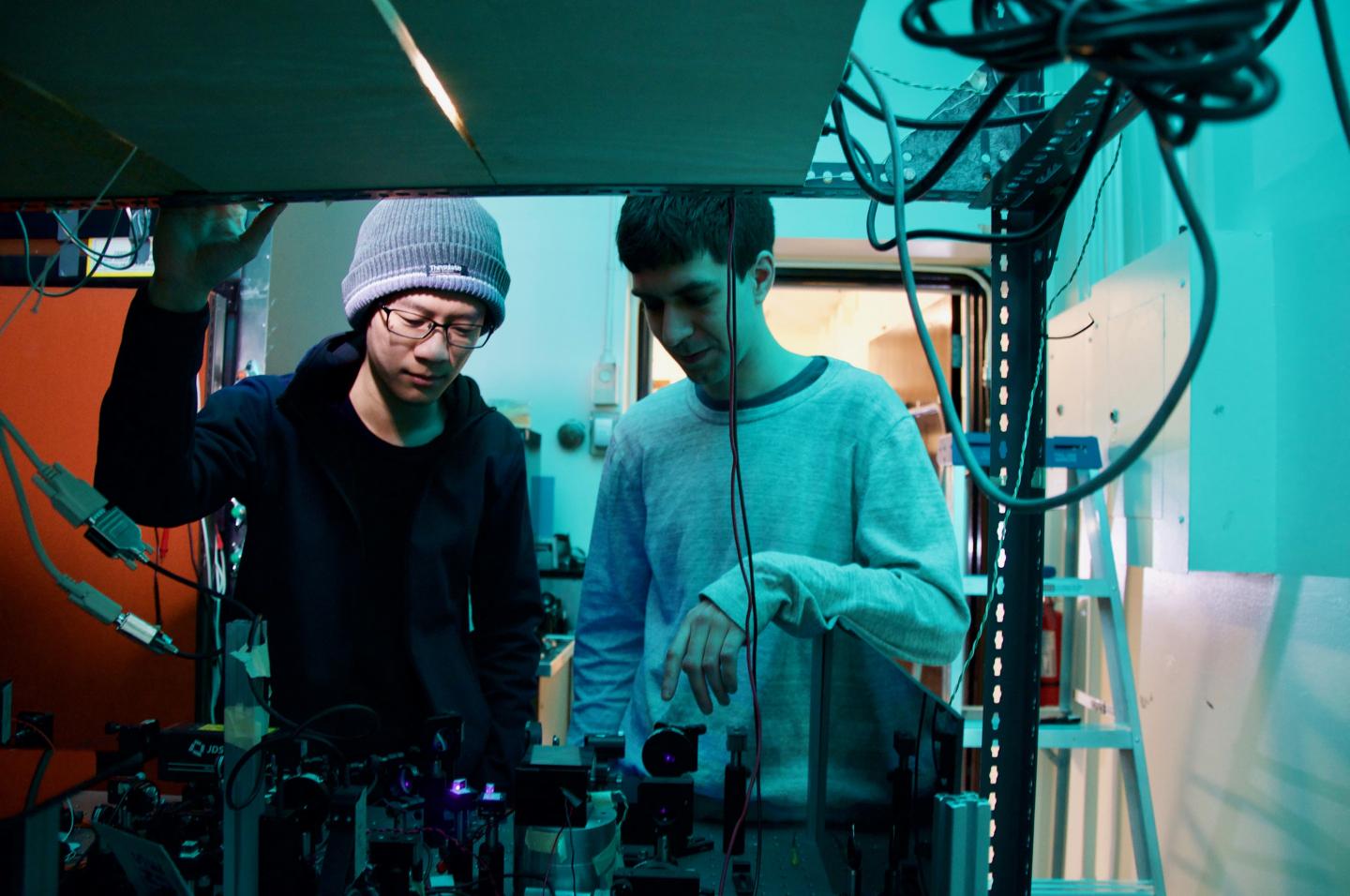
A team of Russian physicists has found a way to tune silicon nanoparticles so they can process optical data at previously unattainable speed, paving the way for the creation of “ultracompact and ultrafast” processing devices.

The findings of the experiment-based survey conducted by scientists from Moscow Institute of Physics and Technology (MIPT) and ITMO University were published in the ACS Photonics journal in late July.

The ‘star in a jar’ that could provide limitless energy on Earth: US Government reveals experiments to create compact fusion plants

It would provide humankind with near limitless energy, ending dependence on fossil fuels for generating electricity.

US Government physicists have backed plans to create ‘a star in a jar’ — replicating on Earth the way the sun and stars create energy through fusion.

Physicists at the U.S. Department of Energy’s Princeton Plasma Physics Laboratory (PPPL) revealed their plan for a next generation fusion device in a paper published in the journal Nuclear Fusion.

Should We Build a Dyson Sphere?

To check out any of the lectures available from Great Courses Plus go to http://ow.ly/Y8lm303oKJe

Get your own Space Time t­shirt at http://bit.ly/1QlzoBi

Tweet at us! @pbsspacetime
Facebook: facebook.com/pbsspacetime
Email us! pbsspacetime [at] gmail [dot] com.

Comment on Reddit: http://www.reddit.com/r/pbsspacetime

The Kepler telescope recently noticed a strange partial eclipse that some have speculated could be a Dyson Sphere. Are Dyson Sphere’s possible? Are they practical? What other alternatives to futuristic energy capture do we have to choose from? Why not a kugelblitz — a swarm of black hole powered engines?

Previous Episode.

ESO confirms the discovery of Earth’s closest potentially habitable neighbour

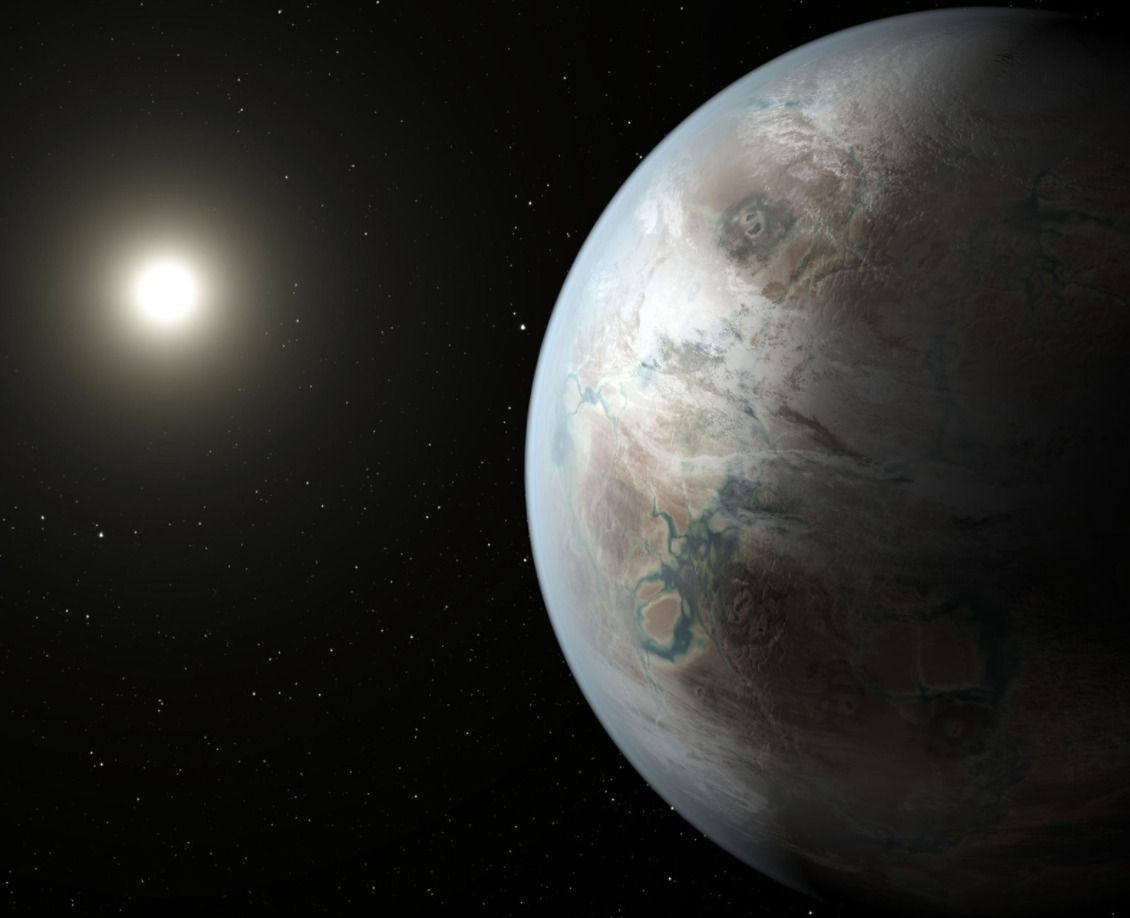
Astronomers have today confirmed the existence of a planet orbiting the sun’s nearest neighbour, Proxima Centauri, which has the potential to host liquid water, and therefore life.

The exoplanet in question, Proxima b, is thought to be the Earth’s closest potentially habitable neighbour, making this discovery a major landmark in humanity’s exploration of the universe.

“We’ve found an exoplanet orbiting Proxima Centauri. It’s the nearest exoplanet we will ever find, because it’s the nearest star to the Sun, and we are very excited about it,” explained a delighted Dr Guillem Anglada-Escudé, from the School of Physics and Astronomy, Queen Mary, University of London, who participated in the epic research project.

HKUST Develops Tiny Lasers that Opens New Era for Light-based Computing

Congrats Hong Kong Univ.


Researchers at The Hong Kong University of Science and Technology (HKUST) have fabricated microscopically-small lasers directly on silicon, enabling the future-generation microprocessors to run faster and less power-hungry – a significant step towards light-based computing.

The innovation, made by Prof Kei-may Lau, Fang Professor of Engineering and Chair Professor of the Department of Electronic and Computer Engineering, in collaboration with the University of California, Santa Barbara; Sandia National Laboratories and Harvard University, marks a major breakthrough for the semiconductor industry and well beyond.

Silicon forms the basis of everything from solar cells to the integrated circuits at the heart of our modern electronic gadgets. However, the crystal lattice of silicon and of typical laser materials could not match up, making it impossible to integrate the two materials until now, when Prof Lau’s group managed to integrate subwavelength cavities — the essential building blocks of their tiny lasers — onto silicon, allowing them to create and demonstrate high-density on-chip light-emitting elements. The finding was recently published as the cover story on Applied Physics Letters.

Like Liked UnlikeA New Approach To the Hard Problem of Consciousness: A Quasicrystalline Language of “Primitive Units of Consciousness” In Quantized SpacetimeLike

The hard problem of consciousness must be approached through the ontological lens of 20th century physics, which tells us that reality is information theoretic and quantized at the level of Planck scale spacetime. Through careful deduction, it becomes clear that information cannot exist without consciousness – the awareness of things. And to be aware is to hold the meaning of relationships of objects within consciousness – perceiving abstract objects, while enjoying degrees of freedom within the structuring of those relationships. This defines consciousness as language – a set of objects and an ordering scheme with degrees of freedom used for expressing meaning. And since even information at the Planck scale cannot exist without consciousness, we propose an entity called a “primitive unit of consciousness”, which acts as a mathematical operator in a quantized spacetime language. Quasicrystal mathematics based on E8 geometry seems to be a candidate for the language of reality, possessing several qualities corresponding to recent physical discoveries and various physically realistic unification models.

/* */