Toggle light / dark theme

Dr. Eric Verdin, MD — President and Chief Executive Officer — Buck Institute for Research on Aging

Fighting The Battle Against Biological Aging — Dr. Eric Verdin MD, President & CEO, Buck Institute for Research on Aging.


Dr. Eric Verdin, MD (https://www.buckinstitute.org/lab/verdin-lab/) is President and Chief Executive Officer of the Buck Institute for Research on Aging, as well as Professor of Medicine at University of California, San Francisco (https://bms.ucsf.edu/people/eric-verdin-md).

Dr. Verdin’s lab currently studies the relationship between aging and the immune system per associated defects in the adaptive immune system, and over chronic activation of the innate immune system, as well as programs on how metabolism, diet, and small molecules regulate the activity of histone deacetylases and sirtuins, and thereby the aging process and its associated diseases, including Alzheimer’s.

Dr. Verdin has published more than 200 scientific papers and holds more than 15 patents. He is a highly cited scientist (top 1 percent) and has been recognized for his research with a Glenn Award for Research in Biological Mechanisms of Aging and a senior scholarship from the Ellison Medical Foundation.

Dr. Verdin is an elected member of several scientific organizations, including the American Association for the Advancement of Science, the American Society for Clinical Investigation, and the Association of American Physicians. He also serves on the advisory council of National Institute on Drug Abuse at the National Institutes of Health.

Reading Memories from the Human Brain — SECRET Brain Project

For the first time ever, Scientists working for the United States Government and Google have managed to read and understand a portion of a brain in real time. This is going to enable abilities such as reading minds and memories from humans in the future. The question is how long it will take until the government starts secret projects in that area for bad purposes.

The Human Brain Project is the biggest secret scientific research project, based on exascale supercomputers, that aims to build a collaborative ICT-based scientific research infrastructure to allow researchers across Europe and the United States Government to advance knowledge in the fields of neuroscience, computing, and brain-related medicine and in the end to create a device in the form of a brain computer interface that can record and read memories from a human brain.

Every day is a day closer to the Technological Singularity. Experience Robots learning to walk & think, humans flying to Mars and us finally merging with technology itself. And as all of that happens, we at AI News cover the absolute cutting edge best technology inventions of Humanity.

If you enjoyed this video, please consider rating this video and subscribing to our channel for more frequent uploads. Thank you! smile

TIMESTAMPS:
00:00 What has just been accomplished.
01:30 How the Brain Map was created.
03:32 The technology to enable reading the brain.
05:22 What this will do for us.
07:41 Last Words.

#bci #ai #mindreading

YOU WILL want these New Robotic Limbs! — AI-Controlled Prosthetics

Advances in Artificial Intelligence, neuroscience and robotics have gotten us to a point where people might want to replace their biological limbs with robotic limbs due to there being more and more advantages with every passing day. Things like improved movement, intelligent controlling systems with the help of machine learning AI can help you control these limbs better than you could control your regular old arms, legs and hands.

But how long until we can finally live out our transhuman fantasies and become cyborgs? All this, and a bunch of new and futuristic scientific discoveries in this one review showcasing the most advanced AI Controlled Prosthetics.

Every day is a day closer to the Technological Singularity. Experience Robots learning to walk & think, humans flying to Mars and us finally merging with technology itself. And as all of that happens, we at AI News cover the absolute cutting edge best technology inventions of Humanity.

If you enjoyed this video, please consider rating this video and subscribing to our channel for more frequent uploads. Thank you! smile

TIMESTAMPS:
00:00 The Future of Humanity?
00:53 Why Prosthetics are necessary.
02:23 The History of Prosthetics.
03:56 Robotic Limbs Today.
05:59 What are the limits?
07:42 Last Words.

#transhuman #cyborg #bci

Solar PV film roll. Revolutionary new production technology

Solar PV panels are now a common site around the world and they do a great job. But they only work on flat surfaces. What about the millions of other surfaces that are not so conveniently shaped? That’s where flexible solar film comes in. The concept is not new but now a UK company has developed a unique Solar PV film that could make the technology accessible to millions more people in remote off grid areas in developing nations.

Power Roll Website.
https://powerroll.solar/unique-solar-film/

Video Transcripts available at our website.
http://www.justhaveathink.com.

Help support this channels independence at http://www.patreon.com/justhaveathink.

Or with a donation via Paypal by clicking here.
https://www.paypal.com/cgi-bin/webscr?cmd=_s-xclick&hosted_b…source=url.

You can also help keep my brain ticking over during the long hours of research and editing via the nice folks at BuyMeACoffee.com.

Researchers discover new type of nerve cell in the retina

Scientists at the John A. Moran Eye Center at the University of Utah have discovered a new type of nerve cell, or neuron, in the retina.

In the central nervous system, a complex circuitry of neurons communicate with each other to relay sensory and motor information; so-called interneurons serve as intermediaries in the chain of communication. Publishing in the Proceedings of the National Academy of Sciences of the United States of America, a research team led by Ning Tian, Ph.D., identifies a previously unknown type of interneuron in the mammalian .

The discovery marks a notable development for the field as scientists work toward a better understanding of the central nervous system by identifying all classes of neurons and their connections.

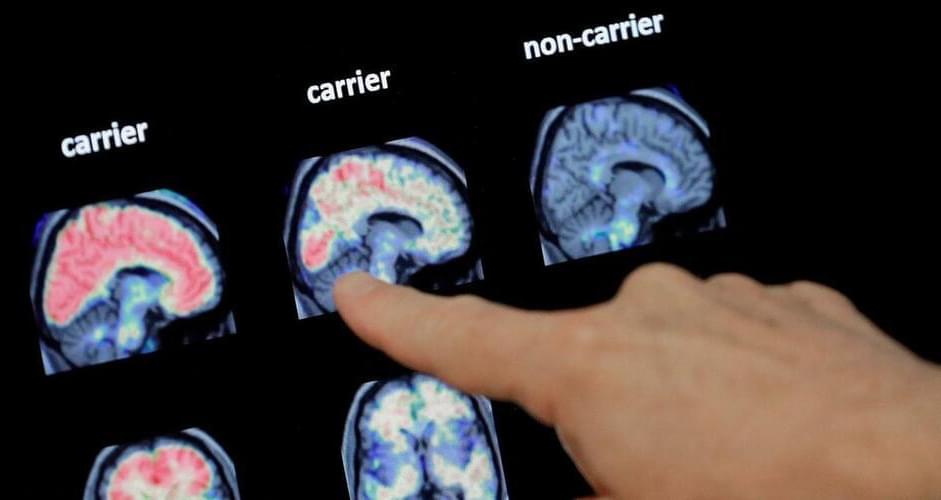
Has a treatment for Alzheimer’s been sitting on pharmacy shelves for decades? Scientists have two possible candidates

Two drugs approved decades ago not only counteract brain damage caused by Alzheimer’s disease in animal models, the same therapeutic combination may also improve cognition.

Sounds like a slam dunk in terms of a cure—but not yet. Researchers currently are concentrating on animal studies amid implications that remain explosive: If a surprising drug combination continues to destroy a key feature of the disease, then an effective treatment for Alzheimer’s may have been hiding for decades in plain sight.

A promising series of early studies is highlighting two well known medicine cabinet standbys—gemfibrosil, an old-school cholesterol-lowering drug, and retinoic acid, a vitamin A derivative. Gemfibrosil, is sold as Lopid and while it’s still used, it is not widely prescribed. Doctors now prefer to prescribe statins to lower cholesterol. Retinoic acid has been used in various formulations to treat everything from acne to psoriasis to cancer.

Neuroscience’s Existential Crisis

On a chilly evening last fall, I stared into nothingness out of the floor-to-ceiling windows in my office on the outskirts of Harvard’s campus. As a purplish-red sun set, I sat brooding over my dataset on rat brains. I thought of the cold windowless rooms in downtown Boston, home to Harvard’s high-performance computing center, where computer servers were holding on to a precious 48 terabytes of my data. I have recorded the 13 trillion numbers in this dataset as part of my Ph.D. experiments, asking how the visual parts of the rat brain respond to movement.

Printed on paper, the dataset would fill 116 billion pages, double-spaced. When I recently finished writing the story of my data, the magnum opus fit on fewer than two dozen printed pages. Performing the experiments turned out to be the easy part. I had spent the last year agonizing over the data, observing and asking questions. The answers left out large chunks that did not pertain to the questions, like a map leaves out irrelevant details of a territory.

But, as massive as my dataset sounds, it represents just a tiny chunk of a dataset taken from the whole brain. And the questions it asks—Do neurons in the visual cortex do anything when an animal can’t see? What happens when inputs to the visual cortex from other brain regions are shut off?—are small compared to the ultimate question in neuroscience: How does the brain work?

Key to resilient energy-efficient AI may reside in human brain

A clearer understanding of how a type of brain cell known as astrocytes function and can be emulated in the physics of hardware devices, may result in artificial intelligence (AI) and machine learning that autonomously self-repairs and consumes much less energy than the technologies currently do, according to a team of Penn State researchers.

Astrocytes are named for their star shape and are a type of glial cell, which are support cells for neurons in the . They play a crucial role in brain functions such as memory, learning, self-repair and synchronization.

“This project stemmed from recent observations in , as there has been a lot of effort and understanding of how the brain works and people are trying to revise the model of simplistic neuron-synapse connections,” said Abhronil Sengupta, assistant professor of electrical engineering and computer science. “It turns out there is a third component in the brain, the astrocytes, which constitutes a significant section of the cells in the brain, but its role in machine learning and neuroscience has kind of been overlooked.”

Experimental depression treatment is nearly 80% effective in controlled study

A new type of magnetic brain stimulation brought rapid remission to almost 80% of participants with severe depression in a study conducted at the Stanford University School of Medicine.

The , known as Stanford accelerated intelligent neuromodulation therapy (SAINT) or simply Stanford neuromodulation therapy, is an intensive, individualized form of transcranial magnetic stimulation. In the study, remission typically occurred within days and lasted months. The only side effects were temporary fatigue and headaches.

“It works well, it works quickly and it’s noninvasive,” said Nolan Williams, MD, an assistant professor of psychiatry and behavioral sciences. “It could be a game changer.” Williams is the senior author of the study, which was published Oct. 29 in the American Journal of Psychiatry.

/* */