Link :- People are diagnosed earlier than in the past: https://www.freethink.com/health/depression-age-of-onset
People are being diagnosed with depression earlier than in the past because of a decrease in stigma and better diagnostic guidelines.

Link :- People are diagnosed earlier than in the past: https://www.freethink.com/health/depression-age-of-onset
People are being diagnosed with depression earlier than in the past because of a decrease in stigma and better diagnostic guidelines.

Researchers have discovered that patterns of activity in our neurons are more influenced by the shape of the brain – its grooves, contours, and folds – than by its complex interconnections.
“The conventional view is that specific thoughts or sensations elicit activity in specific parts of the brain. However, our study reveals structured patterns of activity across nearly the entire brain, relating to thoughts and sensations in much the same way that a musical note arises from vibrations occurring along the entire length of a violin string, not just an isolated segment.”
➡️
Neural activity may be more influenced by the shape of the brain – its grooves, contours, and folds – than by its complex interconnections.
The study, led by Jimo Borjigin, associate professor of molecular and integrative physiology and neurology at Michigan, was very small, featuring only four patients. But the findings echo animal model studies, where the presence of gamma waves in dying brains has also been observed, including in a previous study in rats that Borjigin and colleagues ran a decade earlier.
“These data demonstrate that the surge of gamma power and connectivity observed in animal models of cardiac arrest can be observed in select patients during the process of dying,” the researchers wrote in their paper, published in PNAS.
What are gamma waves? Gamma waves are high-frequency brain waves researchers believe represent multiple areas of the brain working together in complex thoughts. Take, for example, combining the sight, sound, and smell of a car to get a full picture of the vehicle, Ajmal Zemmar, a neurosurgeon at the University of Louisville uninvolved with the study, told Science.
Researchers have also found patterns of gamma waves in healthy people while dreaming, learning, and recalling lessons, Science reported, with some researchers associating them with consciousness itself. But the exact mechanisms behind gamma waves are “one of the biggest mysteries in neuroscience,” Zemmar said.
Summary: Researchers challenge a 75-year-old neuroscience hypothesis, suggesting dendrites play a crucial role in brain computation, not just the neuronal soma.
Experiments conducted under non-physiological conditions revealed that neuron features like firing frequency and stimulation threshold are controlled by dendrites.
This groundbreaking discovery implies that dendrites could be pivotal in learning processes and may even influence our understanding of brain states and degenerative diseases.
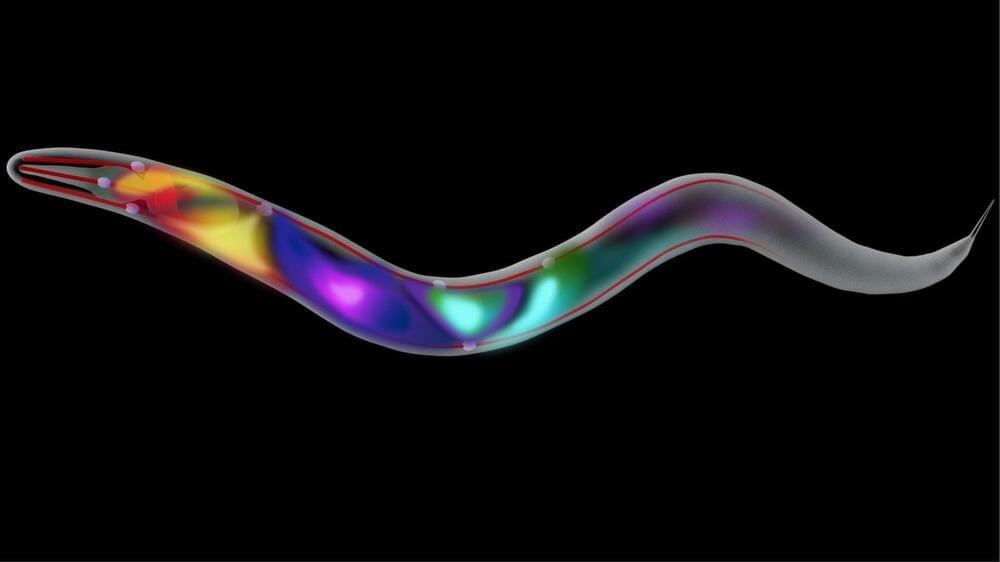
The map reveals how every single neuron in the nervous system of the small worm communicates wirelessly.
Making a significant stride in scientific advancement, researchers have created the first-ever map that illustrates the wireless communication among every individual neuron in the nervous system of a small worm.
This is the first time a map of a neuropeptide network is created in any mammal, even though the same has been successfully done in simple organisms.
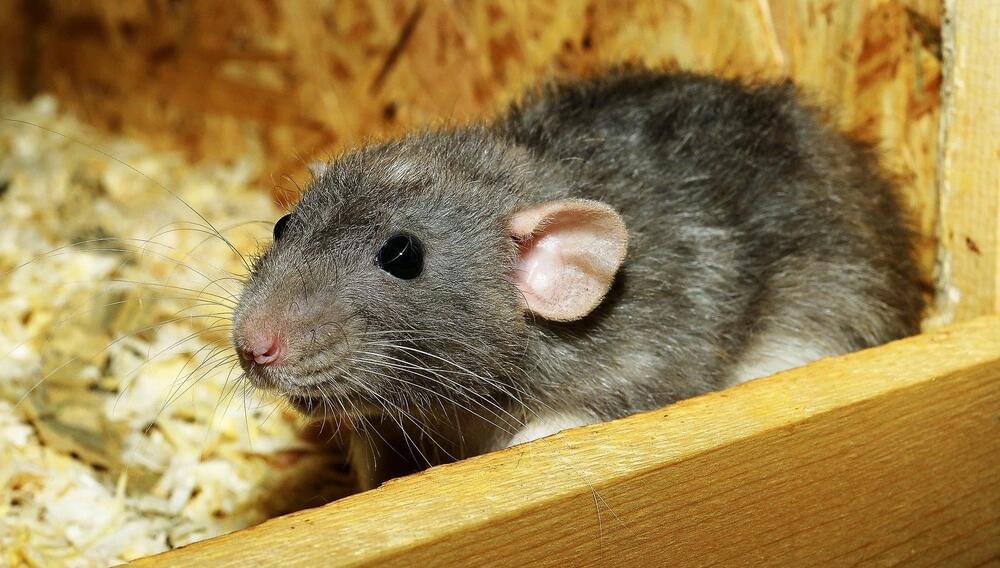
As humans, we live in our thoughts: from pondering what to make for dinner to daydreaming about our last beach vacation. Now, researchers at HHMI’s Janelia Research Campus have found that animals also possess an imagination.
A team from the Lee and Harris labs developed a novel system combining virtual reality and a brain-machine interface to probe a rat’s inner thoughts.
They found that, like humans, animals can think about places and objects that aren’t right in front of them, using their thoughts to imagine walking to a location or moving a remote object to a specific spot.
Researchers at the Barrow Neurological Institute have conducted a study revealing that residing in areas with average air pollution levels is associated with a 56% increased risk of Parkinson’s disease when compared to those living in regions with the lowest level of air pollution.
The study, which was recently published in Neurology – the medical journal of the American Academy of Neurology – was conducted to identify national, geographic patterns of Parkinson’s disease and test for nationwide and region-specific associations with fine particulate matter.
“Previous studies have shown fine particulate matter to cause inflammation in the brain, a known mechanism by which Parkinson’s disease could develop,” says Brittany Krzyzanowski, PhD, a researcher at Barrow Neurological Institute, who led the study. “Using state-of-the-art geospatial analytical techniques, we were, for the first time, able to confirm a strong nationwide association between incident Parkinson’s disease and fine particulate matter in the U.S.”
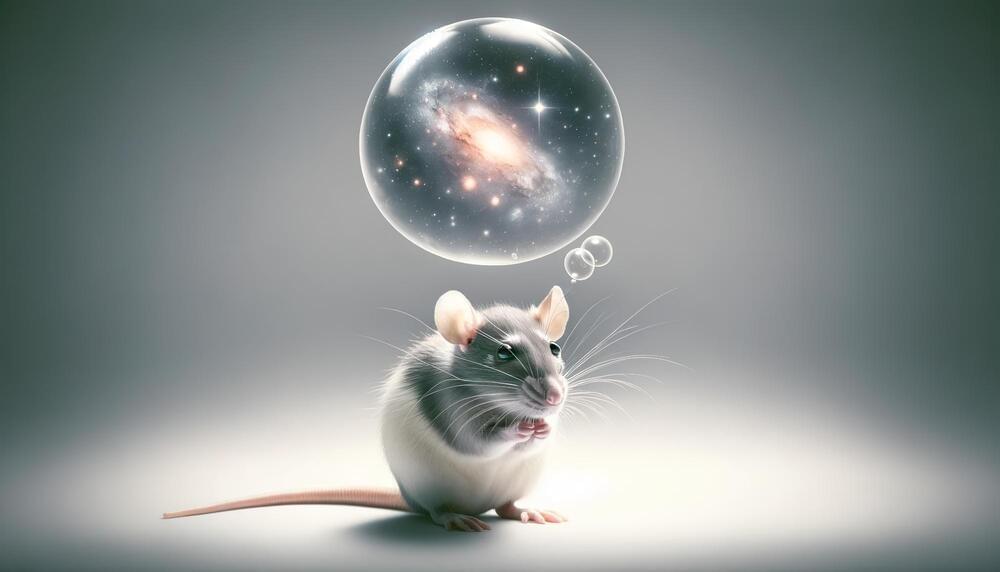
As human beings, our lives are intertwined with our thoughts, whether we’re contemplating dinner options or indulging in memories of our recent beach getaway.
Interestingly, scientists at HHMI’s Janelia Research Campus have discovered that animals also have an imagination.
A group of researchers from the Lee and Harris laboratories devised an innovative approach that fuses virtual reality with a brain-machine interface to explore the inner thoughts of rats.

Are you captivated by the enigma of consciousness? Intrigued by the complexities of the human mind? Or perhaps, you’re just a seeker, thirsty for knowledge that lies beyond conventional wisdom? As a futurist, evolutionary cyberneticist, and philosopher of mind, I invite you on a mind-bending, soul-stirring expedition with a just-released remastered version of my documentary film Consciousness: Evolution of the Mind (TV-PG). Watch it now in its entirety on YouTube (Ecstadelic Media channel)!
#consciousness #evolution #mind #documentary #film
Consciousness: Evolution of the Mind (2023 | Remastered)
IMDb-accredited film, rated TV-PG
Director: Alex Vikoulov.
Narrator: Forrest Hansen.