Toggle light / dark theme

Pentagon Seeks $12 -$15 Billion for AI Weapons Research

The news this month is full of stories about money pouring into AI research. First we got the news about the $15 million granted to the new Leverhulme Center for the Future of Intelligence. Then Elon Musk and friends dropped the news about launching OpenAI to the tune of $1 billion, promising that this would be a not-for-profit company committed to safe AI and improving the world. But that all pales in comparison to the $12-$15 billion that the Pentagon is requesting for the development of AI weapons.

According to Reuters, “The Pentagon’s fiscal 2017 budget request will include $12 billion to $15 billion to fund war gaming, experimentation and the demonstration of new technologies aimed at ensuring a continued military edge over China and Russia.” The military is looking to develop more advanced weapons technologies that will include autonomous weapons and deep learning machines.

While the research itself would be strictly classified, the military wants to ensure that countries like China and Russia know this advanced weapons research is taking place.

Read more

UAT Tech – Official Blog of the University of Advancing Technology

Inhuman: The Next & Final Phase of Man is Here” is not fiction or a mockudrama but a new investigative documentary from Defender Films and Raiders News Productions.

Inhuman travels the globe to unveil for the first time how breakthrough advances in science, technology and philosophy—including cybernetics, bioengineering, nanotechnology, machine intelligence and synthetic biology are poised to create mind-boggling game changes to everything we have known until now about Homo sapiens.

As astonishing technological developments push the frontiers of humanity toward far-reaching morphological transformation (which promises in the very near future to redefine what it means to be human), an intellectual and fast-growing cultural movement known as transhumanism intends the use of these powerful new fields of science and technology as tools that will radically redesign our minds, our memories, our physiology, our offspring, and even perhaps—as Professor Joel Garreau, Lincoln Professor of Law, claims—our immortal souls.

Read more

What Was Your 1st Computer? — Computerphile

Before each Computerphile interview we asked guests and regular contributors about their first computer.

Professor Uwe Aickelin: Missing Data: https://youtu.be/oCQbC818KKU
Professor Ross Anderson: Chip & PIN Fraud: https://youtu.be/Ks0SOn8hjG8

Spencer Lamb: Inside a Data Centre: https://youtu.be/fd3kSdu4W7c
Tom Scott: Animated GIFs and Space vs Time: http://youtu.be/blSzwPcL5Dw

Horia Maior: Brain Scanner: COMING SOON!
Dr Sean Holden: The Singularity & Friendly AI: https://youtu.be/uA9mxq3gneE

Brian Kernighan on Computerphile: https://www.youtube.com/playlist?list=PLzH6n4zXuckqZ90zLyy36qjO5YIn1RulG

Olly Chick: Captain Buzz: Smart Phone Pilot: https://youtu.be/DE5e0C7xw7c

Musk, others commit $1 billion to non-profit AI research company to ‘benefit humanity’

(credit: OpenAI)

Elon Musk and associates announced OpenAI, a non-profit AI research company, on Friday (Dec. 11), committing $1 billion toward their goal to “advance digital intelligence in the way that is most likely to benefit humanity as a whole, unconstrained by a need to generate financial return.”

The funding comes from a group of tech leaders including Musk, Reid Hoffman, Peter Thiel, and Amazon Web Services, but the venture expects to only spend “a tiny fraction of this in the next few years.”

Read more

Scores of Labs Should be Gearing Up to Work on Glucosepane Cross-Link Breakers, But Are They?

Glucosepane is one of the most significant mechanisms of aging and yet very few people are working on it!


As we age skin and blood vessels lose their elasticity. People care too much about the skin and too little about the blood vessels, but that is always the way of it. Appearance first and substance later, if at all. Yet you can live inside an aged skin; beyond the raised risk of skin cancer its damaged state arguably only makes life less pleasant, and the present state of medical science can ensure that the numerous age-related dermatological dysfunctions can be kept to a state of minor inconvenience. Loss of blood vessel elasticity, on the other hand, will steadily destroy your health and then kill you. Arterial stiffening causes remodeling of the cardiovascular system and hypertension. The biological systems that regulate blood pressure become dysfunctional as blood vessels depart from ideal youthful behavior, creating a downward spiral of increasing blood pressure and reactions to that increase. Small blood vessels fail under the strain in ever larger numbers, damaging surrounding tissue. In the brain this damage contributes to age-related cognitive decline by creating countless tiny, unnoticed strokes. Ultimately this process leads to dementia. More important parts of the cardiovascular system are likely to fail first, however, perhaps causing a stroke, or a heart attack, or the slower decline of congestive heart failure.

From what is known today, it is reasonable to propose that the two main culprits driving loss of tissue elasticity are sugary cross-links generated as a byproduct of the normal operation of cellular metabolism and growing numbers of senescent cells. Elasticity is a property of the extracellular matrix, an intricate structure of collagens and other proteins created by cells. Different arrangements of these molecules produce very different structures, ranging from load-bearing tissues such as bone and cartilage to elastic tissues such as skin and blood vessel walls. Disrupting the arrangement and interaction of molecules in the extracellular matrix also disrupts its properties. Persistent cross-links achieve this by linking proteins together and restricting their normal range of motion. Senescent cells, on the other hand, secrete a range of proteins capable of breaking down or remodeling portions of the surrounding extracellular matrix, and altering the behavior of nearby cells for the worse.

The most important cross-linking compound in humans is glucosepane. Our biochemistry cannot break down glucosepane cross-links, and as a result it accounts for more than 99% of cross-links in our tissues. This isn’t a big secret. Given this you might expect to find researchers working flat out in scores of laboratories to find a viable way to break it down. After all here we have one single target molecule, and any drug candidate capable of clearing even half of existing cross-links would provide a treatment that can both reverse skin aging and vascular aging to a much greater degree than any presently available therapy. The size of the resulting market is every human being, the potential for profit staggering. Yet search on PubMed, and this is all of relevance that you will see published on the topic in the past few years:

Read more

Chinese researchers working on a car driven by your brain

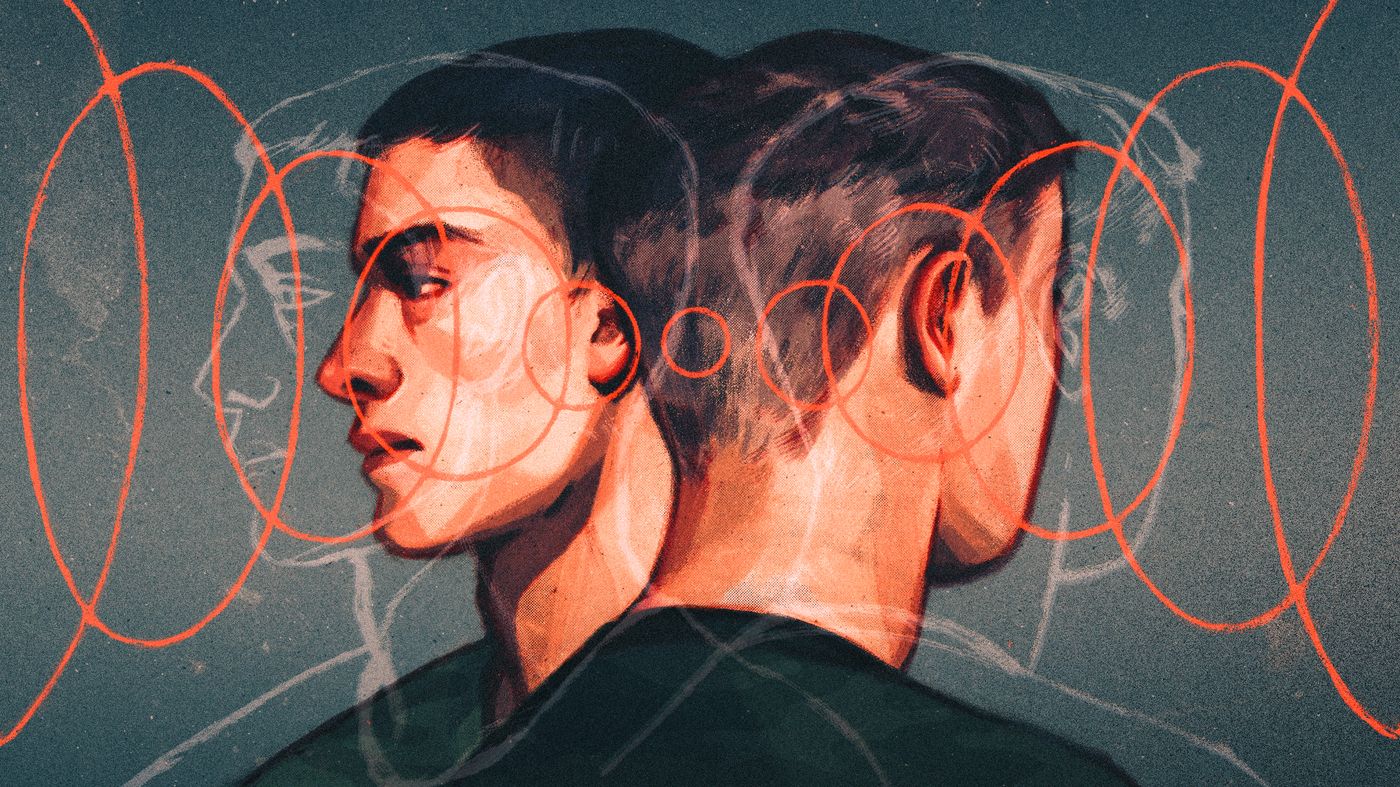
If human-less self-driving cars of the future creep you out, then this latest experimental automotive technology from China might offer you some respite. Or freak creep you out even more. Researchers from the port city of Tianjin have revealed what they claim is the country’s first ever car to be driven without the use of human hands or feet but with a driver still in control. All it takes is some brain power. And some highly specialized equipment, of course.

Mind-reading devices aren’t actually new. In fact, many companies and technologies make that claim year after year, but few have actually been able to deliver an actual consumer product, with most successful prototypes designed for therapeutic or medical uses. The theory, however, is the same throughout. Sensors read electroencephalogram or EEG from the wearer’s brain. These are then interpolated and interpreted as commands for a computer. In this case, the commands are mapped to car controls.

The application of direct brain control to driving is a two-edged sword. On the one hand, removing the delay between brain to muscle movement, which sometimes can be erroneous, could actually lead to better driver safety. On the other hand, given how easily drivers can be distracted even while their hands are on the wheel, the idea is understandably frightening to some.

Read more

Transhumanism Solving Violence and Improving the Human Condition: IQ, EQi, and Intelligence Upgrades

Can we end violence? Can we create greater emotional well being and intellectual equality for the greater well being of humanity? Will we be able to keep up with machines? How can we augment our intelligence? Could we cure mental illness? After advancements in aging the next major area of research from a standpoint of eliminating personal and global suffering would be upgrades in intelligence. Transhumanist values at their core want to eliminate suffering and existential risk to people’s lives. With well founded logic, these goals are not completely out of reach, it is possible but as usual, we will have to take the complex issue from many angles and from the standpoint of a systems engineer, but let’s look at some fun stuff before we get into the heavy stuff.

The Benefits of Intelligence Upgrades

So, what is the benefit for intelligence upgrades for every day people? We live in a time of exponential technology and vast amounts of face paced information, breakthroughs and invention. So, the most obvious answer to what is the benefit of intelligence upgrade is dealing with the massive amount of information one needs to keep up with daily to be on top of the game for work, for research or for business. Sometimes it can be our mere storage capacity that limits us in our abilities to interact with this information, at other times it is our processing speed, and most fundamentally the rate at which we can interact with new information. In 2012, a prosthetic chip was invented that uses electrodes to expand one’s memory storage. Now, with biotechnology predicted to move more quickly in 2016 and Google ready to back more companies in biotechnology, it may be possible to augment or program selective photographic memory. This is just an example of what one could imagine and begin working with, when combining electronics and gene editing. Many big breakthroughs in enhanced intelligence could be achieved in the future. The implications for business professionals, scientists, and the progress of technology would be astounding if upgrades like these were available. Personally, I can’t wait for the day when me and my personal A.I. through my Google Glass or some sort of eye wear or ear piece could read my brainwaves so I can type and do all my work through what would be a virtual form of telepathy. I could store everything I will need later instantly in the cloud and exactly where I want on my computer, there would be almost no delay because, well, how could there be? Time is everything.

Read more

/* */