Toggle light / dark theme

Can Humans Actually Have A Brain Like A Computer?

With modern innovations such as artificial intelligence, virtual reality, wi-fi, tablet computing and more, it’s easy for man to look around and say that the human brain is a complex and well-evolved organ. But according to Author, Neuroscientist and Psychologist Gary Marcus, the human mind is actually constructed somewhat haphazardly, and there is still plenty of room for improvement.

“I called my book Kluge, which is an old engineer’s word for a clumsy solution. Think of MacGyver kind of duct tape and rubber bands,” Marcus said. “The thesis of that book is that the human mind is a kluge. I was thinking in terms of how this relates to evolutionary psychology and how our minds have been shaped by evolution.”

Marcus argued that evolution is not perfect, but instead it makes “local maxima,” which are good, but not necessarily the best possible solutions. As a parallel example, he cites the human spine, which allows us to stand upright; however, since it isn’t very well engineered, it also gives us back pain.

“You can imagine a better solution with three legs or branches that would distribute the load better, but we have this lousy solution where our spines are basically like a flag pole supporting 70 percent of our body weight,” Marcus said.

“The reason for that is we’re evolved from tetrapods, which have four limbs and distribute their weight horizontally like a picnic table. As we moved upright, we took what was closest in evolutionary space, which is what took the fewest number of genes in order to give us this new kind of system of standing upright. But it’s not what you would have if you designed it from scratch.”

While Marcus’ book talked about the typical notion in evolutionary psychology that we have evolved to the optimal, he also noted that the human mind works as a function of two pathways, both the optimal performance and our brains’ history. To that end, he sees evolution as a probabilistic process of genes that are nearby, which aren’t necessarily those that are best for a given solution.

“A lot of the book was actually about our memories. The argument I made was that, if you really want a system of brain that does the thing humans do, you would want a kind of memory system that we find in computers, which is called location addressable memory,” Marcus explained.

“With location addressable memory, I’m going to store something in location seven or location eight or nine, and then you’re guaranteed to be able to go back to that thing you want when you want it, which is why computer memory is reliable. Our memory is not even remotely reliable. I can forget what I was going to say or forget where I parked my car. Our memories are nothing even close to the theoretical optimum that a computer shows us.”

Enhancing our minds, and our memories, won’t happen overnight, Marcus said. One might have a “brain like a computer” in theory, but he believes a more evolved, computer-like human brain is thousands of years away.

“There is what I call ‘evolutionary inertia’ that says once something is in place, it’s very hard for evolution to change it. If you change one or two genes, you might have an organism that survives. If you change several hundred, most likely, things are gonna’ break.”

In other words, evolution is the ultimate resourceful engine. Most evolutionary changes are small, since the brain tends to tweak the existing parts rather than start from scratch, which would be a more costly and rather inefficient solution in a survival-of-the-fittest-type world.

Given that genetic science hasn’t worked through a way to rewire the human brain, Marcus poses that better solution toward cognitive enhancement might be found in implants. Rather than generations from now, he believes that advancement could happen in our lifetimes.

“There are now actual cognitive enhancements, if you count motor control substitutes. Neural prostheses are here in limited ways. We know roughly how to make them. There’s a lot of fine detail that needs to be sorted,” Marcus said. “We certainly know how to write computer programs that can translate between interfaces. The big limiting step in improving our memory or enhancing our memory is, we just don’t really understand how information is stored in the brain. I think (a solution for that) is a 50-year project. It’s certainly not a 50,000 year project.”

400 Days nr: Movie Trailer

400 DAYS is a psychological sci-fi film centering on four astronauts who are sent on a simulated mission to a distant planet to test the psychological effects of deep space travel. Locked away for 400 days, the crew’s mental state begins to deteriorate when they lose all communication with the outside world. Forced to exit the ship, they discover that this mission may not have been a simulation after all.

Read more

Australian Researchers to 3D Print with Stem Cells for Cranial Reconstruction

The human brain is a fragile and powerful tool, and is also fully dependent on a sturdy skull to keep it secure and intact. Unfortunately for some, there is a need for cranial reconstruction on people who were either born with a skull-related deficiency or critically injured in the head area. 3D printing has shown itself to be a potential game-changer in this regard; we have already witnessed successful titanium mesh skull replacements for one Chinese farmer and even a three-year-old girl born with congenital hydrocephalus. Now, researchers out of Western Australia are developing a new advanced 3D printing method that involves reconstructing the human skull from stem cell cultures.

3dprinting_rph

The project, which is taking place within the Royal Perth Hospital and is being funded by the State Government, will provide their patients with damaged or surgically removed skull fragments with a high-quality cranial reconstruction surgery. The 3D printed stem cell-based skull replacement can potentially increase the success rate and the post-surgical quality of life of patients who require this intensive surgery.

Read more

How Facebook Will Use Artificial Intelligence to Understand Your Entire Social Life

facebook-zuckerberg-ai
Short Bytes
: Artificial Intelligence holds a special place in the future of the humanity. Many tech giants, including Facebook, have long been working on improving the AI to make lives better. Facebook has decided to reveal its milestones in Artificial Intelligence Research in the form of a progress report.

It doesn’t matter if you are scared of AI like Elon Musk or Stephen Hawking or if you have an opinion same as that of Google’s chief of Artificial Intelligence that computers are remarkably dumb. Companies are still going through the byzantine process of training the machines and creating human brain algorithms. Meanwhile, Facebook has just announced its progress report.

Facebook’s AI research team (FAIR) will present at NIPS, an Artificial Intelligence conference, its report card and reveal the team’s achievements regarding its state-of-the-art systems. Facebook has been trying to improve the image recognition and has created a system that speeds up the process by 30% using 10 times less training data from previous benchmarks.

Read more

Cryonics Is No Fantasy, Should We Be Taking It Seriously?

Most science starts off at the fringe and slowly makes it way to the mainstream. Cryopreservation is commonly achieved in a laboratory setting, but for many years serious applications remained confined to science fiction. Is it time to change how we see cryonics?

The science of freezing things

Scientific research requires great storage, and huge amounts of material including cells are frozen every day to be used at the later date. If you follow the correct protocols, many forms of life can be re-awakened after their cryogenic sleep. DMSO, propylene glycol and glycerol help abolish problems like ice crystals which can rupture cells, and storage temperatures can drop to below −120 oC. At these levels biological reactions are essentially halted.

Read more

Mind Control Device Alters Emotions on Demand

Think of all the possibilities!


braincontrolMind control has been a topic of many great suspense and science fiction movies until recent. Now, an emotion altering device that will work in conjunction with a smart phone app is now being developed by Thync, and is slated for release to the public in 2015.

Thync announced on Oct. 8 that it’s raised $13 million from financial contributors to develop technology combining neuroscience and consumer electronics.

“This is an avenue for people to call up their best stuff on demand,” says Isy Goldwasser, Thync’s chief executive officer and co-founder. “It’s a way for us to overcome our basic limitation as people. It lets us call up our focus, our calm, and creativity when we need it.”

Read more

The Autopilot is learning fast: Model S owners are already reporting that Tesla’s Autopilot is self-improving

During the press conference for the release of the Autopilot, Tesla CEO Elon Musk referred to each Model S owners as “expert trainers” – meaning that each driver will train the autonomous features of the system to feed the collective network intelligence of the fleet by simply driving the electric vehicle on Autopilot.

He said that the system should improve everyday, but that improvements might only become noticeable every week or so by adding up. Just a few weeks after the release, Model S owners are already taking to the Tesla Motors Club forum to describe how the Autopilot is improving…

Read more

BioViva Presents: Alzheimer’s Disease and Gene Therapy

Adam Alonzi has made another excellent film about the power of gene therapy.

Narrated and produced by Adam Alonzi. Music arranged by Leslee Frost. Sponsored by BioViva Sciences Inc.

Alzheimer’s Disease.
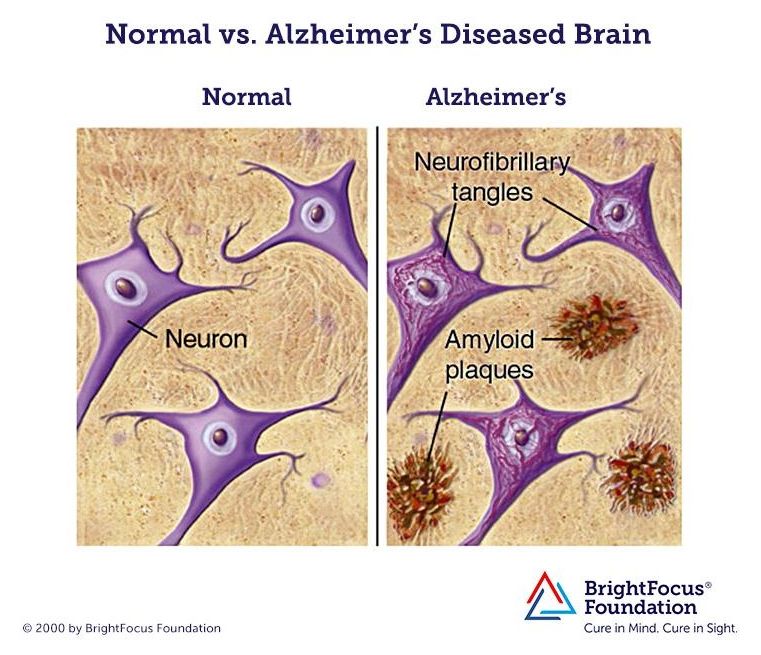
Alzheimer’s disease is a progressive, neurodegenerative disorder. It is the leading cause of dementia. Typically the condition affects short-term memory, but as it advances it can result in disorientation, mood disorders, language difficulties and behavioral issues. Over time, body functions are lost, leading to death.

Current treatment options are extremely limited and the outlook is poor for sufferers with the average life expectancy being 3–9 years from diagnosis. According to RAND Corp, the average annual cost of care for someone with Alzheimer’s disease is $41,689 to $56,290.

BioViva’s Therapy — Telomerase AAV gene therapy.

We are exploring therapies with the gene that creates telomerase to rejuvenate the microglia cells that support the Neurons with the aim of combating Alzheimer’s disease and restoring healthy function to the brain once more. There is mounting evidence to indicate this gene plays an active role in protection from Tau Pathology and various experiments have encouraged us to pursue this therapy with the goal of eliminating the suffering this disease brings.

Scientists Connect Brain to a Basic Tablet—Paralyzed Patient Googles With Ease

That was the year she learned to control a Nexus tablet with her brain waves, and literally took her life quality from 1980s DOS to modern era Android OS.

A brunette lady in her early 50s, patient T6 suffers from amyotrophic lateral sclerosis (also known as Lou Gehrig’s disease), which causes progressive motor neuron damage. Mostly paralyzed from the neck down, T6 retains her sharp wit, love for red lipstick and miraculous green thumb. What she didn’t have, until recently, was the ability to communicate with the outside world.

Read more

/* */