The blind may be able to see with help from this chip.
Category: neuroscience – Page 1,202
Neural networks explained
In the past 10 years, the best-performing artificial-intelligence systems—such as the speech recognizers on smartphones or Google’s latest automatic translator—have resulted from a technique called “deep learning.”
Deep learning is in fact a new name for an approach to artificial intelligence called neural networks, which have been going in and out of fashion for more than 70 years. Neural networks were first proposed in 1944 by Warren McCullough and Walter Pitts, two University of Chicago researchers who moved to MIT in 1952 as founding members of what’s sometimes called the first cognitive science department.
Neural nets were a major area of research in both neuroscience and computer science until 1969, when, according to computer science lore, they were killed off by the MIT mathematicians Marvin Minsky and Seymour Papert, who a year later would become co-directors of the new MIT Artificial Intelligence Laboratory.
Could We Hack Our Brains to Gain New Senses?
- Researchers are using advancing technology to expand and augment our traditional senses, tapping into how our brains process signals and manipulating that sensory feedback.
- This research is transforming lives, giving the blind ways to “see” and the deaf ways to “hear,” and it could one day lead to the development of new senses altogether.
Traditionally, humans have five recognized senses: sight, touch, taste, smell, and sound. In the strictest sense, our reality is defined by anything and everything we experience through those five senses, but today’s technology is allowing us to live in a world beyond them.
The idea that humans may have more senses isn’t as far-fetched as it sounds. For example, our sense of balance and our body’s inherent pain monitoring capabilities would both be considered crucial sensory inputs. Not everyone experiences the traditional five senses in the same way, either. A small fraction of the population (around 4.4 percent) has synesthesia, a form of sensory perception that causes them to experience crosswired sensations such as “seeing” sounds or “feeling” tastes.
“Smart Scalpel” Can Identify Tumors in Half a Second
A Mexican engineer has devised a tool that can be used to differentiate between a tumor and healthy tissue while on the operating table, leading to more accurate surgeries and minimizing risks.
Brain surgery is never easy. There is always risk; however, it just got a little bit safer.
Scientists Hacked a Cell’s DNA and Made a Biocomputer Out of It
“These re-engineered organisms will change our lives over the coming years, leading to cheaper drugs, ‘green’ means to fuel our cars and targeted therapies for attacking ‘superbugs’ and diseases, such as cancer,” wrote Drs. Ahmad Khalil and James Collins at Boston University, who were not involved in the study.
Our brains are often compared to computers, but in truth, the billions of cells in our bodies may be a better analogy. The squishy sacks of goop may seem a far cry from rigid chips and bundled wires, but cells are experts at taking inputs, running them through a complicated series of logic gates and producing the desired programmed output.
Take beta cells in the pancreas, which manufacture and store insulin. If they detect a large spike in blood sugar, then they release insulin; else they don’t. Each cell adheres to commands like these, allowing us—the organism—to operate normally.
This circuit-like nature of cellular operations is not just a handy metaphor. About 50 years ago, scientists began wondering: what if we could hijack the machinery behind these algorithms and reprogram the cells to do whatever we want?
Ahead of Elon Musk, this self-made millionaire already launched a company to merge your brain with computers
Bryan Johnson launched Kernel to help humans to co-evolve with machines.
Reprogramming brain cells offers hope for Parkinson’s
This week saw researchers announce a promising new approach to Parkinson’s by the use of cellular reprogramming. The team lead by Ernest Arenas used a cocktail of four transcription factors to reprogram support cells inside the brain.
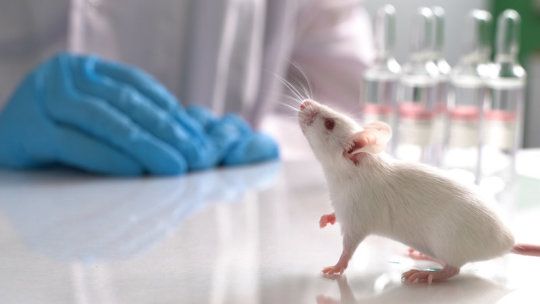
The research team placed the reprogramming factors into a harmless type of lentivirus and injected them en masse into a Parkinson’s disease model mice. The viruses infected support cells in the brain known as astrocytes (a support cell that regulates the transmission of electrical impulses within the brain) which are present in large numbers. The lentiviruses delivered their four factor payload to the target cells changing them from astrocytes into dopamine producing neurons.
Within three weeks the first cells had been reprogrammed and could be detected, and after fifteen weeks there were abundant numbers of dopamine producing neurons present. This is good news indeed as it also confirms that once reprogrammed the cells remain changed and stable and do not revert back into astrocytes.
Predicting the optimal brain computer interface of the future
Interesting link within concerning an injectable interface.
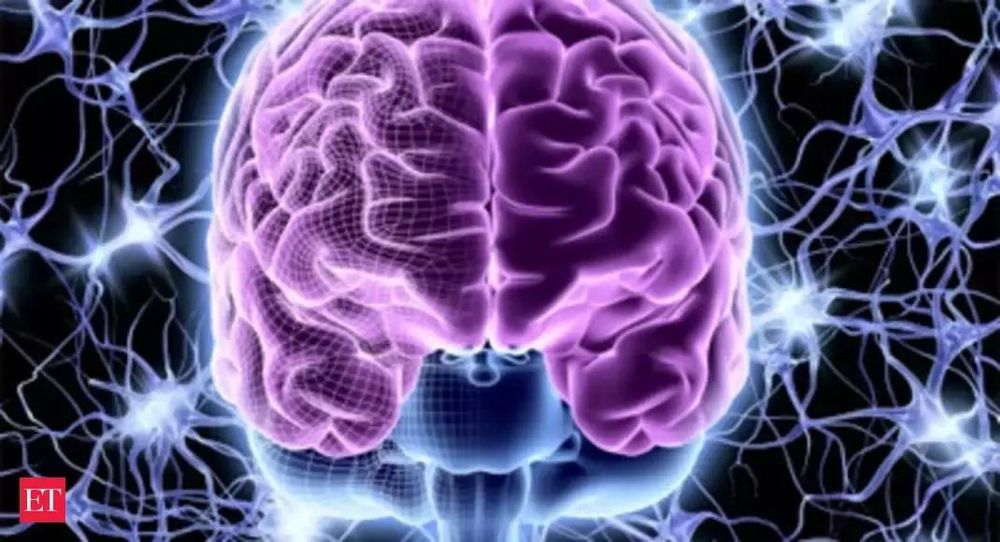
To be able to design a device that measures brain activity an understanding of the brains function is required. This section gives a high-level overview of some of the key elements of brain function. Human brains contain approximately 80 billion neurons, these neurons are interconnected with 7,000 synaptic connections each (on average). The combination of neurons firing and their communication is, in very simple terms the basis of all thoughts conscious and subconscious. Logically if the activity of these neurons and their connections were read in real-time, a sufficiently intelligent algorithm could understand all thoughts present. Similarly, if an input could be given at this level of granularity new thoughts could be implanted.
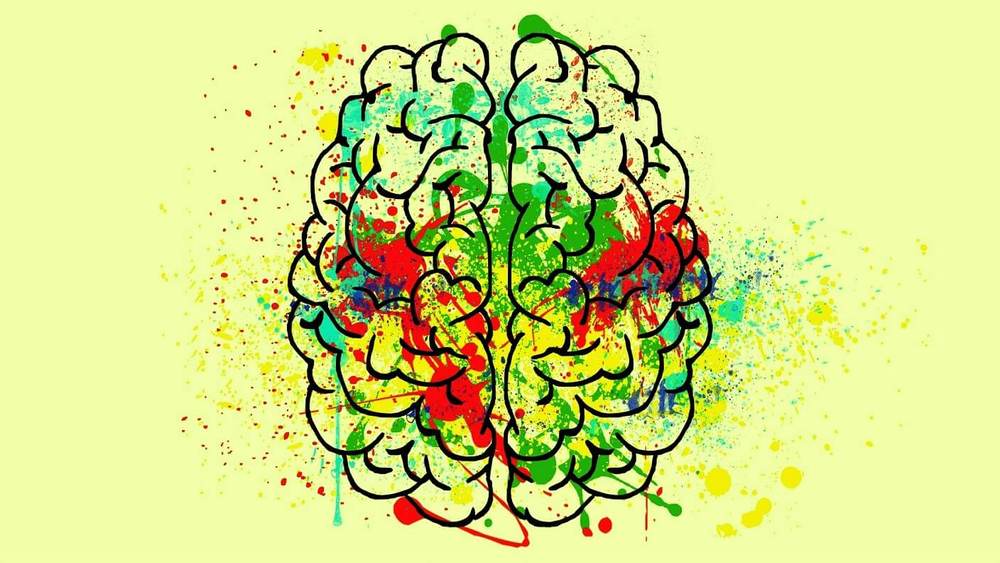
All human brains abide by the general structure shown in the picture below, certain areas, by and large do certain things. If higher levels of thoughts like creativity, idea generation and concentration want to be read, the frontal lobe is the place to look. If emotions and short-term memory are the target, the temporal lobe is the place to read from.
These Species Can Recode Their Own Genetics
Technically, an animal could use RNA editing to change the nature of its proteins without completely altering the underlying DNA instructions. This makes the cephalopods’ ability to do it a very interesting phenomenon, but it’s unclear as to why the species requires this much RNA editing. Many of the edited proteins were found in the animals’ brains, which is why scientists think the editing and their brainpower could be linked.
More than any other species on earth, octopuses are particularly smart—they can solve puzzles, use tools, and communicate using color. Now scientists are saying they’re also capable of editing their RNA.
A team of scientists led by Joshua Rosenthal at the Marine Biological Laboratory and Noa Liscovitch-Braur and Eli Eisenberg at Tel Aviv University have discovered that octopuses and squid are capable of a type of genetic alteration called RNA editing. The process is rare among other species, leading scientists to believe that the cephalopods have evolved to follow a special kind of gene recoding.
Normally, living creatures use the information contained in DNA to make proteins, and RNA is the go-between, simply transmitting the message in the DNA. More than 60 percent of RNA transcripts in squid are recoded by editing, and similar levels of RNA editing were identified in other cephalopod species, including two octopuses and a cuttlefish. This changes the message that gets sent out, which in turn changes the proteins that get produced. In comparison, other species like fruit flies and humans experience recoding events only a fraction of one percent of the time. But exactly how the gene editing mechanics work is a mystery.