Recent research in mice turned to the blood-brain barrier for clues as to why Alzheimer’s disease occurs and how to stop it.


Our minds rarely stay still when left alone. Such trains of thought, however, may unfold in vastly different ways. Here, we combined electrophysiological recording with thought sampling to assess four types of thoughts: task-unrelated, freely moving, deliberately constrained, and automatically constrained. Parietal P3 was larger for task-related relative to task-unrelated thoughts, whereas frontal P3 was increased for deliberately constrained compared with unconstrained thoughts. Enhanced frontal alpha power was observed during freely moving thoughts compared with non-freely moving thoughts. Alpha-power variability was increased for task-unrelated, freely moving, and unconstrained thoughts. Our findings indicate these thought types have distinct electrophysiological signatures, suggesting that they capture the heterogeneity of our ongoing thoughts.
Humans spend much of their lives engaging with their internal train of thoughts. Traditionally, research focused on whether or not these thoughts are related to ongoing tasks, and has identified reliable and distinct behavioral and neural correlates of task-unrelated and task-related thought. A recent theoretical framework highlighted a different aspect of thinking—how it dynamically moves between topics. However, the neural correlates of such thought dynamics are unknown. The current study aimed to determine the electrophysiological signatures of these dynamics by recording electroencephalogram (EEG) while participants performed an attention task and periodically answered thought-sampling questions about whether their thoughts were 1) task-unrelated, 2) freely moving, 3) deliberately constrained, and 4) automatically constrained.
Quantum physics is directly linked to consciousness: Observations not just change what is measured, they create it… Here’s the next episode of my new documentary Consciousness: Evolution of the Mind (2021), Part II: CONSCIOUSNESS & INFORMATION
*Subscribe to our YT channel to watch the rest of documentary (to be released in parts): https://youtube.com/c/EcstadelicMedia.
**Watch the documentary in its entirety on Vimeo ($0.99/rent; $1.99/buy): https://vimeo.com/ondemand/339083
***Join Consciousness: Evolution of the Mind public forum for news and discussions (Facebook group of 6K+ members): https://www.facebook.com/groups/consciousness.evolution.mind.
#Consciousness #Evolution #Mind #Documentary #Film
Innovator, philanthropist, humanitarian — khaliya — discussing radical solutions for the global mental health crisis.
Khaliya (https://www.khaliya.net/) is a Columbia University-trained public health specialist and Harvard University-trained specialist in Global Mental Health and Refugee Trauma. She is also a Venture Partner for Gender Equity Diversity Investments (www.gedi.vc), a new female-led VC firm targeting high growth investments that deliver top-quartile returns and measurable impact towards the UN Sustainable Development Goals with a preliminary focus on health.
Formerly an aid worker in over 32 countries and a former Peace Corps Volunteer for the US State Department, she has won numerous awards for her international service. Khaliya was the youngest member of the WEF’s Futures Council on the Future of Health and Healthcare and her opinion pieces have run in the New York Times (International and Domestic Editions) as well as WiredUK.
Currently at work on a book on the future of mental health, Khaliya continues to be a sought after public speaker, having spoken at the Obama White House organized United States of Women Summit, the World Economic Forum’s Family Business Summit, the Vatican, Clinton Global Initiative, WiredHealth, WebSummit and at the United Nations General Assembly, among others.
Khaliya is next scheduled to speak at the G20 Women’s Summit in Milan, Italy, and the Ethical Assembly Summit in Lisbon, Portugal, both taking place in October, 2021.

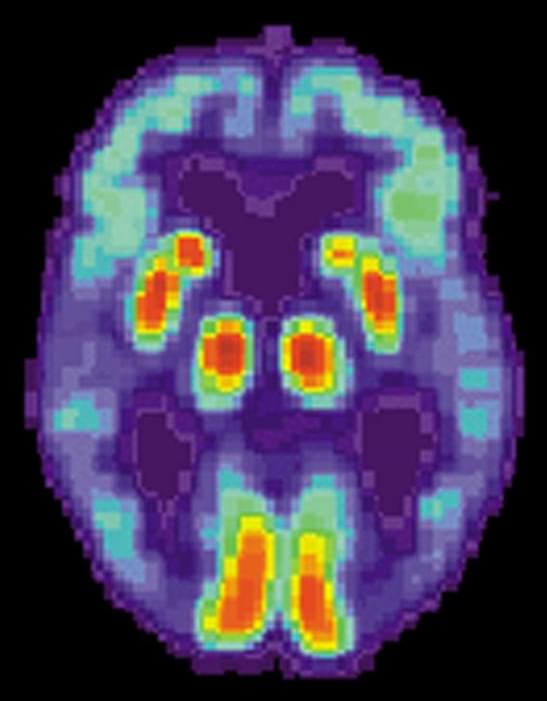
An inexpensive anti-seizure medication markedly improves learning and memory and other cognitive functions in Alzheimer’s patients who have epileptic activity in their brains, according to a study published in the Sept. 27th issue of JAMA Neurology.
“This is a drug that’s used for epilepsy,” says Keith Vossel, MD, MSc, director of the Mary S. Easton Center for Alzheimer’s Disease Research at UCLA, and the principal investigator on the clinical trial. “We used it in this study for Alzheimer’s patients who had evidence of silent epileptic activity, which is seizure-like brain activity without the associated physical convulsions.”
Alzheimer’s disease (AD) is the leading cause of dementia worldwide. Early symptoms include short-term memory loss, decline in problem solving, word-finding difficulties, and trouble with spatial navigation. Among Alzheimer’s patients, an estimated 10–22% develop seizures, while an additional 22–54% exhibit silent epileptic activity.

A large, UK-based study of genetics and autism spectrum disorder (ASD) has been suspended, following criticism that it failed to properly consult the autism community about the goals of the research. Concerns about the study include fears that its data could potentially be misused by other researchers seeking to ‘cure’ or eradicate ASD.
Study aimed at collecting DNA from 10,000 people with autism and their families has drawn criticism for failing to consult the autism community.

Dr. Jennifer Garrison, PhD (http://garrisonlab.com/) is Assistant Professor, Buck Institute for Research on Aging, Founder & Faculty Director, Global Consortium for Reproductive Longevity & Equality (https://www.buckinstitute.org/gcrle/), Assistant Professor in Residence, Cellular and Molecular Pharmacology, UCSF and Adjunct Assistant Professor of Gerontology, USC Leonard Davis School of Gerontology.
Dr. Garrison’s lab is interested in understanding how neuropeptides (a large class of signaling molecules which are secreted from neurons and transmit messages within the brain and across the nervous system) regulate changes in normal and aging animals as well in understanding how they control behavior at both the cell biological and neural circuit level.
Dr. Garrison received her PhD from the University of California San Francisco in Chemistry and Chemical Biology in the laboratory of Dr. Jack Taunton, where she discovered the molecular target of a natural product and elucidated a novel mechanism by which small molecules can regulate protein biogenesis. As a postdoctoral fellow in Dr. Cori Bargmann’s lab at the Rockefeller University, she showed that the nematode C. elegans produces a neuropeptide that is an evolutionary precursor of the mammalian peptides vasopressin and oxytocin, and mapped a neural circuit by which this molecule, nematocin, modulates mating behavior.
Dr. Garrison was named an Alfred P. Sloan Research Fellow and received a Glenn Foundation Award for Research in Biological Mechanisms of Aging in 2,014 and a Next Generation Leader at the Allen Institute for Brain Science in 2015. Her work is funded by the NIH National Institute of General Medical Sciences, the Glenn Foundation for Medical Research, the Alfred P. Sloan Foundation, and the Larry L. Hillblom Foundation.
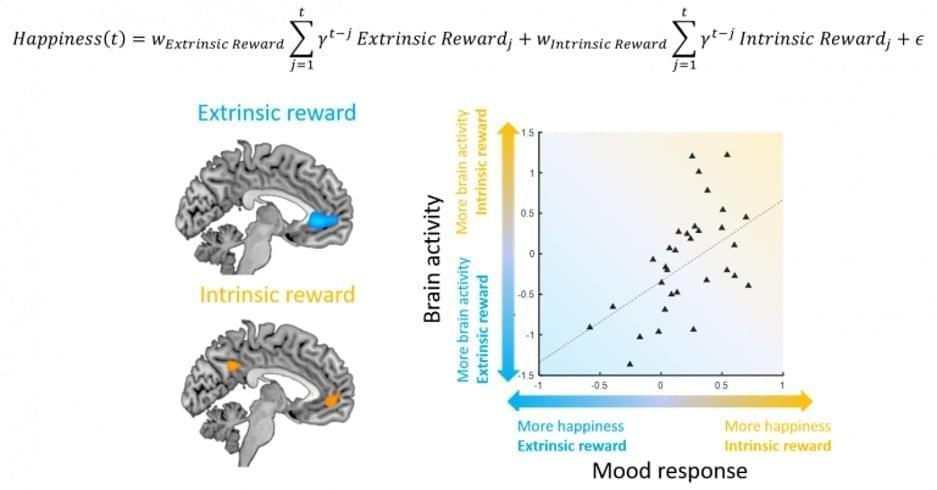
“Our mathematical equation lets us predict which individuals will have both more happiness and more brain activity for intrinsic compared to extrinsic rewards. The same approach can be used in principle to measure what people actually prefer without asking them explicitly, but simply by measuring their mood.”
Summary: A new mathematical equation predicts which individuals will have more happiness and increased brain activity for intrinsic rather than extrinsic rewards. The approach can be used to predict personal preferences based on mood and without asking the individual.
Source: UCL
A new study led by researchers at the Wellcome Centre for Human Neuroimaging shows that using mathematical equations with continuous mood sampling may be better at assessing what people prefer over asking them directly.
People can struggle to accurately assess how they feel about something, especially something they feel social pressure to enjoy, like waking up early for a yoga class.