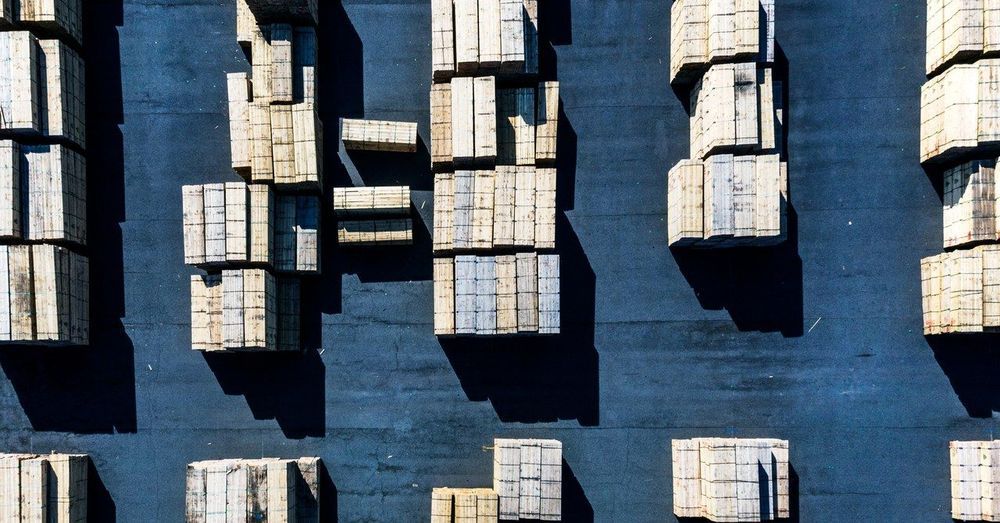
Concrete and steel come with massive emissions. So let’s ditch them and build towers out of wood. Yes, wood.
When it comes to building the interior of a spacecraft, engineers often prioritize function over aesthetics, focusing on materials and hardware that are both safe and effective for executing the vehicle’s intended mission. But some scientists say it’s time to consider another crucial factor when designing a spacecraft’s insides: how it will affect the behavior of the passengers?
https://sc.mp/subscribe-youtube
A Philippine city affected by heavy ashfall from the nearby Taal Volcano has started collecting ash to make bricks, providing needed building materials for post-disaster reconstruction in neighbouring towns.
Full story: https://sc.mp/d6mmb
Follow us on:
Website: https://scmp.com
Facebook: https://facebook.com/scmp
Twitter: https://twitter.com/scmpnews
Instagram: https://instagram.com/scmpnews
Linkedin: https://www.linkedin.com/company/south-china-morning-post/

Different kinds of materials can play different roles when it comes to controlling heat. If we want to keep our home warm in the depths of winter, insulating layers in our walls can help to lock it in. If we want to keep things cool, thermally conductive materials like those used in computer processors can help carry it away. But could one material have it both ways? A new breakthrough suggests that it could, made by a team of scientists who believe heat needn’t just be a one way street.
The research was carried out by scientists at the University of Bayreuth and the Max Planck Institute for Polymer Research, who sought to combine the thermally insulating properties of materials like polystyrene, with the thermally conductive properties of heavy metals often used to dissipate heat.
Their breakthrough boils down to a way of manipulating the way heat travels, which is through the oscillation of individual molecules that pass on their movement to neighboring molecules.
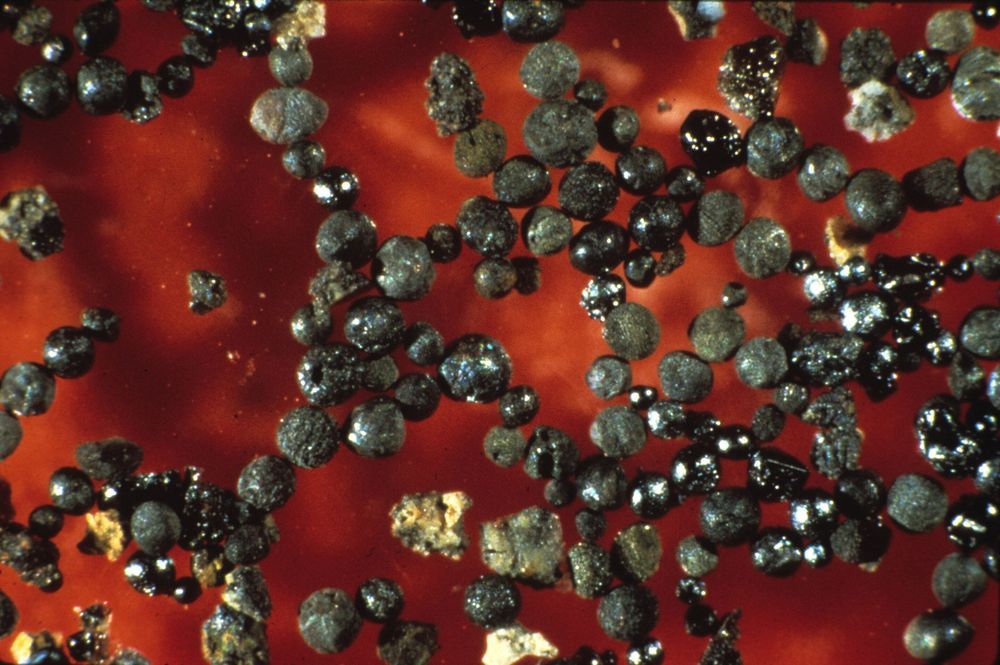
A team of researchers from the University of Washington has found evidence that the Earth’s atmosphere approximately 2.7 billion years ago might have been up to 70 percent carbon dioxide. In their paper published in the journal Science Advances, the group describes their study of micrometeorites and what they learned from them.
As scientists continue to study Earth’s past, they look for evidence of what environmental conditions might have been like in hopes of understanding how life arose. One important piece of the puzzle is the atmosphere. Scientists suspect that its ingredients were far different billions of years ago, but they have little in the way of evidence to prove it. In this new endeavor, the researchers looked to micrometeorites as a possible source of clues. Their thinking was that any material from space that made its way to the surface of the planet had to travel first through the atmosphere—and any material that travels through the atmosphere is highly influenced by its materials, largely due to the high temperatures of atmospheric entry.
Several years ago, researchers found a host of micrometeorites that had landed on Earth approximately 2.7 billion years ago, putting them squarely in the Archean Eon—the time during which it is believed life first appeared on Earth. Study of the micrometeorites showed that they contained high levels of iron along with wüstite. Wüstite forms when iron is exposed to oxygen, but not on the Earth’s surface. It must have been created as the grain-sized meteorites burned and fell through the Earth’s atmosphere. Intrigued by the finding, the researchers created a computer model to simulate the conditions that would lead to the creation of materials such as wüstite on a rock falling through the atmosphere.
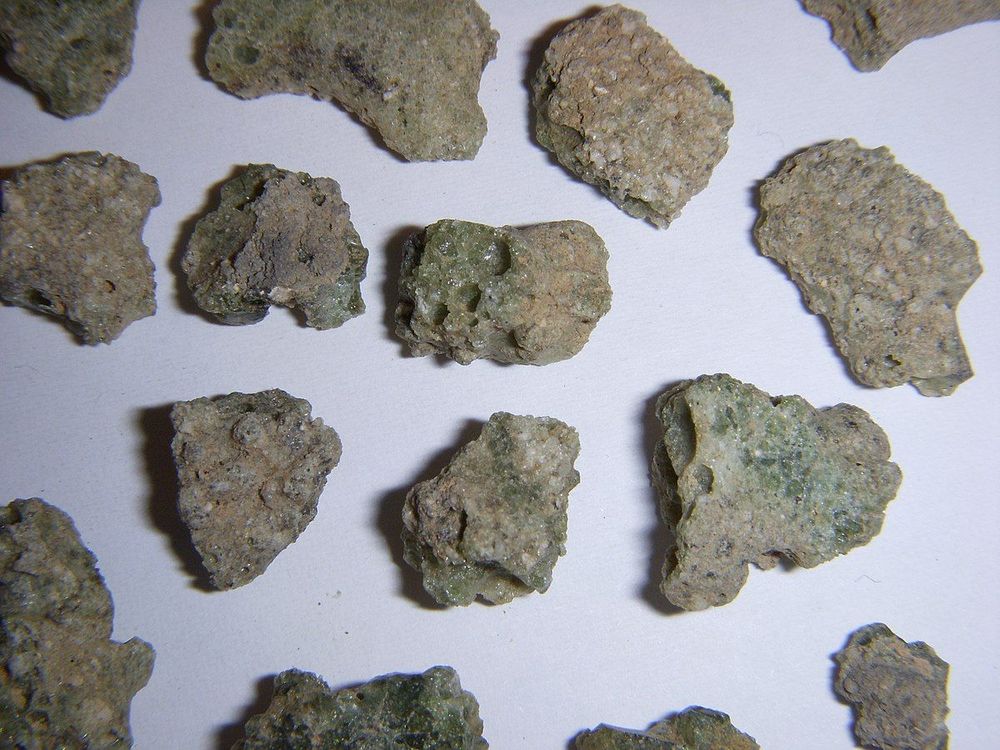
, also known as atomsite or Alamogordo glass,[2] is the glassy residue left on the desert floor after the plutonium-based Trinity nuclear bomb test on July 16, 1945, near Alamogordo, New Mexico. The glass is primarily composed of arkosic sand composed of quartz grains and feldspar (both microcline and smaller amount of plagioclase with small amount of calcite, hornblende and augite in a matrix of sandy clay)[3] that was melted by the atomic blast. It is usually a light green, although color can vary. It is mildly radioactive but safe to handle.[4][5][6]
In the late 1940s and early 1950s, samples were gathered and sold to mineral collectors as a novelty. Traces of the material may still be found at the Trinity Site as of 2019, although most of it was bulldozed and buried by the United States Atomic Energy Commission in 1953.[7] It is now illegal to take the remaining material from the site; however, material that was taken prior to this prohibition is still in the hands of collectors.

Circa 2014
According to one recent study, there’s at least 5 trillion pieces of plastic in the ocean. That’s more than 250 tons. So what to do with mountains of plastic waste with nowhere to go? Katharina Unger thinks we should eat it.
The Austrian designer partnered with Julia Kaisinger and Utrecht University to develop a system that cultivates edible plastic-digesting fungi. That’s right, you can eat mushrooms that eat plastic. In 2012, researchers at Yale University discovered a variety of mushroom (Pestalotiopsis microspora) that is capable of breaking down polyurethane. It kicked off a craze of research exploring how various forms of fungi can degrade plastic without retaining the toxicity of the material. The findings got Unger thinking: What if we could turn an environmental problem (waste) into an environmental solution (food)?
You’ve read your last complimentary article this month. To read the full article, SUBSCRIBE NOW. If you’re already a subscriber, please sign in and and verify your subscription.
According to ancient lore, Genghis Khan instructed his horsemen to wear silk vests underneath their armor to better protect themselves against an onslaught of arrows during battle. Since the time of Khan, body armor has significantly evolved—silk has given way to ultra-hard materials that act like impenetrable walls against most ammunition. However, even this armor can fail, particularly if it is hit by high-speed ammunition or other fast-moving objects.
Researchers at Texas A&M University have formulated a new recipe that can prevent weaknesses in modern-day armor. By adding a tiny amount of the element silicon to boron carbide, a material commonly used for making body armor, they discovered that bullet-resistant gear could be made substantially more resilient to high-speed impacts.
“For the past 12 years, researchers have been looking for ways to reduce the damage caused by the impact of high-speed bullets on armor made with boron carbide,” said Dr. Kelvin Xie, assistant professor in the Department of Materials Science and Engineering. “Our work finally addresses this unmet need and is a step forward in designing superior body armor that will safeguard against even more powerful firearms during combat.”

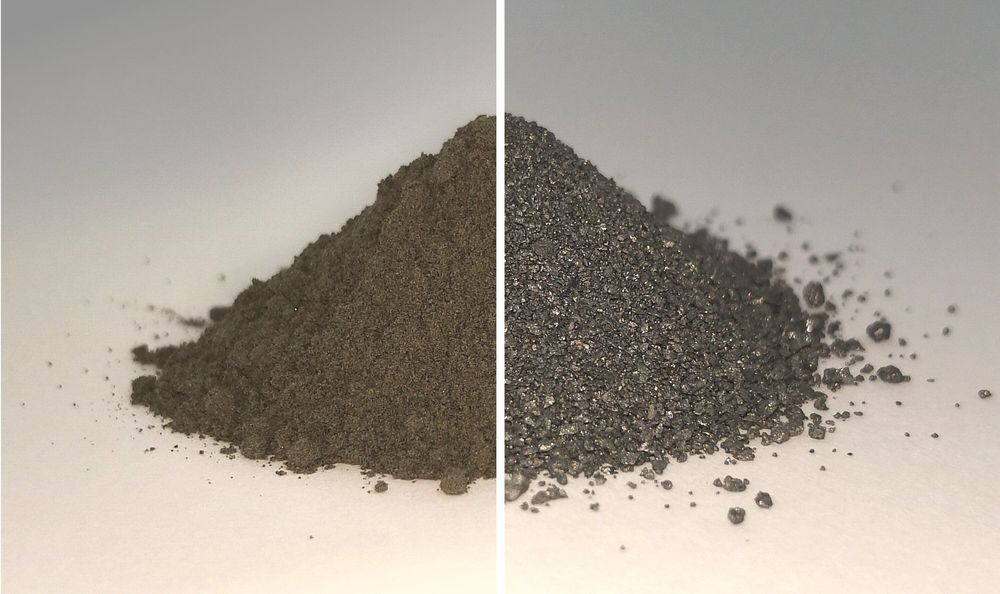
ESA’s technical heart has begun to produce oxygen out of simulated moondust.
A prototype oxygen plant has been set up in the Materials and Electrical Components Laboratory of the European Space Research and Technology Centre, ESTEC, based in Noordwijk in the Netherlands.
“Having our own facility allows us to focus on oxygen production, measuring it with a mass spectrometer as it is extracted from the regolith simulant,” comments Beth Lomax of the University of Glasgow, whose Ph.D. work is being supported through ESA’s Networking and Partnering Initiative, harnessing advanced academic research for space applications.