Toggle light / dark theme

New “Humanized” Mice Brings Scientists Closer to Reversing Aging

Washington State University scientists have developed genetically engineered mice that could help accelerate anti-aging research.

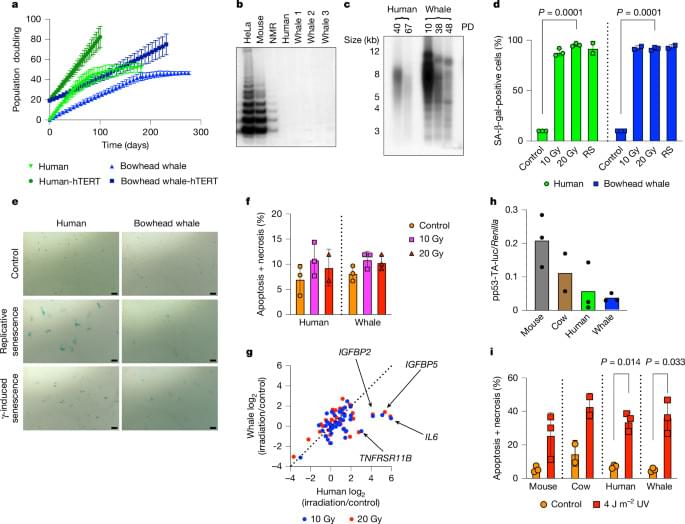
Globally, researchers are striving to unlock the secrets of extending human lifespan at the cellular level, where aging occurs gradually due to the shortening of telomeres—the protective caps at the ends of chromosomes that function like shoelace tips, preventing unraveling. As telomeres shorten over time, cells lose their ability to divide for healthy growth, and some eventually begin to die.

However, studying telomeres at the cellular level has been challenging in humans.

The Dvir Lab prints first ever 3D heart using patient’s own cells

Impact of multiplexing noise on multilayer networks of bistable maps.


In a major medical breakthrough, MBM researchers have “printed” the world’s first 3D vascularised engineered heart using a patient’s own cells and biological materials. Until now, scientists in regenerative medicine — a field positioned at the crossroads of biology and technology — have been successful in printing only simple tissues without blood vessels.

“This is the first time anyone anywhere has successfully engineered and printed an entire heart replete with cells, blood vessels, ventricles and chambers,” says Prof. Tal Dvir.

Heart disease is the leading cause of death among both men and women in the United States. Heart transplantation is currently the only treatment available to patients with end-stage heart failure. Given the dire shortage of heart donors, the need to develop new approaches to regenerate the diseased heart is urgent.

Pioneering the Aging Frontier with AI Models

David Furman, an immunologist and data scientist at the Buck Institute for Research on Aging and Stanford University, uses artificial intelligence to parse big data to identify interventions for healthy aging.

Read more.

David Furman uses computational power, collaborations, and cosmic inspiration to tease apart the role of the immune system in aging.

Can AI Defeat Aging and Death? | Ray Kurzweil

We’ve talked a lot about reversing aging and immortality through AI but does it REALLY POSSIBLE? Ray Kurzweil believes we can achieve immortality by 2029, and Bryan Johnson is already using AI to slow his biological age. Is this the future of human longevity?

Chapters:

Intro 0:00 — 1:09
Can We Stop Aging? 1:10 — 2:21
AI Could Reverse Aging Process 2:22 — 2:52
Blueprint Project 2:53 — 5:30
Longevity Escape Velocity 5:31 — 6:57
Scary Consequences 6:58 — 7:43

New Implant Will Help Patients Regenerate Their Own Heart Valves

Every year, more than 5 million people in the USA are diagnosed with heart valve disease, but this condition has no effective long-term treatment. When a person’s heart valve is severely damaged by a birth defect, lifestyle, or aging, blood flow is disrupted. If left untreated, there can be fatal complications.

Valve replacement and repair are the only methods of managing severe valvular heart disease, but both often require repeated surgeries that are expensive, disruptive, and life-threatening. Most replacement valves are made of animal tissue and last up to 10 or 15 years before they must be replaced. For pediatric patients, solutions are extremely limited and can require multiple reinterventions.

Now, Georgia Tech researchers have created a 3D-printed heart valve made of bioresorbable materials and designed to fit an individual patient’s unique anatomy. Once implanted, the valves will be absorbed by the body and replaced by new tissue that will perform the function that the device once served.


Georgia Tech researchers have developed a groundbreaking 3D-printed, bioresorbable heart valve that promotes tissue regeneration, potentially eliminating the need for repeated surgeries and offering a transformative solution for both adult and pediatric heart patients.

Visceral Fat Removal Extends Lifespan: Which Factors May Reduce Visceral Fat?

Join us on Patreon! https://www.patreon.com/MichaelLustgartenPhD

Discount Links/Affiliates:
Blood testing (where I get the majority of my labs): https://www.ultalabtests.com/partners/michaellustgarten.

At-Home Metabolomics: https://www.iollo.com?ref=michael-lustgarten.
Use Code: CONQUERAGING At Checkout.

Clearly Filtered Water Filter: https://get.aspr.app/SHoPY

Epigenetic, Telomere Testing: https://trudiagnostic.com/?irclickid=U-s3Ii2r7xyIU-LSYLyQdQ6…M0&irgwc=1
Use Code: CONQUERAGING

NAD+ Quantification: https://www.jinfiniti.com/intracellular-nad-test/

Medical Breakthroughs May Mean That More People Will Live To Be Over 100

Medical breakthroughs could mean that more of us will live to be 100 or even more, according to longevity medicine expert Dr. Edouard Debonneuil co-founder of the London-based Longevity Clinic who says that modern technology, new medicine, additional medical breakthroughs, and healthy living could help more of us reach that mammoth milestone.

“If the current trend continues, we could see individuals living to 140 or 150 in good health. While that might sound sensational, it’s grounded in science and the longevity field is booming because of these breakthroughs,” said Dr. Debonneuil after a first-of-its-kind study, Rejuvenation Olympics, which produced promising anti-aging results.

“One of the guys taking part is in his 60’s but biologically he resembles someone in their later 30’s. Some participants halved their biological age within two to three years and have reduced their ageing rate by 40 percent. This is a significant leap in human history, we now have the tools to age slowly,” continued Debonneuil.

/* */