Toggle light / dark theme

Great progress with the Winter Fundraiser and Patrons Challenge for SENS so far it looks like longevity research is really hotting up :)

Hey folks, great news! The Patrons Challenge is going really well and we have already passed the halfway mark for new Patrons which is superb. Thanks to Reason and Josh Triplett who are doubling all new pledges made this year. So if you are interested in being a Patron this is a great time to join us.

Our Winter fundraiser has also reached almost 25k and is going great guns. The more we can raise the more research we can do and as this year has shown, some truly great results are starting to arrive for the SENS approach to treating age-related diseases.

Aubrey de Grey on living to 150 or beyond using biotechnology

Our guest for this show is Aubrey de Grey, Ph.D., and he refuses to accept aging as something we can not change. Aubrey is a Biomedical Gerontologist and Chief Scientific Officer of The SENS Research Foundation. I talk more about his background and the SENS Foundation in the interview. Aubrey has put forth a model for aging based on seven types of damage that occur as a product of aging. We discuss this model and the techniques the possibly address each category of damage. This interview is longer than the other thus far but it had me gripped the entire time so enjoy!

MEDIA
Soundcloud :: https://soundcloud.com/humanOSRadio

ITunes :: https://goo.gl/SDAiNm

Stitcher :: https://goo.gl/LaERkp

YouTube Channel :: https://goo.gl/egvdpb

Image Credit: https://en.wikipedia.org/wiki/Aubrey_de_Grey

Mapping the Genes that Increase Lifespan

“Calorie restriction has been known to extend lifespan for a long time.” said Dr. Kennedy. “The DNA damage response is linked to aging as well. LOS1 may be connecting these different processes.”

A number of the age-extending genes the team identified are also found in C. elegans roundworms, indicating these mechanisms are conserved in higher organisms. In fact, many of the anti-aging pathways associated with yeast genes are maintained all the way to humans.

The research produced another positive result: exposing emerging scientists to advanced lab techniques, many for the first time.

2017 SRF Summer Scholars Program

SRF Summer Scholars Program opens December 1st!


The SRF Summer Scholars Program offers undergraduate students the opportunity to conduct biomedical research to combat diseases of aging, such as cancer, Alzheimer’s, and Parkinson’s Disease. Under the guidance of a scientific mentor, each Summer Scholar is responsible for his or her own research project in such areas as genetic engineering and stem cell research. The Summer Scholars Program emphasizes development of both laboratory and communication skills to develop well-rounded future scientists, healthcare professionals, and policy makers. Students participating in the program will hone their writing skills via periodic reports, which are designed to emulate text scientists commonly must produce. At the end of the summer, students will have the opportunity to put all of their newly developed communication skills into practice at a student symposium.

The Hallmarks of Aging

2013 saw the release of one of the most important papers in aging research and one that saw renewed interest and support for the concept of SENS.


Aging is characterized by a progressive loss of physiological integrity, leading to impaired function and increased vulnerability to death. This deterioration is the primary risk factor for major human pathologies, including cancer, diabetes, cardiovascular disorders, and neurodegenerative diseases. Aging research has experienced an unprecedented advance over recent years, particularly with the discovery that the rate of aging is controlled, at least to some extent, by genetic pathways and biochemical processes conserved in evolution. This Review enumerates nine tentative hallmarks that represent common denominators of aging in different organisms, with special emphasis on mammalian aging. These hallmarks are: genomic instability, telomere attrition, epigenetic alterations, loss of proteostasis, deregulated nutrient sensing, mitochondrial dysfunction, cellular senescence, stem cell exhaustion, and altered intercellular communication. A major challenge is to dissect the interconnectedness between the candidate hallmarks and their relative contributions to aging, with the final goal of identifying pharmaceutical targets to improve human health during aging, with minimal side effects.

Printable Organs Will Put an End to Transplant Lists

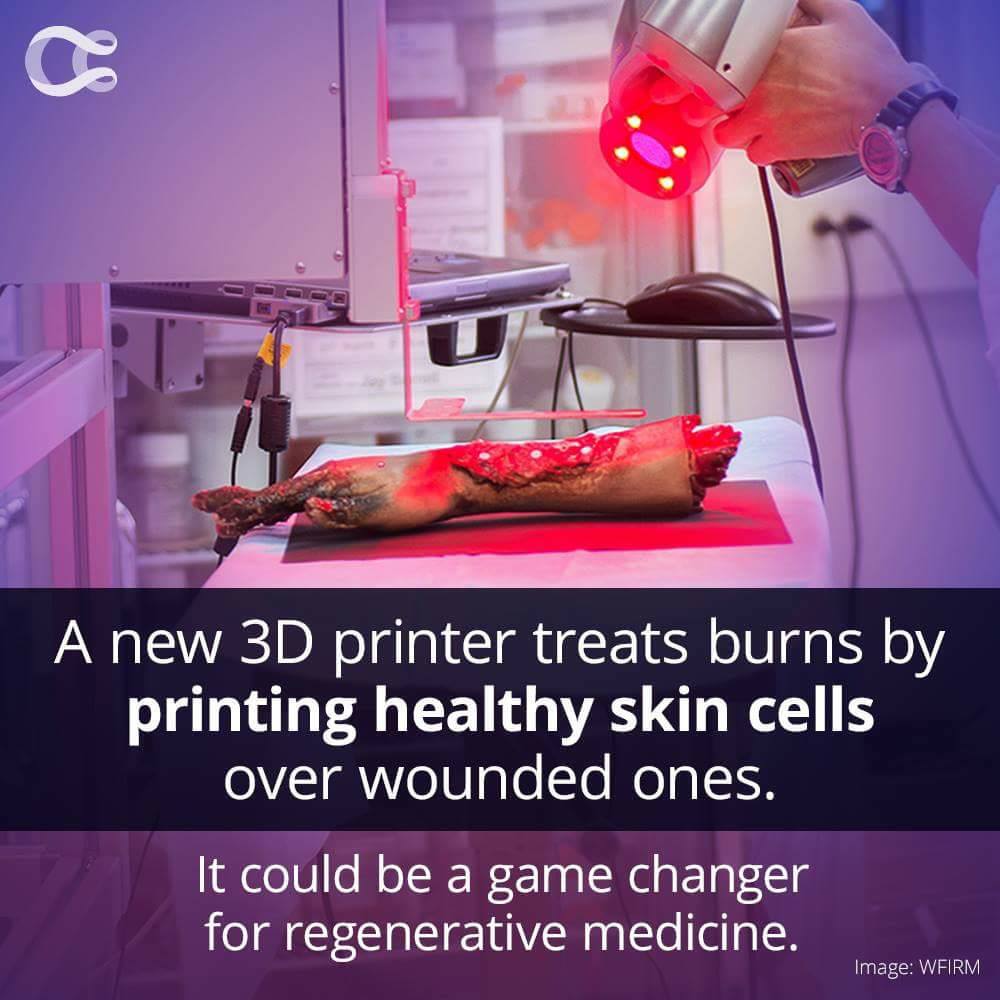
A woman living on a dialysis machine is grown a new kidney using her own cells. A father struggling with age-related vision loss has his eyesight restored. A soldier suffers extensive burns and has his skin regenerated.

This is a glimpse of the holy grail of regenerative medicine. The ultimate goal of the field is to develop therapies that restore normal function to diseased tissues and organs. Advances in 3D bioprinting, the process of fabricating functional human tissue outside the body in a layer-by-layer fashion, have pushed the envelope on what is considered possible in the field.

shutterstock_421718047

/* */