Category: life extension – Page 487
Dr Rudolph Tanzi, the brain health rockstar talks of alzheimer’s disease
If you’re interested in superlongevity and cognitive enhancement, I have a YouTube video to recommend. Our good friend, Ira Pastor, on his excellent podcast ideaXme, discusses with Dr. Rudolph Tanzi the topic of inflammaging, specifically brain inflammation, plaque, tau tangles, brain health, and Alzheimer’s disease. Then they discuss some emergent therapies to prevent Alzheimer’s by protecting the neurons.
The discussion is concise and complete, but also very easy to follow.
Ira Pastor, ideaXme life sciences ambassador, interviews Dr. Rudolph Tanzi, Joseph P. and Rose F. Kennedy Professor of Neurology at Harvard University, Vice-Chair of Neurology, Director of the Genetics and Aging Research Unit, and Co-Director of the Henry and Allison McCance Center for Brain Health at Massachusetts General Hospital.
Ira Pastor Comments
On this episode we are going to journey back to the topic of Alzheimer’s, a disease of substantial unmet medical need, projected to affect over a 100 million people globally by mid century.
‘I want to totally re-engineer my body’ — Natasha Vita-More interview
You might be interested in my latest interview with Natasha Vita-More, transhumanist writer and executive director of Humanity+, covering human augmentation, the world transhumanist movement and whole-body prosthetics.
Trying to grow my transhumanism related channel so super grateful for any subs: https://www.youtube.com/channel/UCnVLqMgLDwO-aSk5YcYo1dA…
I interview Natasha Vita-More, a transhumanist thinker who wrote the ‘Transhumanist Statement’ and is the Executive Director of Humanity+, formerly the World Transhumanist Association.
We cover artificial intelligence, whole body prosthetics, radical life extension, upgrading the human body and the world transhumanist movement amongst other topics.
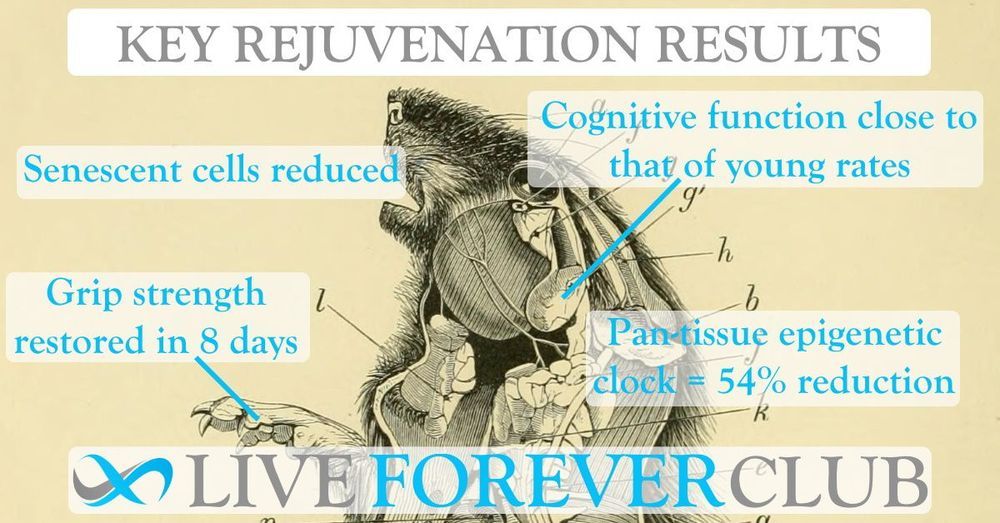

‘Anti-ageing’ protein shown to slow cell growth is key in longevity – new research
Humans are living longer than ever before. But alongside these increases in life expectancy are an increase in the occurrence of age-related diseases such as cancer and dementia.
But understanding the biology of ageing, and knowing the genes and proteins involved in these processes, will help us increase our “healthspan”—the period that people can live in a healthy and productive state, without age-related diseases.
In a recent study, our team identified a novel anti-ageing protein, called Gaf1. We found that Gaf1 controls protein metabolism, a process that has been implicated in ageing and disease. We also found that without Gaf1, cells have a shorter lifespan.
Brain’s ‘updating mechanisms’ may create false memories
A study published in Current Biology reports on one of the first comprehensive characterizations of poorly formed memories, and may offer a framework to explore different therapeutic approaches to fear, memory and anxiety disorders. It may also have implications for accuracy of some witness testimony.
Senior author Professor Bryce Vissel, from the UTS Centre for Neuroscience & Regenerative Medicine, said his team used novel behavioral, molecular and computational techniques to investigate memories that have not been well-formed, and how the brain deals with them. “For memories to be useful, they have to have been well-formed during an event—that is, they have to accurately reflect what actually happened.
”However, in the real world many memories are likely to be inaccurate—especially in situations where the experience was brief, sudden or highly emotional, as can often occur during trauma. Inaccurate memories can also occur when the memory is poorly encoded, potentially as a result of subtle differences in how each person processes memory or because of disease like Alzheimer’s or dementia.”
A Major breakthrough in reversing the cellular aging process
A team at Harvard has identified molecules that restore protective caps on the tips of our chromosomes that regulate cells ageing.
Stem Cells Derived From Fat
Circa 2019 face_with_colon_three
Multipotent cells are critical to regenerative medicine and its associated deployment strategies. Localizing an abundant source of autologous, adult stem cells circumvents the immunological prohibitions of allogeneity and ethical dilemmas of embryologic stem cells, respectively. Classically, these cells have been described as mesenchymal stem cells (MSCs). In this chapter, we characterize adipose tissue as a unique source of MSCs because of its ubiquity, redundancy, and procurability. Specifically, lipoaspirates can be minimally processed to provide a heterogenous, cell-dense isolate – the stromal vascular fraction (SVF) – composed of terminally differentiated vessel-associated cell lines as well as putative progenitor cells. These cells have been cultured and expanded, giving rise to a dynamic cell line termed adipose-derived stromal cells (ASCs). SVF and ASC cell isolates are often administered by standard clinical routes including parenteral, topical application, and local injection in the clinical translational studies of cardiovascular ischemia, neurological injury, rheumatologic and orthopedic disease as well as advanced wound care and tissue engineering. These clinical applications raise safety concerns specific to administration, sequestration, and tumor growth augmentation. Further studies SVF and ASC cells are necessary to realize their potential in a regenerative medicine capacity.
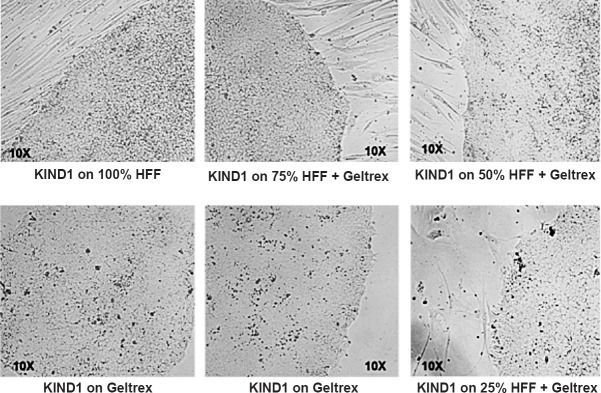
Stem cells to replace or regenerate the diabetic pancreas: Huge potential & existing hurdles
Various stem cell sources are being explored to treat diabetes since the proof-of-concept for cell therapy was laid down by transplanting cadaveric islets as a part of Edmonton protocol in 2000. Human embryonic stem (hES) cells derived pancreatic progenitors have got US-FDA approval to be used in clinical trials to treat type 1 diabetes mellitus (T1DM). However, these progenitors more closely resemble their foetal counterparts and thus whether they will provide long-term regeneration of adult human pancreas remains to be demonstrated. In addition to lifestyle changes and administration of insulin sensitizers, regeneration of islets from endogenous pancreatic stem cells may benefit T2DM patients. The true identity of pancreatic stem cells, whether these exist or not, whether regeneration involves reduplication of existing islets or ductal epithelial cells transdifferentiate, remains a highly controversial area. We have recently demonstrated that a novel population of very small embryonic-like stem cells (VSELs) is involved during regeneration of adult mouse pancreas after partial-pancreatectomy. VSELs (pluripotent stem cells in adult organs) should be appreciated as an alternative for regenerative medicine as these are autologous (thus immune rejection issues do not exist) with no associated risk of teratoma formation. T2DM is a result of VSELs dysfunction with age and uncontrolled proliferation of VSELs possibly results in pancreatic cancer. Extensive brainstorming and financial support are required to exploit the potential of endogenous VSELs to regenerate the pancreas in a patient with diabetes.
Diabetes is one of the major non-communicable diseases in the world with majority of patients belonging to India, China and USA. Along with associated complications like heart disease and stroke, diabetes results in increased morbidity and mortality and it is expected that by the year 2025, India alone will have more than 70 million diabetics1,2. Diabetes is a metabolic disorder associated with progressive loss or dysfunction of β-cells of pancreas. Onset of type 1 diabetes mellitus (T1DM) occurs when the β-cell mass is reduced to less than 20 per cent due to autoimmune effect, whereas the declining β-cell mass is unable to meet the age-related increased insulin demands of the body in type 2 (T2DM) as a result of insulin resistance and in due course the β-cells are lost by apoptosis. Thus, in both T1 and T2DM, restoration of a functional β-cell mass constitutes the central goal of diabetes therapy.
Diary of an Immortal Man
A bit of transhuman fiction. It doesn’t take long.
What would it be like to live forever? Writer Richard Dooling explores this question in this fictional piece from Esquire.
Originally published May 1999. Published on KurzweilAI.net May 22, 2001.
1994
March 30: Today I turn forty. I am officially protected by the Age Discrimination in Employment Act. If I had an employer, I could now sue him if he discriminated against me because of my, ulp, age. Until now, I’ve half believed in one of Vladimir Nabokov’s elegant syllogisms: Other men die, but I am not other men; therefore, I’ll not die. Nabokov died in 1977. Every time I look in the bathroom mirror, I see Death, the Eternal Footman (looking quite proud), standing in the shadows behind me, holding my coat, snickering. I live with my family in my hometown of Omaha. My selfish genes have managed an immortality of sorts by getting themselves into four delightful children, who are still too young to turn on me. My wife and I have enjoyed nine years of marriage, what Robert Louis Stevenson called “a friendship recognized by the police.” I’m Catholic, so as mortality looms on the far side of the middle-age horizon, I seek consolation in my Christian faith and one of its central tenets: belief in the immortality of my soul. But the lawyer in me also highlights the usual caveats and provisos. According to the Scriptures, my quality of life after death may depend on my ability to love my fellow man. This is a big problem. I forgot to mention that in addition to being a practicing Catholic, I’m also a practicing misanthrope. As I see it, my only chance of avoiding eternal damnation is to stay alive until I learn to love other people. Or until some future pope issues an encyclical providing spiritual guidance for misanthropic Catholics. November 16: My second novel, White Man’s Grave, is a finalist for the National Book Award. For at least a day or two, I wonder if I might be able to achieve immortality by writing great literature. My wife and I fly to the awards ceremony in New York City, where William Gaddis wins the National Book Award in Fiction for A Frolic of His Own.