Cryonics is one of the most misunderstood ideas in science today: most people think it means “freezing dead people.” It doesn’t. Follow Tomorrow.bio to understand what cryopreservation actually is, how it works, and why a growing number of healthy people are choosing to sign up for it long before they need it. Thinking seriously about cryopreservation? We created a free guide covering the process, costs, funding, and important planning decisions: [ https://www.tomorrow.bio/tools/cryoguide ] 🫀ABOUT THIS VIDEO Part 3 of Cryonics A-Z is here. We’re covering the ethics behind cryopreservation, the current laws and regulations, what the future could look like, and the myths that just won’t die (pun intended). If you’ve ever wondered what’s actually true about cryonics, and what’s just noise, this one’s for you. 🔎 CHAPTERS [ 00:00 ] – Introduction [ 00:30 ] – Ethics of cryopreservation [ 07:56 ] – Do we freeze people? [ 10:01 ] – We just want to make money [ 12:53 ] – What about the future? [ 15:18 ] – How to deal with overpopulation [ 18:52 ] – Stagnation [ 20:47 ] – Cryonics & Religion [ 22:34 ] – Law & Regulation [ 30:41 ] – Outro 🔗 LINKS.
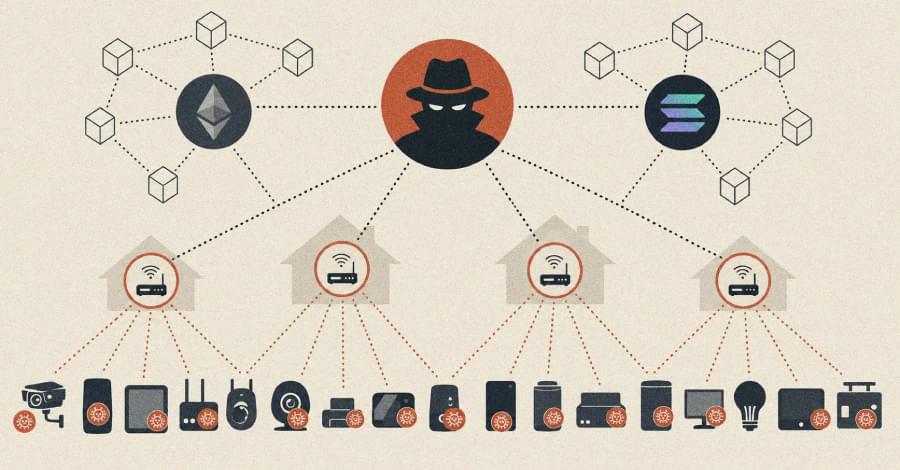
The lineage runs through JackSkid, one of four IoT botnets targeted in coordinated U.S., German, and Canadian law-enforcement actions on March 19. Court documents attributed more than 90,000 DDoS commands to JackSkid alone.
Within days, Nokia Deepfield and Comcast’s threat lab documented the operator falling back to an Ethereum Name Service (ENS) domain, m3rnbvs5d[.]eth, for command-and-control (C2). XLab’s Dysphoria timeline opens with a JackSkid sample captured on March 25, six days after the disruption, that resolves C2 through the same domain.
XLab found that the burrberry[.]eth record encodes distribution-node IPv4 addresses, while 24carnforth2merseyside[.]sol supplies other infrastructure records. The DDoS sample asks a distribution node over HTTP for a current server list, and the listed endpoints are infected machines relaying traffic to the real controllers. The design keeps those controllers one step removed from the addresses exposed to bots.
Hackers are changing the DNS settings on Wi-Fi devices at hotels and conference centers to redirect users to fake Microsoft 365 login pages.
The campaign has been ongoing since at least June and impacts organizations in various sectors, including financial services, professional services, legal, health care, energy, and retail.
Cybersecurity company ReliaQuest identified compromised Wi-Fi gateways in multiple U.S. cities as well as other regions of the world, such as India and Saudi Arabia.
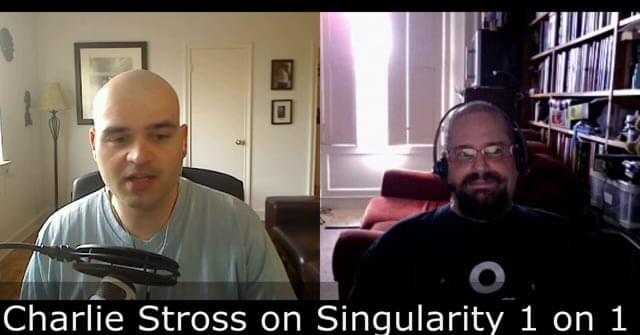
Fifteen years ago, I interviewed Charlie Stross about a short story called “Lobsters.”
This spring, a thousand people queued outside Tencent’s Shenzhen headquarters to raise one.
June 2011, Singularity 1 on 1. Back then, “singularity” was a word most people filed under astrophysics, not #AI. Charlie’s 2001 story “Lobsters,” which grew into Accelerando, was one of the sharpest early maps of what happens when intelligence stops being exclusively biological. Uploaded minds. Post-scarcity economics. Legal personhood for software. An economy run by optimization processes no human fully follows.
He wrote it six years before the iPhone.
Now look at 2026. OpenClaw, the open source agent built by Austrian developer Peter Steinberger, now at OpenAI, became the fastest-growing project in GitHub history. In China, installing it is called 养龙虾, “raising lobsters,” after the red logo. Shenzhen, Wuxi and Changshu rushed out subsidy packages. Retirees, schoolkids and office workers lined up for help. A grey market of house-call technicians appeared within days.
Any connection to Charlie’s story? None. The logo is a claw pun on Claude.
As one legal analyst noted, the settlement may be seen by the tech industry as simply “a price of conducting business in a fiercely competitive space”—a cost of doing business rather than a genuine deterrent. Meanwhile, the fair-use ruling on training means Anthropic retains the legal right to train on copyrighted works, as long as it doesn’t pirate them to do so.
Anthropic is accusing three Chinese AI companies of setting up more than 24,000 fake accounts with its Claude AI model to improve their own models.
The labs — DeepSeek, Moonshot AI, and MiniMax — allegedly generated more than 16 million exchanges with Claude through those accounts using a technique called “distillation.” Anthropic said the labs “targeted Claude’s most differentiated capabilities: agentic reasoning, tool use, and coding.”
The accusations come amid debates over how strictly to enforce export controls on advanced AI chips, a policy aimed at curbing China’s AI development.
A new study by Queen Mary University of London mathematician Professor Ginestra Bianconi proposes a new perspective on one of the deepest questions in modern physics: How can the universe become increasingly structured and complex while still obeying the second law of thermodynamics?
Einstein famously stated that “The second law of thermodynamics occupies a unique position among the laws of Nature,” reflecting his conviction that it is among the most fundamental principles of physics and unlikely to be overthrown. The second law states that the total entropy of an isolated system tends to increase over time, a principle often associated with the growth of disorder.
This presents a long-standing puzzle in cosmology. The early universe is generally believed to have existed in a low-entropy state and to evolve toward states of higher entropy. Yet over cosmic history, the universe has also given rise to increasingly complex structures, including galaxies, stars, planets and ultimately life itself. Reconciling the emergence of such ordered structures with the relentless increase of entropy remains an open challenge.
Sales of corporate jets surged during the pandemic. Growth is taking off again due to a tax break passed last year in the tax law championed by President Trump. But where do you park all those planes when they’re not in the air?
Darwin spent his life trying to find the law that governs evolution. He knew it existed — he just never found it. Stephen Wolfram thinks he has. And it explains a lot more than evolution.
Stephen Wolfram is a mathematician, complexity theorist, and the mind behind Wolfram Alpha and Mathematica — someone who has spent his career finding the hidden rules underneath reality itself.
The same principle that explains why evolution never gets stuck, why you have free will despite living in a deterministic universe, and why the laws of physics are the way they are turns out to say something profound about what it means to be alive.
0:00 Intro. 1:08 Chapter 1: The limits of theoretical physics. 5:50 Chapter 2: A computational understanding of the world. 12:03 Rule 30: a simple program that outputs pure randomness. 15:48 Evolution and machine learning are the same trick. 18:19 What computational irreducibility means for science. 25:00 Chapter 3: A new kind of theory of everything. 31:36 The ruliad: every possible computation, in one object. 35:03 The second law, explained by the limits of our minds. 38:38 Why the universe exists isn’t the real question — why we do is. 42:53 Chapter 4: If the universe is a program, what is the meaning of life? 44:59 Free will as a side effect of computational irreducibility. 48:06 AI as a civilization we’re learning to coexist with.
Temporal-interference (TI) stimulation promises what other non-invasive methods cannot: focal, steerable stimulation deep in the brain, produced where two high-frequency currents overlap and their amplitudes beat at a low difference frequency. Yet a puzzle sits at its core. An amplitude-modulated field carries no power at that beat frequency, so no passive, linear part of a neuron can follow it; recovering the beat requires a nonlinearity, usually sought in single-cell ion channels. Here we show that the recovery, and its tuning, are properties of the neural population rather than the single cell. In a neural mass—the $ $$104$-neuron unit that generates the EEG—the firing-rate nonlinearity acts as a square-law detector that demodulates the beat, while the recurrent synaptic network, poised near a Hopf bifurcation, resonantly amplifies the recovered rhythm at its own natural frequency. Detection is inherited from the single neuron; the sharp, frequency-selective amplification is emergent—set by how near the network sits to criticality, and tunable by its own connectivity. Demonstrated in a heuristic cortical column and in an exact next-generation mean field, the mechanism reproduces TI’s known behavior: it is independent of the carrier once the membrane polarization is matched, largest when the beat matches a region’s intrinsic rhythm, and—because the resonance amplifies oscillatory timing far more than mean rate—locks spike timing without changing firing rate, as observed in vivo. Because the gain depends on brain state, TI efficacy should be as much a property of the brain as of the device: the cortical column behaves as a tuned AM radio receiver.: temporal interference; transcranial stimulation; neural mass model; amplitude demodulation; Hopf bifurcation; cross-frequency coupling; Jansen–Rit; LaNMM.