Toggle light / dark theme

From Big Bang To AI, Unified Dynamics Enables Understanding Of Complex Systems

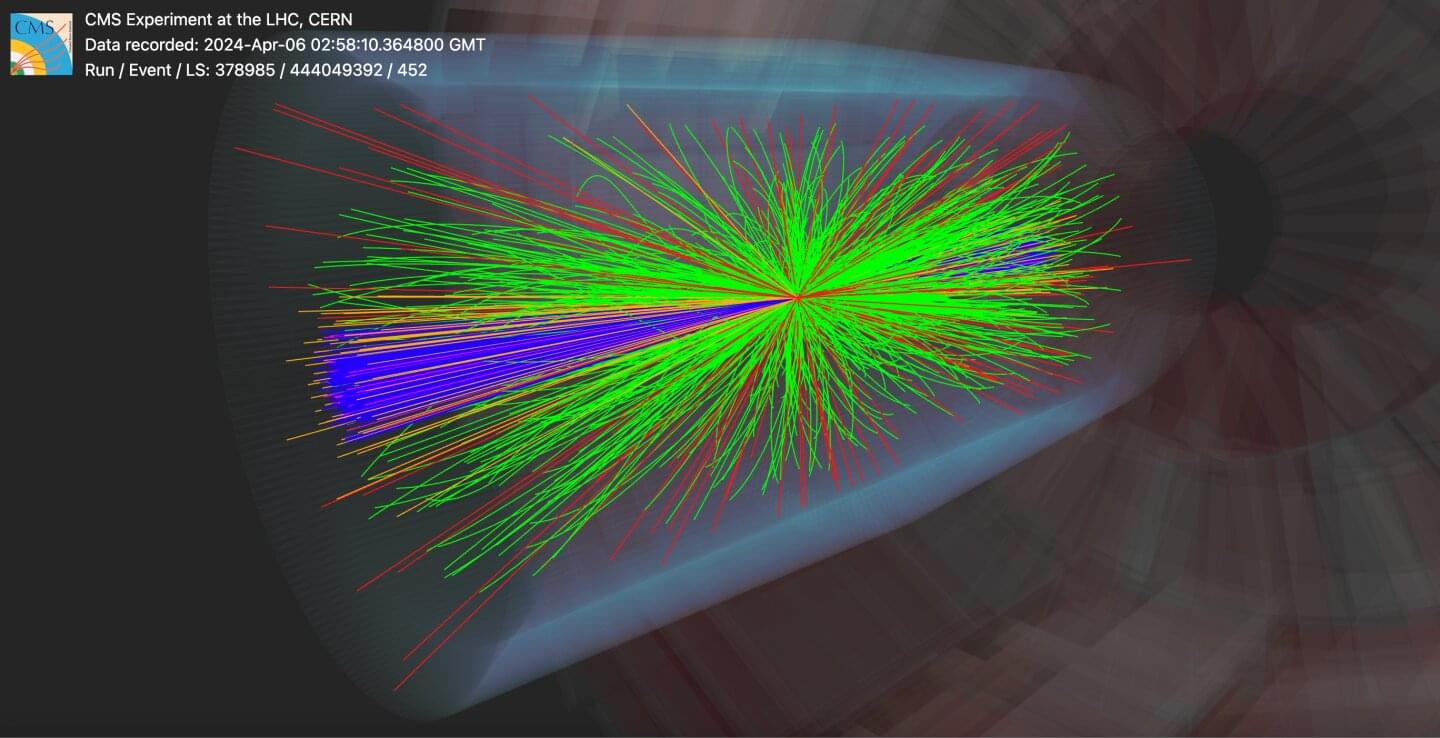
Experiments reveal that inflation not only smooths the universe but populates it with a specific distribution of initial perturbations, creating a foundation for structure formation. The team measured how quantum fluctuations during inflation are stretched and amplified, transitioning from quantum to classical behavior through a process of decoherence and coarse-graining. This process yields an emergent classical stochastic process, captured by Langevin or Fokker-Planck equations, demonstrating how classical stochastic dynamics can emerge from underlying quantum dynamics. The research highlights that the “initial conditions” for galaxy formation are not arbitrary, but constrained by the Gaussian field generated during inflation, possessing specific correlations. This framework provides a cross-scale narrative, linking microphysics and cosmology to life, brains, culture, and ultimately, artificial intelligence, demonstrating a continuous evolution of dynamics across the universe.

Universe’s Evolution, From Cosmos to Cognition

This research presents a unified, cross-scale narrative of the universe’s evolution, framing cosmology, astrophysics, biology, and artificial intelligence as successive regimes of dynamical systems. Rather than viewing these fields as separate, the work demonstrates how each builds upon the previous, connected by phase transitions, symmetry-breaking events, and attractors, ultimately tracing a continuous chain from the Big Bang to contemporary learning systems. The team illustrates how gravitational instability shapes the cosmic web, leading to star and planet formation, and how geochemical cycles establish stable, long-lived attractors, providing the foundation for life’s emergence as self-maintaining reaction networks. The study emphasizes that the universe is not simply evolving in state, but also in its capacity for description and learning, with each transition.

Lorenz system

The Lorenz system is a three-dimensional classical dynamic system represented by three ordinary differential equations. It was first developed by the meteorologist Edward Lorenz and describes chaotic behavior of fluid movement when subjected to heating.

Although the Lorenz system is deterministic, its dynamics depend on the choice of initial parameters. For some ranges of parameters, the system is predictable as trajectories settle into fixed points or simple periodic orbits. In contrast, for other parameter ranges, the system becomes chaotic and the solutions never settle down but instead trace out the butterfly-shaped Lorenz attractor, popularly known as butterfly effect. In this regime, small differences in initial conditions grows exponentially making long-term prediction practically impossible.

Ignorance Is the Greatest Evil: Why Certainty Does More Harm Than Malice

The most dangerous people are not the malicious ones. They’re the ones who are certain they’re right.

Most of the harm in history has been done by people who believed they knew what was right — and acted on that belief without recognizing the limits of their own knowledge.

Socrates understood this long ago: the most dangerous is not *not knowing*, but *not knowing that we don’t know* — especially when paired with power.

Read on to find why:

* certainty often does more harm than malice * humility isn’t weakness, it’s discipline * action doesn’t require certainty, only responsibility * and why, in an age of systems, algorithms, and institutions, has quietly become structural.

This isn’t an argument for paralysis or relativism.

It’s an argument for acting without pretending we are infallible.

AI learns to build simple equations for complex systems

A research team at Duke University has developed a new AI framework that can uncover simple, understandable rules that govern some of the most complex dynamics found in nature and technology.

The AI system works much like how history’s great “dynamicists”—those who study systems that change over time—discovered many laws of physics that govern such systems’ behaviors. Similar to how Newton, the first dynamicist, derived the equations that connect force and movement, the AI takes data about how complex systems evolve over time and generates equations that accurately describe them.

The AI, however, can go even further than human minds, untangling complicated nonlinear systems with hundreds, if not thousands, of variables into simpler rules with fewer dimensions.

Making lighter work of calculating fluid and heat flow

Scientists from Tokyo Metropolitan University have re-engineered the popular Lattice-Boltzmann Method (LBM) for simulating the flow of fluids and heat, making it lighter and more stable than the state-of-the-art.

By formulating the algorithm with a few extra inputs, they successfully got around the need to store certain data, some of which span the millions of points over which a simulation is run. Their findings might overcome a key bottleneck in LBM: memory usage.

The work is published in the journal Physics of Fluids.

Cracking the mystery of heat flow in few-atoms thin materials

For much of my career, I have been fascinated by the ways in which materials behave when we reduce their dimensions to the nanoscale. Over and over, I’ve learned that when we shrink a material down to just a few nanometers in thickness, the familiar textbook rules of physics begin to bend, stretch, or sometimes break entirely. Heat transport is one of the areas where this becomes especially intriguing, because heat is carried by phonons—quantized vibrations of the atomic lattice—and phonons are exquisitely sensitive to spatial confinement.

A few years ago, something puzzling emerged in the literature. Molecular dynamics simulations showed that ultrathin silicon films exhibit a distinct minimum in their thermal conductivity at around one to two nanometers thickness, which corresponds to just a few atomic layers. Even more surprisingly, the thermal conductivity starts to increase again if the material is made even thinner, approaching extreme confinement and the 2D limit.

This runs counter to what every traditional model would predict. According to classical theories such as the Boltzmann transport equation or the Fuchs–Sondheimer boundary-scattering framework, reducing thickness should monotonically suppress thermal conductivity because there is simply less room for phonons to travel freely and carry heat around. Yet the simulations done by the team of Alan McGaughey at Carnegie Mellon University in Pittsburgh insisted otherwise, and no established theory could explain why.

Why we can’t stop clicking on rage bait

Stanford research reveals creators feel exhausted, depressed, and financially unstable due to constant pressure to post, algorithm unpredictability, and frequent “demonetization.” While rage bait may work short-term, it’s unsustainable. Creators eventually seek other revenue streams, only to be replaced by new outrage merchants.

Bottom line: Rage bait is a symptom of platforms’ engagement-based economic incentives—not an isolated phenomenon, but a “highly visible result” of the ecosystem social media companies have created.


“Rage bait” is Oxford’s Word of the Year. What makes anger so appealing?

String Theory Inspires a Brilliant, Baffling New Math Proof

When the team posted their proof in August, many mathematicians were excited. It was the biggest advance in the classification project in decades, and hinted at a new way to tackle the classification of polynomial equations well beyond four-folds.

But other mathematicians weren’t so sure. Six years had passed since the lecture in Moscow. Had Kontsevich finally made good on his promise, or were there still details to fill in?

And how could they assuage their doubts, when the proof’s techniques were so completely foreign — the stuff of string theory, not polynomial classification? “They say, ‘This is black magic, what is this machinery?’” Kontsevich said.

AI Guides Robot on the ISS for the First Time

Dr. Somrita Banerjee: “This is the first time AI has been used to help control a robot on the ISS. It shows that robots can move faster and more efficiently without sacrificing safety, which is essential for future missions where humans won’t always be able to guide them.”


How can an AI robot help improve human space exploration? This is what a recent study presented at the 2025 International Conference on Space Robotics hopes to address as a team of researchers investigated new methods for enhancing AI robots in space. This study has the potential to help scientists develop new methods for enhancing human-robotic relationships, specifically as humanity begins settling on the Moon and eventually Mars.

For the study, the researchers examined how a technique called machine learning-based warm starts could be used to improve robot autonomy. To accomplish this, the researchers launched the Astrobee free-flying robot to the International Space Station (ISS), where its algorithm was tested floating around the ISS in microgravity. The goal of the study was to ascertain if Astrobee could navigate its way around the ISS without the need for human intervention, relying only on its algorithm to determine safely traversing the ISS. In the end, the researchers found that Astrobee successfully navigated the tight terrain of the ISS with limited need for human intervention.

/* */