Toggle light / dark theme

Is buzzy startup Humane’s big idea a wearable camera?

The demo is clever, questionably real, and prompts a lot of questions about how this device will actually work.

Buzz has been building around the secretive tech startup Humane for over a year, and now the company is finally offering a look at what it’s been building. At TED last month, Humane co-founder Imran Chaudhri gave a demonstration of the AI-powered wearable the company is building as a replacement for smartphones. Bits of the video leaked online after the event, but the full video is now available to watch.

The device appears to be a small black puck that slips into your breast pocket, with a camera, projector, and speaker sticking out the top. Throughout the 13-minute presentation, Chaudhri walks through a handful of use cases for Humane’s gadget: * The device rings when Chaudhri receives a phone call. He holds his hand up, and the device projects the caller’s name along with icons to answer or ignore the call. He then has a brief conversation. (Around 1:48 in the video) * He presses and holds one finger on the device, then asks a question about where he can buy a gift. The device responds with the name of a shopping district. (Around 6:20) * He taps two fingers on the device, says a sentence, and the device translates the sentence into another language, stating it back using an AI-generated clone of his voice. (Around 6:55) * He presses and holds one finger on the device, says, “Catch me up,” and it reads out a summary of recent emails, calendar events, and messages. (At 9:45) * He holds a chocolate bar in front of the device, then presses and holds one finger on the device while asking, “Can I eat this?” The device recommends he does not because of a food allergy he has. He presses down one finger again and tells the device he’s ignoring its advice. (Around 10:55)

Chaudhri, who previously worked on design at Apple for more than two decades, pitched the device as a salve for a world covered in screens. “Some believe AR / VR glasses like these are the answer,” he said, an image of VR headsets behind him. He argued those devices — like smartphones — put “a further barrier between you and the world.”

Humane’s device, whatever it’s called, is designed to be more natural by eschewing the screen. The gadget operates on its own. “You don’t need a smartphone or any other device to pair with it,” he said.

Dr. Leroy Hood, MD, Ph.D. — Co-Founder, Institute of Systems Biology (ISB); CEO, Phenome Health

(https://isbscience.org/bio/leroy-hood/) is Co-Founder, Chief Strategy Officer and Professor, at the Institute of Systems Biology (ISB) in Seattle, as well as CEO of Phenome Health (https://phenomehealth.org/), a nonprofit organization dedicated to delivering value through health innovation focused on his P4 model of health (Predictive, Preventive, Personalized and Participatory) where a patient’s unique individuality is acknowledged, respected, and leveraged for the benefit of everyone.

Dr. Hood, who is a world-renowned scientist and recipient of the National Medal of Science in 2011, co-founded the Institute for Systems Biology (ISB) in 2000 and served as its first President from 2000–2017. In 2016, ISB affiliated with Providence St. Joseph Health (PSJH) and Dr. Hood became PSJH’s Senior Vice President and Chief Science Officer.

Dr. Hood is a member of the National Academy of Sciences, the National Academy of Engineering, and the National Academy of Medicine. Of the more than 6,000 scientists worldwide who belong to one or more of these academies, Dr. Hood is one of only 20 people elected to all three.

Dr. Hood received his MD from Johns Hopkins University School of Medicine and his PhD in biochemistry from Caltech.

Dr. Hood was a faculty member at Caltech from 1967–1992, serving for 10 years as the Chair of Biology. During this period, he and his colleagues developed four sequencer and synthesizer instruments that paved the way for the Human Genome Project’s successful mapping and understanding of the human genome. He and his students also deciphered many of the complex mechanisms of antibody diversification.

In 1992, Dr. Hood founded and chaired the Department of Molecular Biotechnology at the University of Washington, the first academic department devoted to cross-disciplinary biology.

Mayo Clinic-born Startup Scores $7.7M for Its Clinical AI Deployment Platform

The adoption of AI in clinical settings has increased exponentially over the past decade, but AI models still haven’t achieved the level of ubiquity that they could within the sector.

A few years ago, a group of Mayo Clinic researchers recognized this major problem. The health system was producing a huge amount of research on AI in clinical contexts, but it was still having a hard time actually deploying those AI models at scale.

That realization led to the creation of Lucem Health, a platform for clinical AI solution deployment. The North Carolina-based startup, which launched in 2021, closed a $7.7 million Series A funding round last week.

Researchers reveal DNA repair mechanism

A new study adds to an emerging, radically new picture of how bacterial cells continually repair faulty sections of their DNA.

Published online May 16 in the journal Cell, the report describes the behind a DNA repair pathway that counters the mistaken inclusion of a certain type of molecular building block, ribonucleotides, into genetic codes. Such mistakes are frequent in code-copying process in bacteria and other organisms. Given that ribonucleotide misincorporation can result in detrimental DNA code changes (mutations) and DNA breaks, all organisms have evolved to have a DNA repair pathway called ribonucleotide excision repair (RER) that quickly fixes such errors.

Last year a team led by Evgeny Nudler, Ph.D., the Julie Wilson Anderson Professor in the Department of Biochemistry and Molecular Pharmacology at NYU Langone Health, published two analyses of DNA repair in living E. coli cells. They found that most of the repair of certain types of DNA damage (bulky lesions), such as those caused by UV irradiation, can occur because damaged code sections have first been identified by a called RNA . RNA polymerase motors down the DNA chain, reading the code of DNA “letters” as it transcribes instructions into RNA molecules, which then direct protein building.

USC Researchers Zoom Into the Human Genome With Unprecedented Resolution

Dr. Steven Gazal, an assistant professor of population and public health sciences at the Keck School of Medicine of USC, is on a mission to answer a perplexing question: Why, despite millions of years of evolution, do humans still suffer from diseases?

As part of an international research team, Gazal has made a groundbreaking discovery. They’ve become the first to accurately pinpoint specific base pairs in the human genome that have remained unaltered throughout millions of years of mammalian evolution. These base pairs play a significant role in human disease. Their findings were published in a special Zoonomia edition of the journal Science.

Gazal and his team analyzed the genomes of 240 mammals, including humans, zooming in with unprecedented resolution to compare DNA.

Dr. Emre Ozcan & Walid Mehanna — Merck KGaA, Darmstadt, Germany — Tech As A Force For Good In Health

Technology As A Force For Good In People’s Lives — Dr. Emre Ozcan, PhD, VP, Global Head of Digital Health & Walid Mehanna, Group Data Officer And Senior Vice President, Merck KGaA, Darmstadt, Germany.


EPISODE DISCLAIMER — At any time during this episode when anyone says Merck, in any context, it shall always be referring to Merck KGaA, Darmstadt, Germany.

Dr. Emre Ozcan, Ph.D. is VP, Global Head of Digital Health, at Merck KGaA, Darmstadt, Germany (https://www.emdgroup.com/en), where he brings 15+ years experience in biopharma, med-tech and healthcare consulting with experience across strategy, research, marketing, and operations in several therapeutic areas. In his current role, he holds the accountability for the design and end-to-end delivery of digital health solutions to support Merck KGaA, Darmstadt, Germany franchise strategies and shape the architecture of the offering “around the drug” including devices and diagnostics.

Prior to joining Merck KGaA, Darmstadt, Germany, Dr. Ozcan was a Junior Partner at Boston Consulting Group. He holds a BA degree from Yale University; and MPhil and PhD from Oxford University.

Walid Mehanna is Group Data Officer And Senior Vice President, Merck KGaA, Darmstadt, Germany, where he has responsibility for driving Data & Analytics strategy, implementation, architecture, governance, and culture across all its businesses.

Groundbreaking: The clearest snapshot of human genomic diversity ever taken

Scientists with the Human Pangenome Reference Consortium have made groundbreaking progress in characterizing the fraction of human DNA that varies between individuals. They have assembled genomic sequences of 47 people from around the world into a so-called pangenome in which more than 99 percent of each sequence is rendered with high accuracy.

For two decades, scientists have relied on the human reference genome as a standard to compare against other genetic data. Thanks to this reference genome, it was possible to identify genes implicated in specific diseases and trace the evolution of human traits, among other things.

However, it has always been a flawed tool: 70% of its data came from a single man of predominantly African-European background whose DNA was sequenced during the Human Genome Project. Hence, it can reveal very little about individuals on this planet who are different from each other, creating an inherent bias in biomedical data believed to be responsible for some of the health disparities affecting patients today.

Food, Mood, and Brain Health: Implications for the Modern Clinician

Improved, innovative strategies are needed for the prevention and promotion of recovery from mental illness as these disorders leading cause of disability worldwide. This article will review the evidence linking dietary pattern to brain-based illnesses and provide an overview of the mechanisms that underlie the association between brain health and the food we eat. Considerations for dietary intervention will be discussed including encouraging a shift towards a traditional or whole foods dietary pattern.


Robert, a 43-year-old married man who presents with irritability and a low mood for two months. He has a history of attention deficit disorder, first diagnosed two years ago, and is currently treated with Vyvanse 70 mg. While his focus and work function are improved, he reports low appetite, fatigue, and difficulty sleeping. He notes that he tends to be quite irritable during mealtimes to the extent that his wife has asked him to stay at work past dinnertime to “stay out of the way.” He feels guilty and, concerned about not connecting emotionally to his young children ages 1 and 3. Further history and medical workup reveal no substance use, no active medical issues, and blood work reveals no abnormalities.

The evidence is growing: food choice is strongly implicated in mental health risk. In cases like Robert’s, a food history is a vital piece of data, both in assessing low appetite as a possible medication side effect, or as a symptom of depression. Furthermore, a food history is imperative to understand whether targeted dietary recommendations could assist in his recovery.

An approach to consider for patients with mental health symptoms is to offer counseling on lifestyle interventions, such as diet.1 Physicians often feel ill-equipped to discuss diet due to lack of training, limited time, and a poor reimbursement structure. Physician uncertainty is likely exacerbated by the wide variety of specific dietary recommendations and dietary “tribes” that exist in our society today. Over 2,000 years ago, Hippocrates said, “let thy food be thy medicine and thy medicine be thy food.”2 The evidence base is increasing that we should re-examine his counsel, as the effect of good food has profound implications for brain health.

Using electrified spatiotemporal heating to depolymerize plastics

A team of engineers and materials scientists affiliated with multiple institutions in the U.S., has developed a new way to depolymerize plastics using electrified spatiotemporal heating. In their paper, published in the journal Nature, the group describes the new process and its efficiency. Nature has also published a Research Briefing in the same journal issue outlining the work done by the team.

Over the past several years, has become a major concern, both for the environment and for the health of plants and animals, including humans, and scientists are seeking ways to recycle it. Most of the techniques developed thus far involve using chemicals to depolymerize . These efforts are still extremely inefficient, however, with yields between 10% and 25%. In this new effort, the team has found a way to use pulsed electricity to boost the yield to approximately 36%.

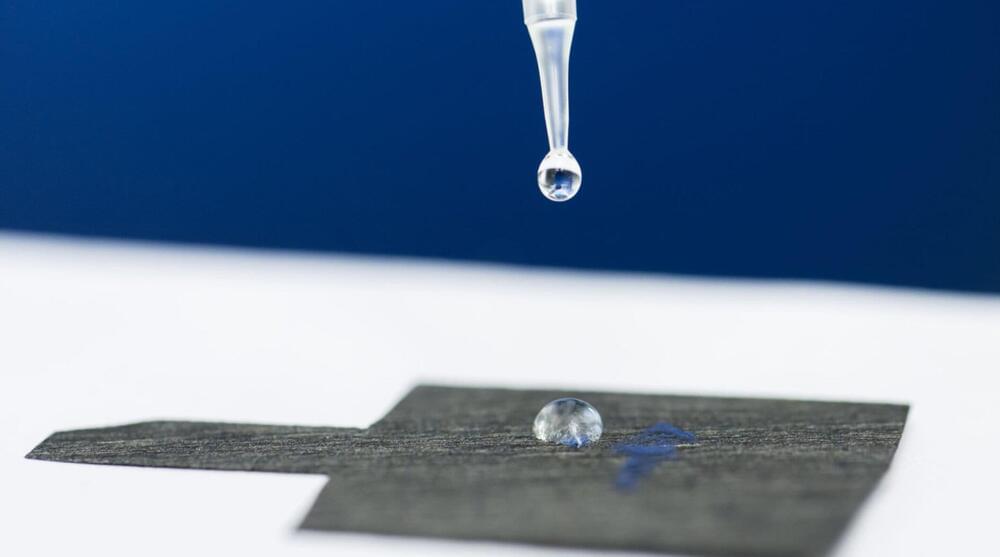
The approach involved designing a new kind of with a porous carbon felt bilayer and a pulsed electric heater at the top. In their reactor, plastic bits are melted as they are fed in to the upper chamber and flow as a mass into a lower chamber, where the material is pushed through the felt filter. The plastic then begins to decompose as the . As the molecules that make up the plastic become smaller, their volatility grows until they are expelled from the reactor as a gas, which allows more liquid to be drawn in. Using electricity to heat the plastic allows for oscillating the temperature, allowing simpler depolymerization reactions to take precedence over side reactions, which need additional heating to depolymerize.

/* */