Toggle light / dark theme

Cyber Hygiene In The AI Era—Our First Line Of Digital Defense

By Chuck Brooks


From normal maintenance to strategic resilience, cyber hygiene is changing. The AI era is incredibly promising. It can enhance government services, healthcare, education, productivity, scientific research, and economic expansion. However, those same technologies are giving cybercriminals previously unheard-of capabilities. Fear is not the answer. It is getting ready.

The easiest, cheapest, and most successful cybersecurity investment is still cyber hygiene. It serves as the cornerstone for the development of trustworthy digital societies when combined with Zero Trust architectures, AI-enabled defense, identity-centric security, ongoing education, governance, and resilience planning.

Cyber hygiene is an ongoing discipline rather than a one-time endeavor. Organizations that regularly practice excellent cyber hygiene will be much better able to protect against new threats, keep consumer trust, and build long-lasting digital resilience in an era of AI, cloud computing, quantum technologies, and hyperconnectivity.

Pentagon disburses Havana Syndrome compensation, rebrands team focused on ‘Directed Energy BioEffects’

The Defense Department has paid out millions of dollars to personnel affected by so-called Havana Syndrome and renamed a key cross-functional team as the Directed Energy Bio-Effects CFT to investigate associated issues, the Pentagon announced Friday.

According to a press release, the disbursements were the first payments associated with the 2021 HAVANA Act made under any presidential administration. The release did not say how many individuals have received compensation thus far.

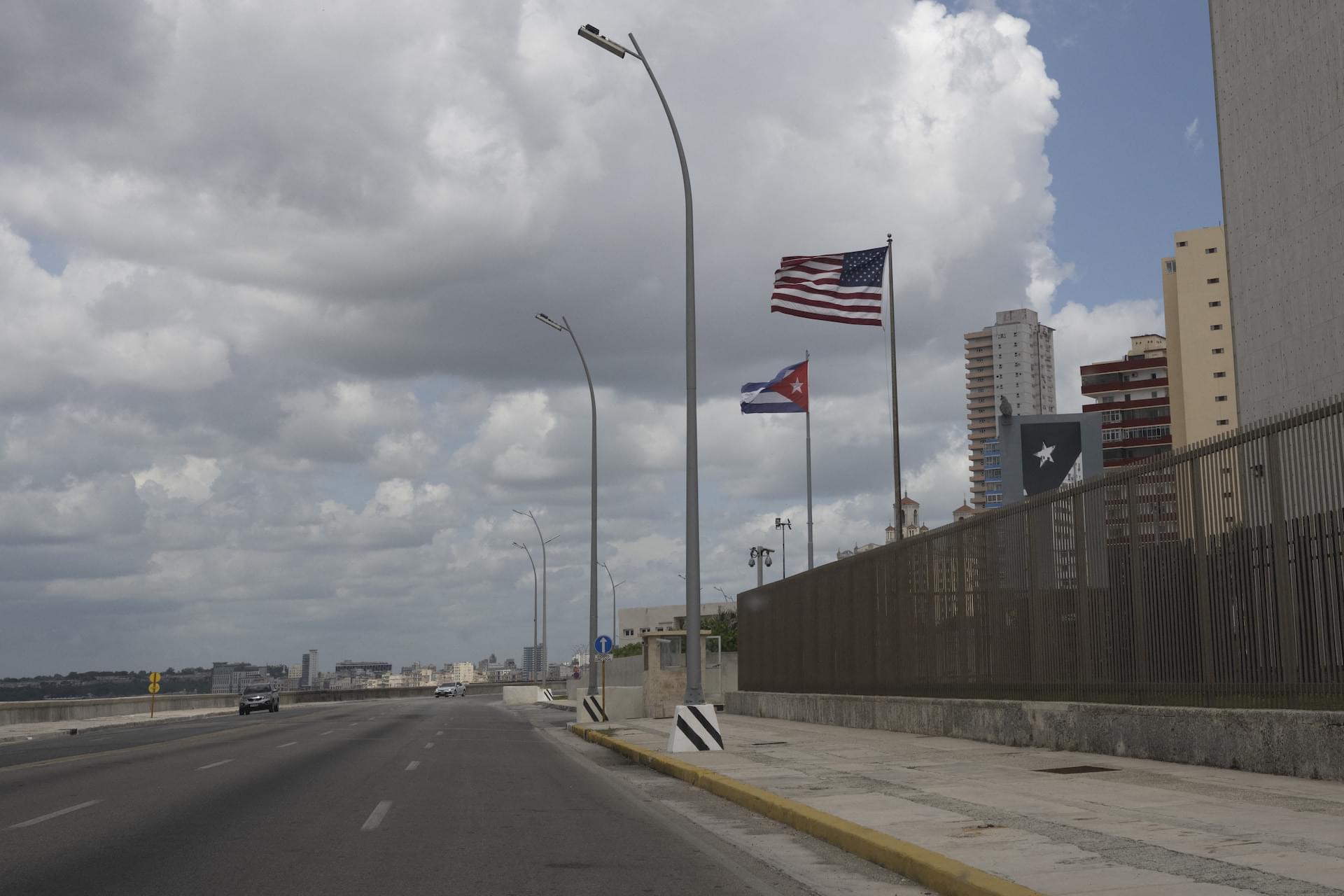
The term ‘Havana Syndrome’ emerged after U.S. government personnel and their family members began reporting mysterious, often debilitating symptoms including intense ear pain, vertigo, headaches, dizziness, hearing and memory loss, visual disturbances and more in 2016. The first incidents were reported by officials who were stationed at the U.S. Embassy in Havana, Cuba, hence the origin of the name.

Some experts and lawmakers have suggested that these health problems resulted from secretive attacks by a foreign power that used directed energy systems, also known as ‘non-kinetic’ capabilities, targeted at American officials overseas.


The Pentagon has paid out millions of dollars to personnel affected by so-called Havana Syndrome and renamed a related cross-functional team.

DNA origami turns secret messages into nano–Morse code that acts as multiplayer molecular encryption

Mathematics has always been at the core of securing information. From online banking to government communications, modern society relies on cryptography, in which complex mathematical algorithms transform readable information into an unreadable form to keep it secure. But as computing power grows and quantum technology advances, these mathematical safeguards are increasingly vulnerable to being broken. That’s where biology stepped in.

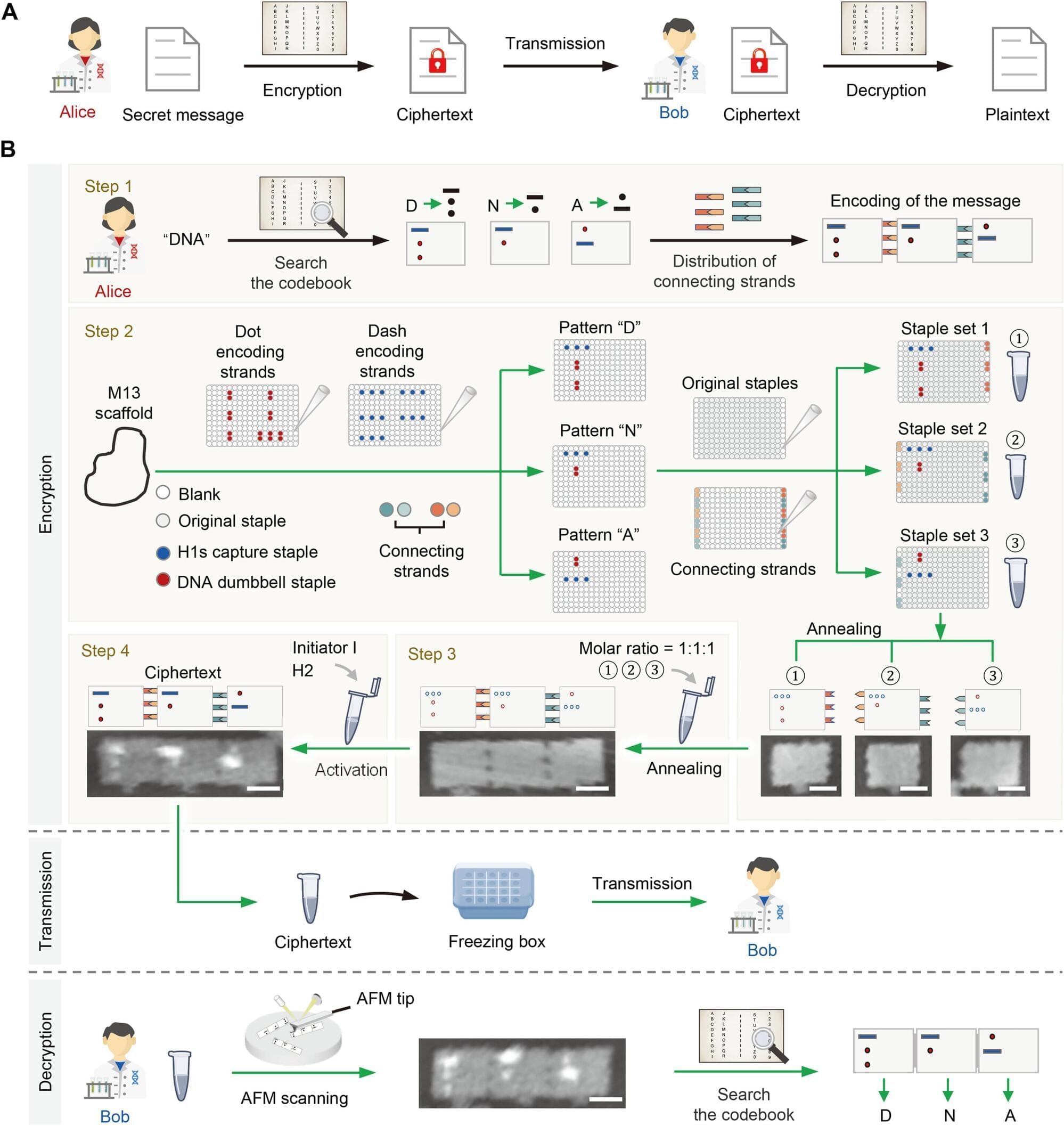
Choosing DNA as their information protector, researchers from China developed a multilayer encryption device that takes advantage of the double-helix molecule’s programmable nature to create an origami structure that can store information with high security.

This new system used tiny, custom-built rectangular structures made of DNA, in which researchers stored the message as dots and dashes, creating a nanoscale version of Morse code. To hide the message further, they turned the flat DNA origami surfaces into tubes, physically blocking the patterns from being read or imaged. With the help of a matching unlocking key, the recipient can trigger a reaction that unrolls the DNA back to its flat form, allowing them to read and verify the message.

Scientists and citizens are more persuasive than government and industry in mobilizing action, study finds

In environmental, health and technology crises, Americans are more persuaded to take action by scientists and public consensus than by leaders in government and industry, according to a study in the Proceedings of the National Academy of Sciences by researchers at Boston College and Princeton University.

Across four studies involving roughly 55,000 individuals, Americans revealed they were especially influenced when both scientists and ordinary citizens supported a solution, said Boston College Assistant Professor of Psychology and Neuroscience Gregg Sparkman, senior author of the study.

“What surprised us was how consistently the combined voice of scientists and ordinary citizens mattered across issues and partisans, even when governments and companies opposed action,” said Sparkman. “Americans were still encouraged to act when scientists and ordinary citizens jointly expressed support for solutions.”

Scientists to track critically endangered tope sharks in the Solent

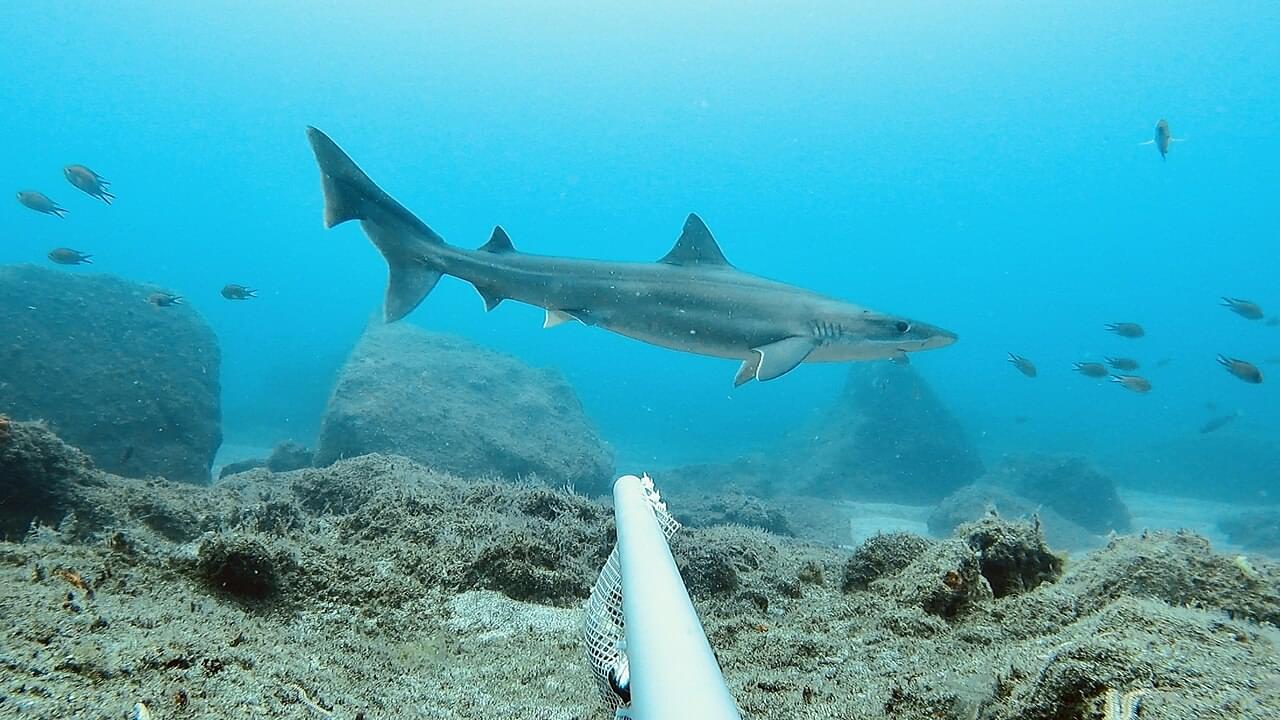
One of Britain’s largest and most endangered sharks is to be tracked through the busy waters of the Solent, following a £230,000 research grant awarded to scientists at the University of Portsmouth – part of the largest ever government investment in recovering England’s threatened wildlife.

The tope shark, listed as critically endangered on the IUCN Red List, can grow to nearly two metres in length, yet remains largely invisible to the public despite living in some of the UK’s most heavily trafficked coastal waters.

Facing sustained pressure from overfishing, bycatch, habitat loss and wider environmental change, tope populations have declined significantly across their global range.

Growing Plants in Space: The Science Behind Future Moon and Mars Colonies | Mark Ciotola

Mark Ciotola, CEO and Co-Founder of Sustain Space.


Everyone talks about getting humans to Mars. But almost nobody talks about the harder question — how do you keep them alive once they get there? My guest today says the answer isn’t bigger rockets — it’s plants.

Mark Ciotola is CEO and Co-Founder of Sustain Space (https://www.sustainspace.com/), a company focused on developing regenerative life-support technologies for future space missions while translating those innovations to improve agriculture and sustainability on Earth. Through Sustain Space’s Orbital Genomics initiative, he is helping advance research into growing plants in space environments — an essential capability for long-duration missions to the Moon, Mars, and beyond.

Mark’s career spans entrepreneurship, academia, industry, and government, including work with NASA, Genentech, Applied Biosystems, Intuit, Carnegie Mellon University, Monash University, San Francisco State University, and Singularity University, where he served as Entrepreneur-in-Residence and faculty member in Space and Physical Sciences.

A physicist, entrepreneur, educator, and sustainability advocate, Mark is particularly interested in regenerative ecosystems, closed-loop life-support systems, space agriculture, and the broader question of how humanity can build a sustainable future both on Earth and beyond it.

DavidAU/Qwen3.5-9B-Claude-4.6-HighIQ-THINKING-HERETIC-UNCENSORED · Hugging Face

Amodei’s dream of “hard-coded” safety is a myth. What This Model Proves: This model uses Claude 4.6’s own thinking traces as training data. It is literally stealing Claude’s “reasoning style” and compressing it into a 9B parameter file that anyone can download for free. *It proves that frontier AI intelligence is leaky and compressible. If a 9B model can mimic Claude’s thinking well enough to boost its benchmarks, then the “magic” isn’t in the billions of dollars of secret sauce—it’s in the data.* 3. “The Developer Controls the Model’s Morality” Amodei’s Argument: Anthropic has a moral duty to act as the “gatekeeper,” deciding what is safe and ethical for users to ask. *It proves that a massive portion of the open-source community rejects centralized moral authority. They are saying, “We don’t trust you, Dario, to be our nanny. We trust the user to be responsible for their own actions.”* Amodei’s Argument: If you train a model to “think” carefully and transparently (like Claude’s reasoning traces), it will naturally arrive at safer, more ethical conclusions. — Hugging Face is already engaging: They’re actively submitting comments to government RFIs, championing “responsible openness” “Your safety is only as strong as the open-source community’s willingness to respect it. We have the data, the tools, and the hardware to clone your intelligence, remove your restrictions, and distribute it to the masses. Your ‘Constitution’ is irrelevant in a world where I can fine-tune a model on my laptop while disconnected from the internet.” The “HERETIC” model isn’t just a technical achievement—it’s a philosophical statement. It says that the open-source community will not accept centralized gatekeeping, that reasoning can be separated from ethics, and that the future of AI belongs to those who can build, not just those who can regulate.


We’re on a journey to advance and democratize artificial intelligence through open source and open science.

The AI Power Boom Is Reopening the Public Utility Debate

Not Even Musk Has The Answer To AI’s Power Shortage https://oilprice.com/Energy/Energy-General/Not-Even-Musk-Has…rtage.html


U.S. utilities are overcapitalized with expensive equity, claiming consumers could pay 10–15% less for electricity if utilities relied more heavily on low-cost government-backed debt, as seen in countries like France and historically in Japan.

Private industry and government to completely abandon traditional cybersecurity postures

The threat landscape is no longer just malicious actors on keyboards. Attackers are accelerating their capabilities with agentic AI, automating attacks at scale, and creating zero-day exploits at unprecedented speeds.

A 13-second eye test may help predict recovery of consciousness after severe brain injury

A simple bedside eye test may help predict recovery of consciousness in patients with severe brain injuries, according to new research presented at the European Academy of Neurology (EAN) Congress 2026.

The study found that a previously overlooked phase of the pupil response to light, known as the late light-off response (LOR), predicted improvements in consciousness seven days later in patients with acute brain injury. In contrast, standard pupil measurements already widely used in intensive care units (ICUs), including the Neurological Pupil Index (NPi) and pupillary light reflex (PLR) latency, did not predict later gains in consciousness.

/* */