Mathematics has always been at the core of securing information. From online banking to government communications, modern society relies on cryptography, in which complex mathematical algorithms transform readable information into an unreadable form to keep it secure. But as computing power grows and quantum technology advances, these mathematical safeguards are increasingly vulnerable to being broken. That’s where biology stepped in.
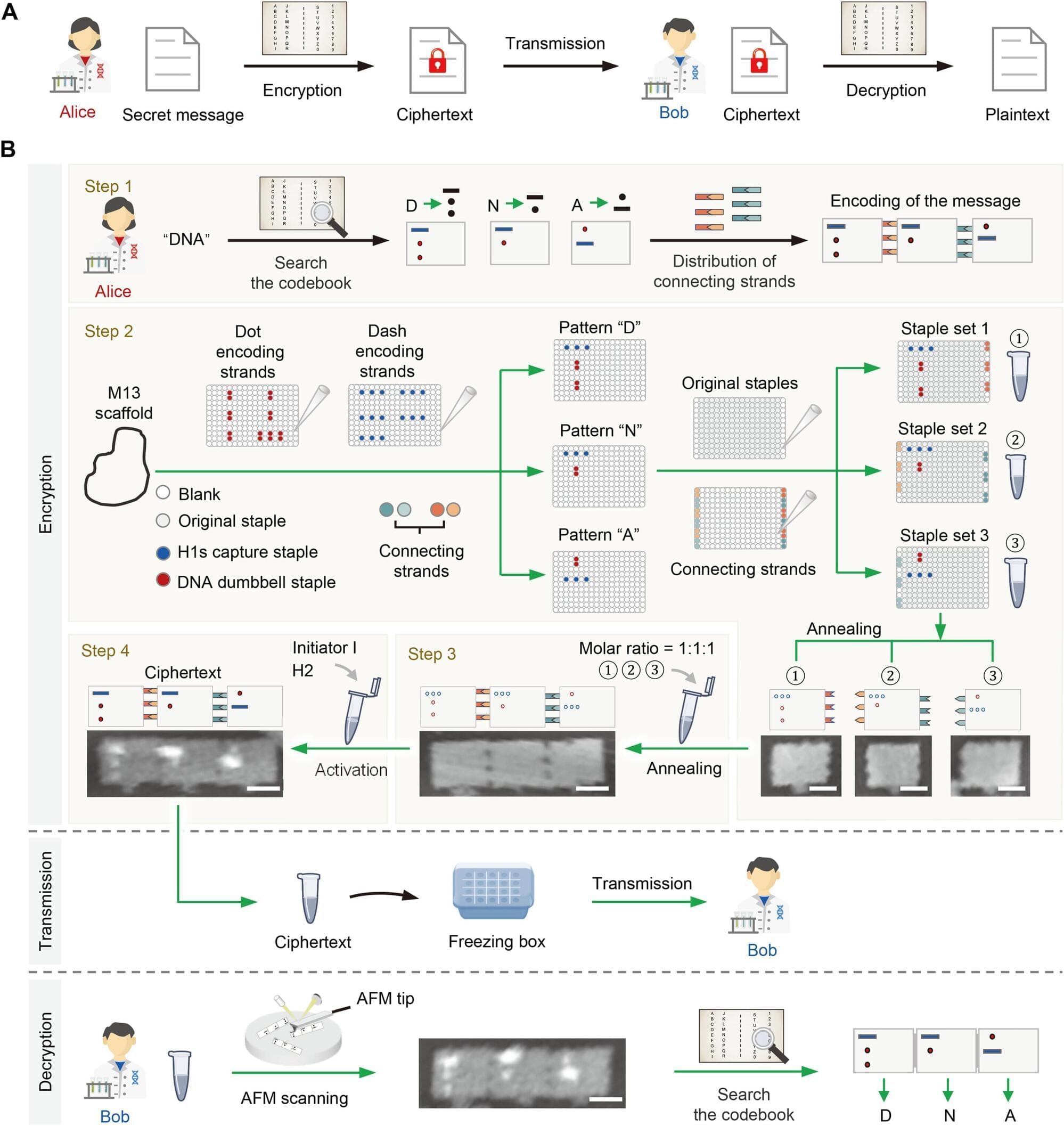
Choosing DNA as their information protector, researchers from China developed a multilayer encryption device that takes advantage of the double-helix molecule’s programmable nature to create an origami structure that can store information with high security.
This new system used tiny, custom-built rectangular structures made of DNA, in which researchers stored the message as dots and dashes, creating a nanoscale version of Morse code. To hide the message further, they turned the flat DNA origami surfaces into tubes, physically blocking the patterns from being read or imaged. With the help of a matching unlocking key, the recipient can trigger a reaction that unrolls the DNA back to its flat form, allowing them to read and verify the message.